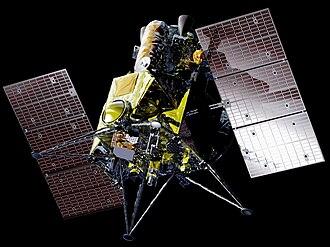
MMX
In transitLaunched in 2026·Liftoff expected October 19, 2026
Countdown to launch
Launched on October 19, 2026 — en route to Phobos and Deimos (Mars moons)
Expected arrival : Aug 20, 2027
Martian Moons eXploration: JAXA will land on Phobos, collect the first samples from a Martian moon and return them to Earth in 2031.
Main objectives
- Land on Phobos and collect at least 10 g of regolith.
- Understand the origin of Phobos and Deimos: captured asteroid or debris from a giant impact on Mars.
- Observe the Martian atmosphere from circumbinary orbit.
- Return the samples to Earth in 2031.
Did you know?
The spacecraft will spend 3 years hovering less than 100 m above Phobos: its gravity is so weak that a jump there would last 15 minutes.
Timeline
Oct 19, 2026
Launch
H3 from Tanegashima (04:41 JST on October 20, local time).
Aug 20, 2027
Arrival in the Martian system
Insertion into circumbinary orbit above Mars.
Jan 01, 2029
Phobos landing
Two sample collections, including an underground corer (C-COMPAS).
Jan 01, 2031
Sample return
Capsule lands in the Australian desert.
MMX

Instruments
[04]Specifications
dry_mass_kg
manufacturer
launch_vehicle
Scientists on this mission
[01]The scientists behind this spacecraft: their role on the mission, their institution and their primary sources.