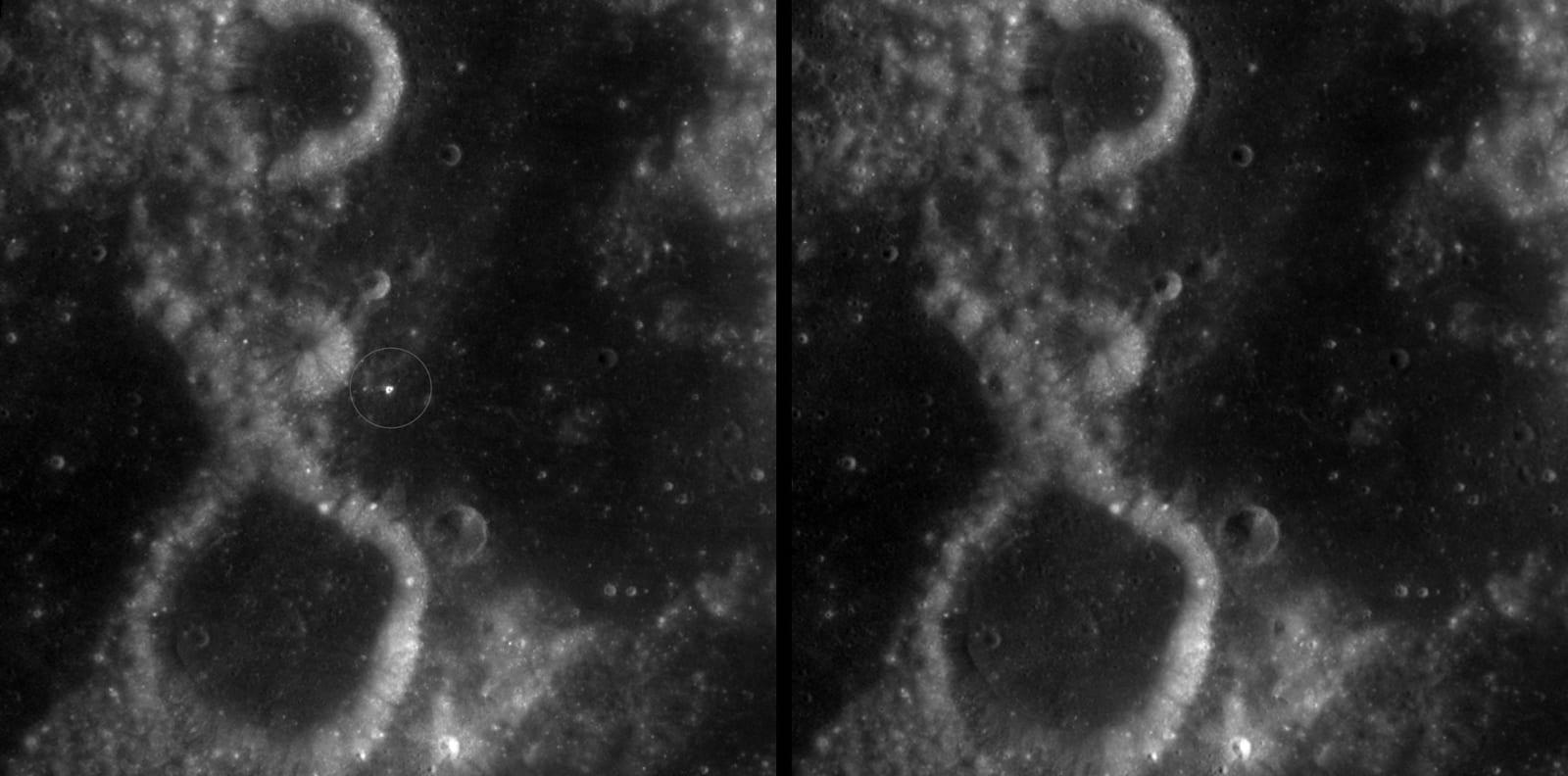
The Moon just handed us something no human eye had ever seen: the birth of a giant crater. On October 24, 2025, during a routine data-quality check, Robert Wagner noticed a bright spot ringed by a dark halo on his map of the Moon. Comparing before-and-after images settled it: a building-sized rock had slammed into the Moon in 2024 and carved McGetchin, the largest crater ever observed forming, 222 m across. Two studies published in September 2026 in Science Advances tell the story.
The largest crater ever seen in the act
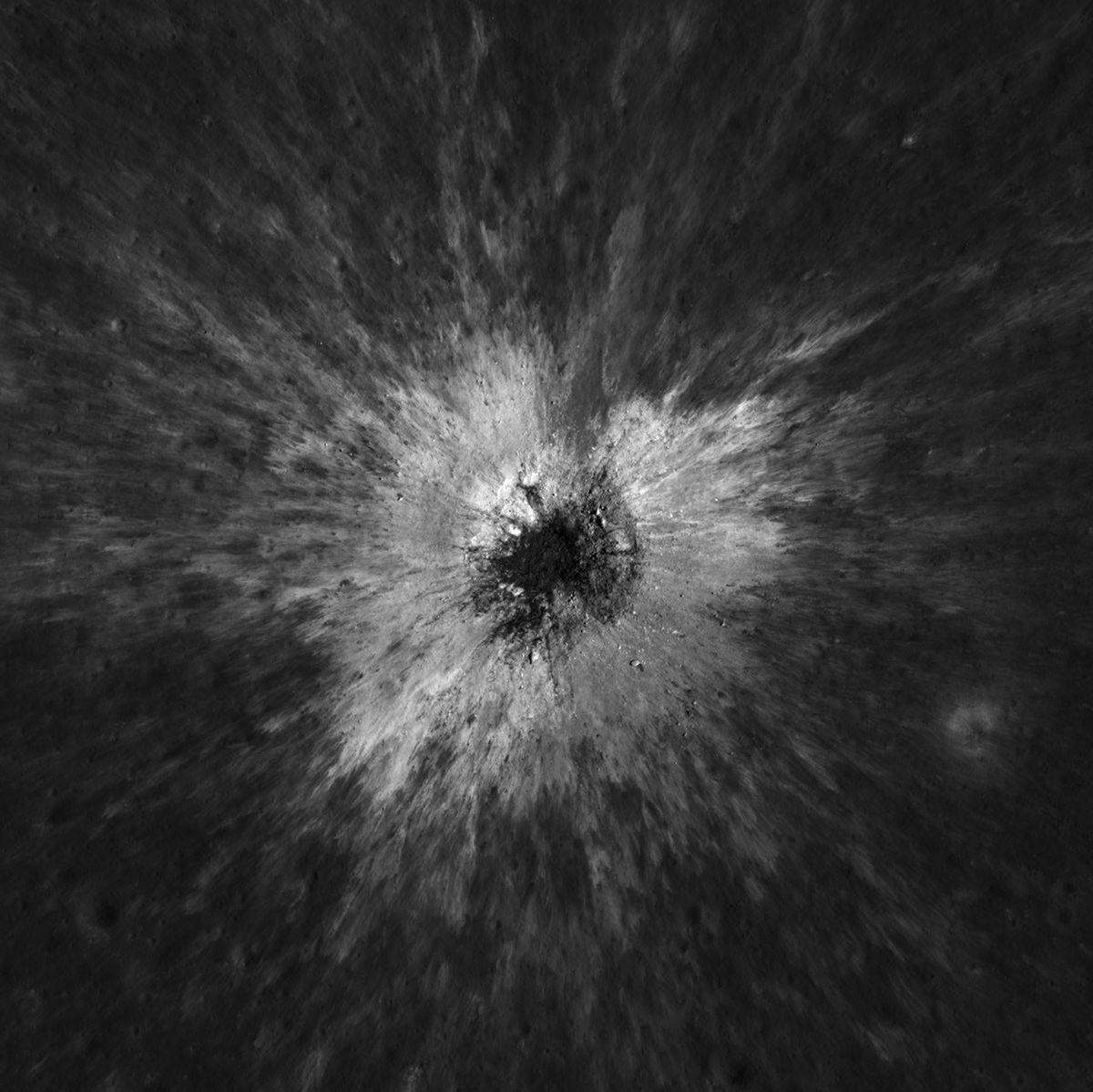
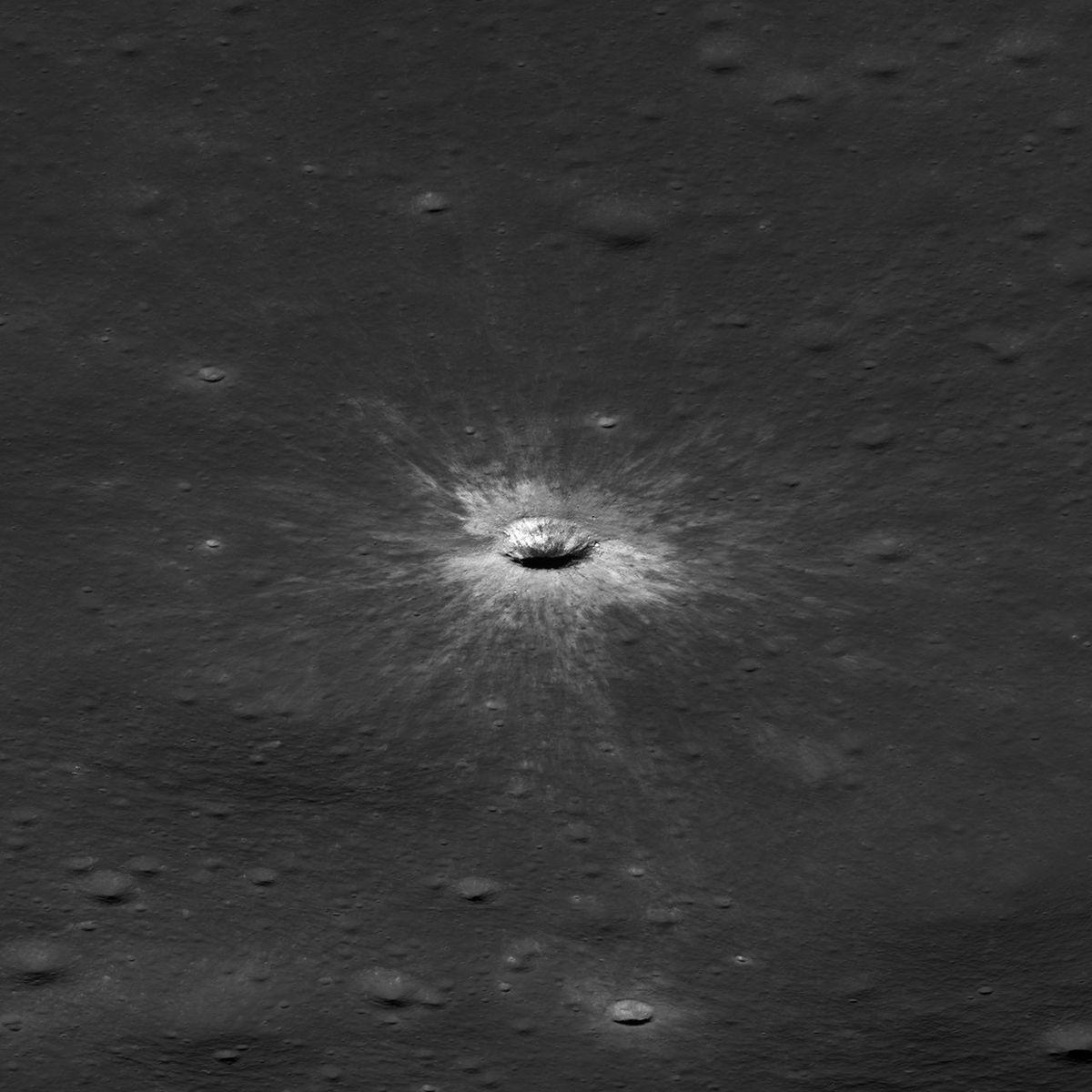
Start with the strongest fact. McGetchin crater, officially named after lunar science pioneer Tom McGetchin, spans 222 m and plunges 43 m deep. Two football fields across, three stacked school buses down. It sits on the Moon's eastern edge and formed between April 11 and May 22, 2024.
The culprit? A comet or asteroid the size of a three- to six-story building. Scientists estimate an impact of this magnitude strikes the Moon only about once a century, maybe less often. Astronomers put such frequencies in context: LRO has kept watch for over 17 years, and nothing of this size had shown up.
Why didn't anyone catch it live? The impact happened out of frame, or in darkness, for every observer on Earth. The Moon has no atmosphere, so nothing slows down or burns up incoming rocks, but nobody happened to be filming that patch of the lunar limb in spring 2024. It took the camera aboard LRO, which has been photographing the Moon on repeat since 2009, to expose the event more than a year later.
A bright spot found during a routine check
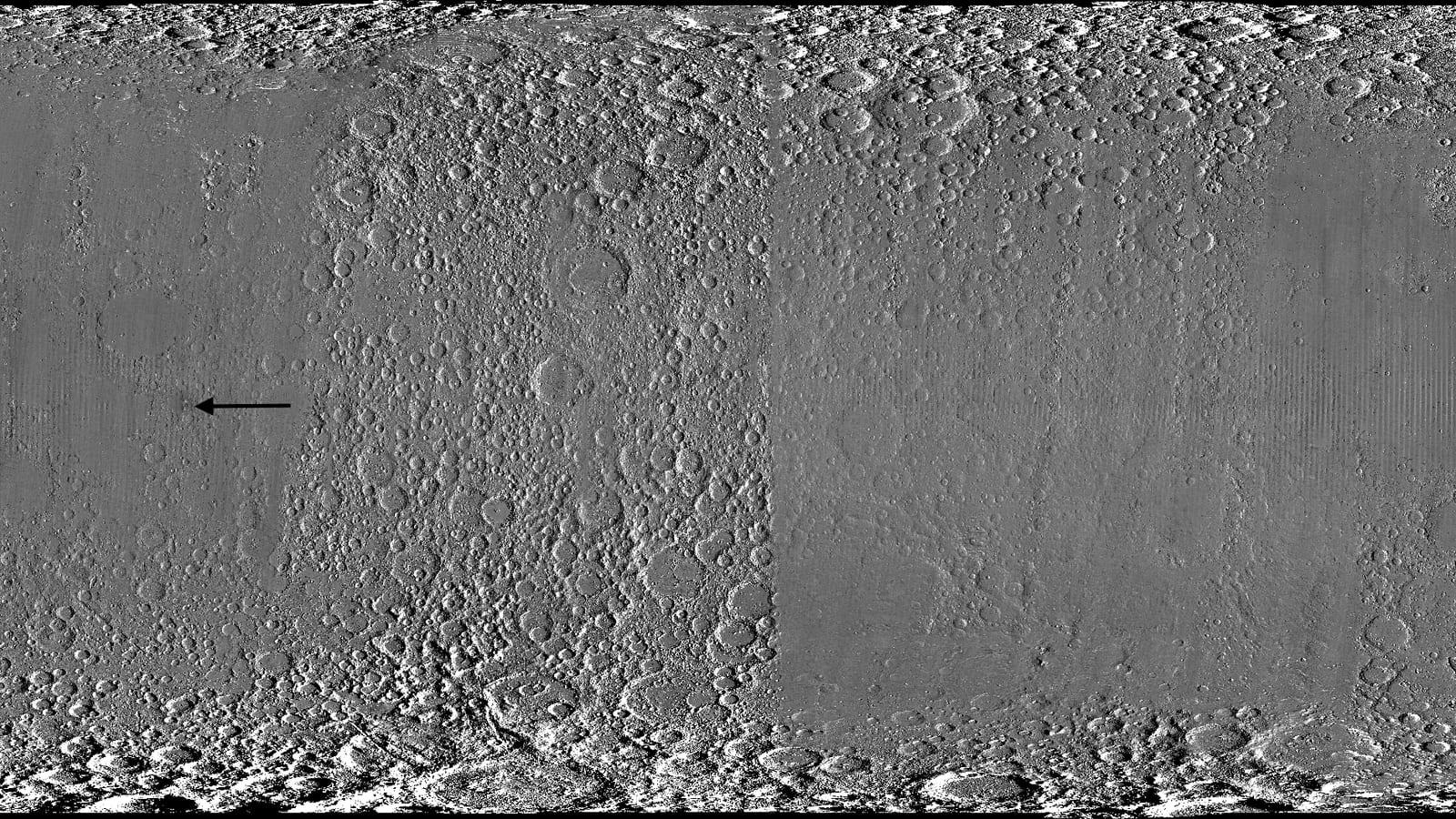
The story starts with a chore. Roughly once a year, the LROC team, the camera system aboard LRO, builds a global map of the Moon. Robert Wagner, an image-processing specialist at Intuitive Machines, the company that operates the camera for NASA, stacks hundreds of before-and-after images taken years apart with software designed to highlight change. Anything that stayed the same turns gray. Anything different shows up as bright or dark patches.
The software raises hundreds of false alarms each pass, because lighting and shadows shift slightly between image sets. So Wagner verifies candidates by hand, looking for a small fuzzy halo around a bright point, the fingerprint of a splash of regolith, the dusty soil that blankets the Moon. On October 24, 2025, one candidate stood out immediately: "It was by far the most obvious impact debris pattern I've ever seen in one of these images," he said.
The bright spot on the maps is not the crater itself. It is material flung out of the hole at the moment of impact, ground that got shaken up and now reflects more light. Wagner was working with the Wide-Angle Camera, where each pixel covers the footprint of a football field. LRO then flew over the site again, and its Narrow-Angle Camera, which resolves details down to 90 cm, delivered close-ups on December 5, 2025: size, shape, and churned-up terrain. An oblique view from March 3, 2026 completes the portrait.
1,000 new craters and 100,000 scars in 17 years
The Moon takes hits constantly. With no atmosphere to burn anything up, every rock from space reaches the ground at full speed. LRO has identified at least 1,000 new craters since launching in 2009, and flagged 100,000 more surface changes caused by impacts or by the debris they throw out.
Those numbers boggle, but scale matters. The smallest craters LRO can distinguish run about 9 m wide, carved by rocks barely 1.1 m across, the size of a monster-truck tire. At that scale, scientists estimate the Moon gains roughly 140 new craters every year. And most impacts stay invisible: microscopic projectiles leave holes too small to spot from orbit.
McGetchin dwarfs the whole menagerie. Its 222 m make it the largest forming crater ever observed anywhere in the solar system, Moon, Mars and other worlds included. That is where the "once in a century" label comes from: we have had an eye on the Moon for 17 years and nothing this big had appeared.
A 6 km cold spot that has scientists intrigued
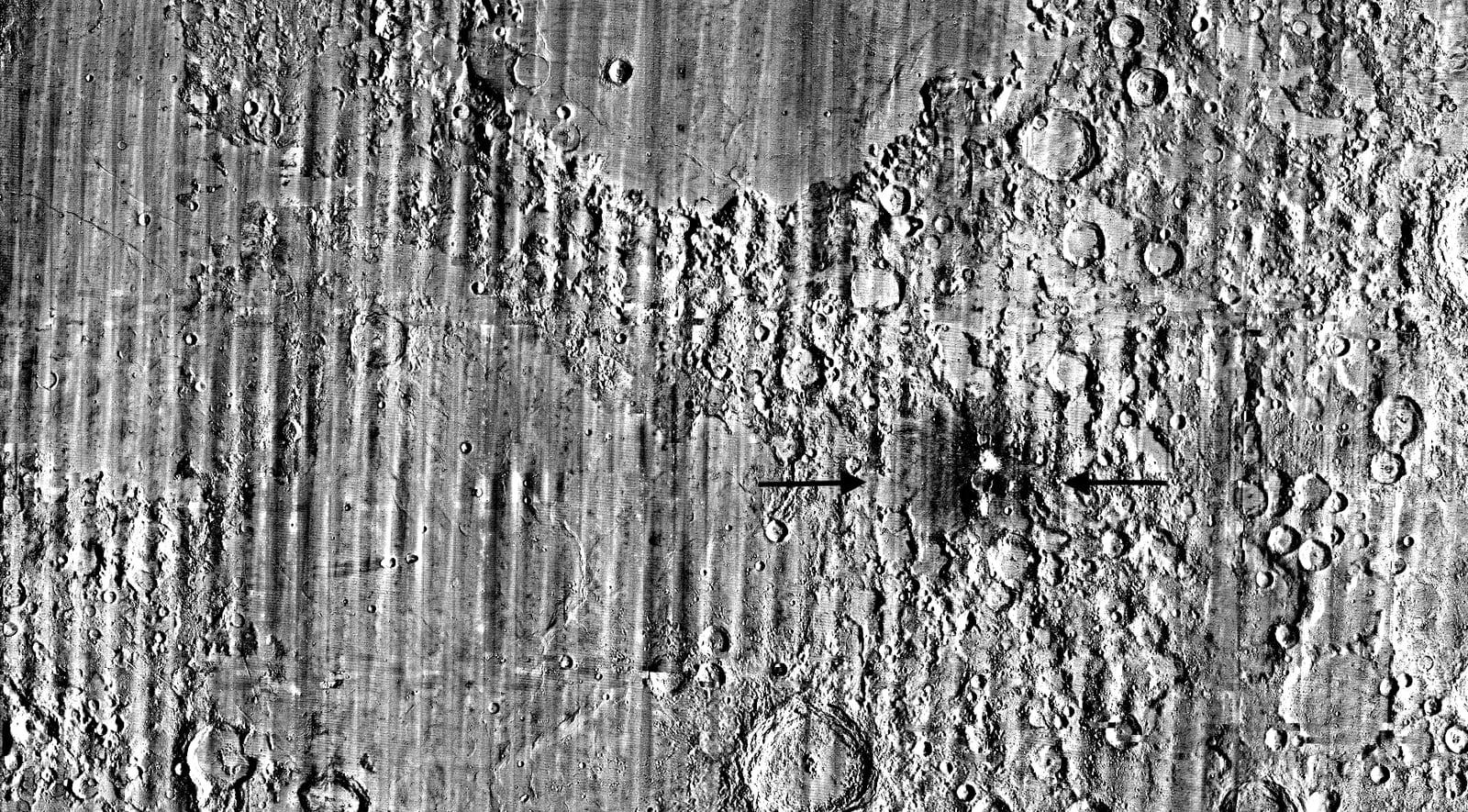
You can see a crater. You can also feel an impact, long after. Diviner, LRO's thermal instrument that measures lunar surface temperature, observed the site after the discovery: across a 6.4 km wide patch around the crater, nearly 30 times its diameter, the surface runs about 9 °C colder than its surroundings during the lunar night.
Why? The impact fluffed up the ground: vibrations lifted and loosened the regolith around the crater, making it less dense. And a less dense soil holds less heat, the way a fluffed-up comforter traps less warmth than a packed one. At night, once the Sun stops heating, that zone sheds its warmth faster. The Diviner team describes this "cold spot" in a paper published September 16, 2026 in Science Advances.
The extent is the real surprise. It shows an impact reshapes the surface far beyond the hole itself, across an area nearly 30 times wider. This is not lab trivia either: future crewed missions and rovers will roll over this kind of reworked ground, fluffier and more insulating. How wheels sink in, how dust sticks, depends on it.
What it changes: mapping a living Moon
The frozen Moon is an old idea quietly dying. We long treated it as a museum piece, dead for billions of years. LRO proves otherwise: impacts retouch its face nearly every day, and instruments like Diviner track thermal changes across kilometers. NASA stresses in its release that such data matter as the agency builds toward a sustained human presence and growing commercial activity on the Moon.
The method matters too. Wagner was not hunting this crater, he found it by systematically comparing maps from different eras. The approach is replicable: every new global LROC map becomes a detector for everything that moved, craters, landslides, fresh landers. Follow-up narrow-angle images have already helped researchers estimate the size and force of the rock that struck, details expected in a future paper.
And the clock keeps ticking. Once in a century does not mean 100 years from now: it could be next year. The Moon keeps taking hits, and with every new map, the LROC team scans the gray for the next spot that shines.
Explore further
- The suspect's body and the crime scene: our glossary entries for the asteroid, the comet and the Moon.
- Another eye on the Moon, from the landing side: the Chandrayaan-3 entry, the most recent landing in our mission catalog.
- Lunar dust as a solar system archive: our article on technosignatures in lunar dust.
- The Moon is observable tonight, no orbiter needed: our interactive sky map and observing guide.
- The Moon in full-size images: browse our astrophotography gallery.
- Official sources for this article: NASA's release and the two scientific papers in Science Advances.