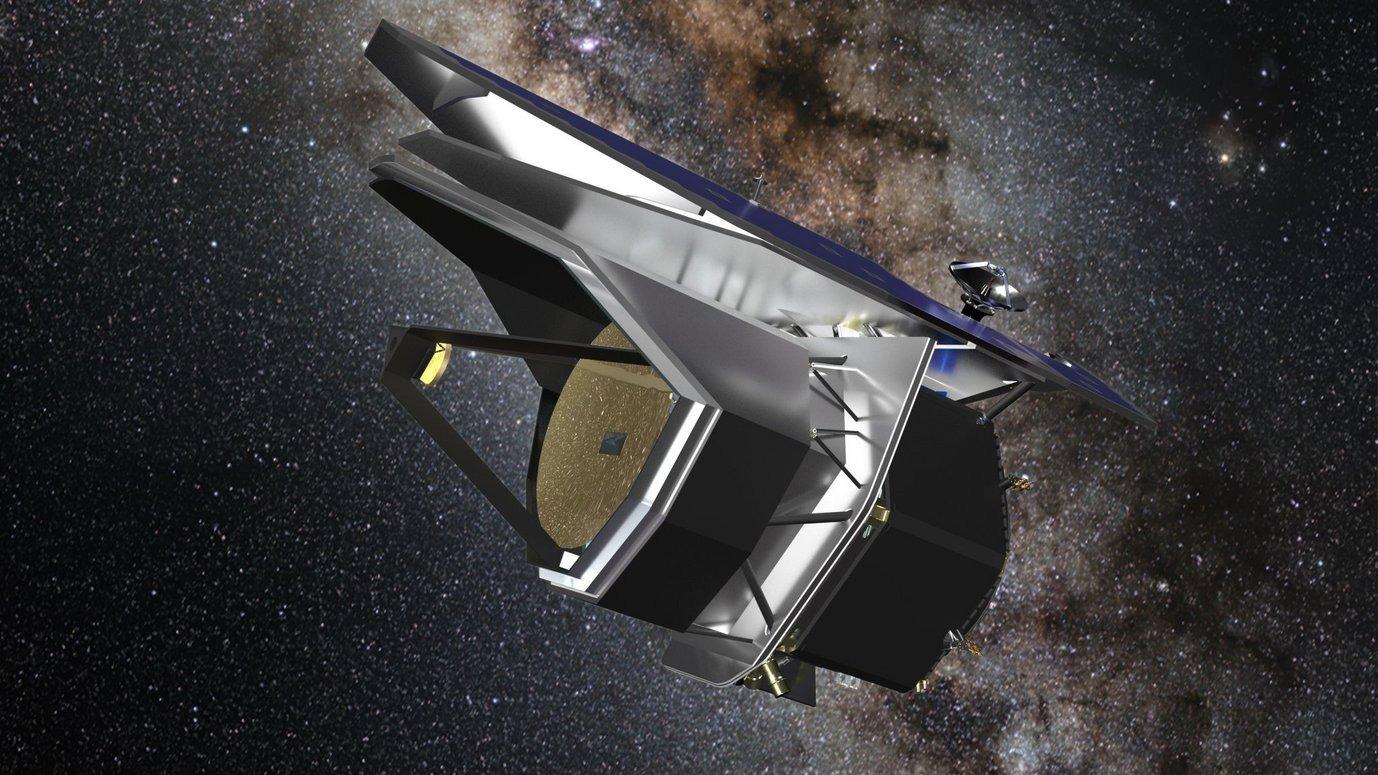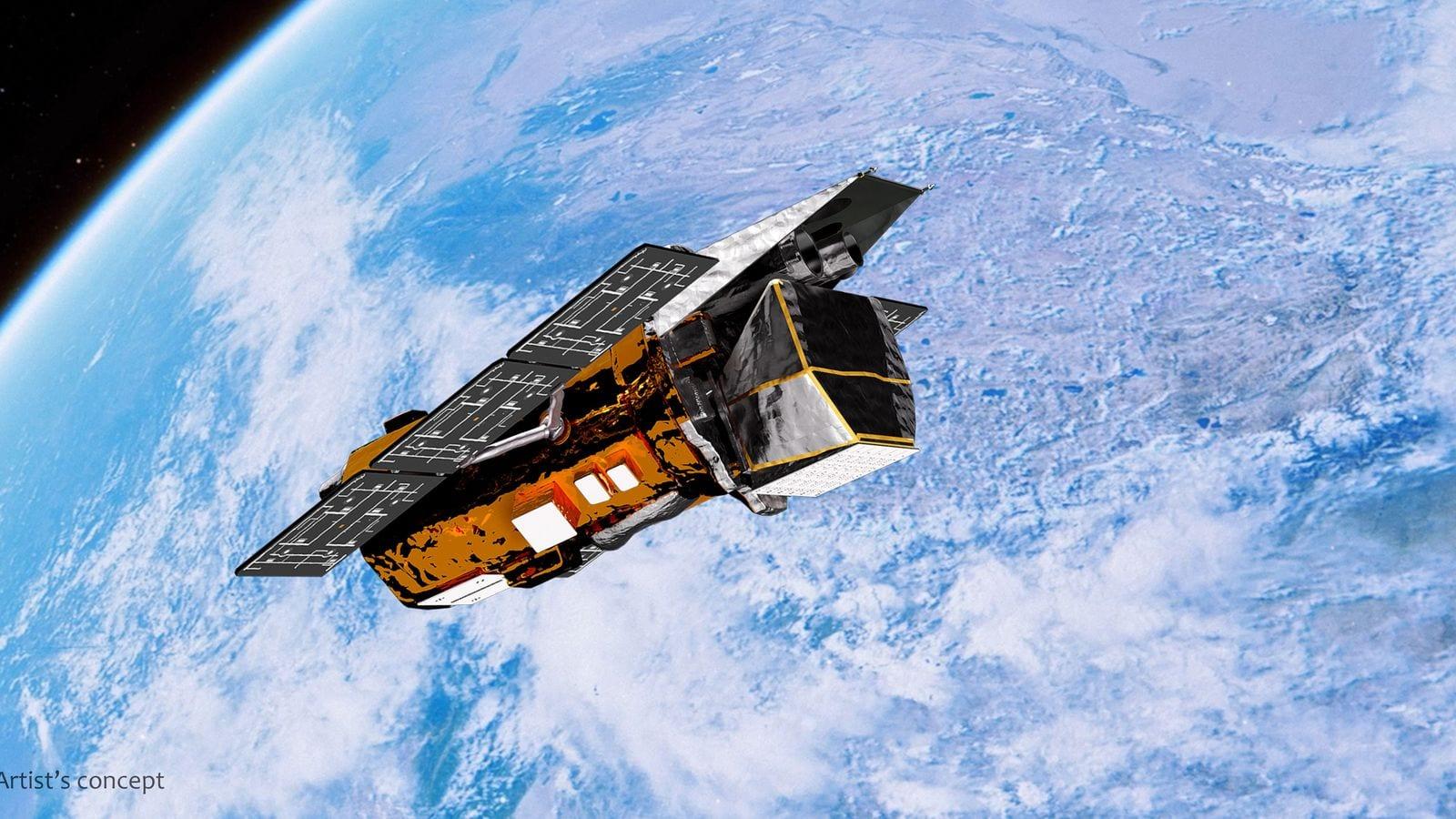
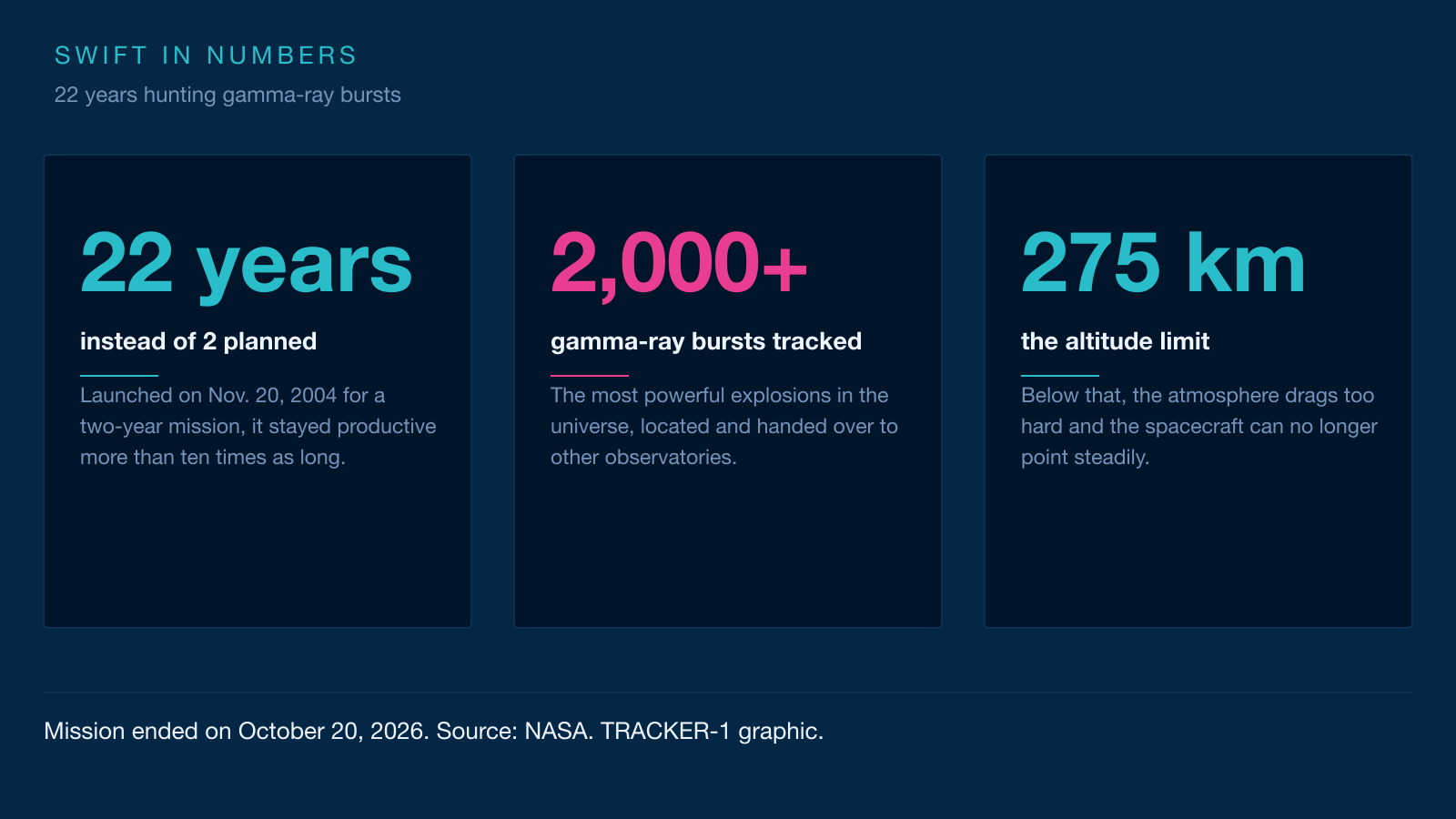
On October 20, 2026, NASA's Swift space telescope made its final observation. Three days later, the agency announced the end of the mission. The spacecraft now orbits at less than 275 kilometers (171 miles), a height where the atmosphere slows it enough that it cannot hold a steady aim on its targets. It should reenter within weeks. Planned for two years, it stayed productive for nearly 22.
One last observation, then the descent
Swift circles the planet in low Earth orbit. A satellite at that height is bathed in the outermost layers of the atmosphere. At 275 kilometers the air is tens of billions of times thinner than at sea level, but molecules are still there. They strike the solar panels and the body of the spacecraft, and every one of those collisions acts as a tiny brake. Swift has no engine to compensate. Its path therefore drops a little further each day.
Picture a hand held out of a car window. You cannot see the air, yet it is there, and it pushes.
For a telescope, the consequence is direct. To photograph a distant galaxy, Swift must stay locked on it for several minutes, sometimes hours, long enough to gather light. Its sensors constantly correct small drifts, much like the balance of a moving bicycle. As drag grows, those corrections stop being enough. The image smears and the measurements blur. That is exactly what NASA describes: the telescope can no longer hold a steady point on its targets.
The critical threshold had been known for months. NASA puts it around 300 kilometers. Below that, operations become difficult and science observations risk stopping. In September, with Swift near 325 kilometers, the agency expected it to cross that line in early or mid-October. By late October the spacecraft had fallen below 275 kilometers. Only the descent is left.
22 years instead of 2: what Swift changed
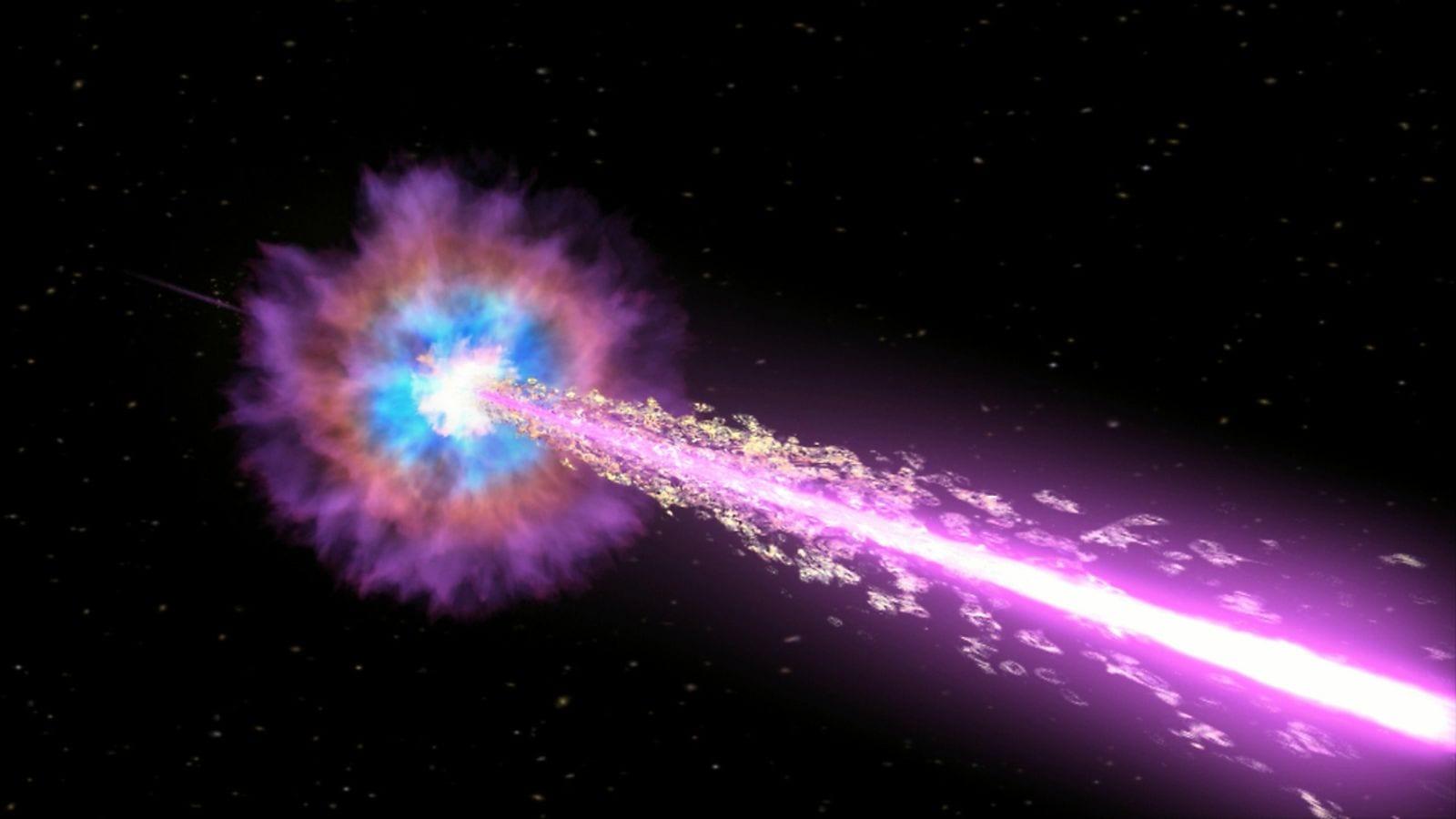
Swift launched on November 20, 2004, and went to work the following month. Its goal fit in one sentence: catch gamma-ray bursts, the most powerful explosions in the universe, on the fly, before they vanish. The name says it all. Swift means fast.
Before it, the problem was the lookout. A gamma-ray burst is a flash of gamma rays, the most energetic radiation in the spectrum. It lasts from a few milliseconds to a few minutes. Astronomers have no time to swing a large telescope around. By the time one is on target, the flash is over. What remains is a fading glow, the afterglow, which itself dies out within hours or days.
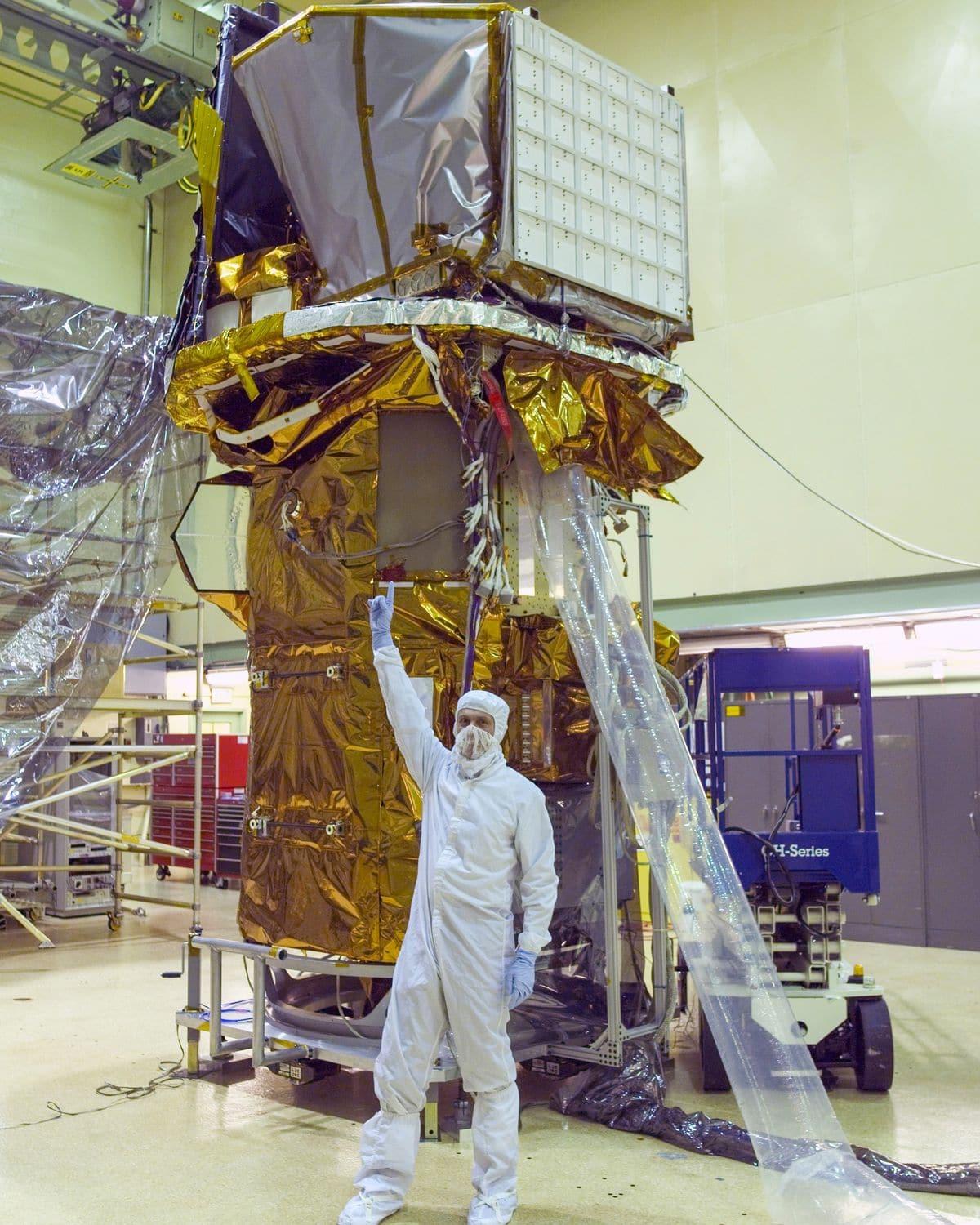
Swift solved that with three instruments and a great deal of automation. Its Burst Alert Telescope (BAT), a gamma-ray detector that takes in 16% of the sky at once, spots the flash. A computer works out its position in seconds, sends it to observatories around the world, then turns the spacecraft. Its two other telescopes, the X-ray Telescope for X-rays (XRT) and the Ultraviolet/Optical Telescope for ultraviolet and visible light (UVOT), are aligned on the same axis. They can therefore image the burst site at the same time.
"Swift was designed as a satellite dedicated to studying gamma-ray bursts, outbursts that came and went so quickly that no one could target them with large telescopes to learn more," says S. Bradley Cenko, the mission's principal investigator at NASA's Goddard Space Flight Center. "Swift needed to detect and locate gamma-ray bursts, communicate their position to other observatories, and then swing its telescopes around to image the burst locations before their afterglows faded out. This typically took Swift about a minute to do."
That speed changed burst physics. In May 2005, Swift caught a record-setting burst, GRB 050509B, lasting 0.03 second. It still had time to collect 11 X-ray photons, the first afterglow ever seen from a "short" burst. Those observations backed a model: short bursts come from the merger of two neutron stars, stellar corpses that pack the Sun's mass into a sphere the size of a city.
A machine built to watch the whole sky
Swift did more than chase bursts. Its scheduler could line up as many as 75 independent targets a day and accept last-minute observing requests from the ground within minutes. Astronomers used it to follow comets, asteroids, active galaxies and stars being torn apart by a black hole.
Across two decades, the haul went far past the contract. More than 2,000 gamma-ray bursts, more than 1,400 supernovae, about 7,000 scientific papers. NASA sums it up this way: built for two years, Swift was productive for more than ten times as long. Neil Gehrels, its first principal investigator, died before the agency renamed the mission after him in 2018.
The rescue that never happened
From 2025 on, NASA saw the end coming. Solar activity had risen, and with it the density of the upper atmosphere. The Sun heats the outer layers, which expand and slow satellites further. Swift, with no propulsion, was descending faster.
So the agency tried something unusual. In September 2025 it hired Katalyst Space, a company in Flagstaff, Arizona, to build a small spacecraft able to reach Swift, grab it and raise its orbit. The schedule was tight: about a year to design, build, test and launch. The vehicle, LINK, lifted off in July 2026 from Kwajalein Atoll in the Marshall Islands on a Pegasus XL rocket.
The plan fell apart. LINK suffered intermittent communication losses and attitude-control problems. In August, NASA and Katalyst scaled the mission back. No capture and no boost, only technology demonstrations, including a test of xenon propulsion and three robotic arms. NASA formally closed its participation on September 3, 2026, and LINK reentered the atmosphere on September 25.
Meanwhile, flight controllers at Penn State, who fly Swift, bought the spacecraft several months of life. From December 2025 they swapped about 25% of science targets for orientations that gave drag less to grab. In February they went to that mode continuously. In April they stopped using the Burst Alert Telescope, which cut power use and allowed the solar panels to face the most favorable direction. Science resumed in August, the gamma-ray telescope was recalibrated on September 18 and automated slewing returned on September 21. The descent resumed as well.
"From the beginning, this was a high-risk, high-reward mission," said Shawn Domagal-Goldman, director of the Astrophysics Division at NASA Headquarters. Without intervention, Swift would have reentered before the end of the year. The attempt did not save the satellite, but it left lessons for future in-orbit servicing missions.
What Swift leaves behind
An archive remains. NASA describes it as nearly 22 years of brightness measurements of every kind of cosmic outburst, spectra across multiple wavelengths and more than 1.5 million images from the Ultraviolet/Optical Telescope. The whole set runs to about 12 terabytes, roughly the content of 600 high-definition movies, and it is public.
A lesson remains too. Swift was the sky's lookout. It raised the alarm, and large pointed telescopes such as Hubble or James Webb did the close-up work. With Swift gone, NASA is looking at how to keep that rapid-response ability, leaning on its existing fleet and on more agile commercial capabilities.
"Swift delivered an incredible, lasting return on investment for the nation, designed for a two-year primary mission but productive for more than 10 times as long," said Shawn Domagal-Goldman. The agency promises its archive will keep feeding discoveries for decades.
Going further
- The key concepts: X-rays, supernovae, the space telescope and low Earth orbit in our glossary.
- The observatories picking up the slack: Hubble, James Webb and Chandra in our catalog.
- Our tools: the interactive sky map, the observing guide and the astrophotography gallery.
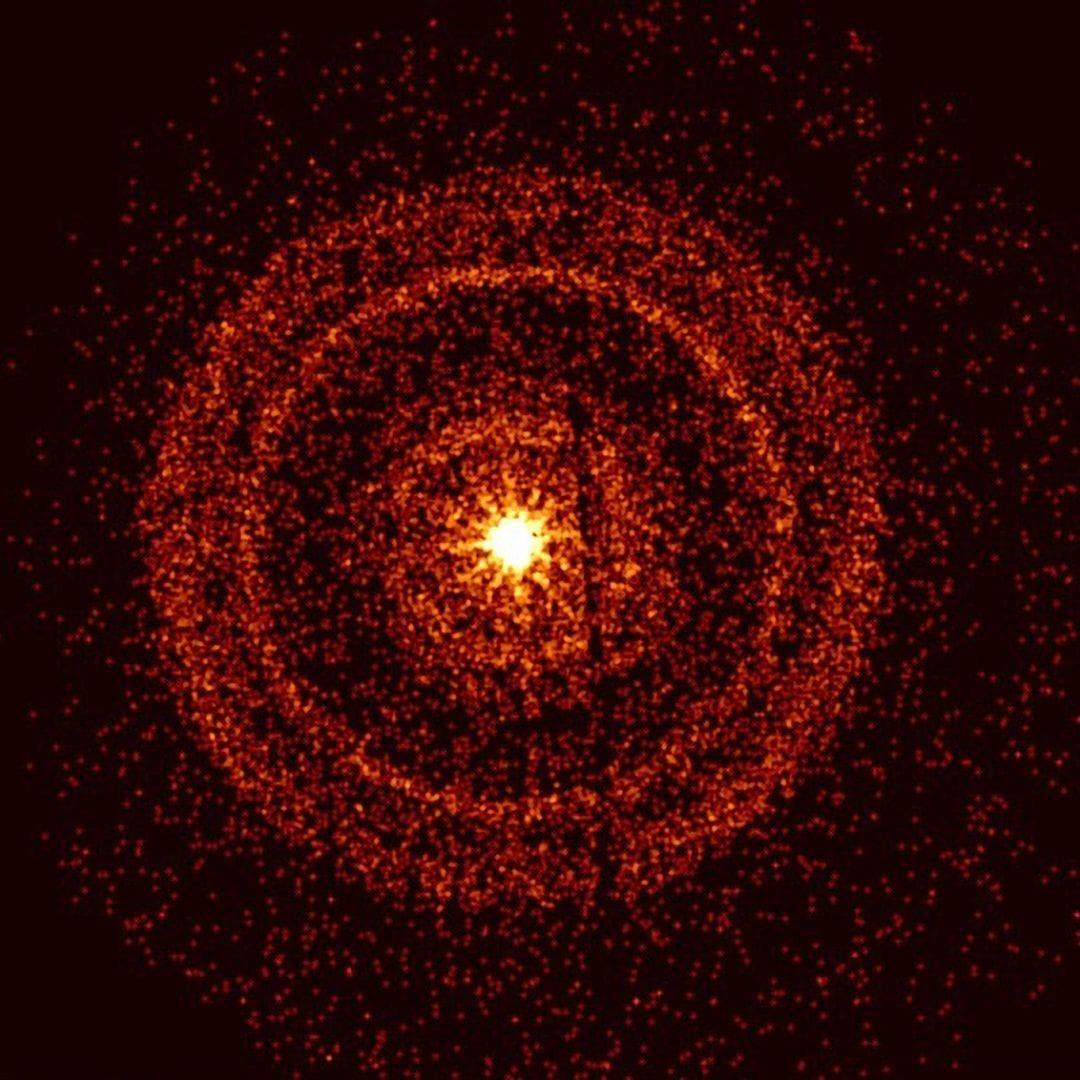
- Official sources: the end of the Swift mission, the lessons from the boost mission, the restart of science observations, the return of the third instrument, the Swift mission page and the GRB 221009A X-ray image.