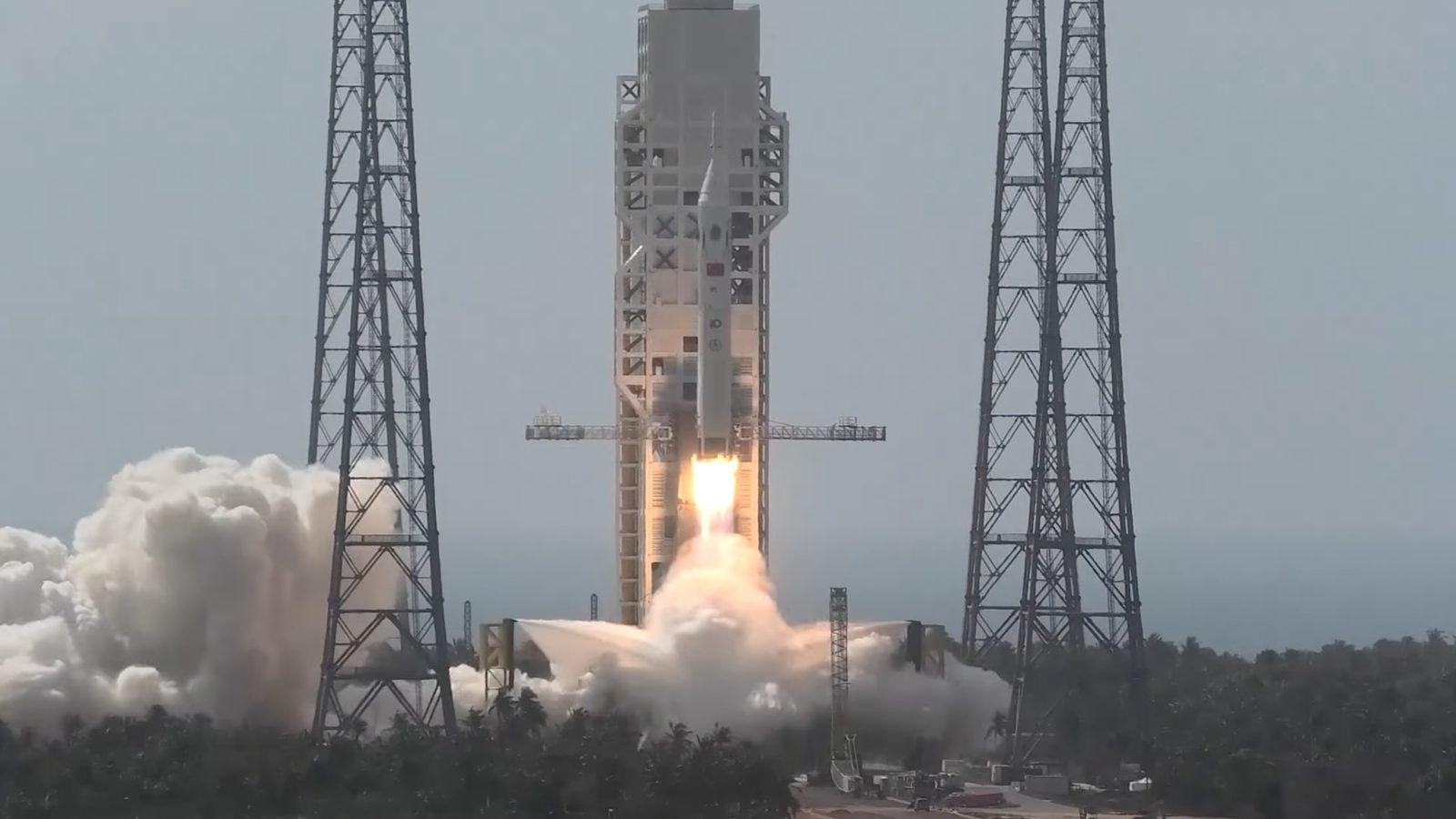
On October 31, 2026, in Beijing, Wang Xiang presented the full plan for China's first crewed trip to the Moon. Two Long March 10 rockets will leave Wenchang separately, one carrying the Mengzhou spacecraft and its crew, the other the Lanyue lander. The two will meet and dock in lunar orbit. The mission will carry three taikonauts, as China calls its astronauts. Two will go down to the surface, and the official target remains a landing before 2030.
Two rockets, one mission
Engineers have a name for this approach: "two launches, lunar orbit rendezvous". A rendezvous is the moment when two spacecraft find each other in orbit and fly in formation. Docking is the step after that, when they touch, lock together and open a sealed tunnel between them. Instead of lifting the whole mission in one go, China sends two vehicles and assembles the expedition around the Moon. Each comes in at about 26 tons.
Wang Xiang is deputy chief designer of China's crewed space program and chief designer of its lunar exploration program. According to the account published by CASC, the state group that builds the country's rockets and spacecraft, the split matches the technical capabilities and infrastructure China already has. It also carries an industrial payoff. Built separately, the spacecraft and the lander can follow a common standard, which should give China a durable family of vehicles instead of a pair of one-off machines.
Picture two removal vans, each loaded with half the furniture, meeting outside the new apartment. The difference is that the meeting point here is a lunar orbit, and both vehicles must line up while already moving at orbital speed.
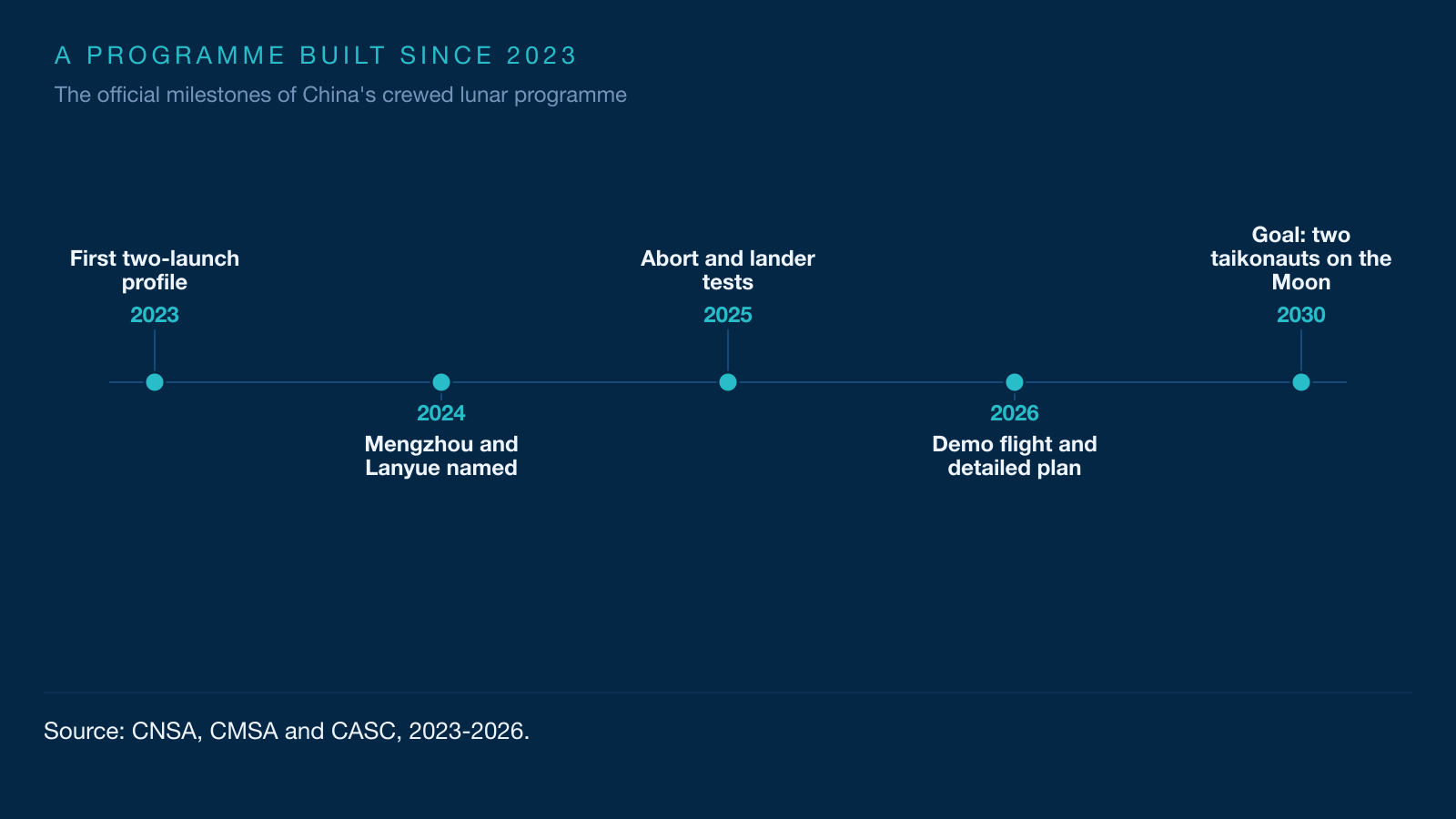
None of this was improvised. The two-launch profile became public on July 12, 2023, at a space forum in Wuhan. What changed on October 31, 2026, is the level of detail: each vehicle's role, how many people go down to the surface, and the industrial schedule. The plan came on the opening day of the 7th Manned Space Symposium in Beijing, before more than 800 experts and researchers.
The mission, step by step
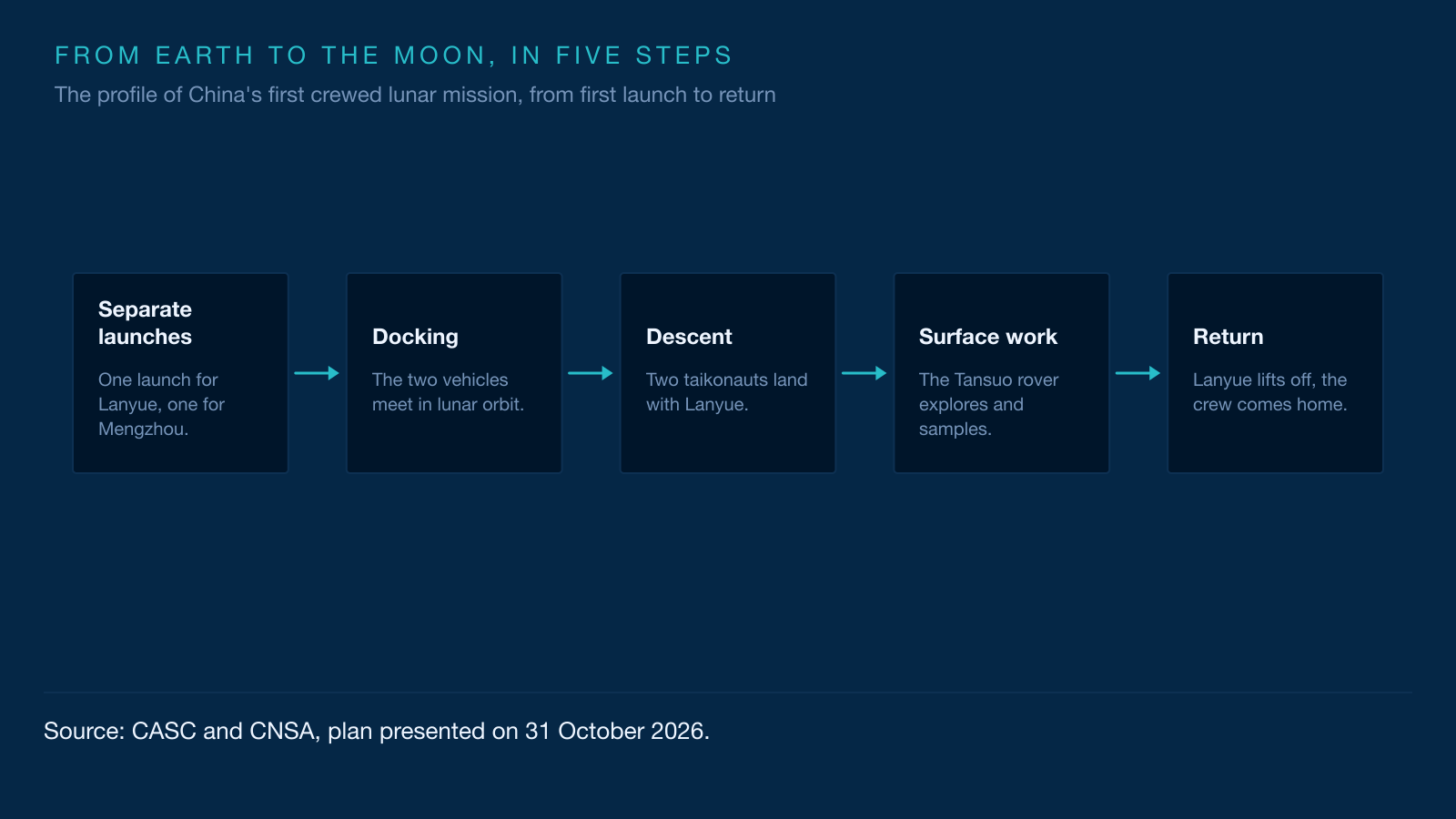
Once both vehicles are on their way, the flight unfolds as a five-beat choreography. Each beat depends on the one before. A single failed docking is enough to call off the descent.
- Two separate launches. One Long March 10 sends Lanyue onto the Earth-Moon transfer orbit, the long curve that carries a spacecraft from Earth's neighborhood out to the Moon. The other launches Mengzhou with its crew aboard. Both lift off from Wenchang Space Launch Center in Hainan province.
- The rendezvous in lunar orbit. Around the Moon, the two vehicles close in on each other and dock. The hatches open and the pair becomes a single sealed volume, where nobody needs a suit. This is the pivot of the whole mission. Without it, nobody can change vehicles.
- The crew transfer. Two of the three taikonauts leave Mengzhou and move into Lanyue. The third stays aboard the spacecraft, in orbit, to support the surface team and prepare the return.
- The descent and the work on the ground. Lanyue undocks, fires its engines and lands in a predefined zone. The two taikonauts step outside, deploy the Tansuo rover and collect samples. The rover weighs about 200 kilograms, carries two people and should let the crew explore within about 10 kilometers of the landing point.
- The return. Lanyue climbs back off the surface, rejoins Mengzhou and docks with it a second time. The samples are transferred to the spacecraft, which undocks from the lander and brings all three taikonauts home.
What the two vehicles look like
Mengzhou is a modular spacecraft, like the Apollo capsules. It combines a crew capsule, a service module that supplies power and propulsion, and an escape system built to pull the capsule clear if a launch goes wrong. Its mass in orbit is about 26 tons, and it can carry three taikonauts. A lunar version, called Mengzhou Y, is planned for this mission.
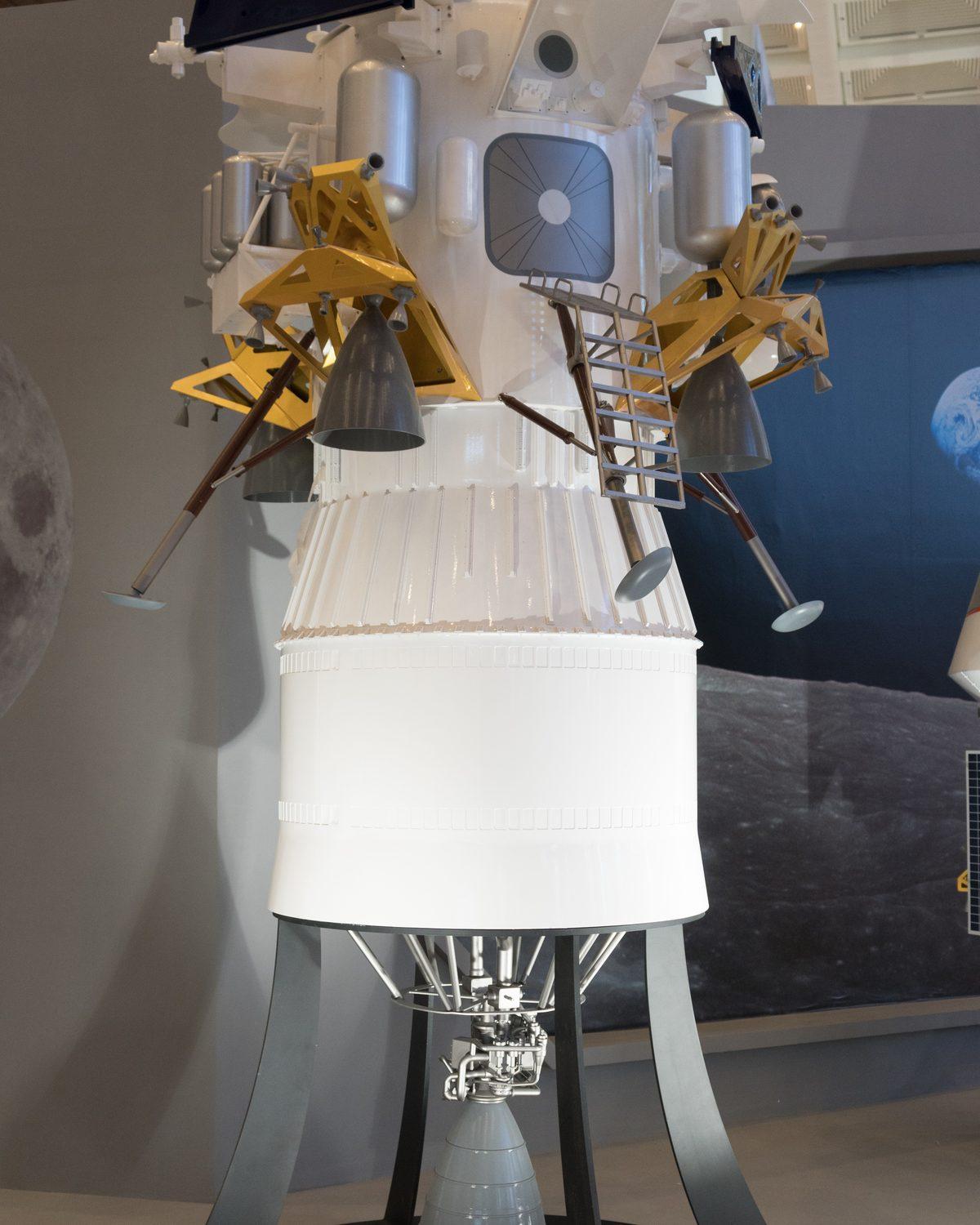
Lanyue, the lander, is the other half of the pair. It weighs about 26 tons as well and is built from two parts: a lunar module, which is the crew cabin, and a propulsion module that brakes the vehicle and sets it down. It carries two people, along with the rover and the science payloads. Once on the ground, it doubles as the crew's shelter, power source and data hub for the stay.
The names were settled in February 2024. Mengzhou means "dream vessel", and Lanyue means "embracing the Moon". The rover is Tansuo, "exploration", and the surface suit is Wangyu, "gazing at the universe". The labels change nothing about the mechanics. They do say something about the ambition behind the program.
What is already tested
The program advances in stages, and the Chinese space agency documents each one. On June 17, 2025, Mengzhou passed a zero-altitude abort test from Jiuquan. The setup is easy to picture. The capsule sits on the pad, and when the launch goes wrong at ignition it has to tear itself clear within seconds. That is the escape system proving it works at the worst possible moment.
On August 6, 2025, Lanyue completed a full landing and takeoff test at the Huailai site in Hebei. The vehicle rehearsed the powered descent, the guidance, the control and the engine cutoff at contact with the ground, then climbed back out. The test covered the entire chain in one shot, which is what makes it a milestone.
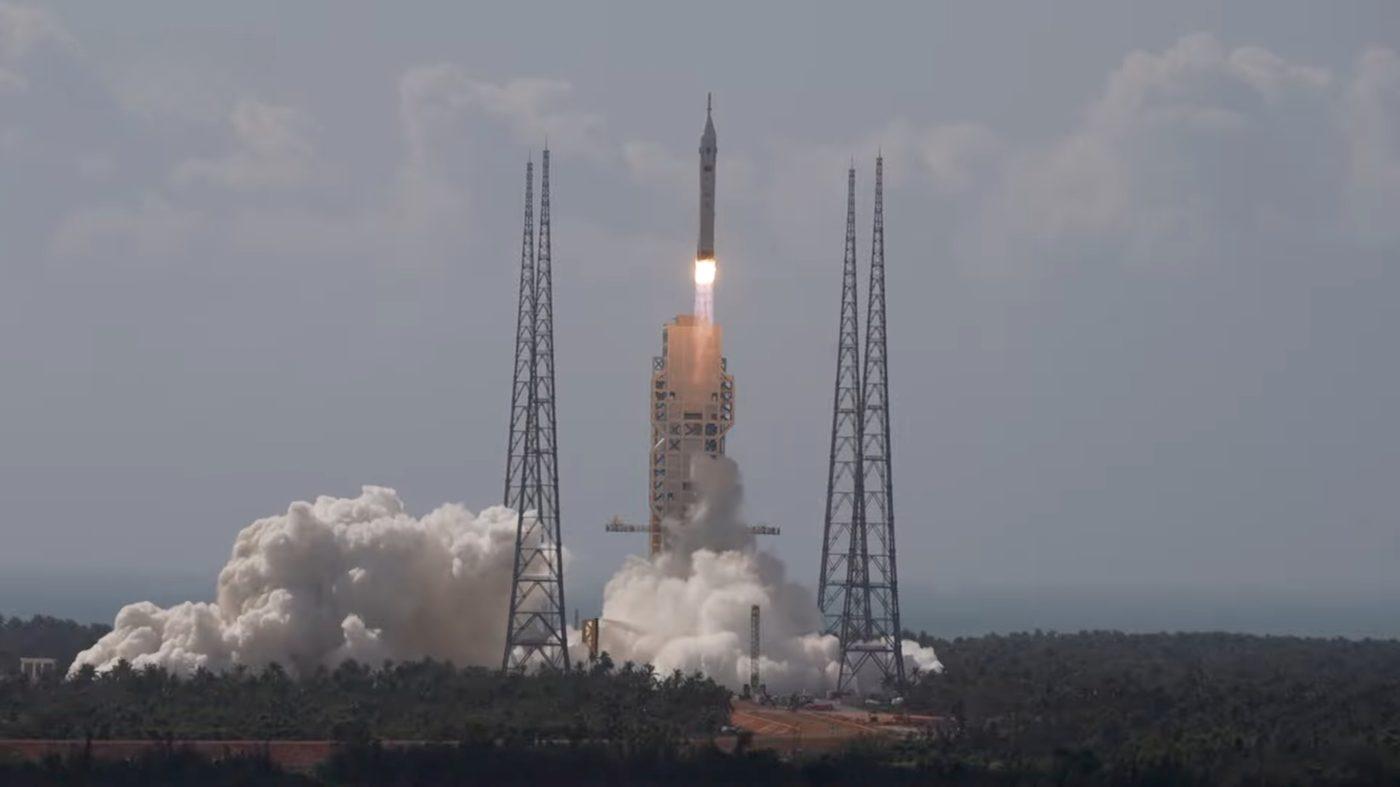
The next step came on February 11, 2026, at Wenchang: a first low-altitude demonstration flight for Long March 10 and a first max-Q abort test for Mengzhou. Max-Q is the instant during the climb when the air presses hardest on the rocket, the way a hand pushes back on a car window as the car speeds up. If a capsule ever has to escape, that is the hardest moment of all.
Wang Xiang keeps returning to one principle. Everything planned on the Moon will first be tested in low Earth orbit, and every crewed mission will be cleared by uncrewed flights beforehand. The Chinese station Tiangong already serves as a rehearsal space for quick rendezvous and spacewalks. Hardware and expertise from the uncrewed Chang'e lunar program are meant to feed the crewed landing as well.
2030 is getting close
The 2030 target does not stand alone. It belongs to a direct race with the United States. In April 2026, Artemis II flew a voyage of about 10 days around the Moon, the first crewed flight for NASA's Orion spacecraft and its SLS rocket (Space Launch System, the agency's heavy launcher). NASA now aims for its first crewed landing under Artemis in 2028. China says before 2030. On paper, the two calendars sit close enough that a single launch slip could flip the order.
None of that guarantees the Chinese calendar will hold. The country still has to fly Long March 10 in its real configuration, with a first flight targeted around 2027, then string together several uncrewed missions before it risks a crew. Official sources give no landing site, no exact mission date and no names for the taikonauts.
Wang Xiang places what comes next on another plane. In his view, lunar exploration should follow a simple order: build knowledge and capability first, move to resource use later. He argues for a long survey phase, run step by step, rather than a race for a flag. Behind the technical demonstration, a long-term strategy is taking shape.
Further reading
- The station that serves as the rehearsal room: Tiangong, where Chinese crews train for quick rendezvous and spacewalks. Its mission page gathers the flight history and the next launches.
- The concepts to keep in mind: the Moon and its glossary entry, the lander, and the agency running the program, CNSA. To find the Moon in tonight's sky, start with our sky map.
- The sources: the CASC release on the plan presented by Wang Xiang, the CMSA account of the 7th Manned Space Symposium, the mission profile published by CNSA in 2023, and NASA's Artemis page.