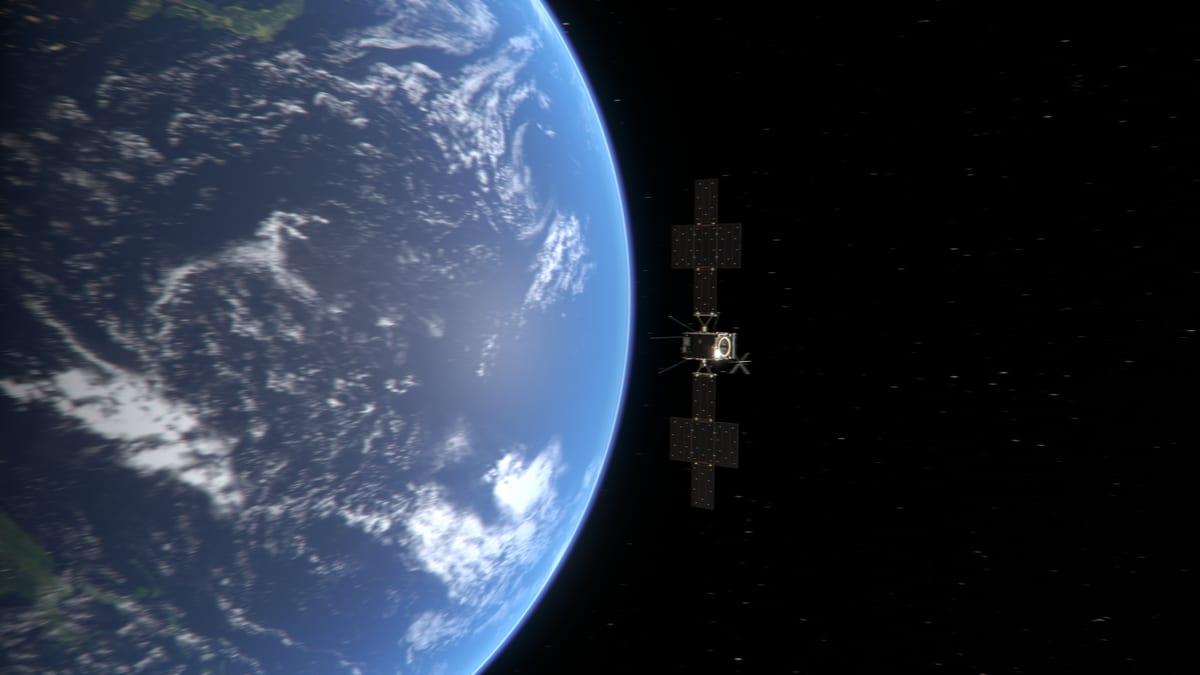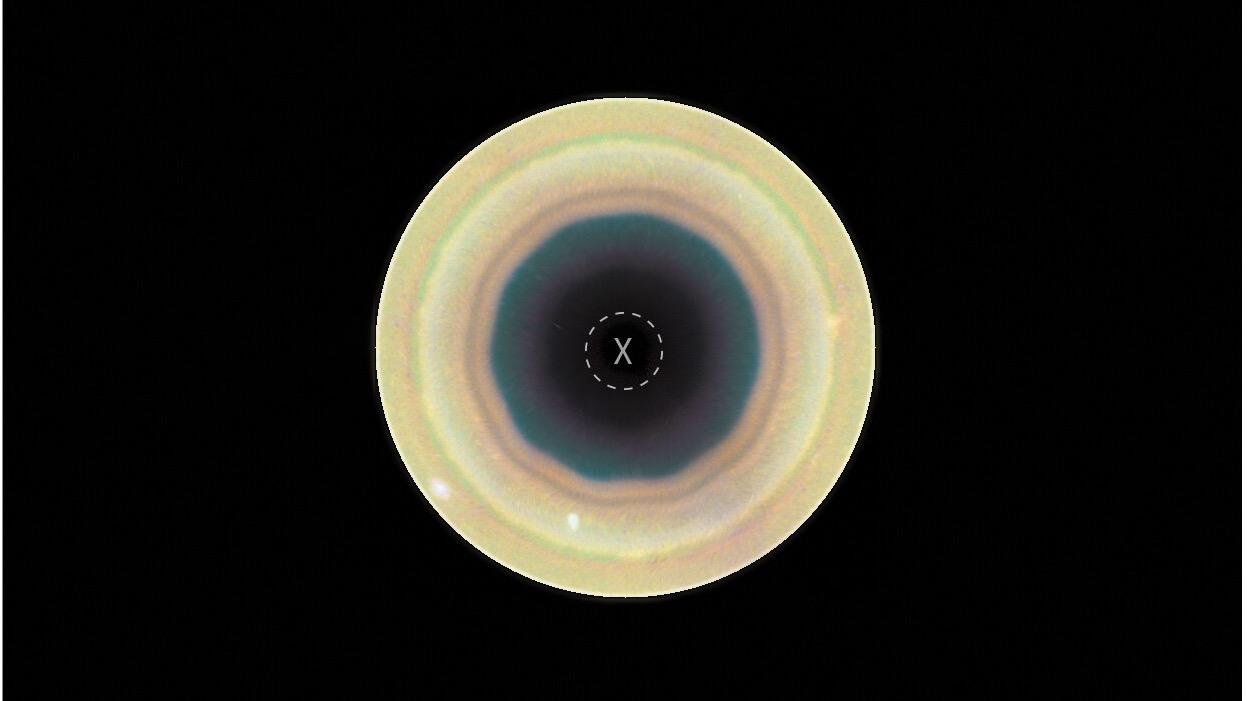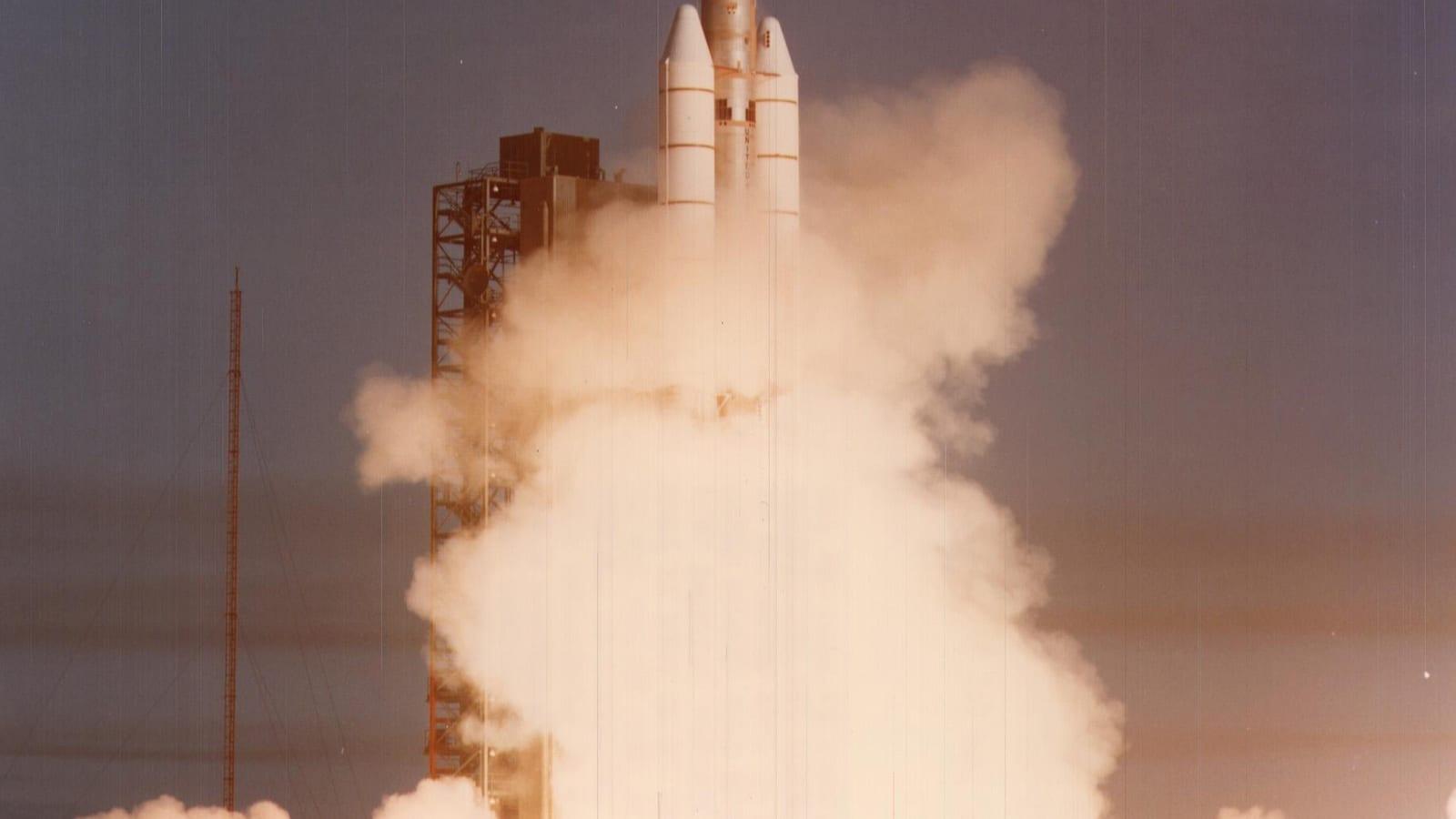
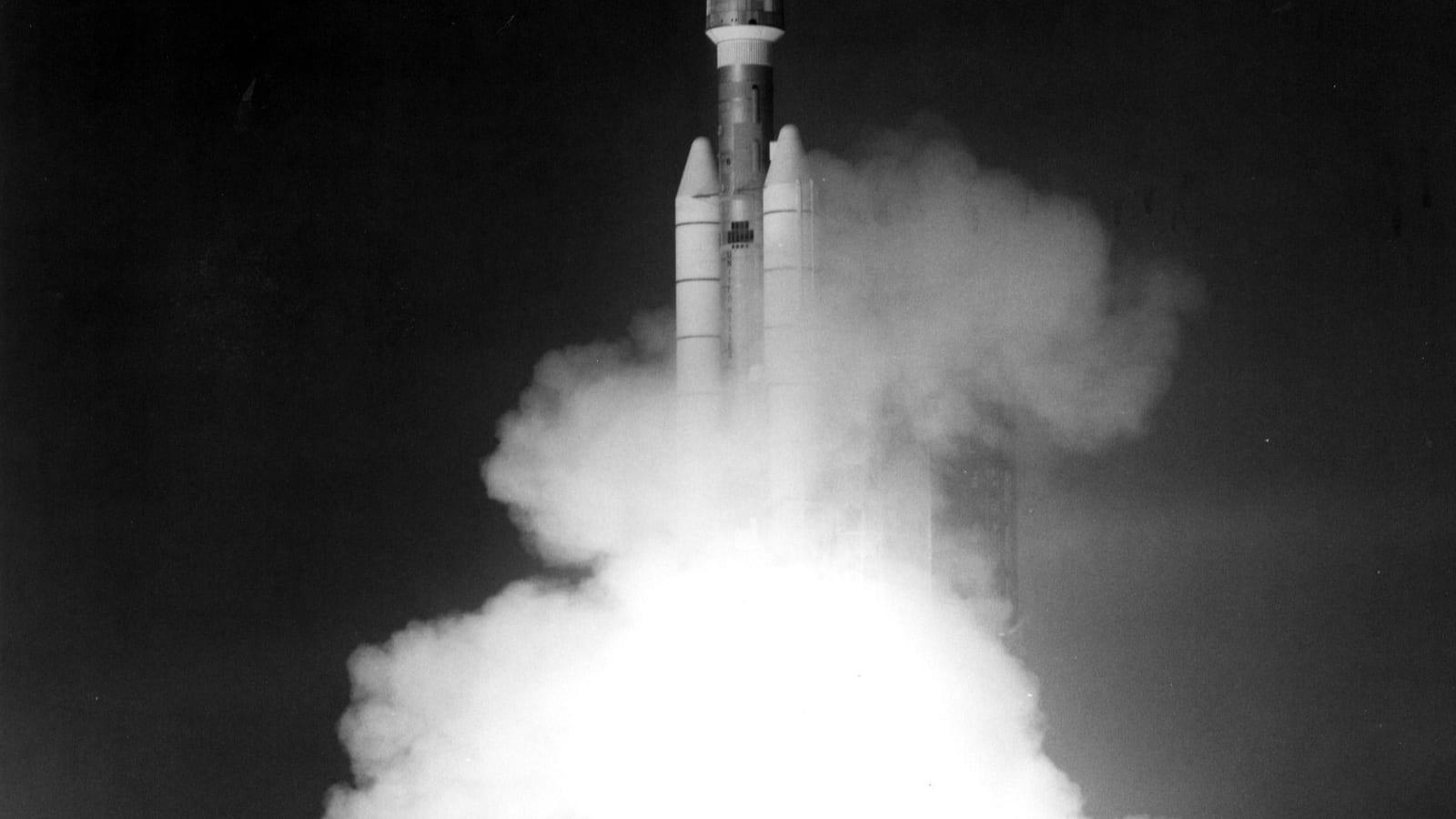
On September 5, 1977, a Titan IIIE-Centaur rocket tore away from Cape Canaveral, Florida. On board sat a 722-kilogram (1,592-pound) probe on a chase: catch up with its twin, launched fifteen days earlier, then race on to Jupiter and Saturn. Forty-nine years later, Voyager 1 drifts more than 15 billion miles (25 billion kilometers) from home, in the space between the stars, and it still sends data back to Earth.
Here is what that trajectory changed, and how a mission built for two flybys has been playing overtime for four decades.
Two twins, two trajectories: the fast lane won
The Voyager program rides on a celestial rendezvous: every 176 years, the four giant planets line up closely enough for a single probe to hop from one to the next, letting gravity do the steering. That launch window opened in the late 1970s. NASA sent two twin probes rather than betting everything on one.
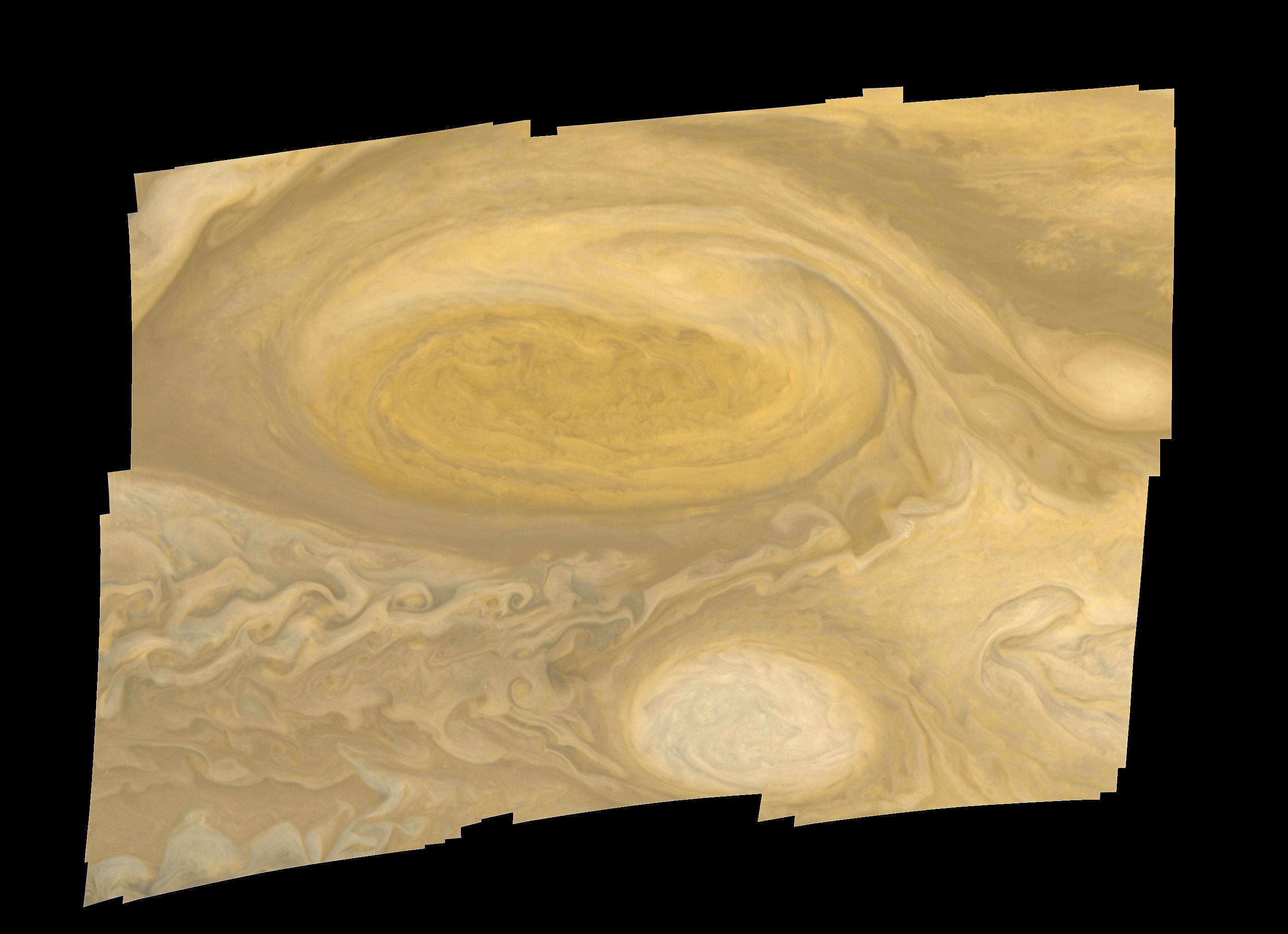
Voyager 2 left first, on August 20, 1977, drawn to the full tour: Jupiter, Saturn, Uranus, Neptune. Voyager 1, launched on September 5, took the fast track to Jupiter. The result is a neat reversal: second off the pad, first on arrival. By December 15, 1977, it had already overtaken Voyager 2, and it reached Jupiter first, on March 5, 1979, passing within 174,000 miles (280,000 kilometers) of the cloud tops.
Along the way, the team spotted a faint ring around Jupiter, invisible from Earth, plus two new moons, Thebe and Metis. At Saturn, on November 12, 1980, five more moons appeared on the images, along with a never-before-seen ring. One choice then set the course: flying past Titan, the moon wrapped in a thick atmosphere, sent Voyager 1 out of the plane of the solar system, heading north. Uranus and Neptune were left to its twin.
1990: the last photo, and the Pale Blue Dot
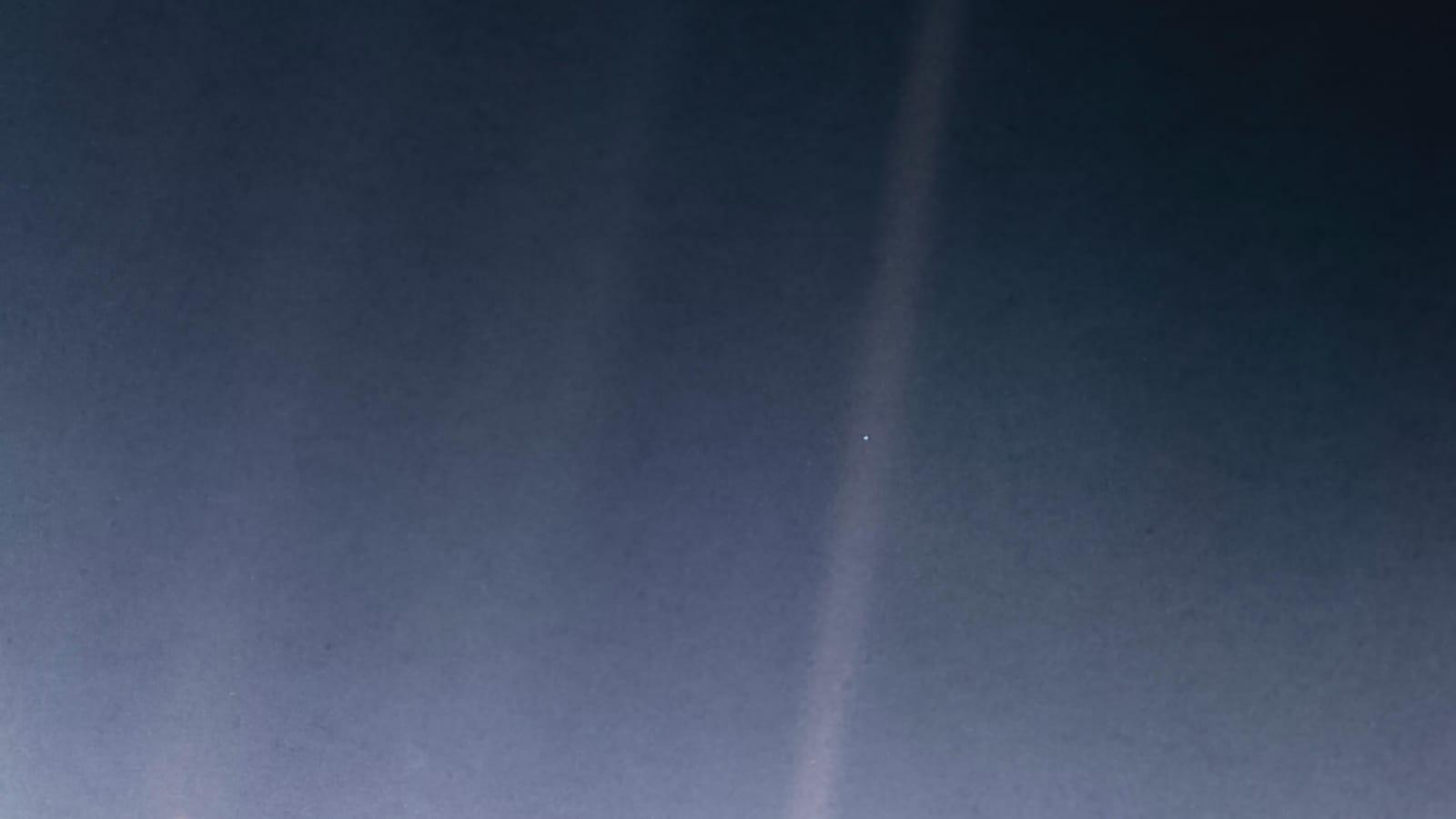
On February 14, 1990, from 3.7 billion miles (6 billion kilometers) from the Sun, Voyager 1 turned back toward Earth one last time. The assignment: photograph our solar system as a mosaic, planet by planet, before turning its instruments outward for good. The Solar System Family Portrait gathers 60 frames with six visible planets. Mercury and Mars were too close to the Sun to show up.
In one of them, Earth fits on a single pixel, a grain of light caught in a beam of sunlight. Carl Sagan, an astronomer on the science team, called it the Pale Blue Dot, "a mote of dust suspended in a sunbeam". A few weeks earlier, on January 1, 1990, the mission had already changed its name: the Voyager Interstellar Mission began.
2012: out of the solar bubble
To grasp that feat, picture the Sun as an inflating balloon. It constantly blows out a stream of charged particles, the solar wind, which fills an immense bubble around our system: the heliosphere. Its outer edge, the heliopause, marks where that breath can no longer push back against the interstellar medium, the thin material filling the space between the stars.
On August 25, 2012, Voyager 1 crossed that boundary, 11 billion miles (18 billion kilometers) from the Sun. The first human-made object to enter interstellar space. The data confirmed it with a delay: the plasma, the gas of charged particles the probe measures, had suddenly cooled and thinned out forty days earlier. Since then, Voyager 1 has been probing that medium, and its twin joined it on the far side in 2018.
49 years on: rowing against the current
Voyager 1 has neither solar panels nor a rechargeable battery. Its electricity comes from three radioisotope thermoelectric generators, nuclear batteries of a sort that convert the heat of plutonium into current. The principle is unforgiving: the cooler the source, the weaker the current. NASA puts the loss at about 4 watts a year, roughly a small bike light dimming on its own.
That decline is being managed coldly. Years ago, the science and engineering teams agreed on the order in which to shut down the spacecraft's systems, to stretch the science without cutting it off abruptly. On April 17, 2026, the turn came for the LECP experiment, which had measured low-energy charged particles since 1977. Seven of the probe's ten instruments are now switched off. Two science instruments remain on duty, dedicated to fields and particles, the core of the interstellar program.
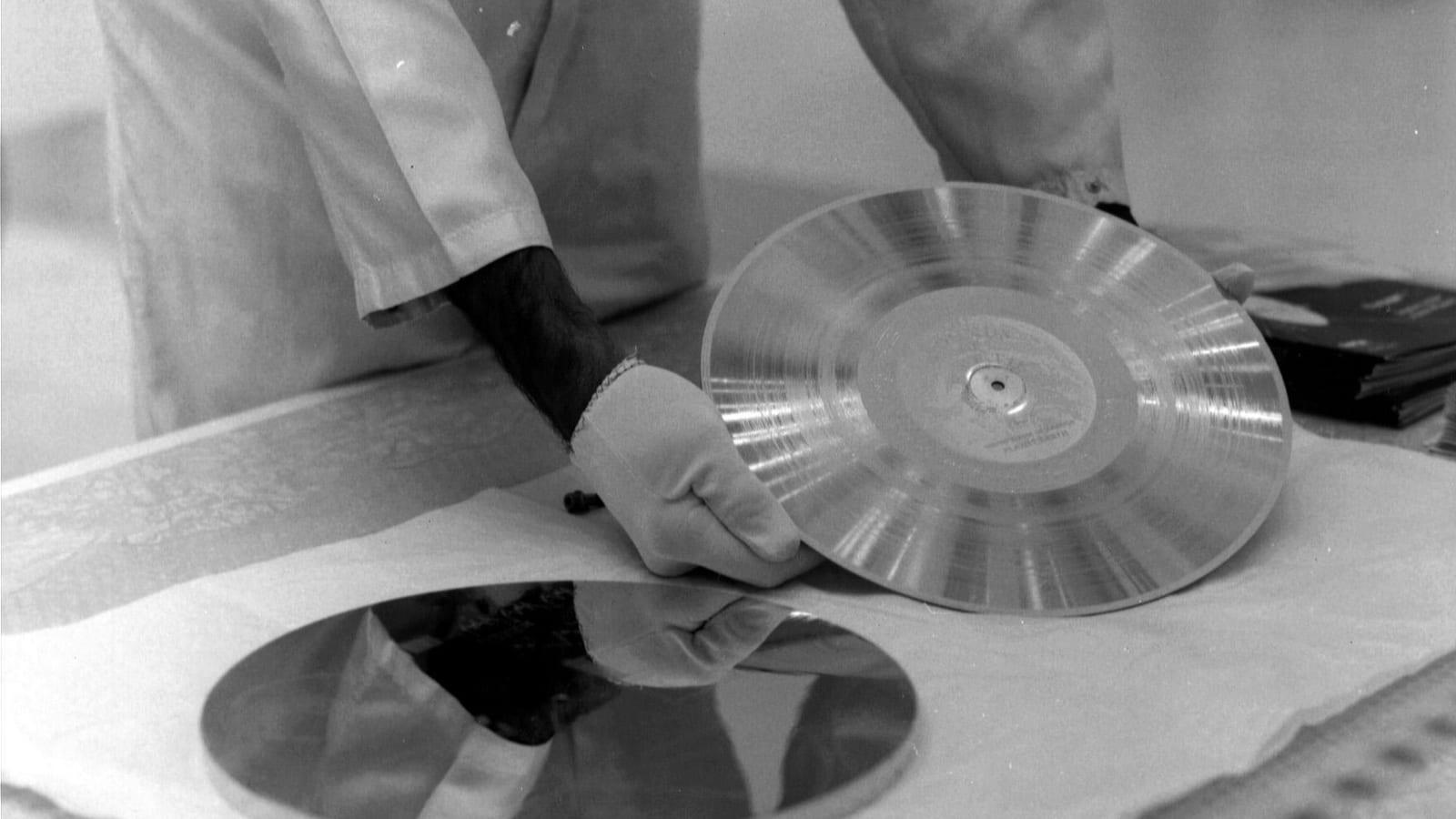
The spacecraft itself must still hold out. NASA expects it to stay within reach of the Deep Space Network, the antenna network that listens to the cosmos, until about 2036. That is where the mission will end, not the journey: in the year 40272, by NASA's calculations, Voyager 1 will pass within 1.7 light-years, the distance light covers in a year, of a dim star in Ursa Minor, AC+79 3888. Its Golden Record, a keepsake addressed to any extraterrestrials out there, will still be waiting for a listener.
Going further
- The mission page of Voyager 1, the farthest human-made object, tracked live on the site dashboard.
- The key concepts to follow the story: space probes and the solar system.
- To see Jupiter and Saturn with your own eyes, the interactive sky map and the observing guide tell you when and where to look. The astrophotography gallery shows what a well-equipped amateur can capture of the giants.
- The official sources: NASA's Voyager 1 mission page, the JPL release of April 17, 2026 and the Voyager blog for month-by-month updates.