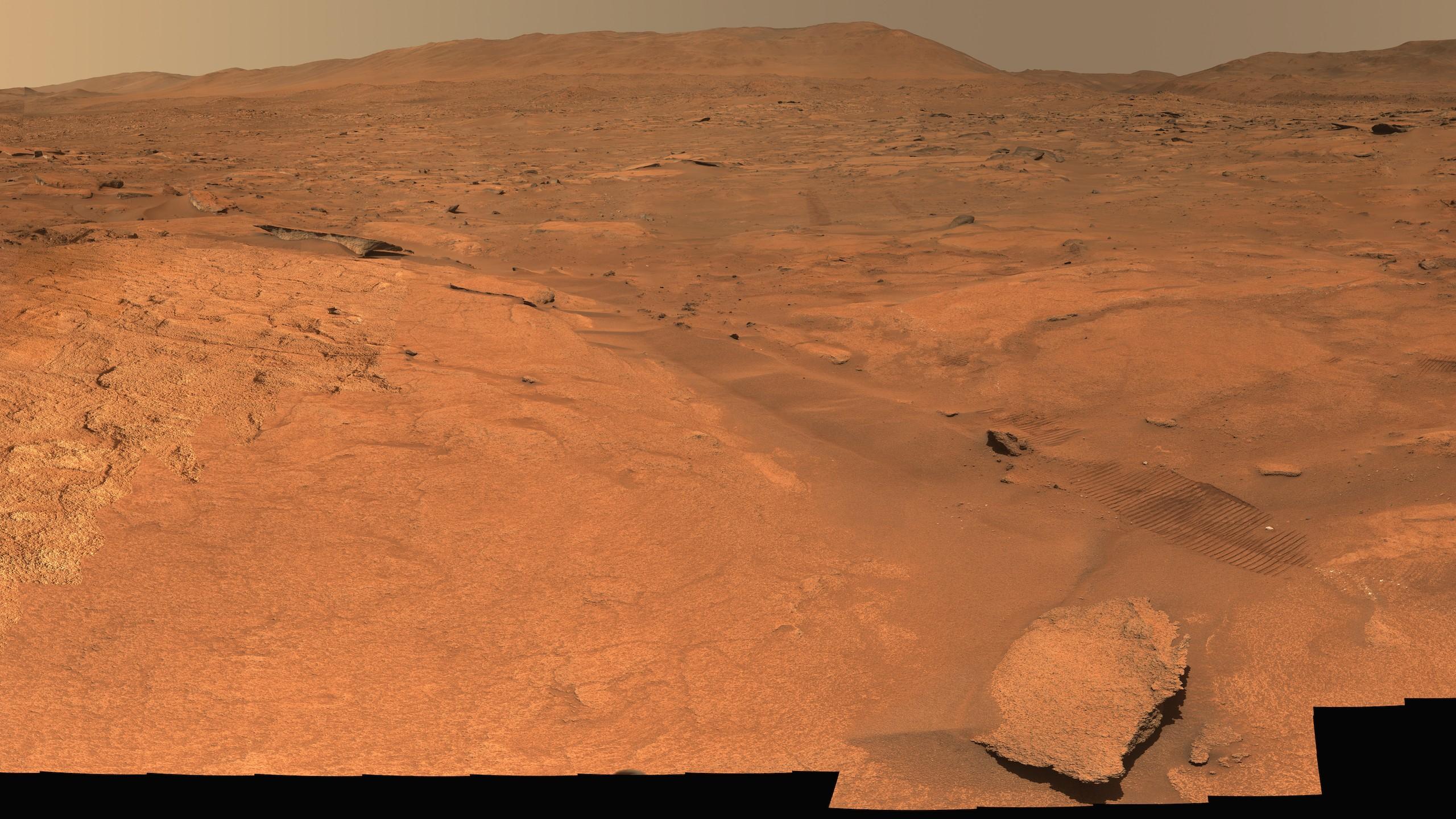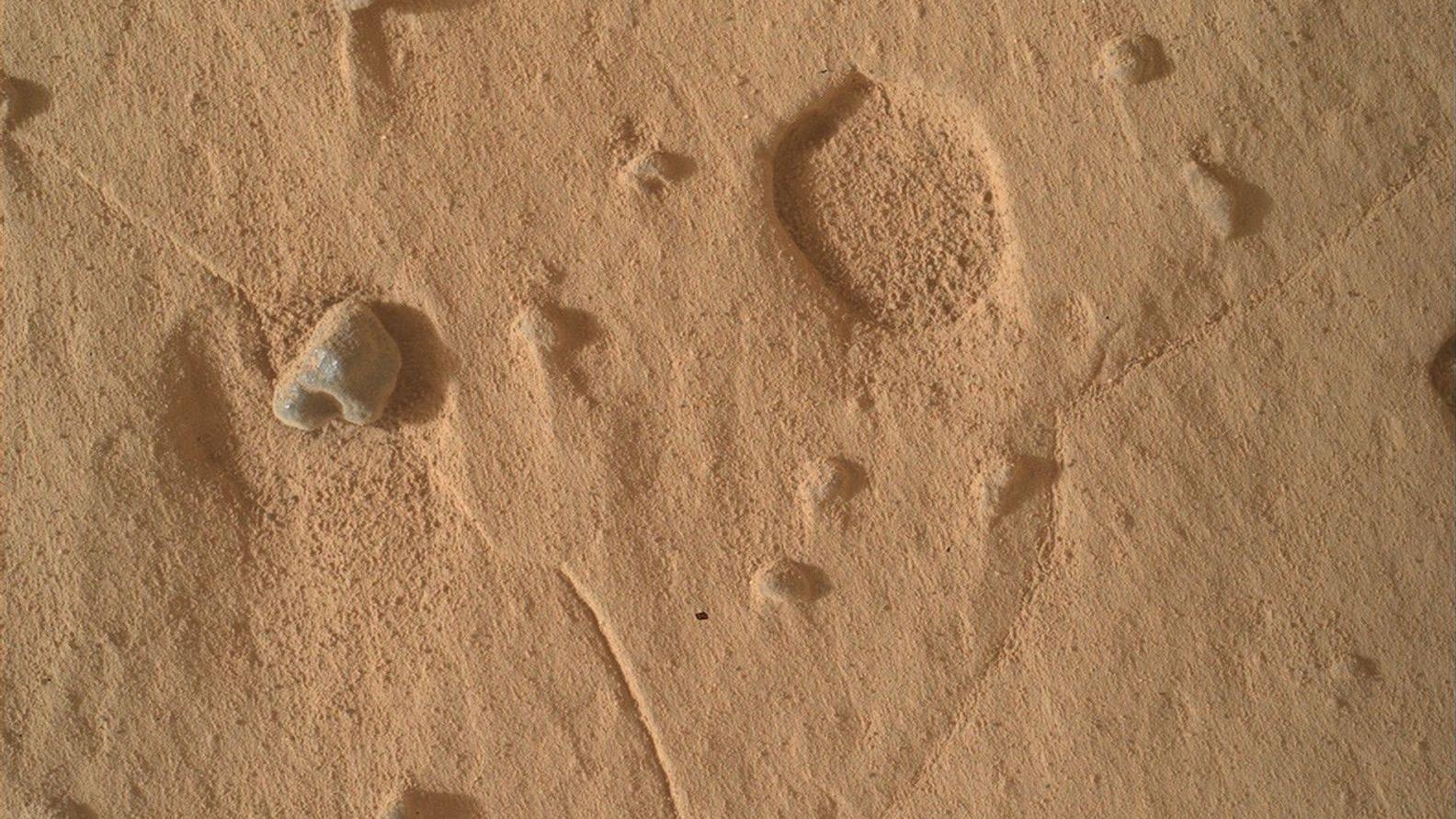
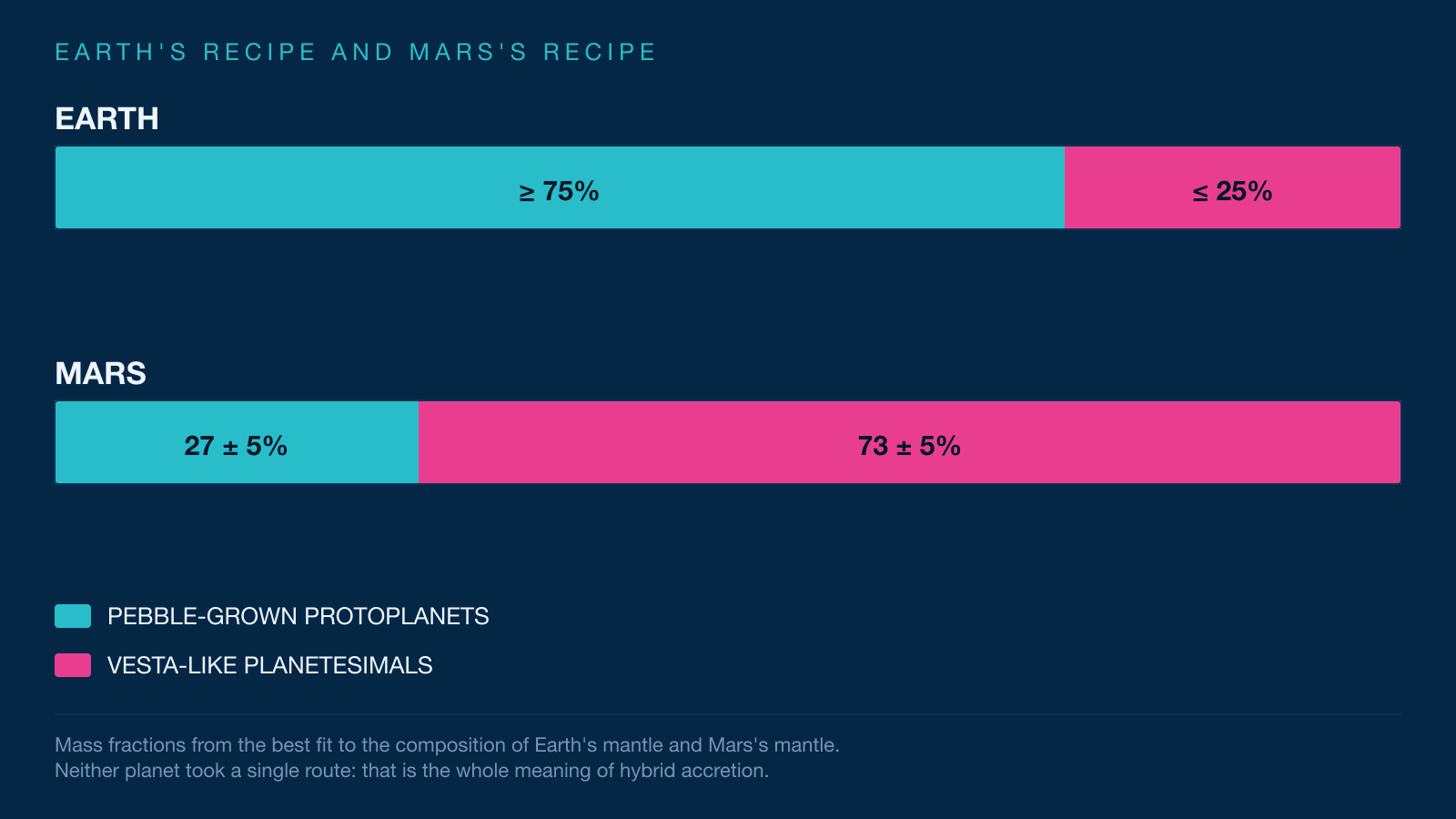
Earth and Mars are the two rocky planets we know best, and it turns out they were not assembled the same way. By studying what each one lost as volatile elements, the ingredients that evaporate easily, a team at the Center for Star and Planet Formation at the University of Copenhagen concludes that our planet owes at least 75% of its mass to protoplanets grown from small grains, while Mars owes 73% of its own to large rocky bodies. The study appears on 25 September 2026 in Nature Astronomy.
The missing elements in rocky planets
It all starts with a gap nobody had managed to explain. Take the composition of the Sun, then compare it with that of Earth's mantle, the rocky layer wrapped around the core. Elements are missing. Sodium, potassium, zinc and lithium are not there in the expected amounts. They are present, but reduced, as if part of the stock had been taken away before the planet closed up.
This is not a terrestrial oddity. Mars's mantle shows the same deficit, with different proportions. And astronomers find that signature elsewhere, in the atmospheres of white dwarfs that swallowed rocky debris, or around twin stars that appear to have ingested a planet. The process is therefore common, perhaps universal, and it has a name: devolatilization.
The open question was when and how it happened. Three broad families of explanations shared the field. The first invoked a very hot primordial disk, in which planets formed directly from incompletely condensed gas. The second called on the melting and evaporation of small bodies heated by radioactivity or by collisions. The third blamed giant impacts, those monstrous collisions between protoplanets.
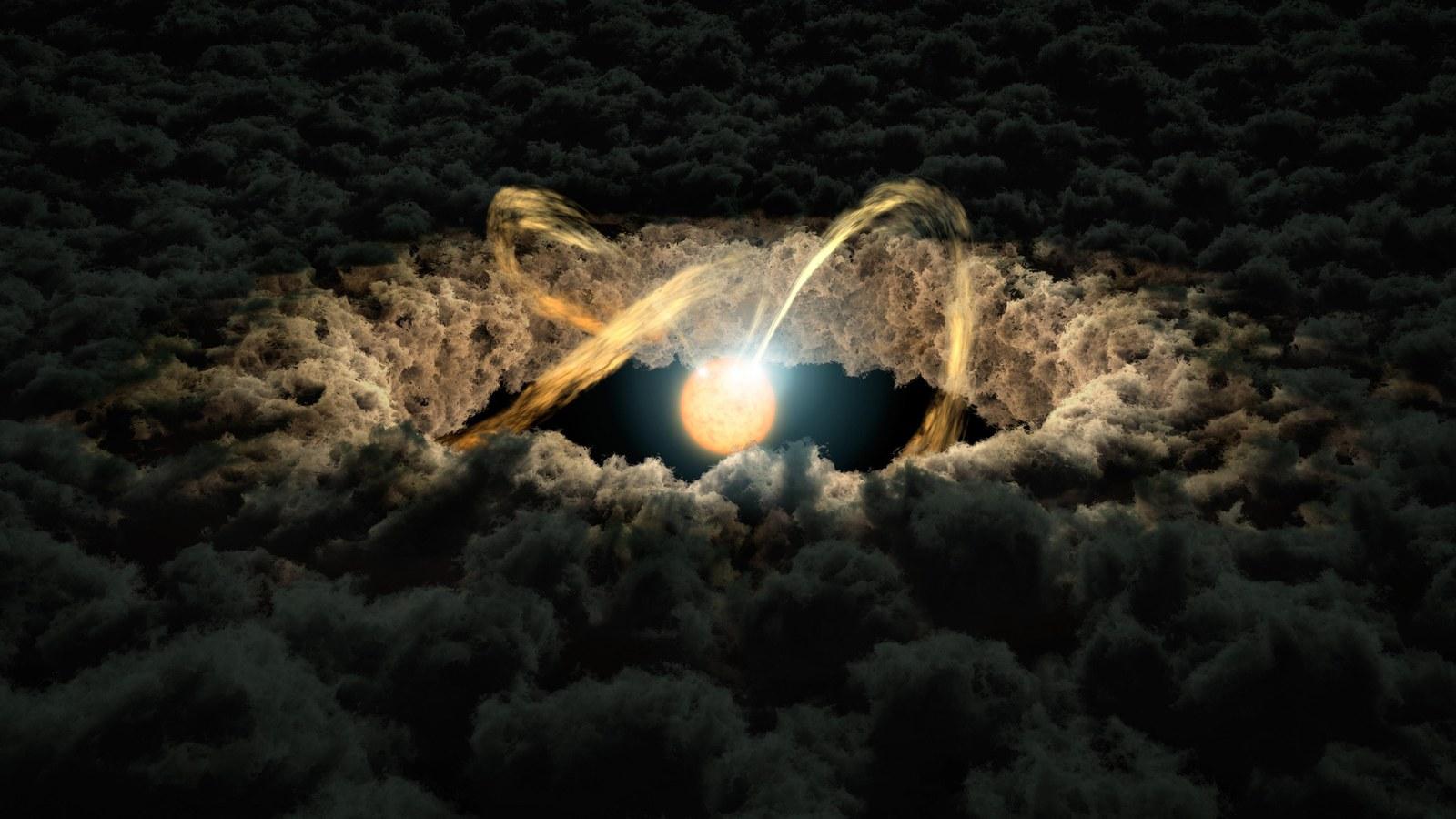
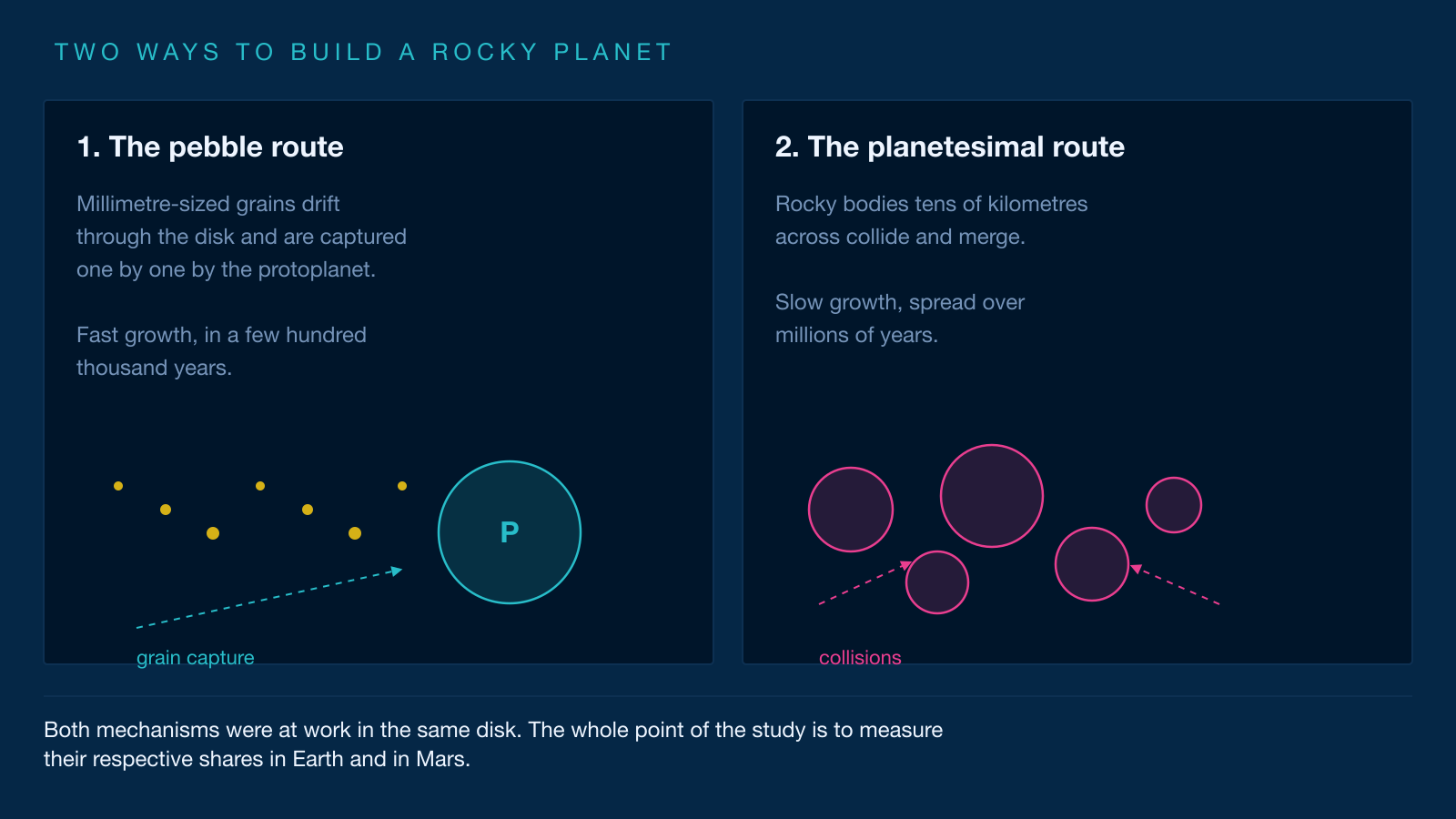
Haiyang Wang and Anders Johansen, the two lead authors, propose a fourth route, and that is what makes the work new. When a body grows inside a protoplanetary disk, it eventually captures the grains that drift within reach. Those grains fall toward it, but before landing they cross the thick hydrogen and helium atmosphere the young planet has gathered. That atmosphere is scorching. Volatile elements in the grains melt there, rise through convection and escape back into the disk. The planet, in a sense, spits out part of what it swallows.
The method: reading history in chemistry
To settle the question, the team made a methodological bet. If each growth route leaves a different signature in the volatile elements, then reading a planet's composition should be enough to tell how it was built. That requires a reliable measurement of the signature, and something to compare it with.
The team therefore gathered, for thirteen elements, the composition of Earth's mantle and of Mars's mantle, drawn from decades of geochemical measurements. They then sorted those elements by volatility, from the toughest to the most fleeting, and tracked how their abundance drops. As a reference they used the composition of the Sun, a record of the gas and dust mixture everything started from.
Then comes the statistical part. The team simulated the formation of Earth and Mars by mixing three ingredients: one protoplanet grown from pebbles, one large impactor also grown from pebbles, and a population of planetesimals with a composition close to Vesta's. Every possible mixture yields a predictable composition. The technique known as Bayesian inference, which confronts thousands of combinations with the data, keeps the ones that fit best and measures the uncertainty, singled out the most probable proportions.
Vesta, the witness that settles it
One point deserves a pause, because it explains why the result is so clear-cut. The researchers needed to know what the planetesimal material looked like. Yet that material had itself lost its volatile elements before joining Earth or Mars. Which recipe should they adopt?
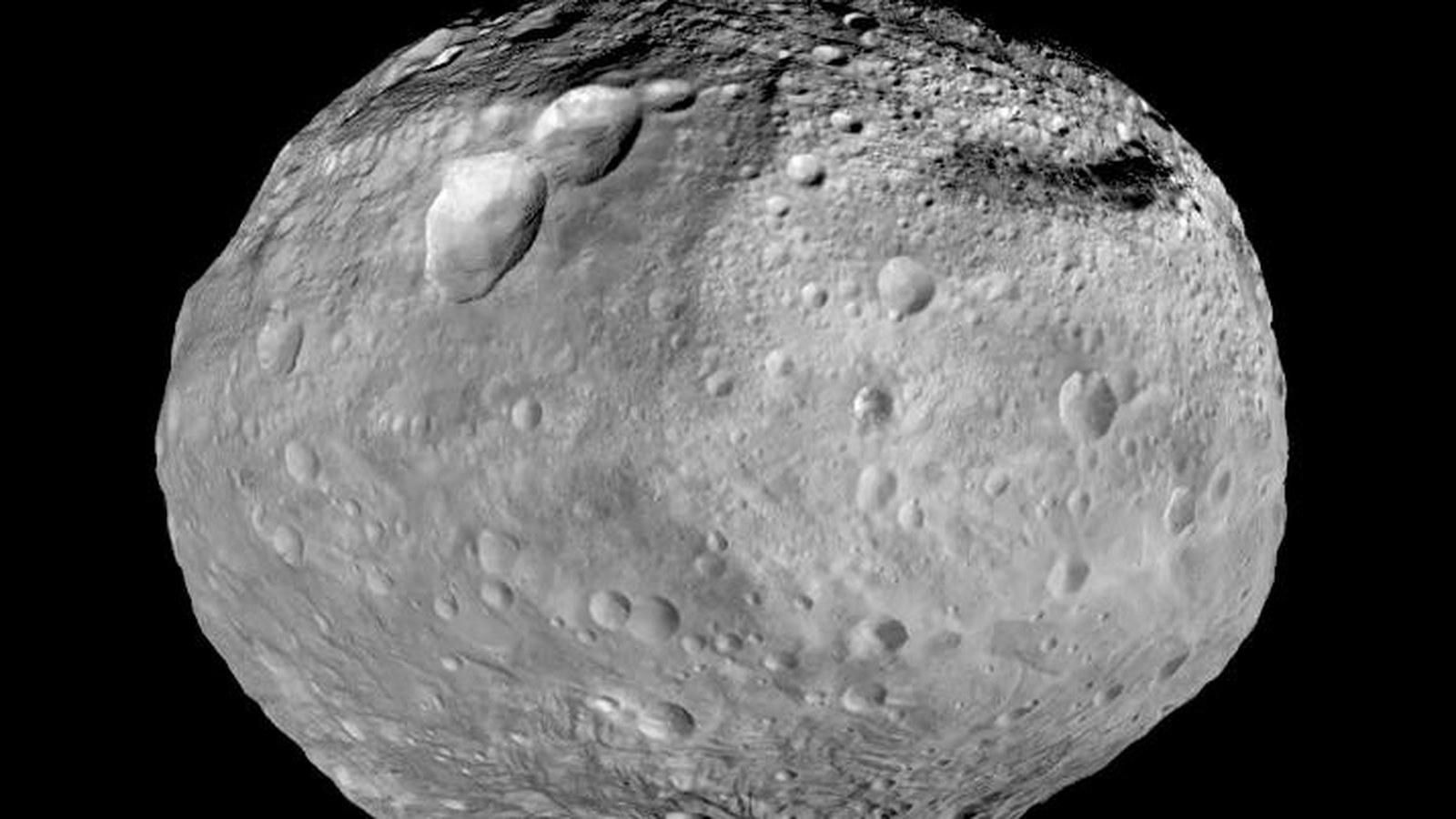
They chose Vesta. This asteroid, 525 kilometres across, is the only body of that size we have been able to examine up close, thanks to NASA's Dawn spacecraft, and its fragments reach us in abundance: a good share of the meteorites found on Earth come from it. Those rocks show a marked depletion in volatile elements, a signature geochemists know well.
By adopting Vesta's composition as a reference, while acknowledging that the choice remains an assumption, the team obtains a sharp fit. It also tested a looser variant, letting the model pick the planetesimal composition on its own. The planetesimal contribution can then climb to 40% for Earth, but the broad conclusion does not move: two routes worked together.
Why Earth had time, and Mars did not
One question remains: why did two such close neighbours take such different paths? The team offers an explanation rooted in the crowdedness of their neighbourhood.
A protoplanet captures pebbles efficiently only if the disk supplies a steady stream of them and if its orbit stays calm. A large body growing nearby can instead stir that orbit and deflect the flow of grains. Earth developed in an environment that gave it time to capture a flood of pebbles and reach a large mass. Mars, being smaller, seems to have endured that stirring, which slowed its pebble capture and left it dependent on collisions with large rocky bodies.
That reading fits an independent clue that was already known: Mars built its core quickly, within a few million years, which matches an assembly dominated by rocky bodies that had already formed.
The model also sheds light on the elements essential to life. During the pebble phase, carbon, hydrogen, nitrogen and sulfur are heavily evaporated too, even if the protoplanet grows just beyond the line where water ice condenses. Water and organic molecules on a rocky planet therefore arrive later, carried by late pebbles or by impacts from small bodies, rather than during the main growth phase.
What it changes
This is why the result reaches beyond our two neighbours. For thirty years, astronomers have been discovering thousands of rocky planets around other stars, and many of them turn out to be depleted in volatile elements, just like Earth and Mars. The question was whether that poverty reflected a property of their star or a step in their construction.
The work answers: it is a step in the construction. A rocky planet's composition becomes a clue to its history, a readable imprint of the way it grew. For exoplanets, whose surfaces we will never see up close, that is precious information: it links what telescopes measure, mass and radius, to a specific formation scenario.
The method also opens a research avenue. The authors release their data and their code, so other teams can apply the same reasoning to planets in distant systems and compare recipes. One thing is certain: the rocky planet family is no uniform crowd, and Earth is just one recipe among many.
Going further
- The basics: the Solar System, Mars, asteroids and exoplanets in our glossary.
- The sky above you: track Mars through the months with the interactive sky map, or plan an observing session with our guide.
- The sources: the scientific paper Wang et al., Nature Astronomy (2026), open access, and its preprint on arXiv.