On November 4, 2026, an international team led by Alexander Trokhimovskiy reported in Science Advances the detection of hydrogen chloride above the volcanic fissures of Alba Mons, on Mars. The gas showed up in early northern summer, at a season when it should have been gone, and the authors read it as a sign of magma still warm beneath the surface. Mars, they suggest, is not geologically dead deep inside, only sleeping. Here is what ESA's ExoMars orbiter saw, and what it does not prove.
A gas that should not have been there
Hydrogen chloride is not new to Mars. The ExoMars Trace Gas Orbiter, the European Space Agency's orbiter that reads the chemistry of the air, first reported the gas back in 2021. On Earth, hydrogen chloride is commonly found escaping from magmatic vents, so researchers asked whether the same was happening on Mars.
The instrument behind the detection is the Atmospheric Chemistry Suite, a set of infrared spectrometers. It works on a simple idea: every molecule absorbs light at its own set of wavelengths, a spectral fingerprint. Measure how much light goes missing at the fingerprint of hydrogen chloride, and you can count the molecules.
The gas also keeps a calendar. It varies with the seasons on Mars, reaching its maximum in northern hemisphere winter and then mostly disappearing in summer. Most of that swing appears to follow the planet's dust and water cycles, the two great weather machines that shift dust and vapour around the atmosphere.
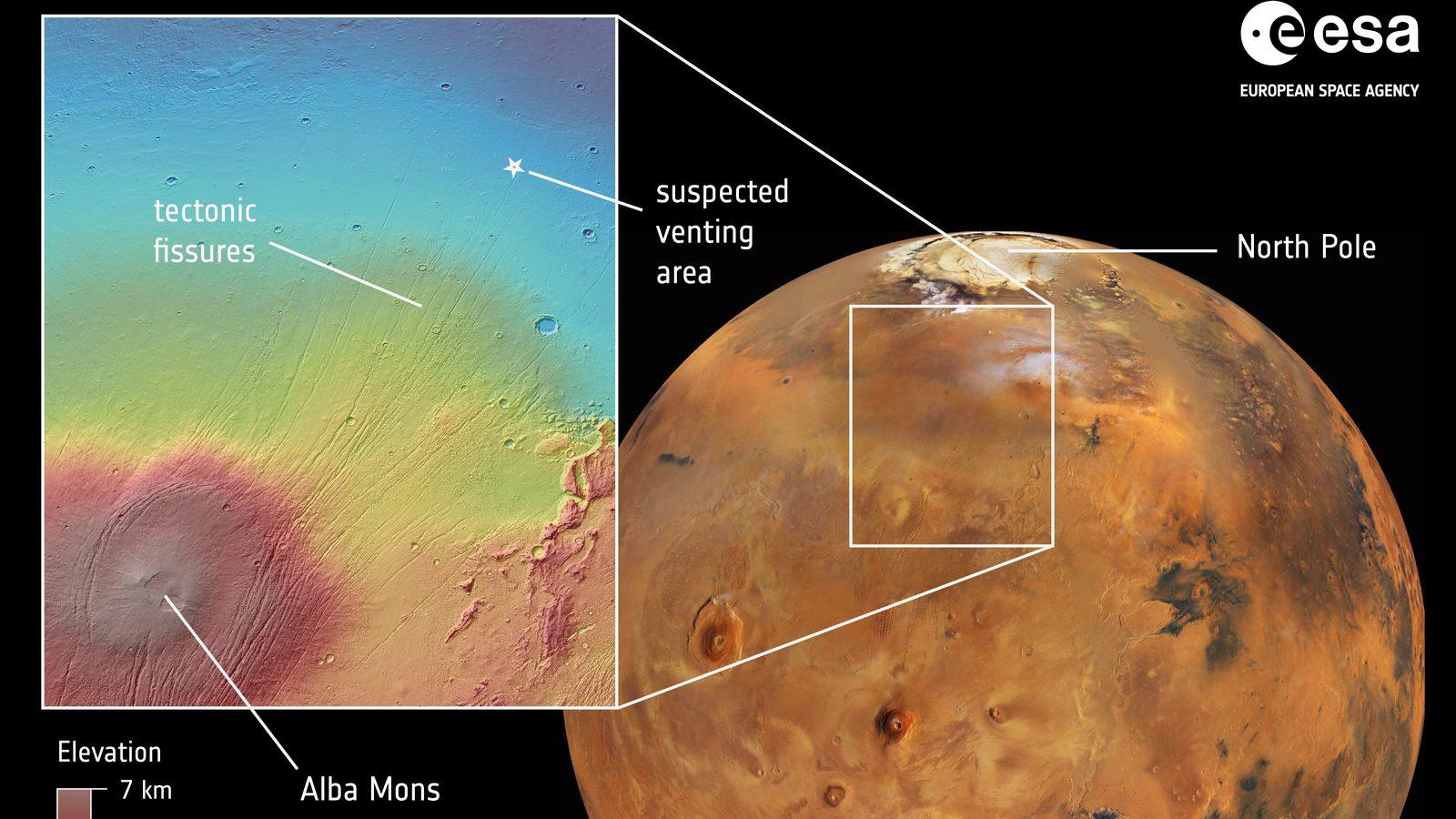
Then came the exception. In early northern summer, the orbiter picked up spikes of hydrogen chloride where the gas should have been absent, always in the same season and always at the same place: above the volcanic fissures on the flanks of Alba Mons.
The paper reports "HCl detections during the cold aphelion season that are isolated in the Alba Mons region."
Mars does not orbit the Sun in a perfect circle. At aphelion it sits at the farthest point of its path, in the cold part of its year. At perihelion it comes closest, in the warm part. Earlier detections of hydrogen chloride at part-per-billion levels had been planet-wide and had all fallen in that warm perihelion stretch, where researchers attributed them to reactions between aerosols and the air.
Finding the gas at all took more than pointing an instrument. The orbiter sweeps across the whole planet and never parks above one spot. "The Trace Gas Orbiter was able to find the smoking gun. It was like looking for a needle in a haystack. It's truly amazing that it spotted a handful of molecules from a perhaps intermittent source, whilst moving continuously along its orbit to monitor the whole martian atmosphere," explains Daniel Mège, professor at the Space Research Centre of the Polish Academy of Sciences and co-lead author of the study.
Ruling out every other explanation was the bulk of the job. "A huge part of the work consisted of examining all the possible chemical processes going on in the martian atmosphere. We needed to be rigorous, critical and creative to explain the presence of hydrogen chloride. The data were complex, but also excellent brain food," adds Mège.
Fresh fissures in the right place
A gas signal on its own would have stayed a curiosity. The ground below turned it into a story. Alba Mons is a volcano in the northern hemisphere of Mars, and its flanks are cut by long volcanic fissures.
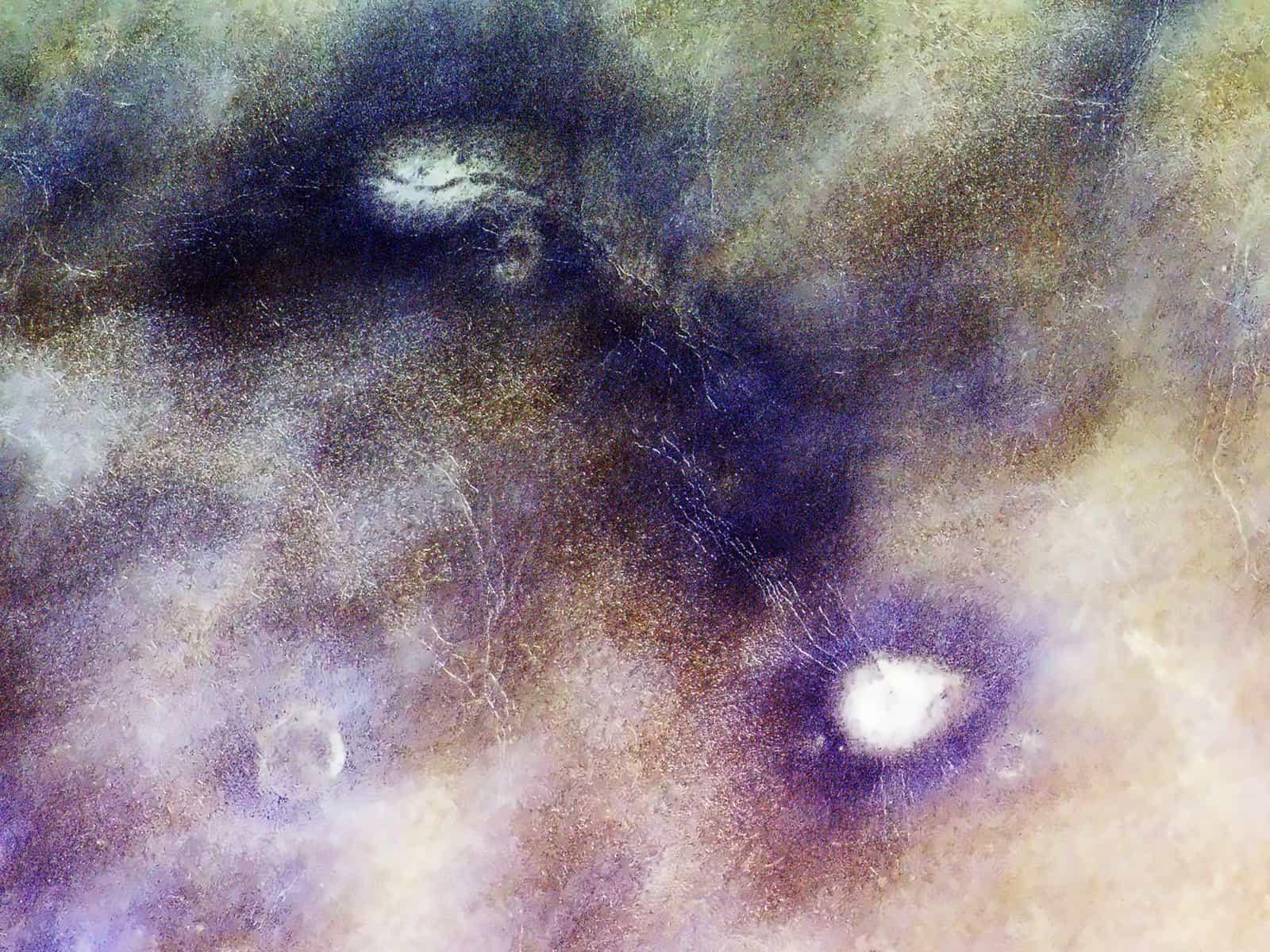
The orbiter's colour stereo camera, CaSSIS, took a closer look at that ground. It showed fresh and narrow fissures, in some cases hundreds of metres long, with colour changes on the surface around them. The paper goes further, describing fissures less than a metre wide and interpreting them as "potential HCl pathways rooted into magmatic bodies at depth."
The colour change may be the visible trace of the same process. It could come from deposits left behind by gases escaping from the interior of Mars, the kind of staining that surrounds fumaroles on Earth.
For Mège, one glance at the map was enough. "Looking at the spatial distribution of the seeping, it became instantly obvious to me that there was something volcanic behind it, but it had to be demonstrated," he concedes.
How ice opens and closes a volcanic vent
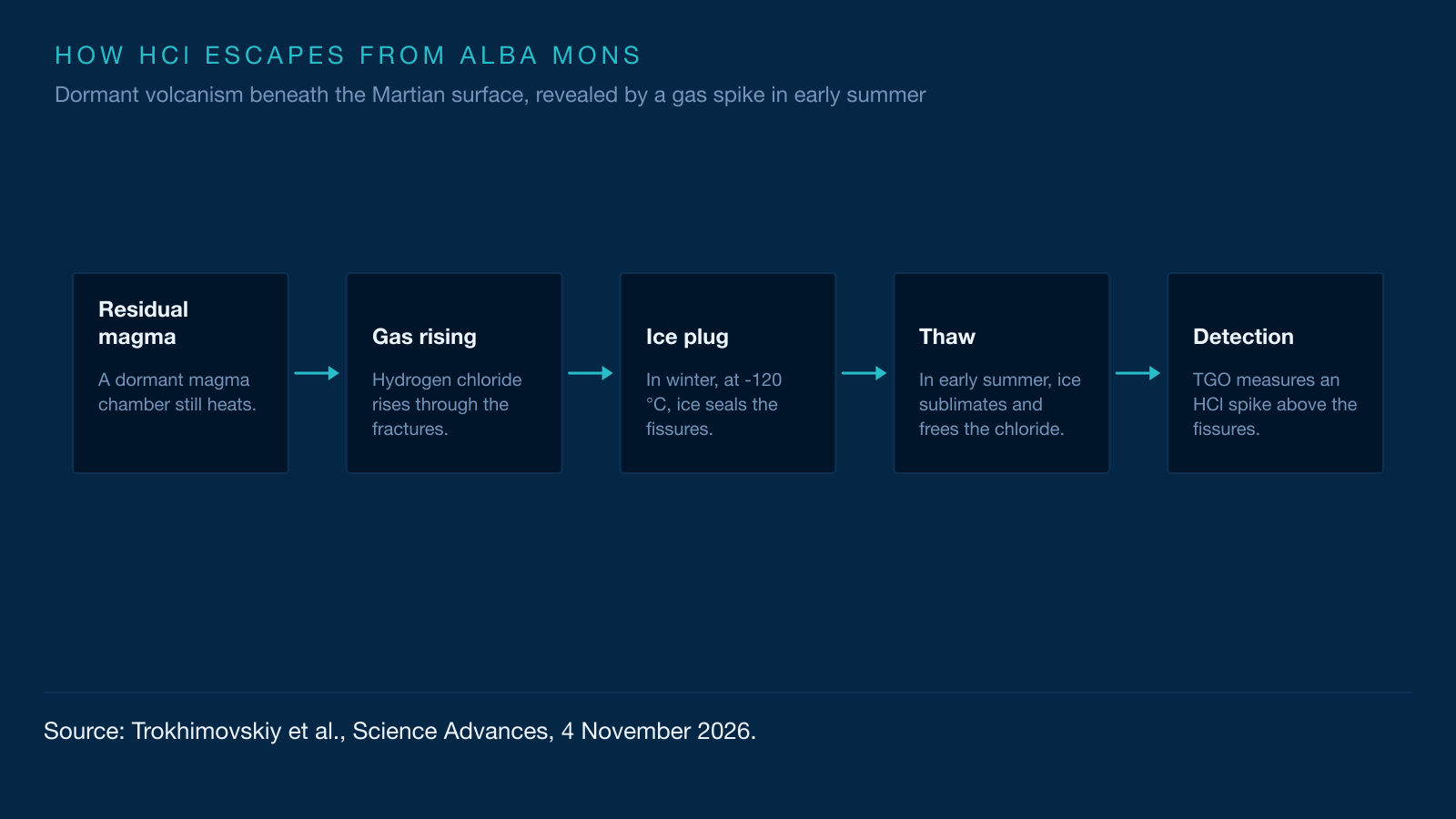
The team's interpretation connects the gas to a dormant magma chamber, a pocket of molten rock that still heats the crust above it, a sort of volcanic plumbing system under the surface of Mars. Heat from below keeps gases moving upward along fractures.
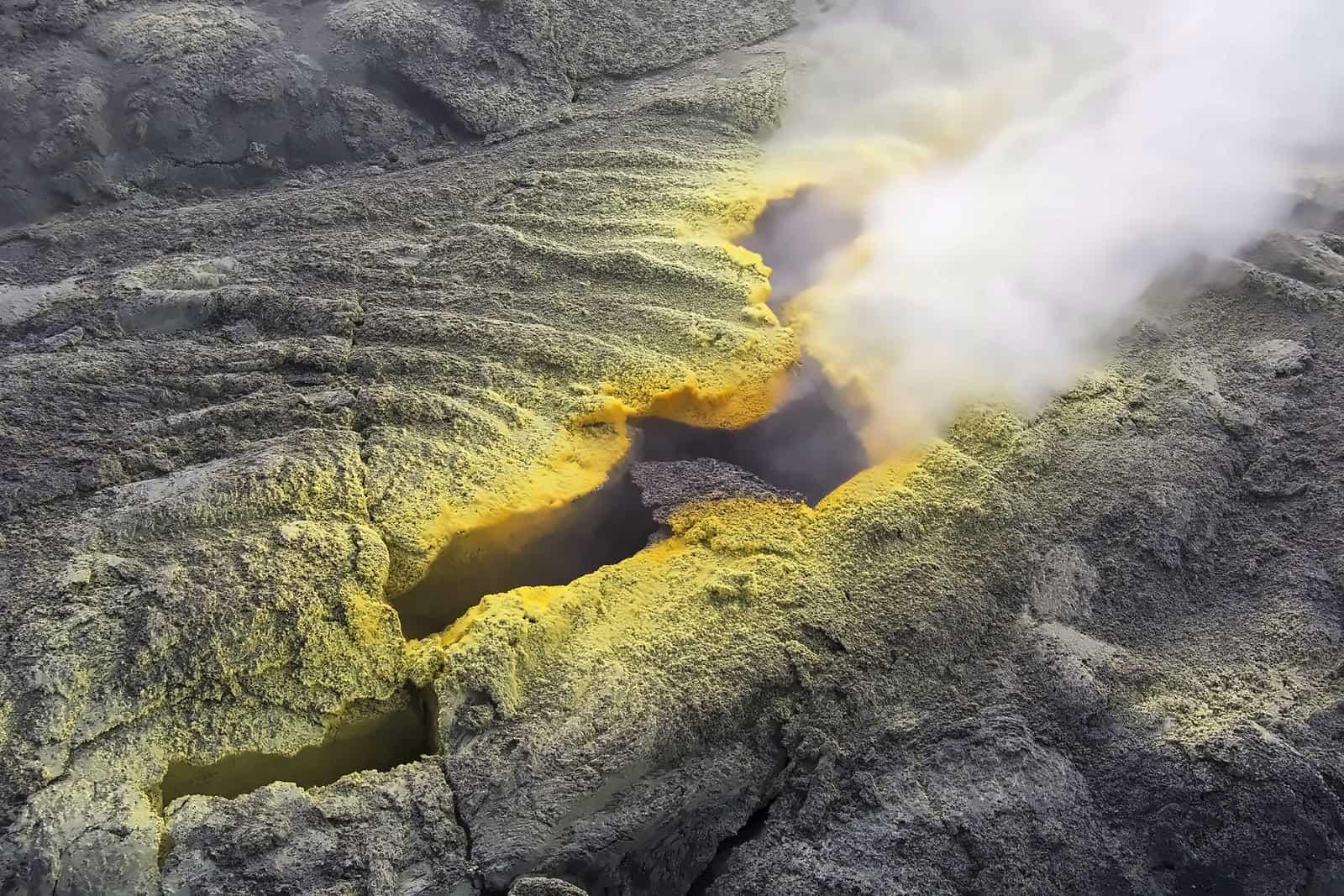
The gas itself behaves like the fumaroles of Earth, the vents where volcanic gases reach the open air, and around those vents, escaping gases leave pale deposits on the ground.
Winter adds a lid. Temperatures at the fissures drop to minus 120 °C, or minus 184 °F. At that level, water ice seals the cracks and holds the gas in. Nothing escapes. The gas waits under the ice.
Early summer reopens it. As the ice sublimates, turning from solid to vapour without passing through a liquid stage, the seal fails and the chloride escapes with the vapour. Planet-wide, the gas still peaks in winter. The Alba Mons signal is the exception, and the ice explains why.
A second filter sits in the way. Hydrogen chloride may seep all year round, but it is easily taken up by ice particles, so what the orbiter sees depends heavily on atmospheric conditions, which is another way of saying it depends on the seasons.
Dead Mars or sleeping Mars?
Mars has the largest volcanoes in the Solar System, and nobody knows how active they are. Other clues have accumulated. Orbital imagery shows that some volcanoes appear to have been active within the last few million years, and seismometers have detected marsquakes, the earthquakes of Mars. The paper notes that "marsquakes were revealed recently, and clues to volcanism younger than tens of million years have accumulated."
But no new lava flows or eruptions have ever been observed. That absence is not proof of death. As the ESA blog accompanying the result puts it, "most volcanoes are dormant, they erupt only exceptionally. Periods of repose can be tens of thousands of years long." Statistically, catching an eruption in the act is a long shot.
"Our findings suggest that Mars has retained enough internal heat to support volcanic activity until recently, and possibly still does," says Mège.
The paper holds the same careful line. "Our results are best explained by ongoing igneous processes in the Martian interior," the authors write. Best explained, not proven: this is the language of a case that fits the data better than any rival.
For the mission's project scientist, the result already carries weight. "These findings may prove to be TGO's greatest success yet," highlights Colin Wilson, ESA's project scientist for the ExoMars Trace Gas Orbiter.
What it means for life
The result also reaches into the past. Magmatic gases like hydrogen chloride could have been more abundant in the past, contributing to a thicker atmosphere and a warmer climate, one that allowed liquid water to cover much of the surface of Mars.
The present is more speculative. If lava rising through the crust meets groundwater, the meeting could produce warm habitable niches, pockets of liquid water and heat sheltered from the frozen surface. Habitability here means the conditions that allow life, not life itself.
Hydrothermal environments, the hot water systems that form where heat meets water, are among the main locations where life started on Earth, because they provide energy and protection against a hostile or changing outside environment over long periods of time.
Mège puts it this way. "Looking for martian life in the seeping fissures of the Alba Mons region would make a lot of sense. If hydrothermal systems are active, they could contain the ingredients and energy needed for microorganisms to develop, and shield microorganisms from the hostile and changing environment above the surface," he reflects.
None of this is evidence of life. The paper reports a gas, a set of fissures and a plausible source, not a biosphere. What it offers is a place to look, and a reason to look there rather than somewhere else.
Going further
- The mission behind the data: ExoMars Trace Gas Orbiter, and its two instruments in this story, the Atmospheric Chemistry Suite and the CaSSIS camera.
- The key ideas: Mars, its atmosphere, the spectrometers that read it, and the question of exobiology.
- Under your own sky: the interactive sky map and our observing guide.
- The official sources: the ESA release on the detection, the ESA blog on the geological intuition behind it, and the paper "Enigmatic HCl detections as a potential signature of igneous activity on Mars" by Trokhimovskiy and colleagues in Science Advances.