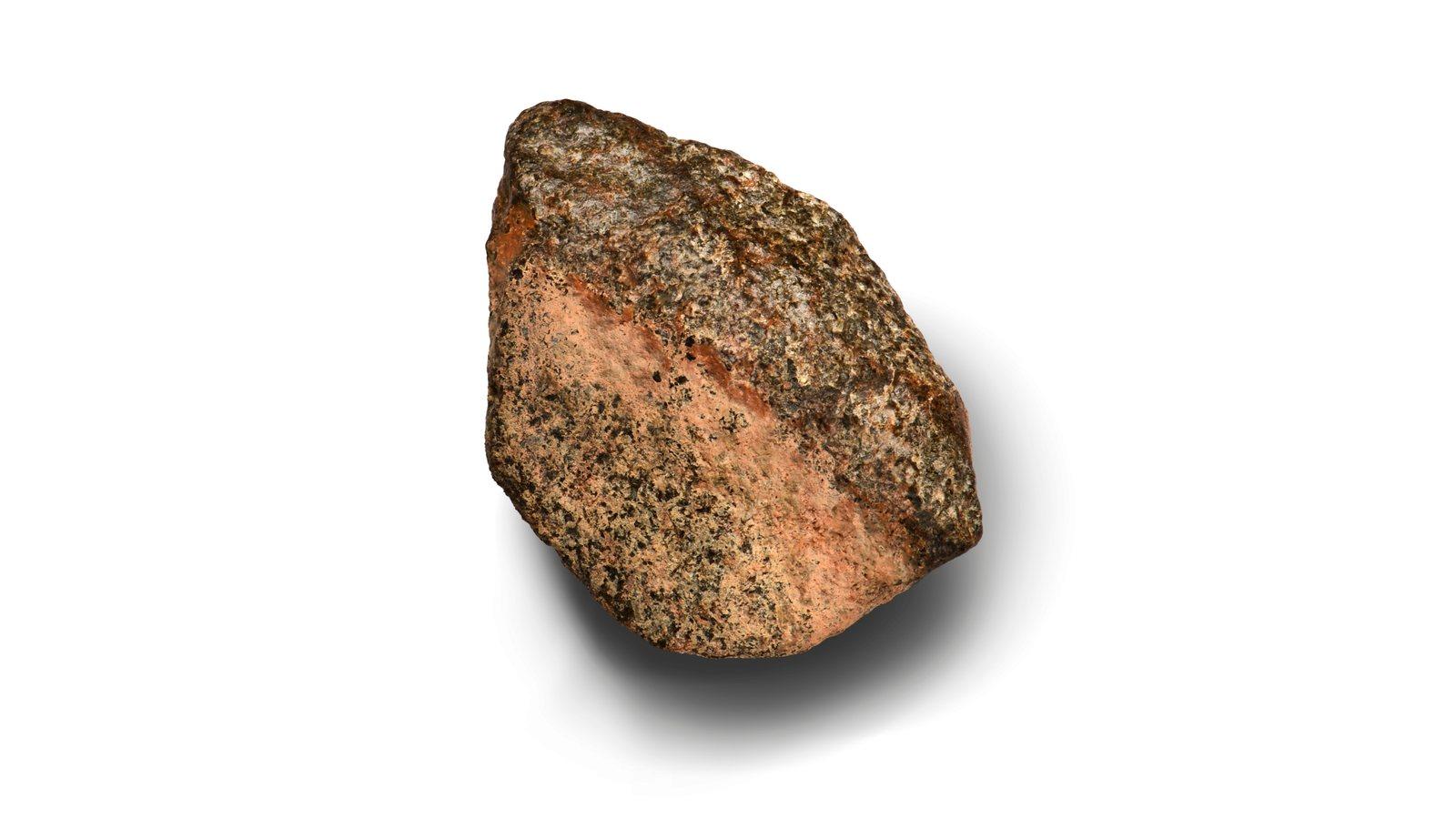
It weighs 800 grams. It was found in 2022 in the Malian Sahara, and at the time no one knew where it came from. Two studies published in 2026 answer part of the question: this stone formed more than 4.1 billion years ago on Mars, then was torn from its crust by an impact. It is one of the three oldest Martian meteorites ever found.
A rose-colored stone from the desert
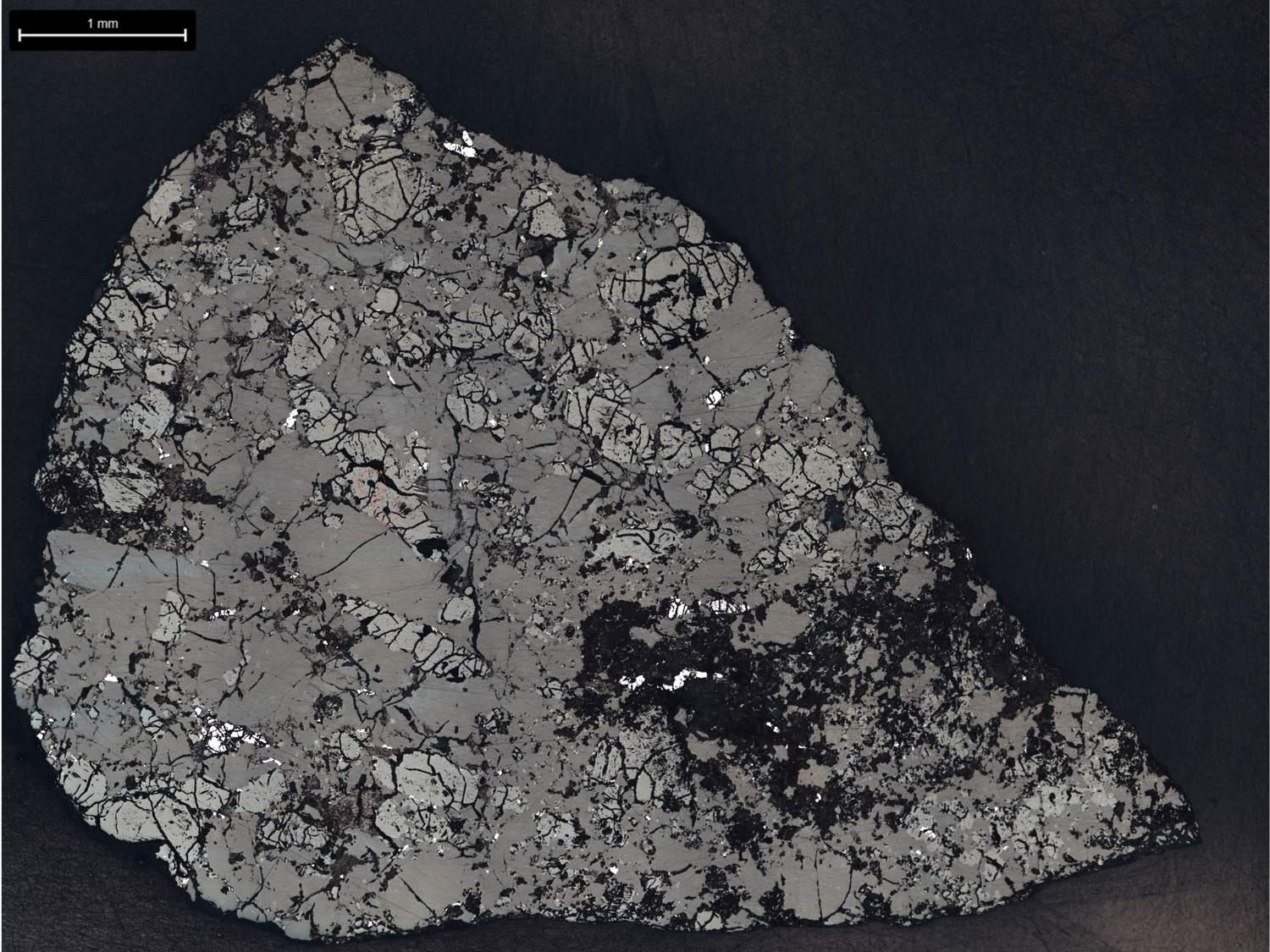
The rock does not look like much. Yet it came from very far away. Researchers call it Teghaza 001, after the salt plain in Mali where it was discovered. It weighs 800 grams, just under two pounds, and it joins a rare family: Martian meteorites, roughly 435 known so far.
First step: prove it really comes from Mars. Researchers at the University of New Mexico compared its oxygen isotopes with those of other Martian meteorites. These isotopes, variants of oxygen with different masses, act as a chemical signature for each planet. The signature matches. Scientists also cross-check the stone's chemistry against measurements from missions on Mars, from the Viking landers to the Curiosity and Perseverance rovers.
On paper, Teghaza 001 even looks like a shergottite, the most common class of Martian meteorite. Yang Liu, a planetary samples specialist at NASA's Jet Propulsion Laboratory in Southern California, almost passed on it. She took a look anyway. The textures were odd, the minerals unusual. "It was only after we started looking closely that we realized this meteorite is really unique," says the researcher, lead author of the study published Oct. 29, 2026, in the journal Science.
A 4.1-billion-year clock
The team found zircons in the rock. These microscopic crystals are tough archives: they survive events without dissolving, and geologists can read their age. Their presence already says something. Teghaza 001 crystallized very early in Mars's history.
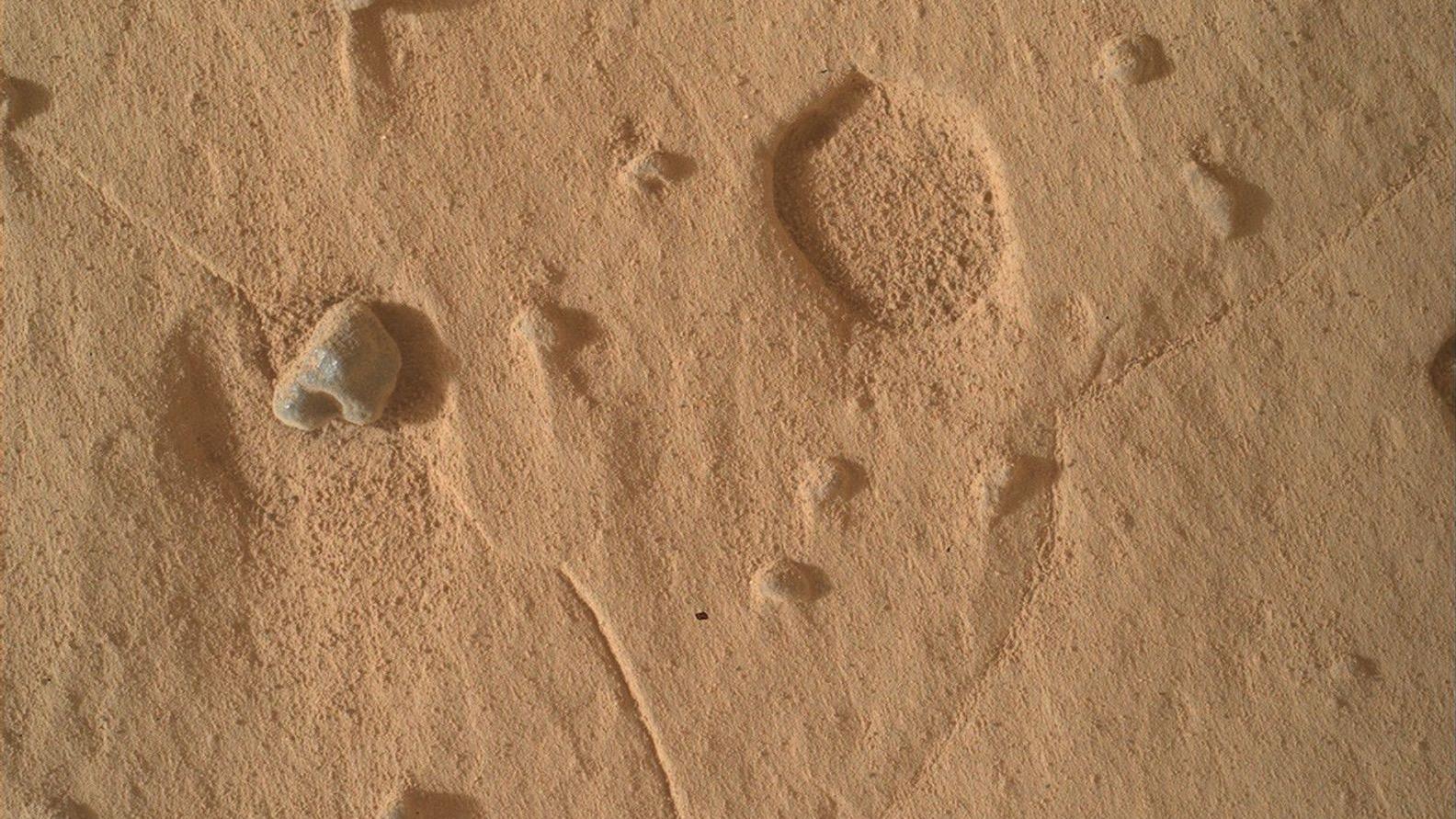
To date the stone, the researchers used another clock. Rubidium, a chemical element found in some minerals, slowly turns into strontium. The rate of that transformation is known. The more strontium a mineral has built up relative to rubidium, the older it is. The method is standard, but Francois Tissot, a coauthor at Caltech, adapted it to work in place, grain by grain, on the surface of a fragment smaller than a fingernail. Instead of dissolving a whole piece, the team dated each tile of a mosaic without damaging the mosaic. The rock remains available for later studies.
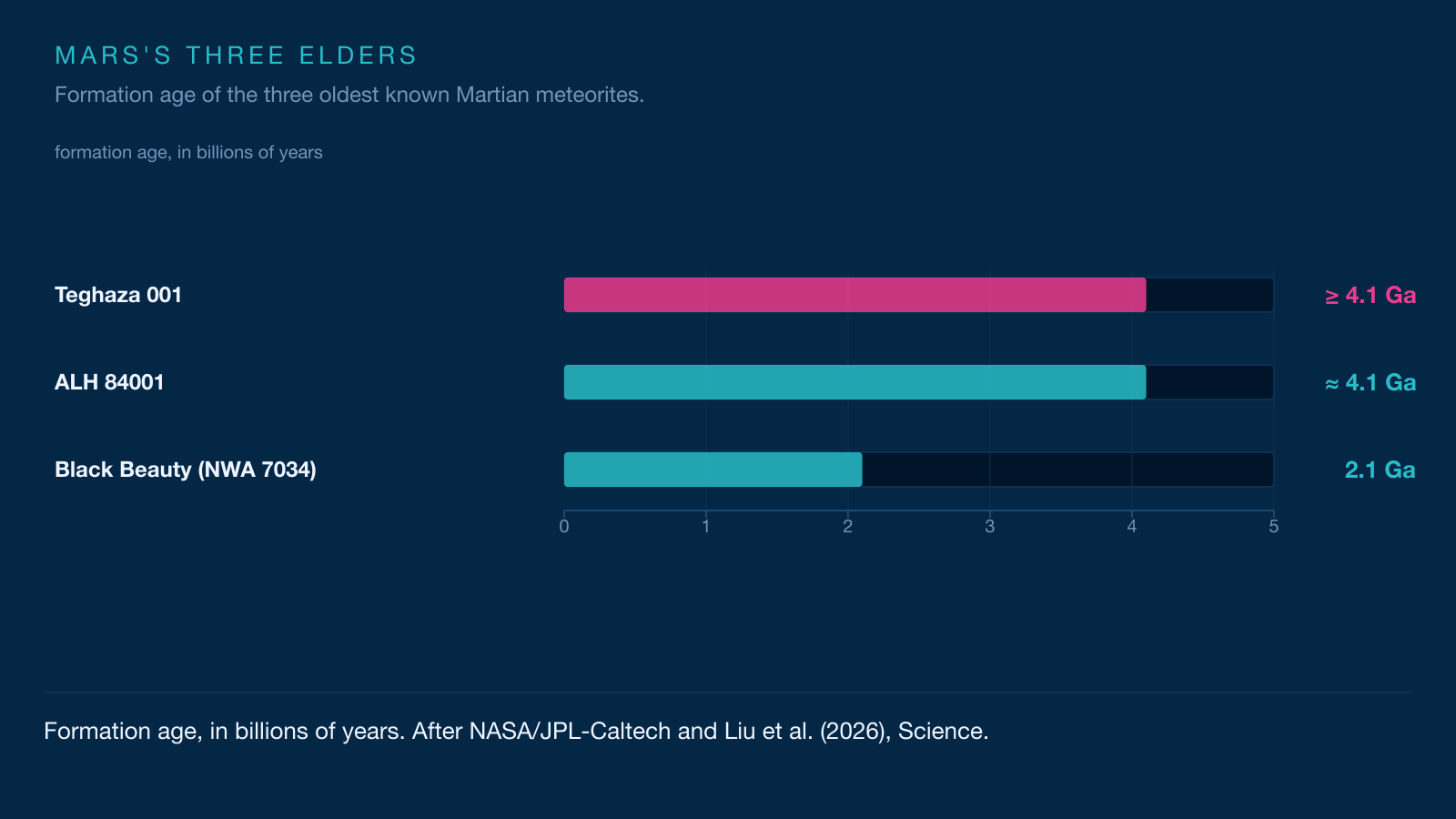
The result: the stone was altered by Martian water about 4.1 billion years ago, so it must have formed even earlier. The dating puts Teghaza 001 at least 4.1 billion years back, making it one of the three oldest known Martian meteorites, along with ALH 84001, of similar age, and Black Beauty, which formed about 2.1 billion years ago. "We are one of very few labs in the world able to perform this kind of age-dating, and the first to date such an ancient Martian meteorite," Tissot says. The team hopes to pave the way for dating more Martian meteorites, and samples returned from other planets, their moons and asteroids.
Water flowing underground
A second paper, published in June 2026 in Science Advances, tackles water. The team measured water content and the ratio between two forms of hydrogen trapped in phosphates, minerals that lock in fluids. Two reservoirs mix. On one side, magmatic water poor in deuterium. On the other, water richer in deuterium, inherited from an altered crust the magmas passed through.
Deuterium is heavy hydrogen, with one extra neutron. Light hydrogen escapes to space more easily than its heavy cousin. Water that stays rich in deuterium has therefore lost part of its hydrogen to the sky. Around 4.1 billion years ago, the deuterium-to-hydrogen ratio of Martian water was about twice that of Earth's seawater. That supports the idea of a fast hydrogen escape to space early in the planet's life.
This water was not an ocean sitting on the surface. It circulated deep in the crust. Altered minerals and oxygen isotopes enriched in oxygen-18 tell the same story of rock and fluid reacting. "It records interactions of water and rock and maybe even an imprint of the Martian atmosphere as it was losing water," says Lee Saper, second author of the Science paper and now a scientist at NASA's Ames Research Center.
13 candidate sites in the southern highlands
Where was it born? No one will ever know for sure. A meteorite blasted off Mars by an impact flies off in one direction, and nothing lets us trace the path back. But the field of possibilities can be narrowed.
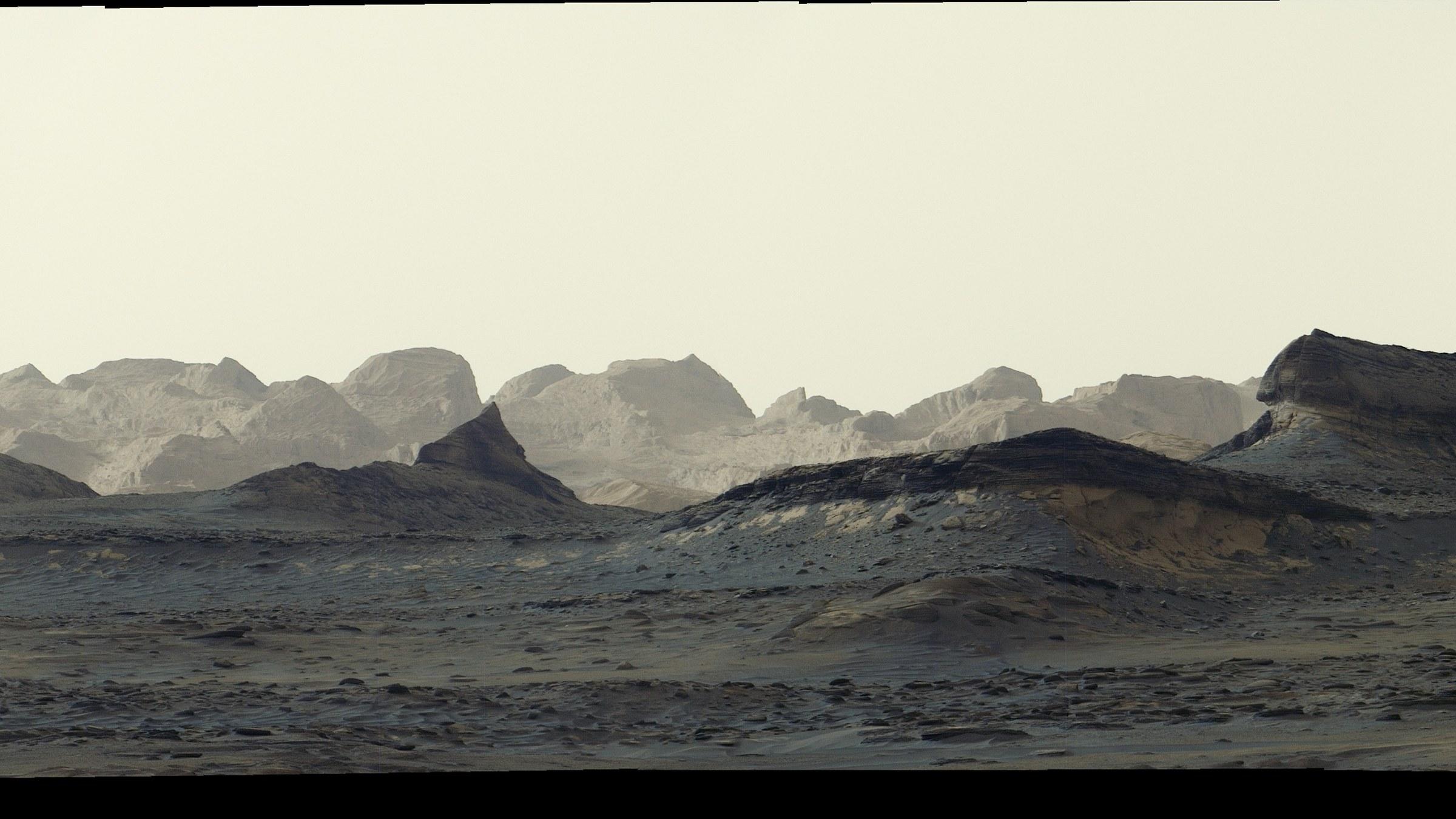
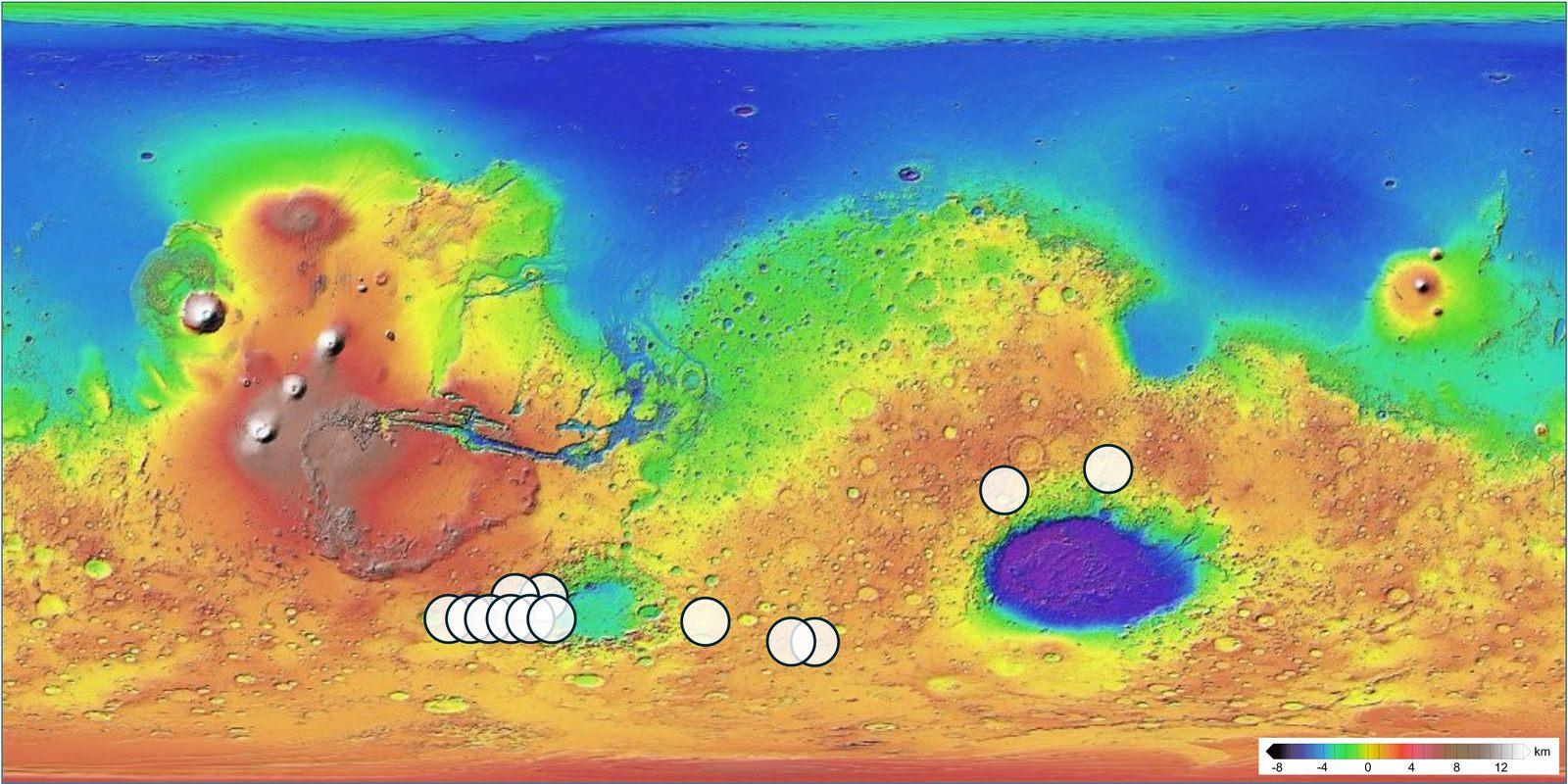
The researchers compared the stone's mineralogy and chemistry with maps of Mars. NASA's Mars Reconnaissance Orbiter measures the surface, and the altimeter on Mars Global Surveyor provided the base map. The result: 13 regions carry a compatible signature, in the cratered highlands of the southern hemisphere. These bright, crater-scarred lands hold Mars's ancient crust.
"This is really our first piece of Martian crust from a part of Mars we've never had a sample of before," Saper says. The word matters. Known Martian meteorites often come from younger ground, unlike the ancient surface that dominates the planet. Teghaza 001 speaks of a Mars close to its beginnings.
What this stone changes
Teghaza 001 is no ordinary rock. It cooled slowly, giving crystals time to grow, and researchers classify it as a gabbroic diorite. Its composition matches no other Martian meteorite. It comes from a distinct magma source with a primordial composition, close to the planet's earliest days. In other words, it samples part of the crust and mantle that other meteorites never reached.
The other two elders tell us less. ALH 84001 is made almost entirely of one mineral. Black Beauty, whose official name is NWA 7034, is a patchwork of small volcanic fragments. Teghaza 001 combines several igneous minerals that record the making of the crust, then its alteration by water.
One question remains. What can a single stone teach us? The authors see it as a starting point. "We've only scratched the surface," Liu says. Other teams will now study Teghaza 001 with their own instruments. They may answer questions this first analysis leaves open: how water and rock interacted on early Mars, and how fast the atmosphere lost its hydrogen.
Going further
- The mission page for Mars Reconnaissance Orbiter, in orbit around Mars since 2006, and for Perseverance, which is looking for signs of ancient life in Jezero Crater.
- Key terms: Mars and sample in our glossary.
- To spot Mars from your backyard: the interactive sky map, the observing guide and the astrophotography gallery.
- Official sources for this article: NASA's release on Teghaza 001, the map of the 13 possible origin sites and the studies in Science and Science Advances.