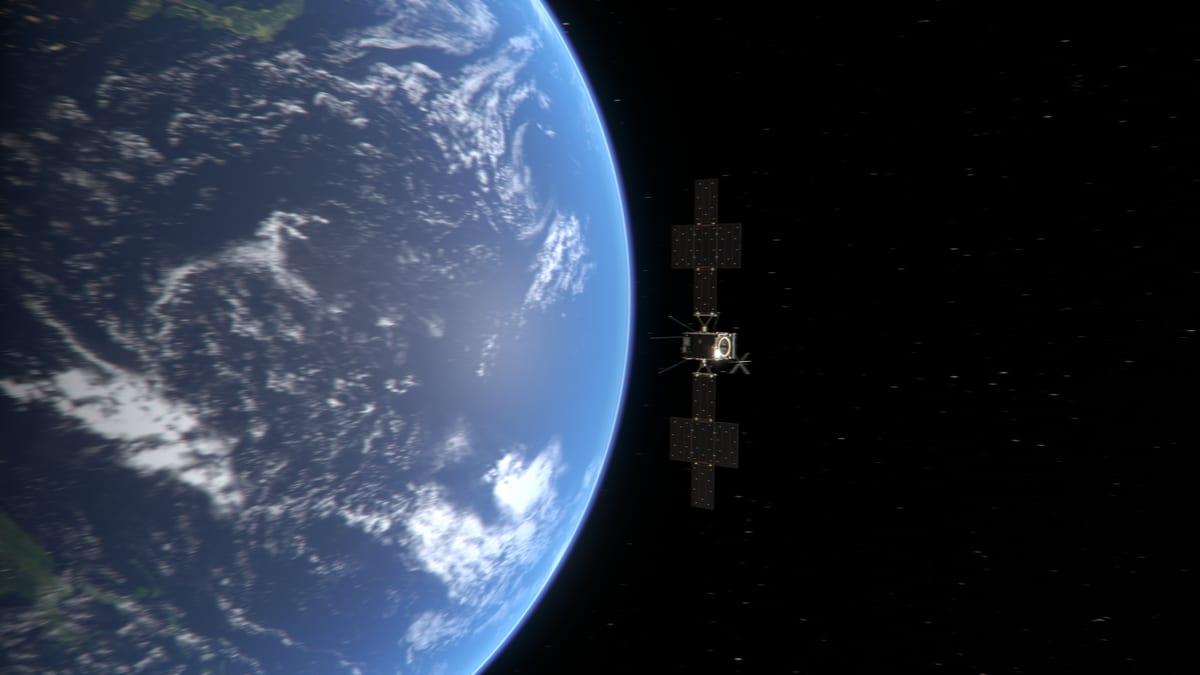
At 15:52 Paris time on Thursday, September 3, the BepiColombo spacecraft cleared the last major hurdle on its road to Mercury: the module that had pushed it for eight years cast off, more than 200 million kilometers from Earth. Now comes the endgame: orbit insertion on November 21, the two science orbiters part ways in December, science begins in April 2027. Here's what just happened, and why arriving at Mercury remains one of the boldest maneuvers ESA has ever attempted.
A green light 200 million kilometers from home
12:03 Paris time: "roll call completed, GO for separation." In the main control room of ESOC, ESA's mission operations center in Darmstadt, Germany, every team confirms out loud that everything is ready. The separation itself happens around 14:00. But at that distance, nobody can watch anything live: the radio signal takes more than eleven minutes each way, so sending a corrective command in time is out of the question.
So how do you know the module let go? Through the same effect that shifts the pitch of a siren as an ambulance passes. At 14:41, ESA detected a change in the frequency of the radio signal: the stack had just changed speed, the telltale sign that the two parts had split. This is the Doppler signal, the shift in frequency of a wave when its source moves toward or away from you. At 15:52, full confirmation: the deep-space antennas at Cebreros, Spain, and Malargüe, Argentina, picked up the telemetry, the stream of health data from the spacecraft. Everything is nominal, and the solar panels of the European orbiter MPO, hidden behind the module throughout the cruise, are finally recharging the batteries.
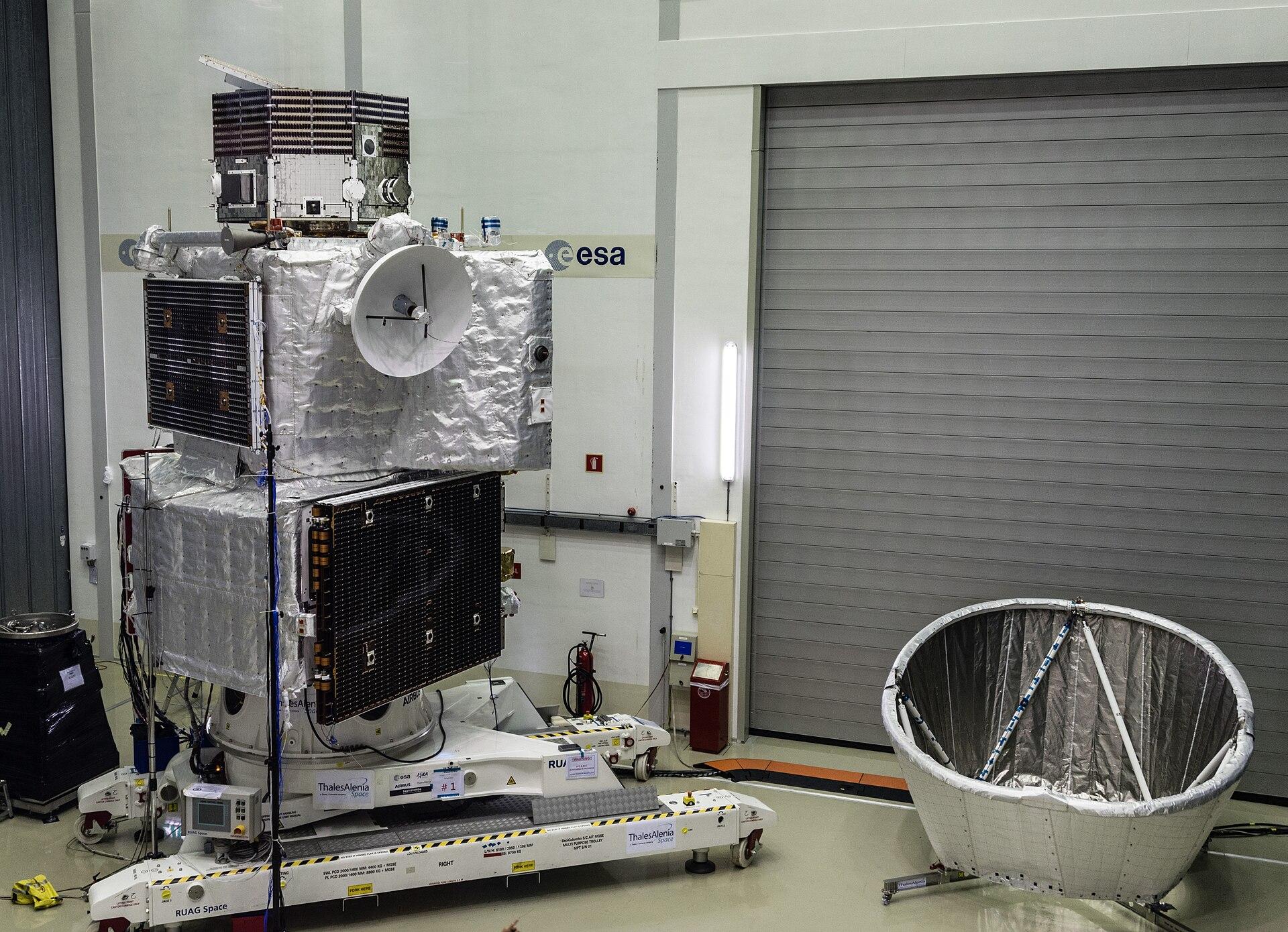
That was only the first move in an arrival sequence ESA ranks among the most complex it has ever attempted. Ahead of the event, at a press briefing on August 31, Ignacio Tanco, head of inner solar system mission operations at ESA, had compared the separation to bringing a new spacecraft online: the remaining stack has to take over power generation, attitude control and thermal management, all of it close to the Sun. Several instruments, including the mission's best cameras, stayed hidden behind the module during the cruise and will see first light only once released.
Why the closest planet takes eight years to reach
Mercury is the closest planet to the Sun, yet one of the hardest to reach. The reason is mechanics: to fall toward the Sun, you first have to brake against Earth's own motion around it. And once a probe drops into the inner solar system, it speeds up more and more, like a bicycle rolling down a steep hill. By the time it reaches Mercury, it's going too fast for the planet to capture it: that enormous speed has to be canceled out. ESA puts it in one line: putting an orbiter around Mercury takes more energy than sending one to Pluto.
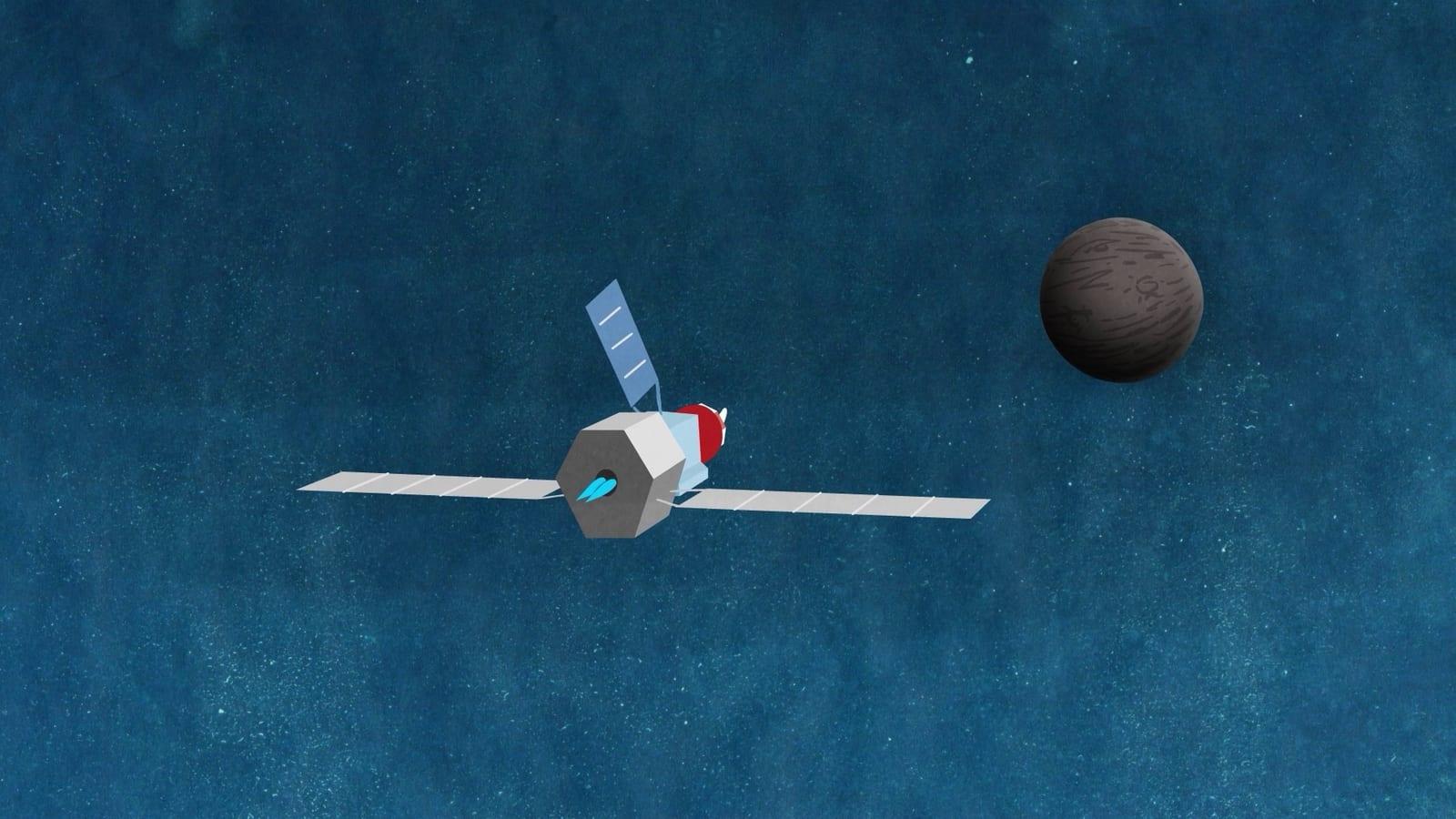
ESA and JAXA, the Japanese space agency, answered with a three-module train. The locomotive, the Mercury Transfer Module, carried four ion engines fed by a large solar wing. An ion engine works nothing like a rocket engine: it strips electrons off xenon gas, then fires those charged atoms out at 50,000 m/s, fifteen times the exhaust speed of a chemical engine. The push is tiny, the equivalent of one or two coins resting in your palm, but it applies nonstop for months. That fuel-sipping cruise regime slowly bent the trajectory toward the Sun.
The journey had its share of setbacks. In 2024, a problem with the solar panels cut part of the power available to the ion engines. ESA recalculated the flight plan and stretched the cruise by a year to compensate. Since June 2026, the ion engines have been off for good: the spacecraft now flies on its own momentum, free-falling around the Sun, and MPO's chemical propulsion has taken over for the final maneuvers.
The next four dates, then two observatories around Mercury
- November 21, 2026: the MPO-Mio duo lets Mercury's gravity capture it and enters orbit.
- December 9-10, 2026: the two orbiters part ways. Until that day, MPO powers the whole stack.
- March 2027: MPO, after jettisoning the sunshield that protected Mio, completes its descent to its own polar orbit, the orbit passing over the planet's poles.
- April 2027: science operations begin for both orbiters.
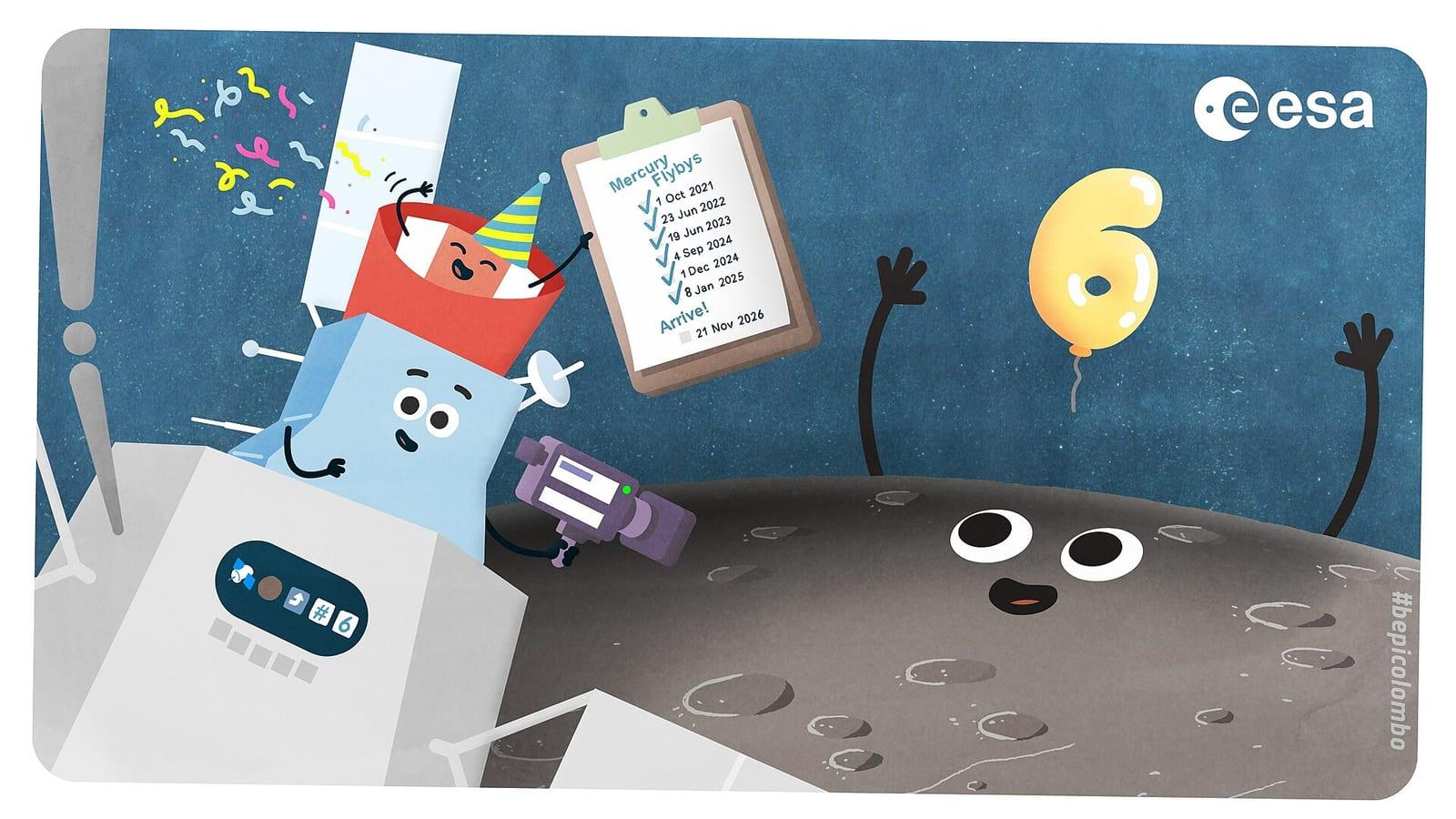
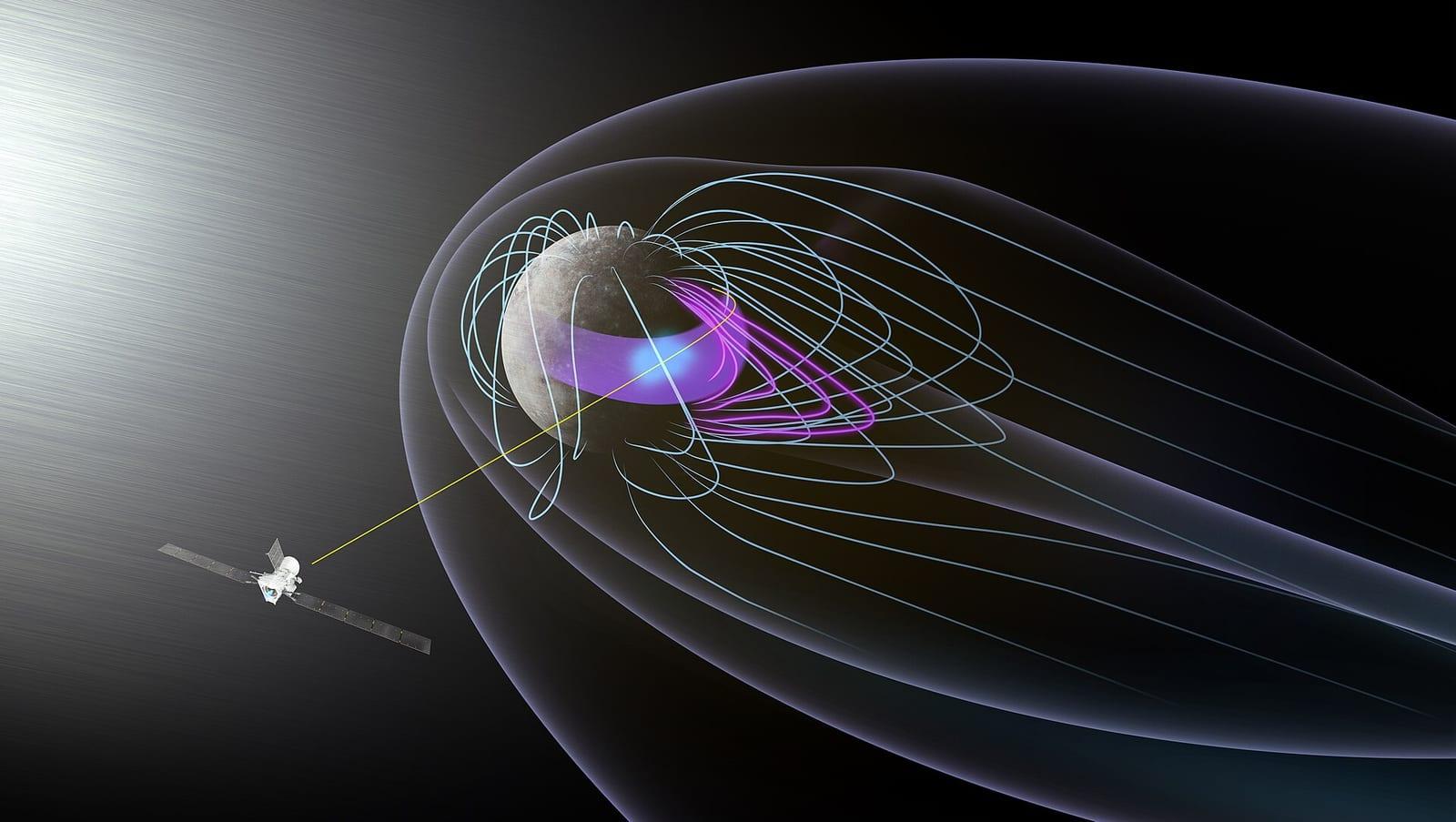
BepiColombo's signature is this two-craft arrival. The European orbiter MPO, for Mercury Planetary Orbiter, will fly low on a tight polar orbit: it will map the surface, geology and composition of the planet in high resolution. The Japanese orbiter Mio, for Mercury Magnetospheric Orbiter, will follow a highly elongated polar orbit, shaped for measuring the planet's magnetic environment.
That environment is the magnetosphere: the region around a planet where its magnetic field deflects the solar wind, the constant stream of charged particles the Sun sends across the solar system. Small and close to the Sun, Mercury takes a ferocious beating, and understanding how its magnetosphere holds up will teach us about our own. Having two spacecraft around the planet at once, one inside that magnetic bubble and the other sweeping its outline, changes the game: we'll get to watch, in real time, how the solar wind batters a planet.
The payoff goes beyond Mercury. The planet is the least explored of the inner solar system, and ESA presents it as a key to the history of the whole system: why such a small world still holds a magnetic field, why its poles may shelter water ice, and how rocky planets form close to a star. From 2011 to 2015, NASA's MESSENGER probe drew the first global map of the planet before crashing into its surface. BepiColombo raises the stakes: two observatories, in color and in high resolution, to answer the questions the first map raised.
Going further
- The mission page of BepiColombo, with its trajectory, objectives and latest news.
- The key concepts: spacecraft (sonde spatiale), magnetosphere and solar wind.
- In the same season of arrivals: ESA's JUICE probe will skim past Earth on September 28, 2026 on its way to Jupiter, our article explains the gravity assist with a home-made diagram.
- To observe the sky tonight: the interactive sky map, the observing guide and the astrophotography gallery.
- The official sources for this article: ESA's Mercury arrival live updates page, ESA's separation livestream page, the mission factsheet, the Mercury Transfer Module page and ESA's article on switching off electric propulsion.