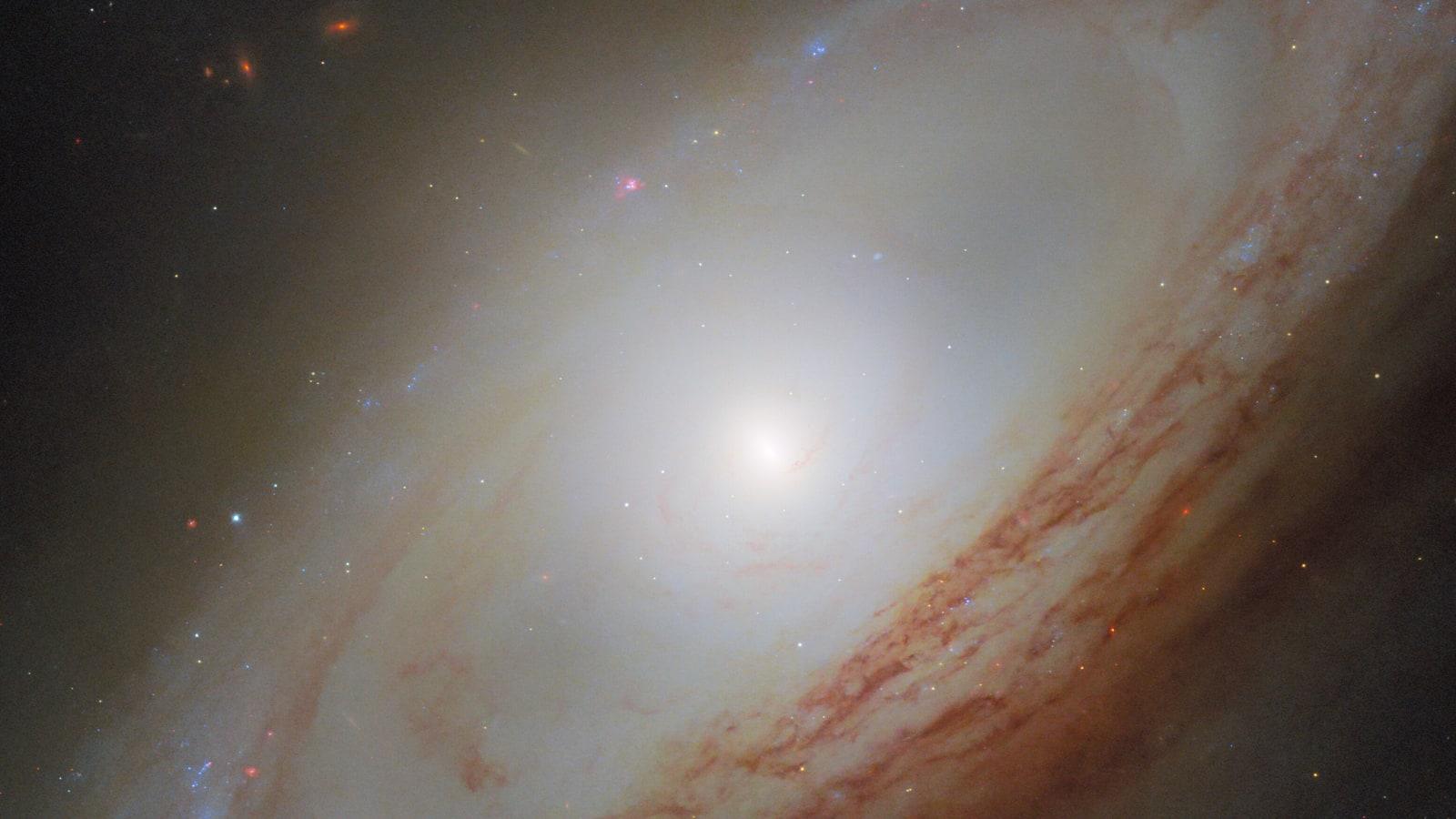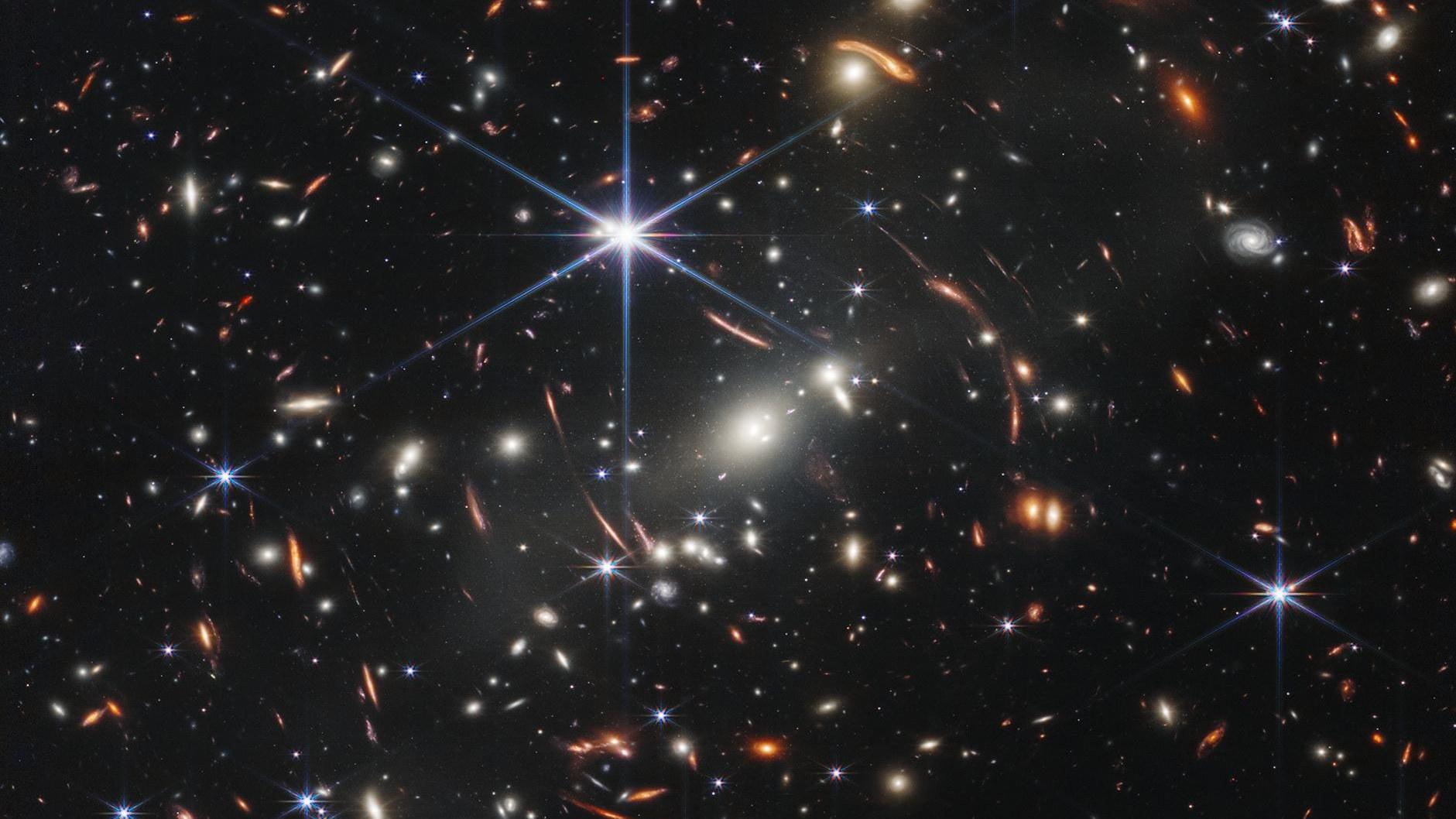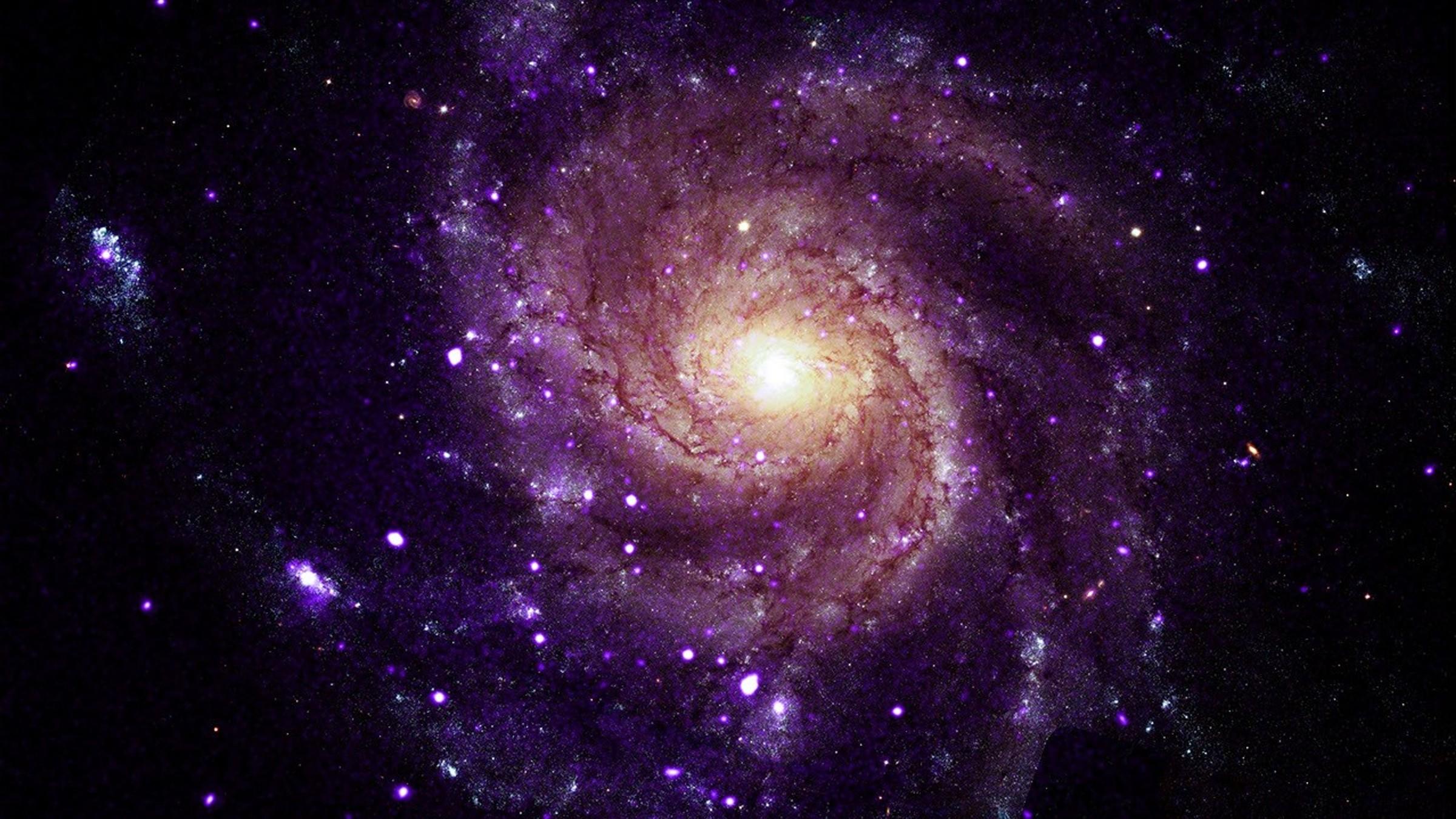
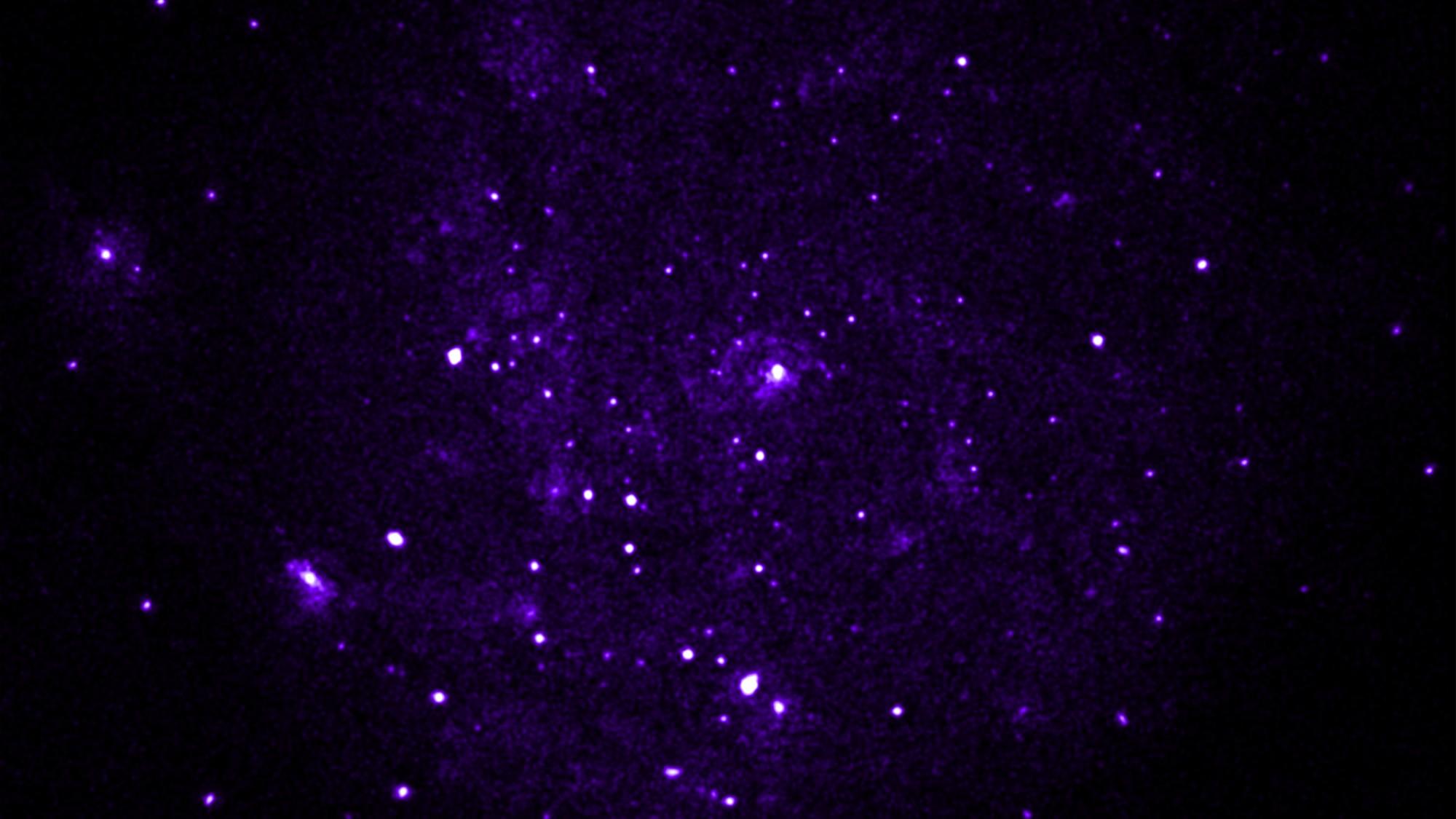
Eighty-four. That is how many points of light a US team pulled out of the shadows across six nearby galaxies, among them the Pinwheel galaxy (M101) and the Andromeda galaxy (M31). These objects emit X-rays at such low energy that telescopes had passed over them for nearly thirty years. The result, obtained with NASA's Chandra space telescope, appeared on September 9, 2026 in the journal Nature Astronomy.
The researchers gave them a name: hypersoft X-ray sources. Behind the label may lie the answer to two questions astrophysics has carried for decades. And a hint about how certain stars die.
84 points of light that vanish as energy rises
The story starts with sorting images. The researchers went back to pictures of six galaxies already observed by Chandra, picked for their proximity and for exposure times of up to a million seconds. Then they compared two versions of each image: one taken in the softest X-ray band, another in a slightly more energetic one.
What they saw was striking. Points of light show up in the first version and disappear in the second, the way stains fade from fabric under a different light. An object that shines at low energy and not at all above it must be sending its X-rays toward the bottom of the spectrum. That is exactly what the team was after.
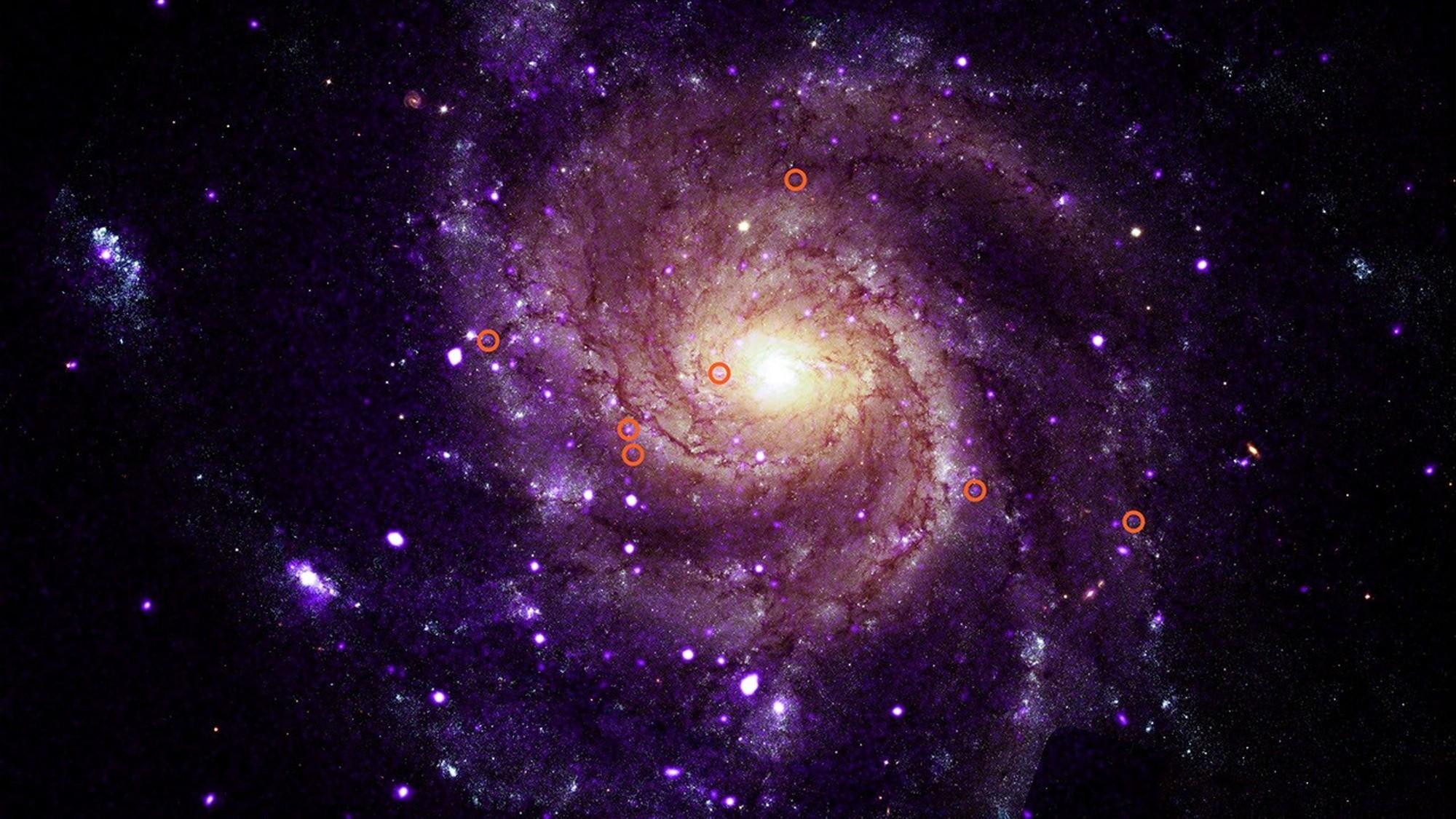
The tally came out clean: 84 sources, between 7 and 21 per galaxy depending on distance and observing time. Seven in M101, eighteen in the core of M31. They turn up both in regions where stars are being born, along the spiral arms, and among the older star populations of elliptical galaxies.
One detail gives the finding extra weight. An unusual cluster of these sources sits near the center of the elliptical galaxy NGC 3379, where they account for at least 20% of all detected X-ray sources. Another clue: they are far rarer than expected inside star clusters, the dense gatherings where binary stars form so readily. These objects look like nothing astronomers had classified before.
Why nobody had seen them
The first reason is how faint the signal is. Chandra was built to catch far more energetic X-rays, the kind that betray blazing gas falling into black holes. Below 300 electronvolts its detectors turn nearsighted, and it takes very long exposures to make out anything at all.
The second reason is a matter of working habit. To avoid mistaking a real object for background noise, most teams routinely strip out the lowest-energy data before they even analyze it. That is standard signal-processing caution, a bit like tuning out the softest voices in a room to hear the louder ones. Except that in this case, the precaution wiped out precisely the objects being sought.
A third obstacle is the toughest. Between the stars, and even more so between galaxies, drifts a gas of hydrogen and helium. This gas absorbs extreme ultraviolet light with formidable efficiency, making it a near-impenetrable wall for telescopes. A source can blaze like a thousand suns in that range and its light will never reach us.
Hence the researchers' workaround. An object that emits heavily in the ultraviolet still leaks a little light into the neighboring, slightly more energetic range: the tail of soft X-rays. We never see the source itself, only its shadow cast onto the energy band just above. That trace is what Chandra managed to capture.
There is a last snag, and it is telling. Chandra is aging badly in this range. Molecules shed by its own materials settle over time onto the filters of its main camera, ACIS, and absorb the softest X-rays. By comparing observations of the galaxy cluster Abell 1795, the authors showed that by 2017 Chandra's sensitivity in that band had dropped below 20% of its 1999 capability. They therefore stopped gathering data at that date. Without saying so, the paper also shows what a telescope more than 26 years old can still deliver.
What it changes: two mysteries in one
The first mystery is the weightier one. Type Ia supernovae are stellar explosions whose brightness is so regular that astronomers use them as a measuring stick for distances in the universe. They are how we learned in the late 1990s that cosmic expansion is speeding up. The trouble is, we still do not know which stars explode.
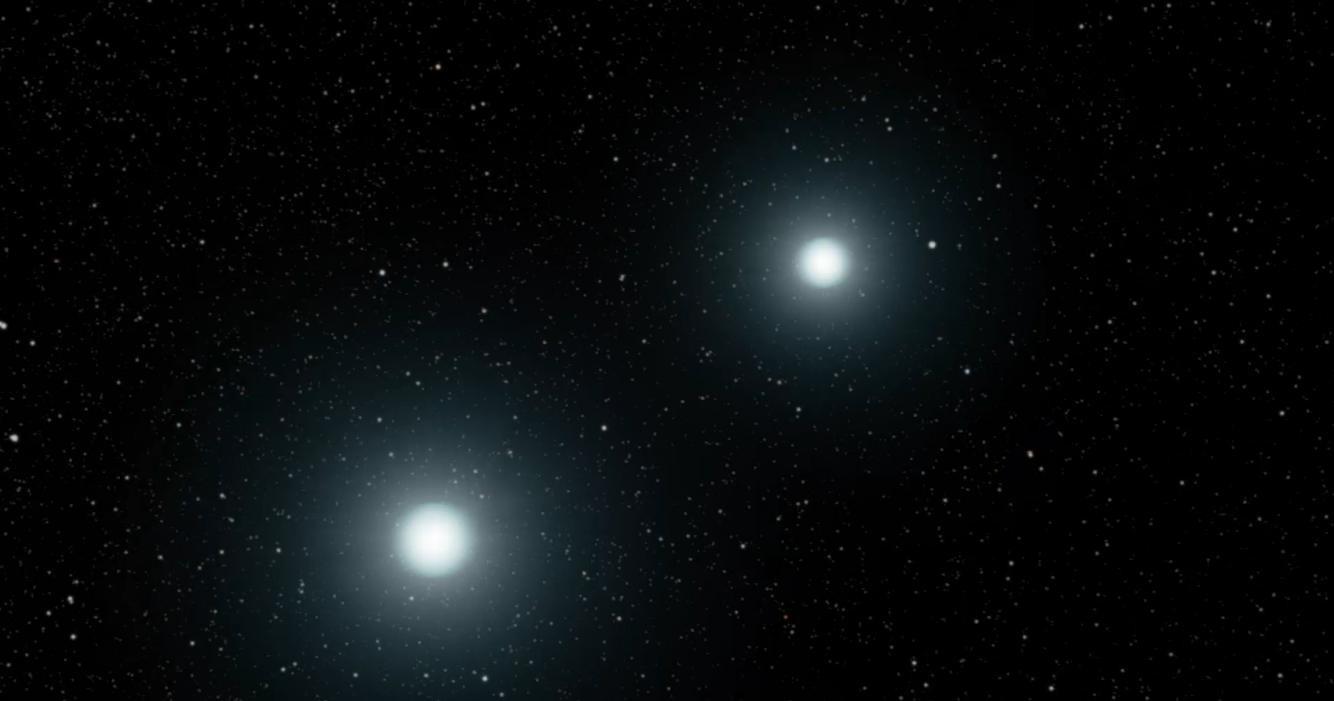
The likeliest scenario involves a white dwarf, the compact corpse of a Sun-like star. If it pulls matter off a companion star, its mass grows until it crosses a threshold where nuclear burning runs away and tears it apart. The catch is that the census of observed supernovae and the census of possible candidates never lined up: stars were missing, by a factor of 10 to 100 depending on the study. Hypersoft sources close part of that gap. Their number doubles the count of white dwarfs pulling in matter, and there is no telling that Chandra saw the faintest ones.
The second mystery is less spectacular but just as stubborn. In some galaxies, the gas filling the space between stars is more ionized than visible stars can account for. Ionized means atoms there have lost electrons, and how much depends on the energy they receive. Massive hot stars supply part of the needed radiation, but not enough to explain everything measured. And as it happens, the ultraviolet from hypersoft sources lands squarely in the energy range helium absorbs best. These objects could be the missing piece.
One name, several possible objects
A deeper question remains, and the authors take care not to settle it: what are these sources made of? The word 'hypersoft' describes an observed behavior, not an identified family of objects. Behind the name there is probably a mix.
In M31, several sources line up with the positions of known novae. A nova happens when a white dwarf blows off the hydrogen layer built up on its surface. After the blast the core keeps burning for a while and then cools, passing through a very cold, and therefore very low-energy, phase. Those particular objects are white dwarfs on their way back down in temperature.
Then come the brightest ones. A source reaching 10³⁸ erg/s in such a narrow energy band puts white dwarf models in a tight spot. No white dwarf has ever been observed at that level. For those extreme cases the researchers consider something else: a stellar-mass black hole wrapped in a disk of cooler matter than usual, which would shift its glow toward the bottom of the spectrum.
One further detail makes the case more intriguing still. These sources do not behave steadily. Some vary from one observation to the next, others vanish entirely before reappearing. In NGC 4472, two of them emit in the soft X-ray band eleven years apart, with no signal in between. Switched off, or cooled to the point of being undetectable? Current data are too sparse to decide.
The upshot: a population of luminous objects had been waiting in public data for more than twenty years, invisible because it sat at the low edge of the X-ray range. A simple sorting rule was enough to miss it.
Going further
- The mission page for Chandra, the telescope whose data archive made this discovery possible.
- Background concepts to follow the story: X-rays, ultraviolet and supernovae.
- To observe the Pinwheel galaxy, home to seven of these sources, for yourself, the interactive sky map and the observing guide show where and when to point. The astrophotography gallery shows what a well-equipped amateur gets on galaxies.
- Official sources: the NASA release, the Chandra X-ray Center image page and the Nature Astronomy paper, plus the arXiv manuscript.