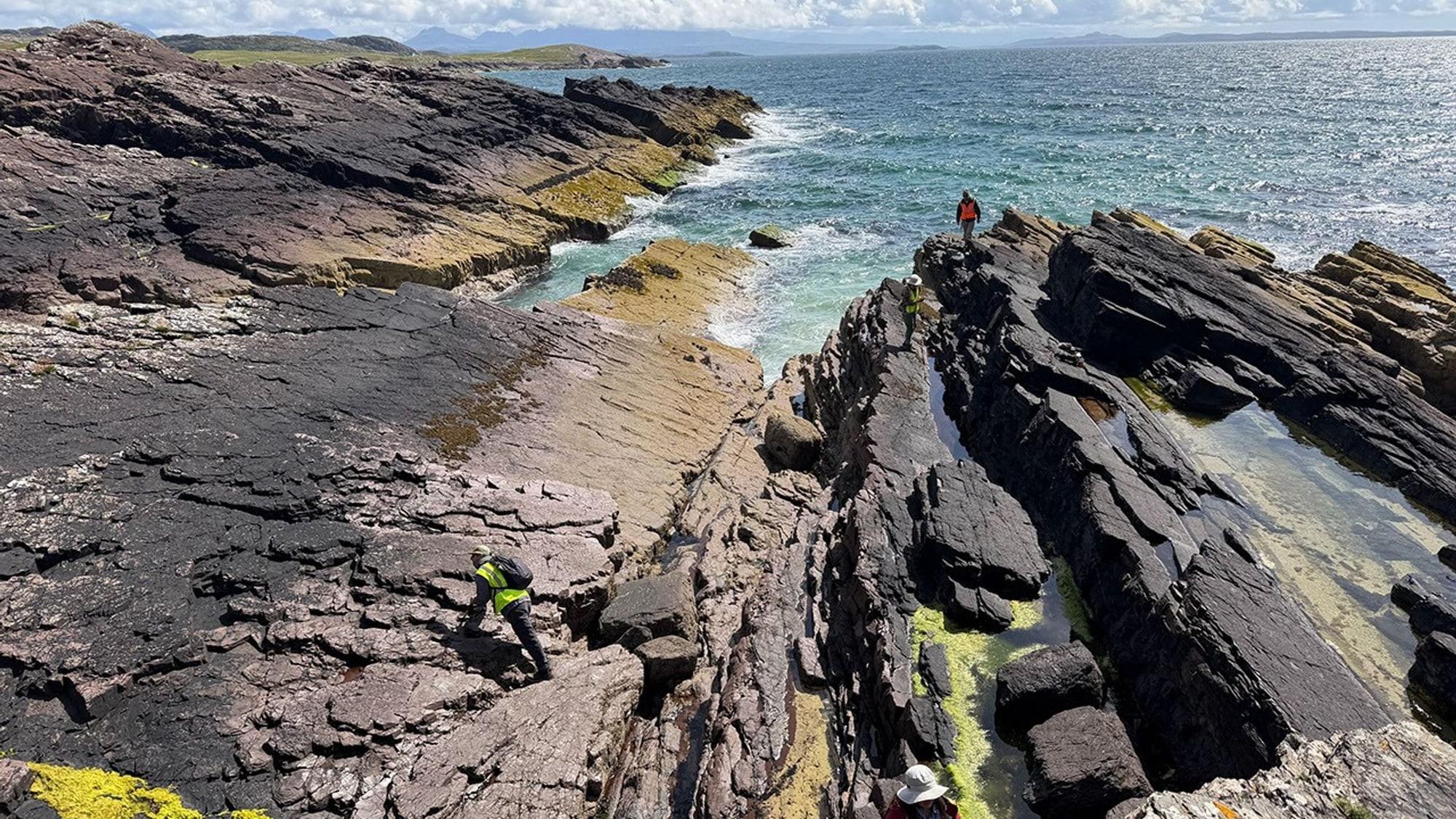
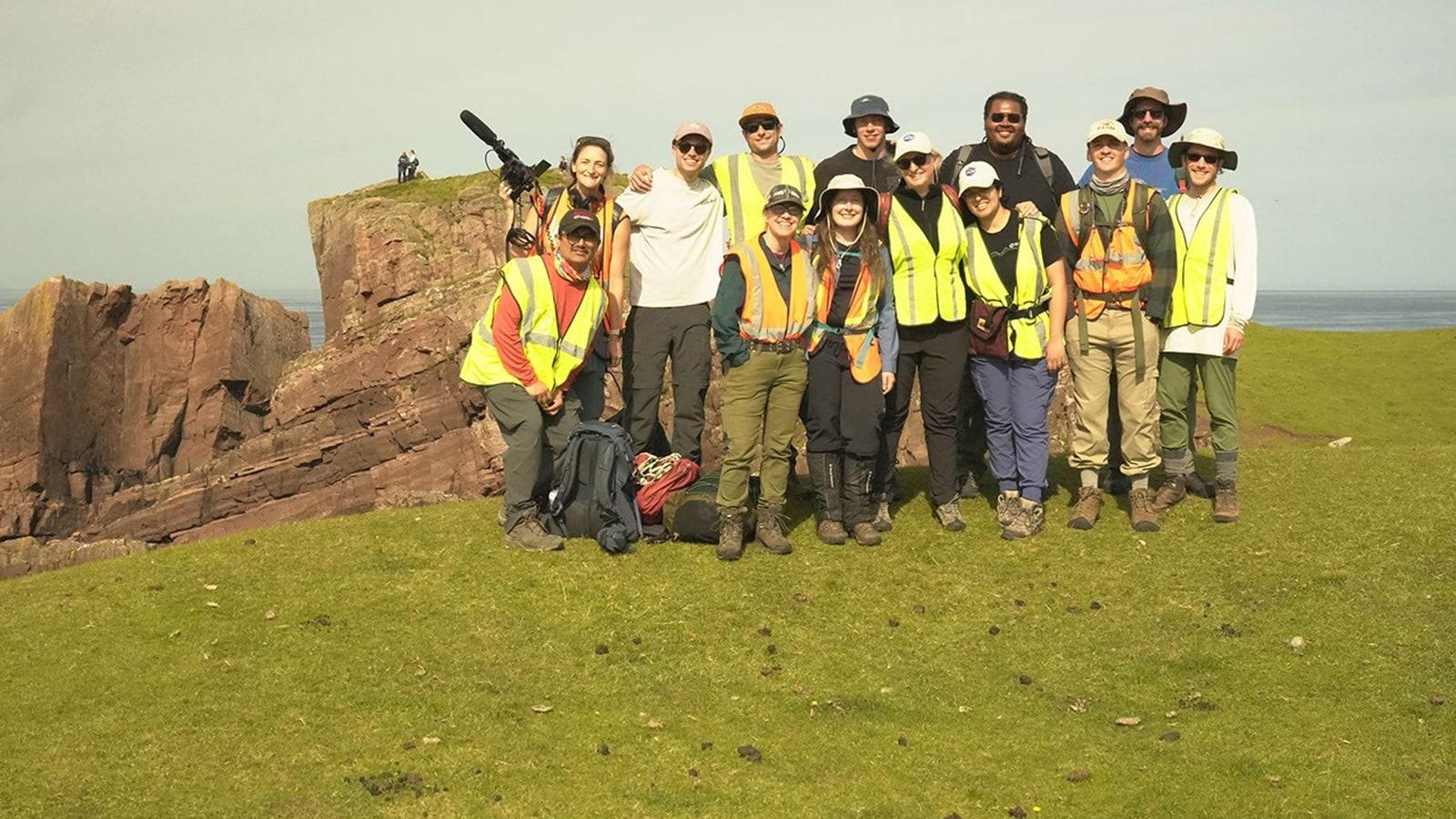
This summer, a team from NASA's Goddard Space Flight Center set down its packs on the cliffs of northwest Scotland, around Clachtoll. Their goal was to field-test handheld instruments on rocks 1.2 billion years old. Those rocks are geological twins of ancient Martian lakes, and they still hold traces of microbial life that has long since vanished.
Scottish cliffs that look like a Martian lakebed
Start with the setting. The coast and cliffs around Clachtoll expose the Stoer formation: a stack of red sandstones and hardened layers of mud and silt. These rocks were laid down roughly 1.2 billion years ago, in rivers and lakes. No plant grew on Earth at the time. The landscape would have looked like a vast mineral expanse, with no forest or grassland to hold the soil together.
Those hardened mud layers, called mudstones, have a useful property: they trap and preserve traces of whatever lived around them. The catch is that the same rocks exist on Mars.
Mars is dry today, yet its landscape was shaped, like ours, by a long history of flowing water. Both worlds carry zones of hardened mud and silt that are rich in clay minerals. That is why the Stoer formation interests NASA. A scientist who learns to read signs of ancient life in an Earth rock will spot them more reliably in a rover's data, tens of millions of kilometres away.
"Scotland offers a combination that is hard to find on Earth," the NASA release explains. The rocks formed in environments comparable to ancient Martian lakes and rivers, and they hold evidence of microbial life 1.2 billion years old. Both qualities sit in the same place, which is exactly what it takes to practise reading Martian measurements.
Reduction spots: a green patch that may come from life
The investigation began on Mars, not in Scotland.
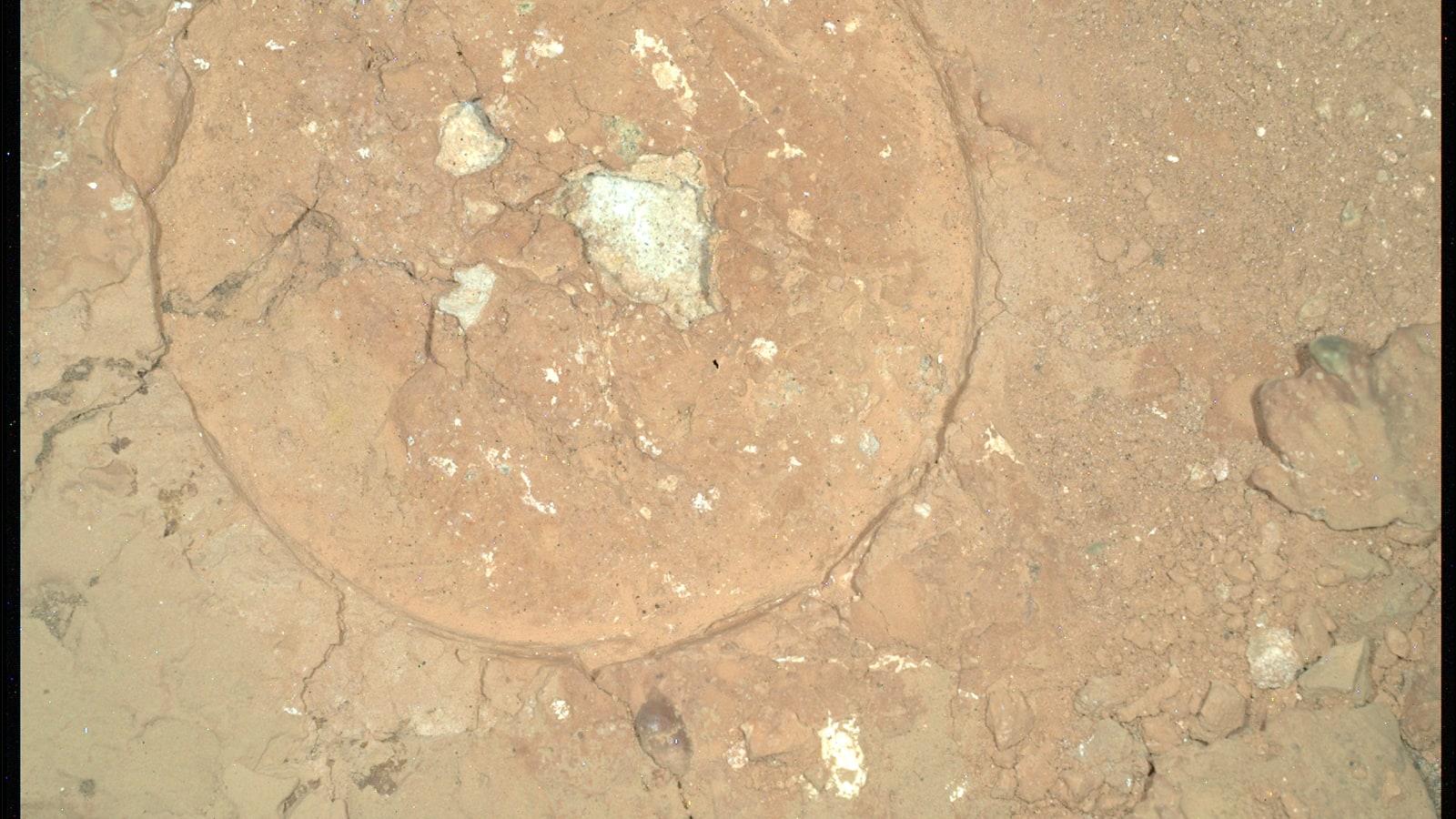
In August 2024, the Perseverance rover examined a red rock in Jezero crater, at a site nicknamed Serpentine Rapids. Its abrading bit ground a small patch 5 centimetres across into the rock, exposing a mix of white, black and green. The biggest surprise was a set of drab green spots, about 2 millimetres wide, each with a dark core and a pale green rim.
These features are called reduction spots. To understand them, first ask why the rock is red. On Earth and on Mars alike, the red colour of a sediment comes from oxidized iron, the same rust that coats a tool left outdoors. Now picture water seeping through that sediment before it hardens. A chemical reaction can turn the oxidized iron into a reduced form, which leans green. The rock then keeps a green patch inside its red bulk, like a piece of cloth faded by a spilled chemical.
Here is the crucial part: on Earth, microbes are sometimes behind that reaction, consuming the oxidized iron as they go. Not always, though. Decaying organic matter can create the same conditions, and reactions between sulfur and iron get there too, with no life involved. A green spot is a clue, never a proof.
That uncertainty is what drove the Scottish expedition. On the Clachtoll cliffs the researchers could hunt for these spots with handheld instruments, on foot, and collect samples around them. Where Perseverance could not place its analysers on a green spot, the field team can study dozens of real cases, observe their surroundings and work out the conditions that produce them.
Handheld instruments that read rock on the spot
The whole method comes down to one constraint: whatever fits in a backpack.
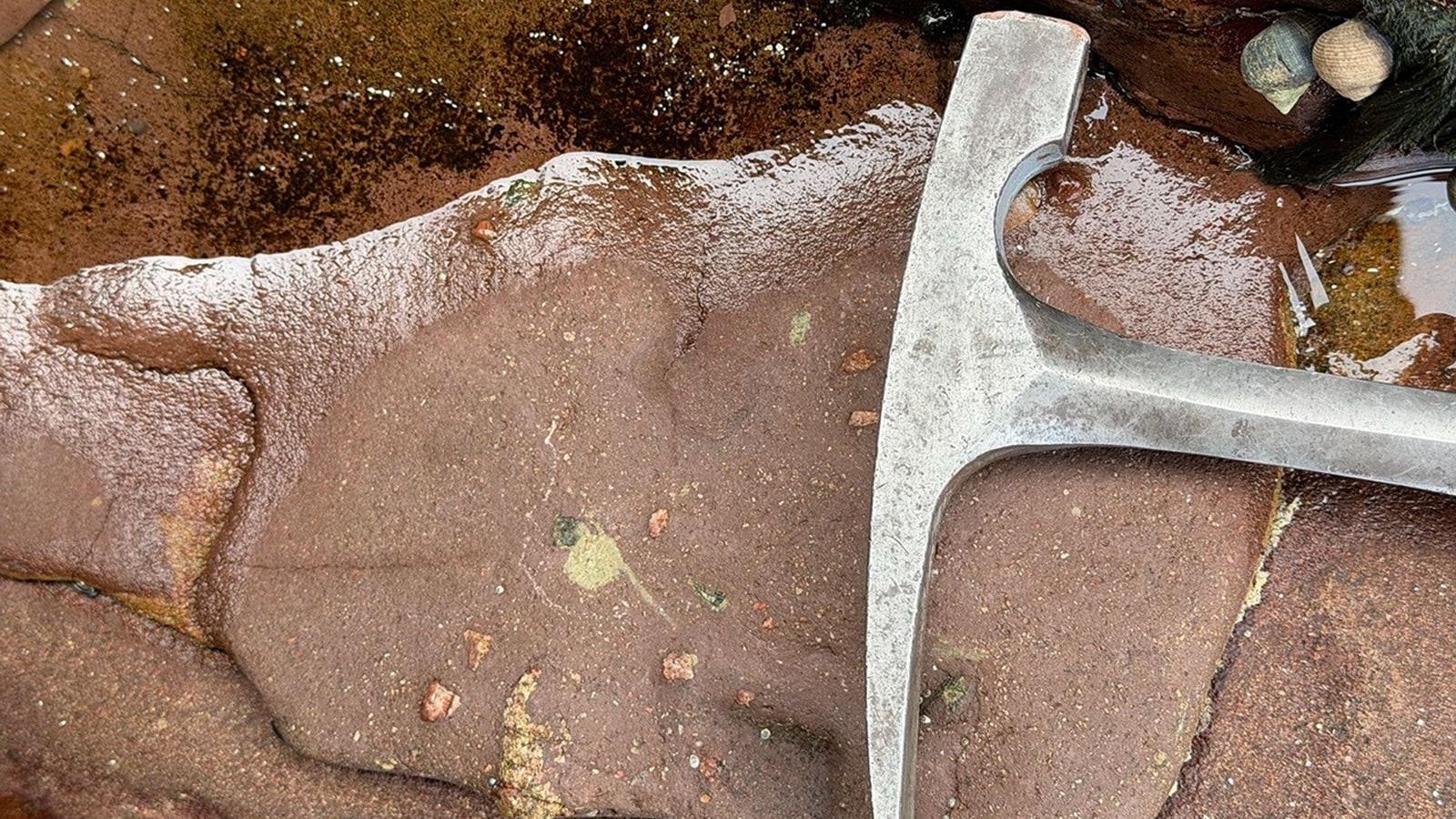
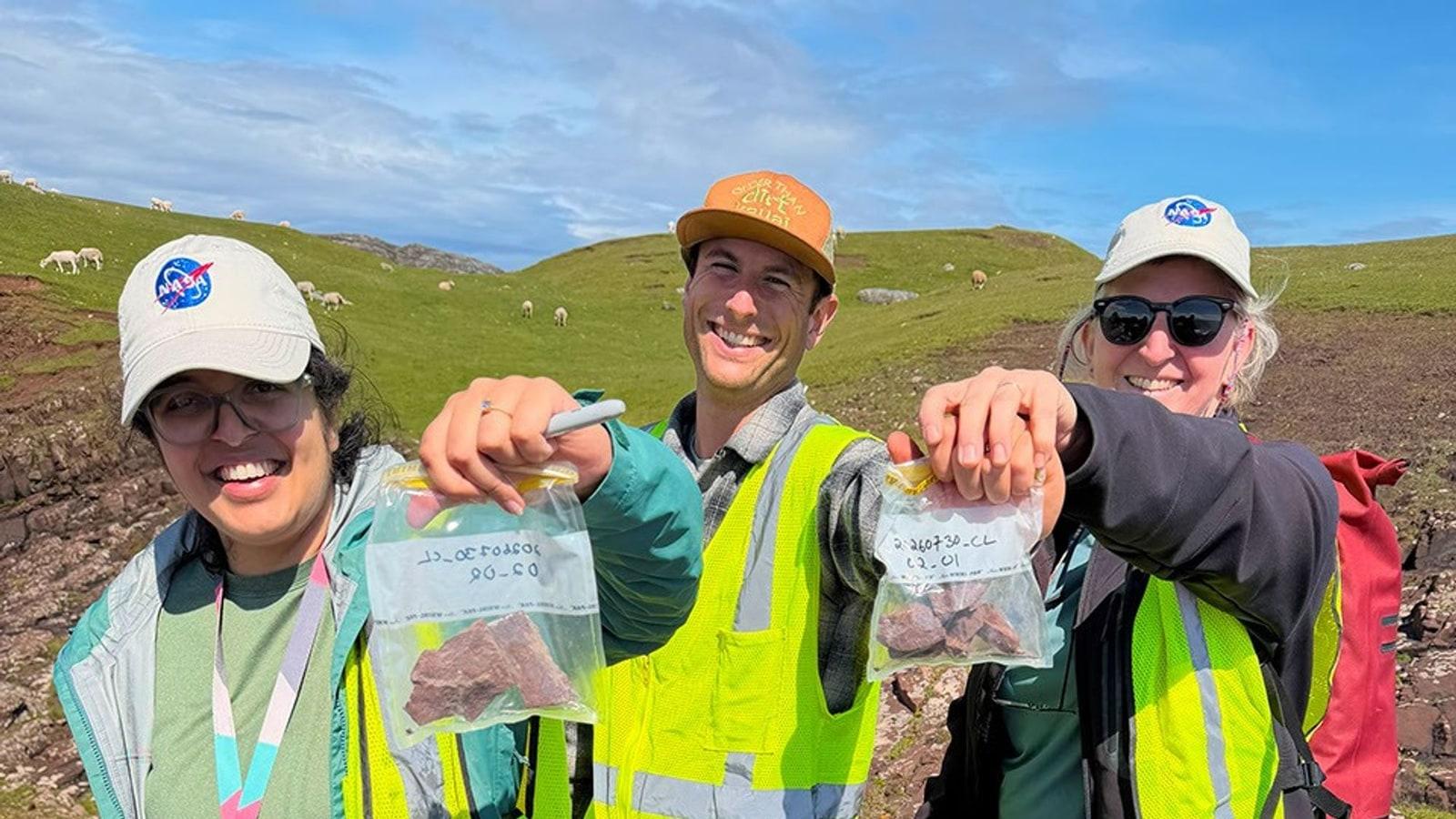
NASA Goddard's Instrument Field Team, based in Greenbelt, Maryland, hiked the coast and cliffs of Clachtoll with science instruments on their backs. They used handheld devices to check the mineral and chemical makeup of the rock on the spot, searched their surroundings for clues about the environment, and identified and collected samples for later. Nothing like the lab tools that fill entire rooms.
The terrain sets the schedule too. At this site, the water level shifts by 3.4 to 4.6 metres between high and low tide. Climbs were therefore timed between tides, so the team could reach a study site and get back down safely while the slopes were dry. In the wet climate of the Scottish Highlands, that is no small feat.
What these rocks will change for Mars
Now to what the expedition actually delivers.
First, a field manual. The Scottish rocks formed in an environment close to that of ancient Martian lakes, and they preserved traces of microbial life. Studying both aspects in the same rock is like working with a case where the answer is already known. A scientist can calibrate their reading and grasp how a sign of life survives in a sediment and how it shows up in a measurement. That reading grid will later help interpret Perseverance's data.
Second, better questions for rovers. The samples reached the United States, and the story continues in the lab. An interdisciplinary coalition of scientists is preparing a detailed analysis of the chemical and mineral traces of ancient life left in Stoer's rocks. The follow-on work is also meant to help mission teams plan new rover investigations and ready the science community for Martian sample analysis, should those samples ever arrive on Earth.
Third, a less expected gain: these rocks fill gaps in Earth's own geologic record. The Stoer formation documents an ancient stretch of our planet, before plants, of which few records survive. The same stone therefore serves two investigations at once.
The expedition was led by Goddard's Instrument Field Team, with collaboration from NASA's Johnson Space Center in Houston and the universities of Glasgow, Maryland, Purdue, Stony Brook and Cambridge. The discipline has a name: planetary analog research, the study of Earth's extreme environments to understand comparable landscapes on other worlds.
A dress rehearsal before Martian samples
Let us be honest about what these rocks do not say. They prove nothing about life on Mars. They do not date the green spots at Jezero, and they cannot stand in for a measurement taken in place. What they offer is a full-scale training ground, with the same rocks, the same questions and a known answer close at hand.
Perseverance has already drilled and stored samples in Jezero crater, waiting for a mission that could bring them to Earth. When those tubes finally arrive, labs will have rehearsed the move on Scottish cliffs. That is how the science community gets ready to meet a Martian rock knowing exactly what to look for.
Going further
- The mission page for Perseverance, on Mars since February 2021.
- The key notions: Mars, astrobiology and habitability in our glossary.
- To observe the sky from your own home: the interactive sky map, the observing guide and the astrophotography gallery.
- The official sources for this article: the NASA Planetary Expeditions blog on the Scottish trip, the mission blog on the red rocks with green spots at Serpentine Rapids by Adrian Broz, NASA's Planetary Analogs page and the Goddard Instrument Field Team introduction.