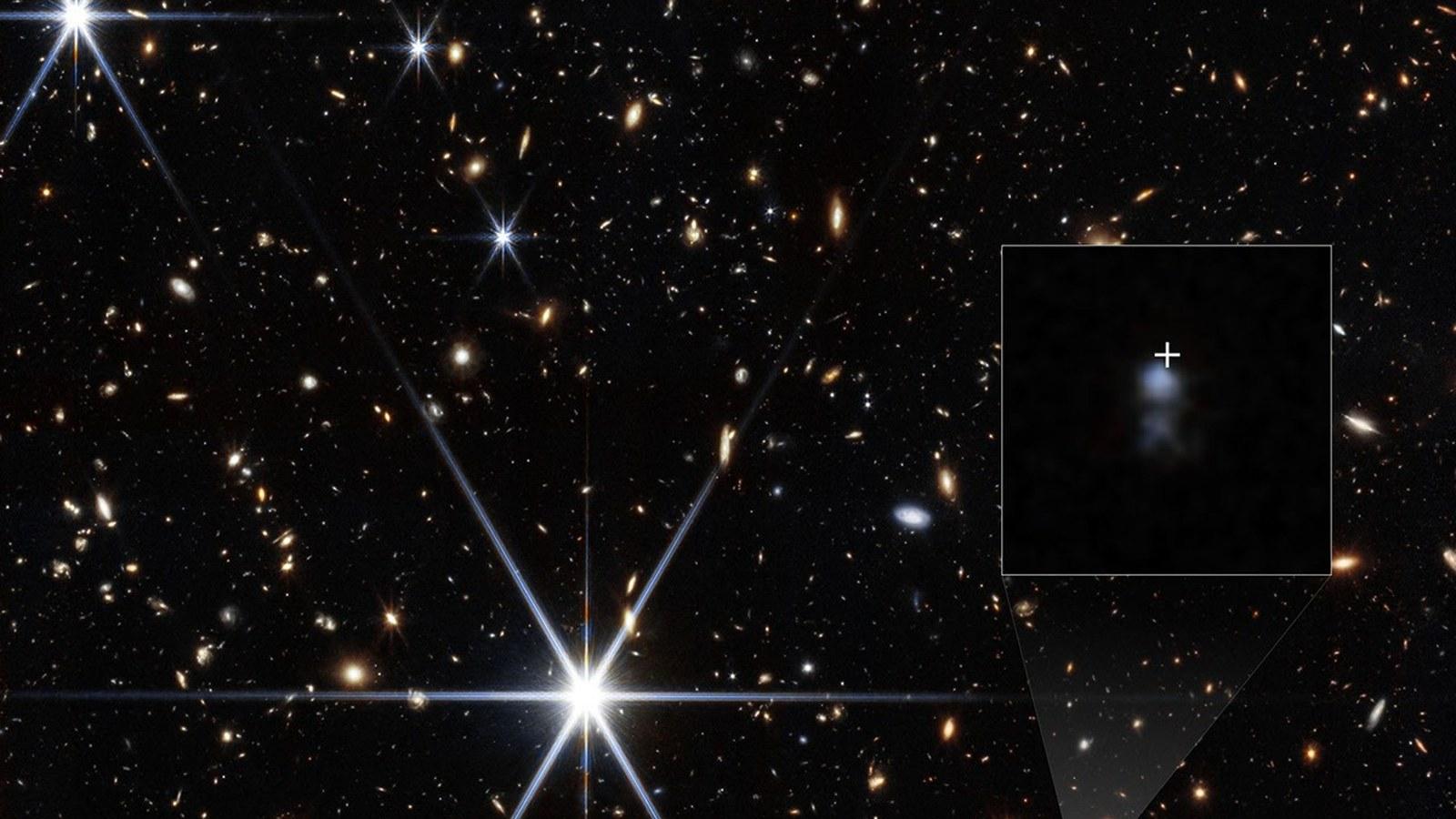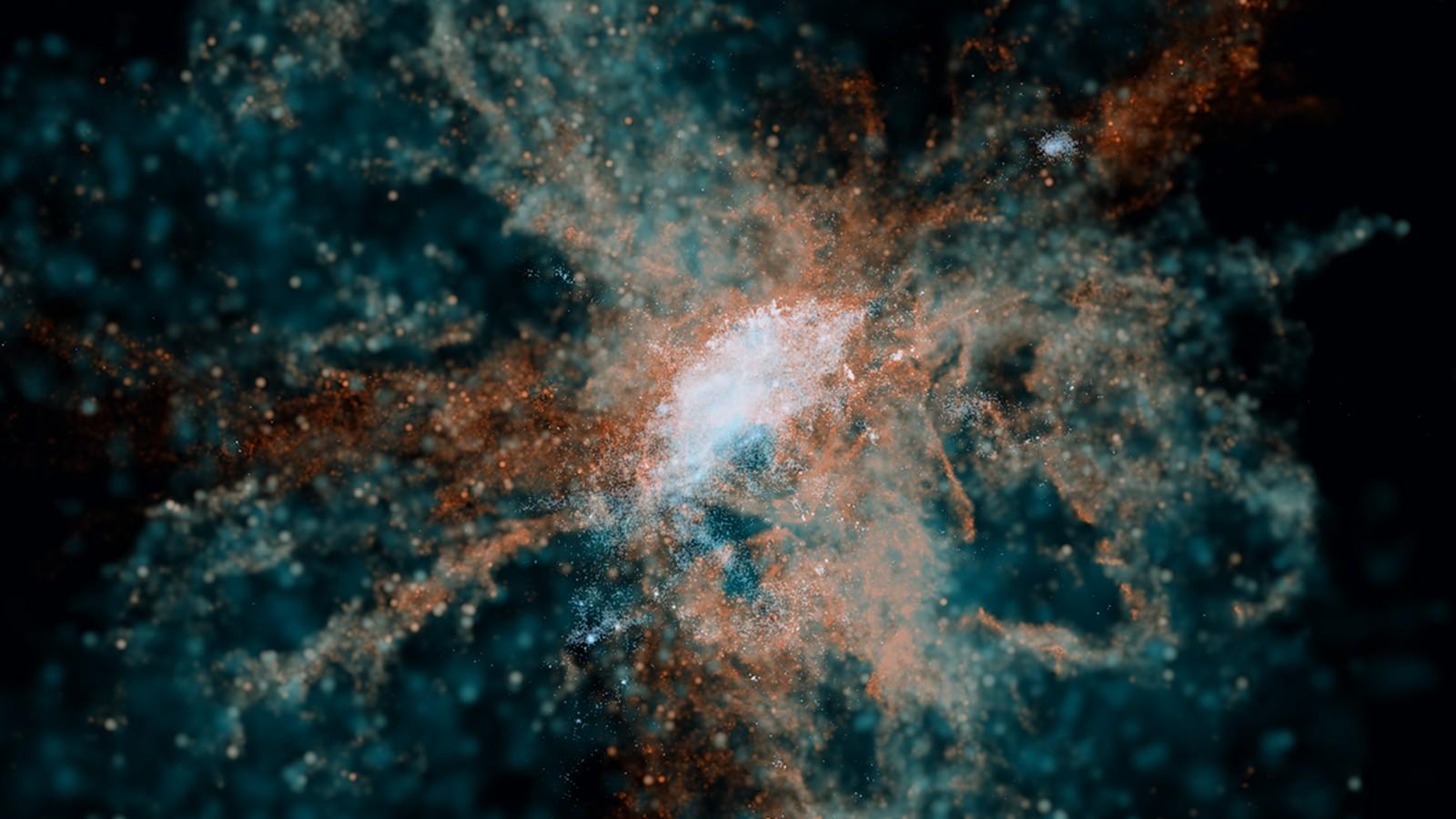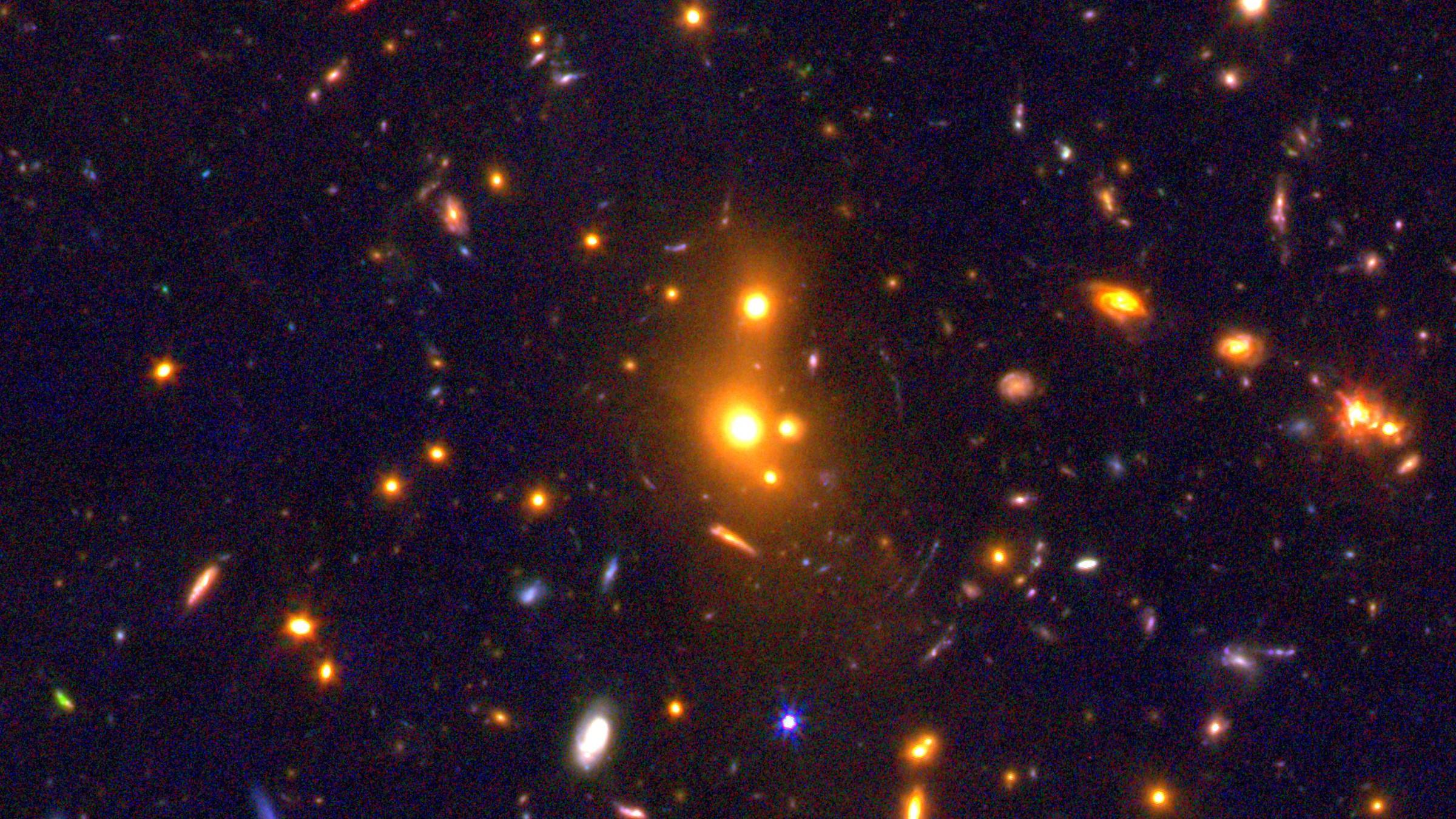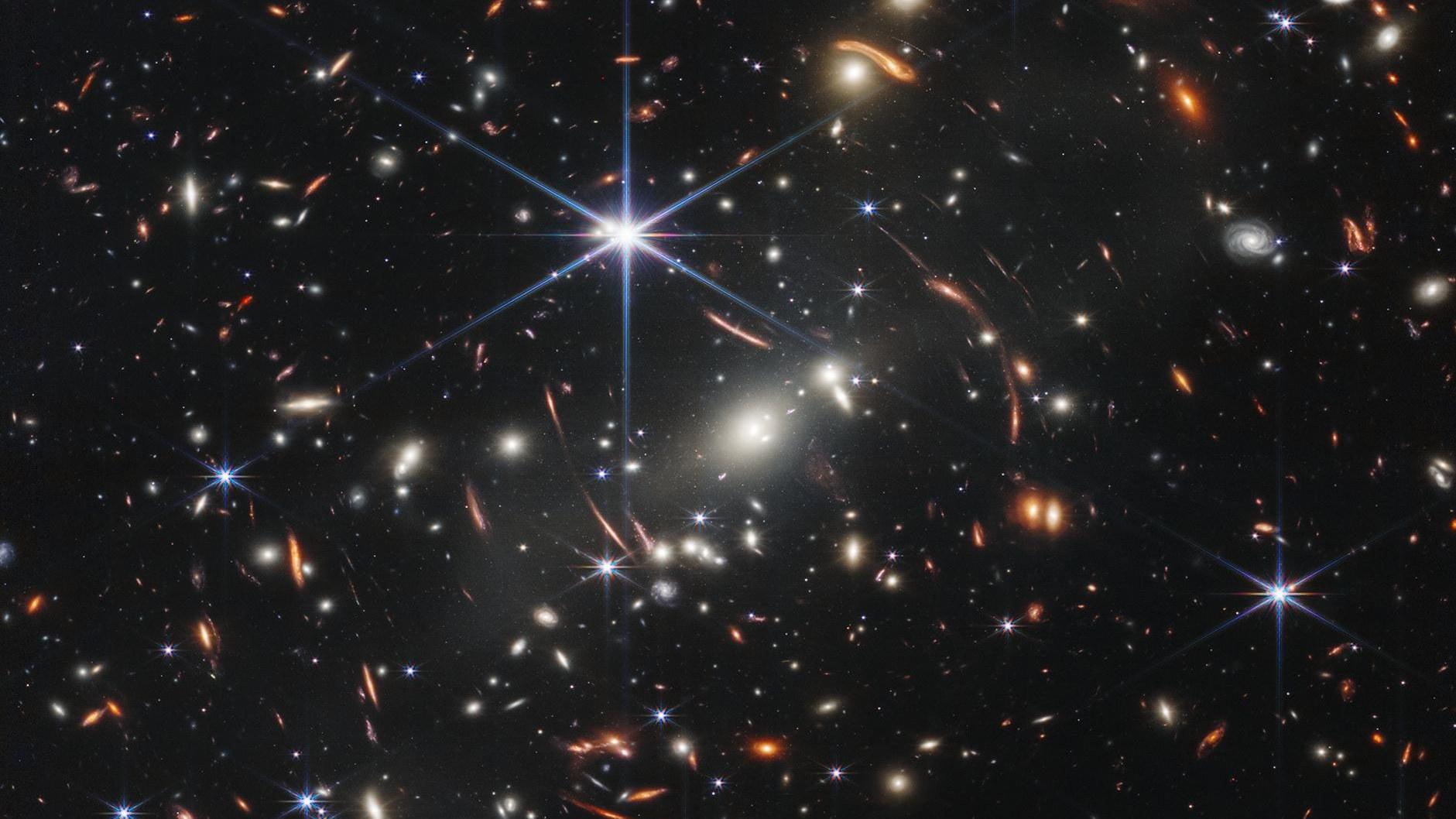
Nine massive galaxies, frozen in time for billions of years, have just given up one of their secrets: they hide crowds of small stars nobody could see. A team led by Leiden Observatory (Mariska Kriek), working with the James Webb Space Telescope and the Very Large Telescope in Chile, shows that these galaxies weigh up to 4 times more than previous estimates. The puzzle of the first "impossible" galaxies just got tougher.
Nine galaxies under the microscope, one clear verdict
Published on August 18, 2026, in Nature Astronomy, the study led by Chloe Cheng and supervised by Mariska Kriek targets nine "quiescent" galaxies: giants that stopped forming stars billions of years ago. Their light spent nearly 6 billion years traveling to us, so we see these galaxies as they were 6.5 billion years after the Big Bang. Along the way, the expansion of the universe stretched their colors toward the red, a redshift astronomers denote with the letter z (here z ≈ 0.7).
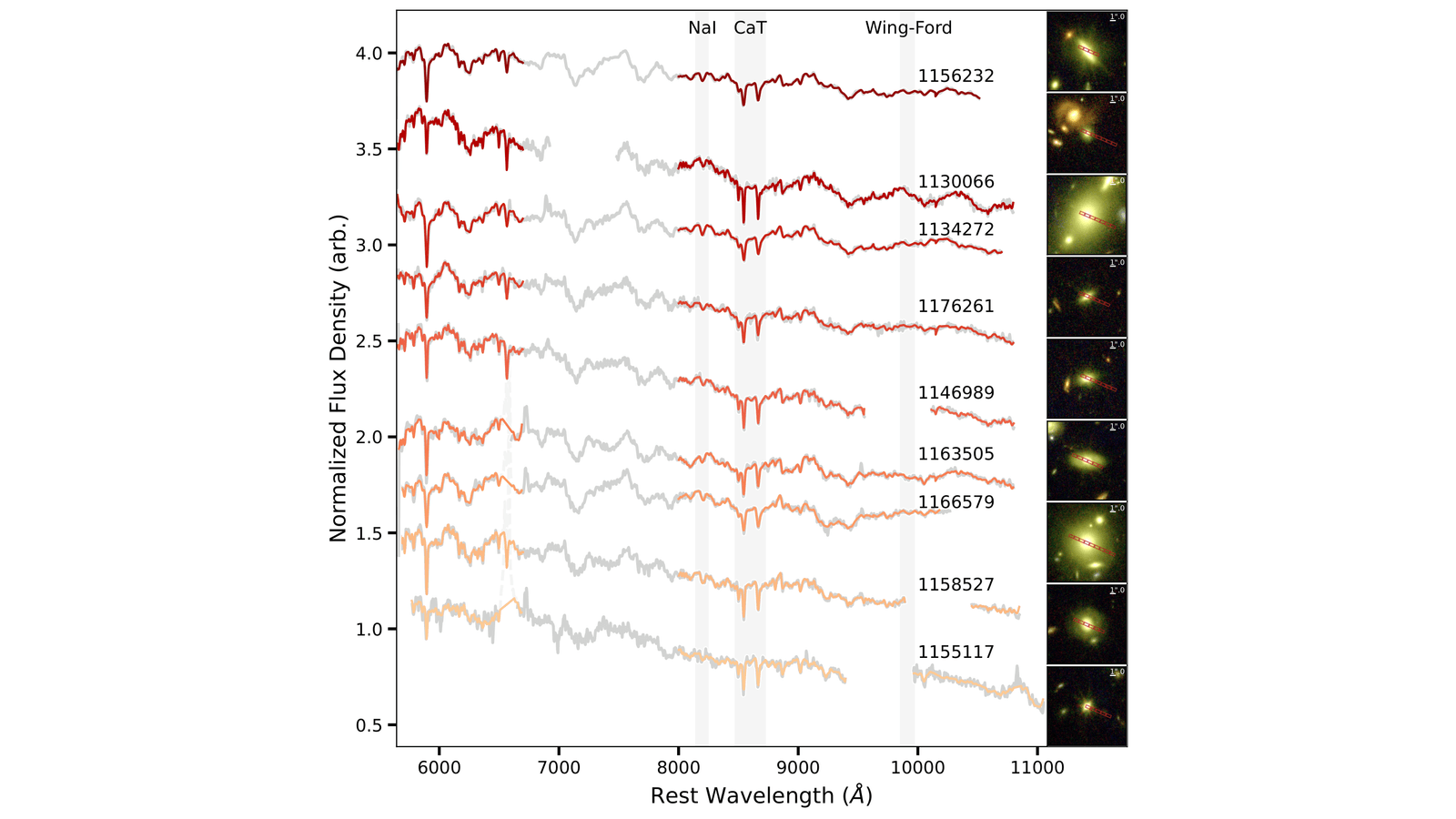
Why this choice? Because a dead galaxy holds an old, calm stellar population, ideal for counting stars. The JWST-IMFERNO program stacked 31.2 hours of observing time with NIRSpec, Webb's spectrograph, which splits light into its colors, to build ultra-deep spectra: exposures so long that the faintest fingerprints finally emerge. Archived data from LEGA-C, a major survey carried out with the VLT in Chile, round out the picture. The upshot: for the first time, astronomers could estimate the fraction of small stars in galaxies this distant.
The IMF problem, the astronomers' star counter
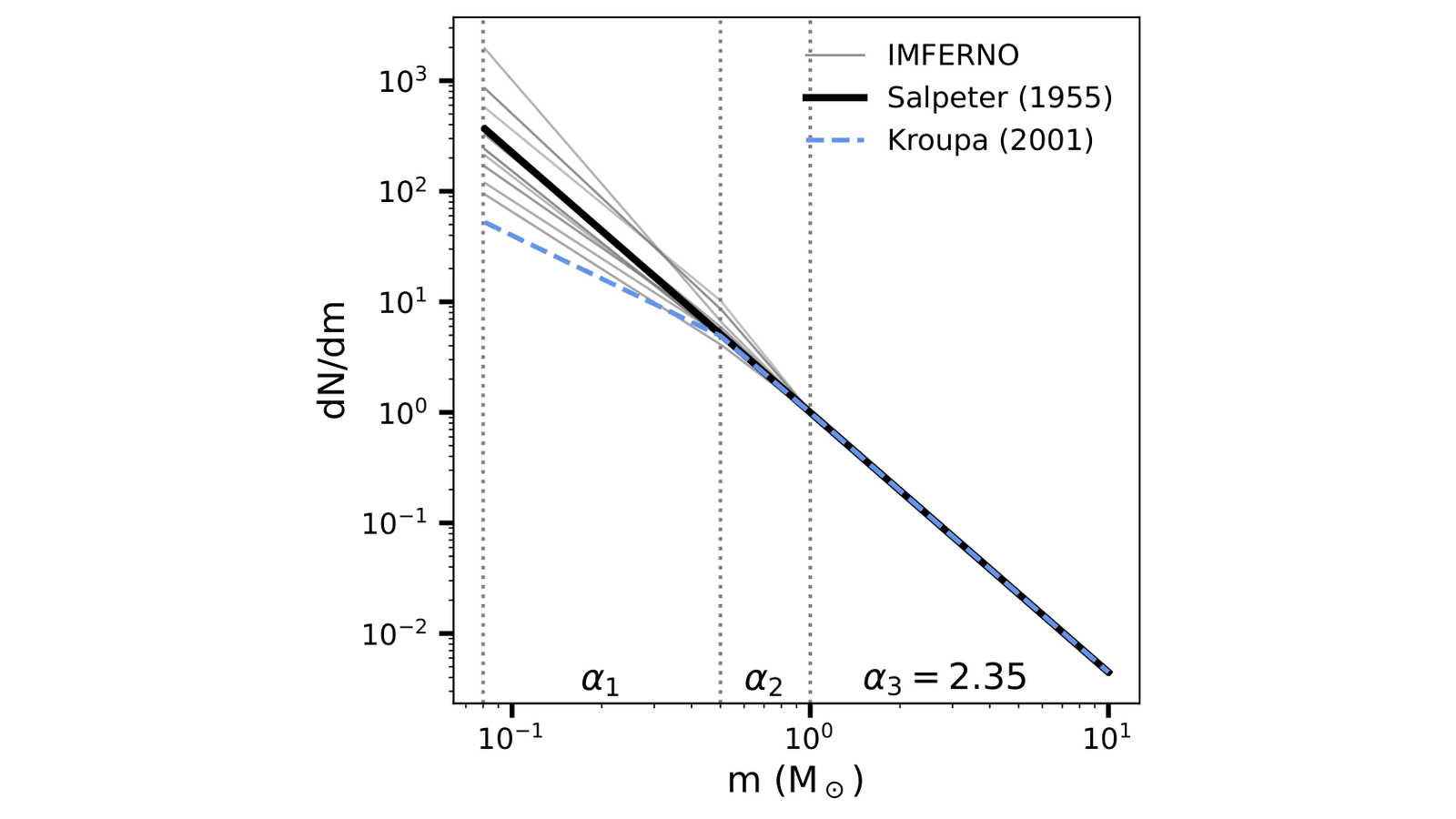
To weigh a galaxy, you add up its stars. The catch: you only see the bright ones. Red dwarfs, small and dim, dominate the headcount: of the roughly 200 billion stars in the Milky Way, most are red dwarfs. They are too faint to be picked out one by one, even by Webb. So astronomers estimate their numbers from a statistical recipe: the initial mass function (IMF), which describes how many stars are born small and how many are born giants.
The trouble is that this recipe was assumed to be universal. Everyone applied the Milky Way version everywhere. The Leiden study shows that assumption fails for the giants of the young universe: the recipe severely undercounts small stars there.
How to flush out the invisible
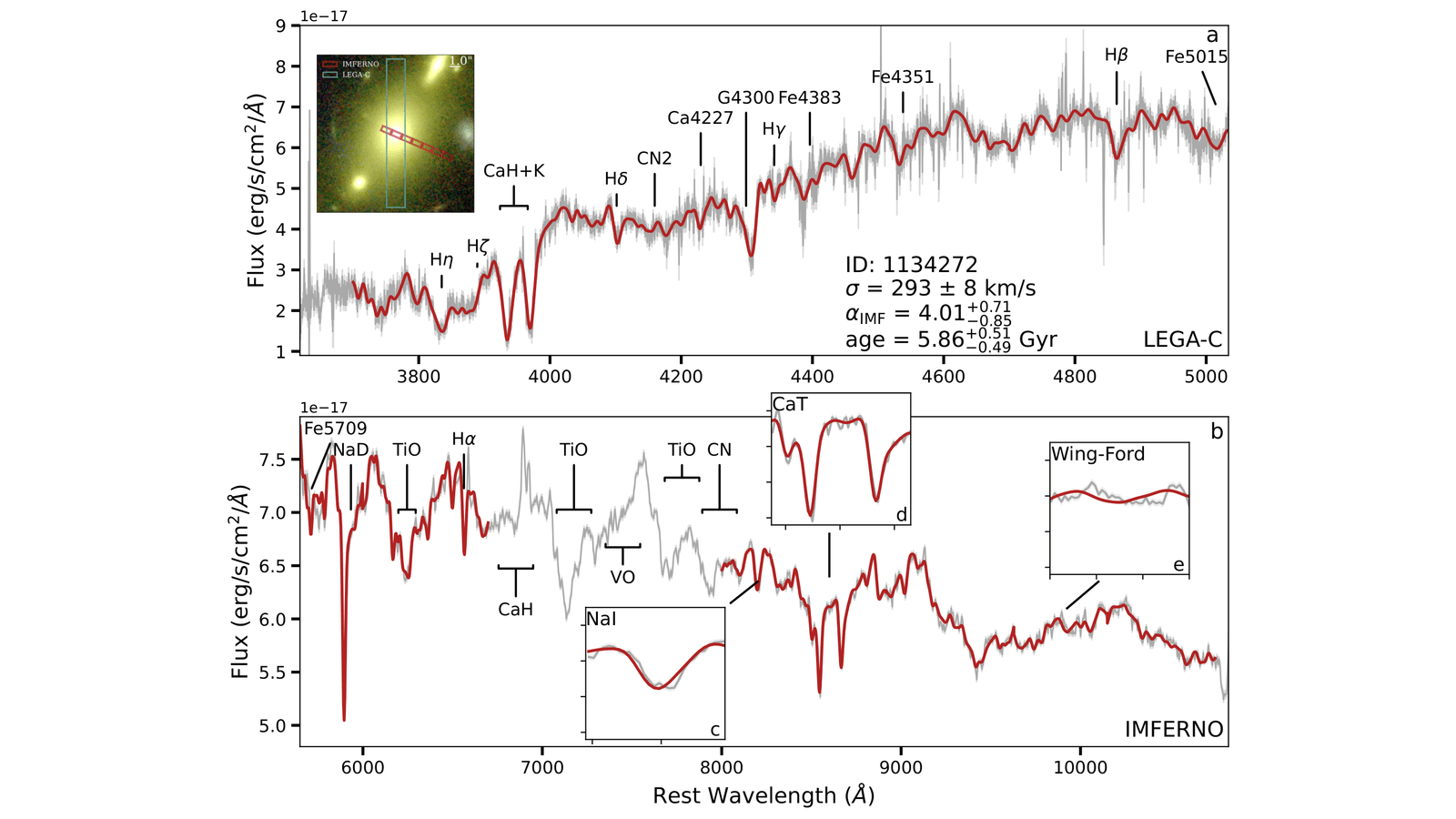
The method relies on spectroscopy: splitting each galaxy's light into its constituent colors, the way a prism spreads sunlight into a rainbow. Red giants and red dwarfs leave different fingerprints in the spectrum, because their surfaces run at different temperatures and gravities. Three near-infrared signatures, colors of light beyond the red that our eyes cannot see, do the job: the Na I bands (8,180 Å), the CaT (8,475 to 8,725 Å) and the Wing-Ford band (9,905 to 9,945 Å), wavelengths measured in angstroms, the unit astronomers use for fine color detail. The last one is an exclusive fingerprint of red dwarfs, first spotted in 1969 in the spectrum of the nearby red dwarf Wolf 359.
By fitting stellar population models to these spectra, in other words simulations that recreate the light of a mixed bag of stars, the researchers measured a parameter α for each galaxy, effectively a correction factor: 1 would mean the bookkeeping was right, 4 that the galaxy weighs four times more than the recipe claimed. The result: α ranges from 1.1 to 4.0 across the sample, with a median of 1.4. Two galaxies clearly cross the statistical threshold, the line beyond which a result is no longer chance: they hold a genuine excess of small stars.
The oldest galaxy: up to 4 times more massive
One galaxy in the sample, catalogued as 1134272, steals the show. Its estimated stellar age of 5.86 billion years means it formed before redshift 5, in other words less than 1.5 billion years after the Big Bang. It would already have stopped forming stars by z ≈ 4.6: a giant, all grown up while the universe was still a child.
For this galaxy, α reaches 4.01 with an uncertainty of ± 0.7. Its mass, computed until now with the Milky Way recipe, should therefore be multiplied by about 4 (± 1). That is no small tweak: the authors suggest this galaxy is a descendant of the "impossibly early" galaxies found by JWST, the ones that seemed too massive, too mature, too soon. If the descendants share this stellar profile, the ancestors had it too. Their true masses could be 4 times higher than published estimates (factor 4 ± 1).
What it changes for cosmology
Every time JWST spots a massive galaxy very early in cosmic history, galaxy formation models break a sweat. By quadrupling the estimated masses of their descendants, the study turns a tension, a gap the theory cannot close, into a major enigma: how could astronomical numbers of small stars form so fast, in a universe still young?
There is also a surprising lead: small stars live very long and readily host planets. A larger-than-expected population of red dwarfs in the young universe could mean more planets formed within the first billions of years. The team plans to push the method toward ever more distant galaxies, on the doorstep of the very first generations of stars.
Going further
- Follow the telescope behind the discovery: James Webb (JWST), with its full mission page and news feed.
- The key concepts, plainly explained: galaxy, star formation and spectroscopy.
- To spot galaxies in your own sky: the interactive sky map and its observing guide.
- Official sources: the scientific paper Cheng et al., Nature Astronomy (2026) and its arXiv preprint, the Leiden University press release and the ScienceDaily summary.