On the eve of the International Astronautical Congress opening in Antalya, Türkiye, on 5 October, Europe has put a card on the table: it wants its own astronauts, launched on its own rockets, living on its own station in low Earth orbit. The price tag is dizzying, about €10 billion spread over ten years. Here is what is actually on the table, who is working on it, and what gets decided in December.
Ten billion to stop buying seats
Europe today is a champion of crewed spaceflight by proxy. Its astronauts reach orbit aboard American or Russian capsules, and its experiments fly inside a laboratory, the Columbus module, that belongs to a station run by a partnership in which Europe is only one member.
So the question of the day is simple: what comes next? The International Space Station, the ISS, is due to end operations in 2030. After that date, with no capability of its own, Europe would have to buy the right to send its astronauts and experiments from its partners.
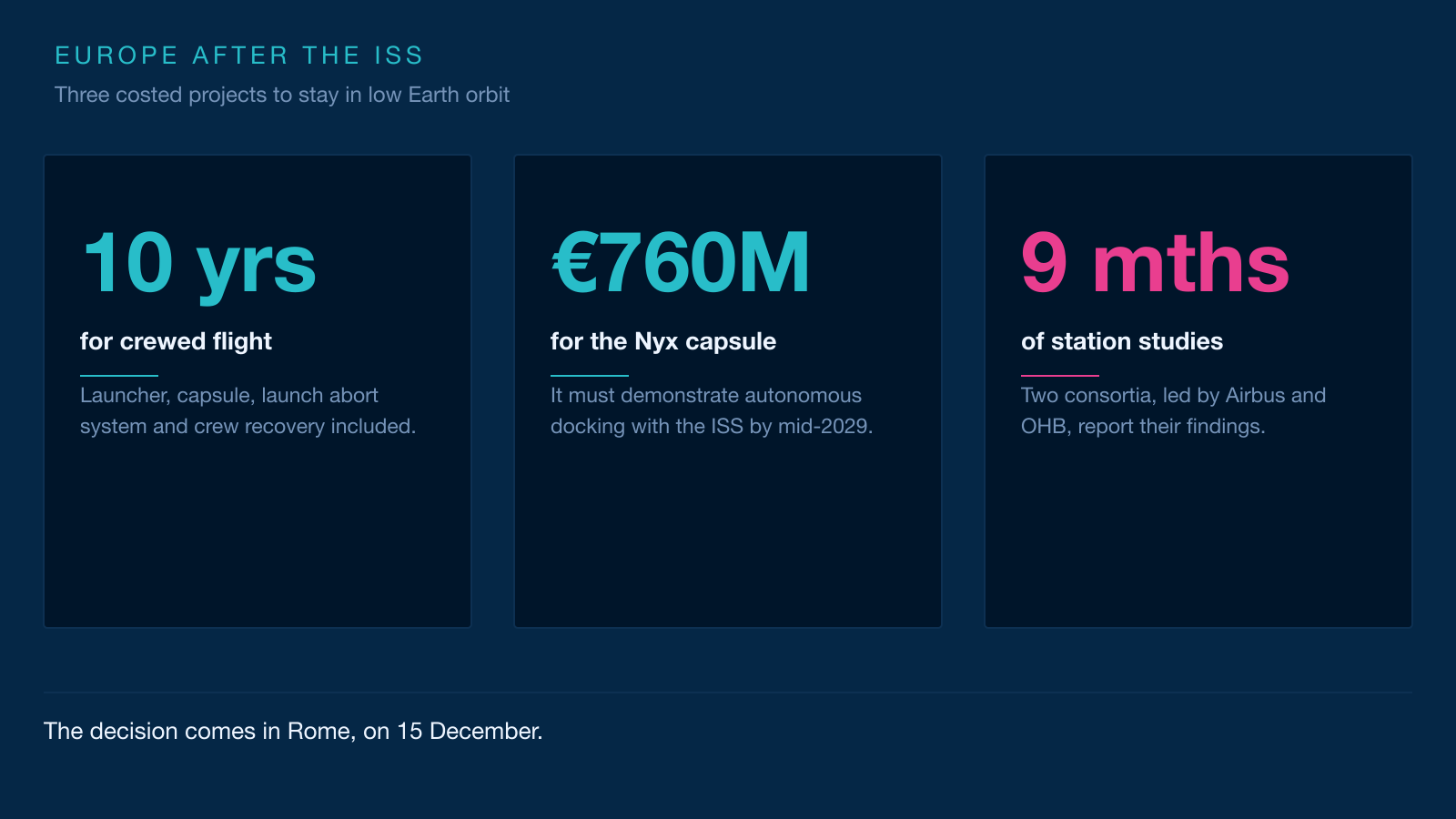
"We have estimated it would take about 10 years for a capacity to launch our own European astronauts with our own rockets and our own system. It would cost about 10 billion," ESA Director General Josef Aschbacher told NASASpaceflight. His next sentence is the heart of the argument: "But if we don't do it, that means we would still want astronauts in space. We would need to buy this capacity in the United States, which is our partner today. That means both the flight opportunity but also the station opportunity in orbit, in space, and that cost us about five billion. So, for five billion extra we can do it ourselves and leave the money in Europe and therefore invest in our own capacity."
Put another way: the bill is not €10 billion against zero, but €10 billion against €5 billion. The real gap to fund is therefore around €5 billion, half the figure that keeps making the rounds.
A complete crew transport system is not just a rocket and a capsule. It also needs a launch abort system, the device that yanks the capsule off the rocket within seconds if liftoff goes wrong, ground operations, crew health monitoring, and a way to recover the crew after landing. Every one of those pieces must be certified to fly with humans, a far stricter process than for a satellite.
Two candidate capsules, already under construction
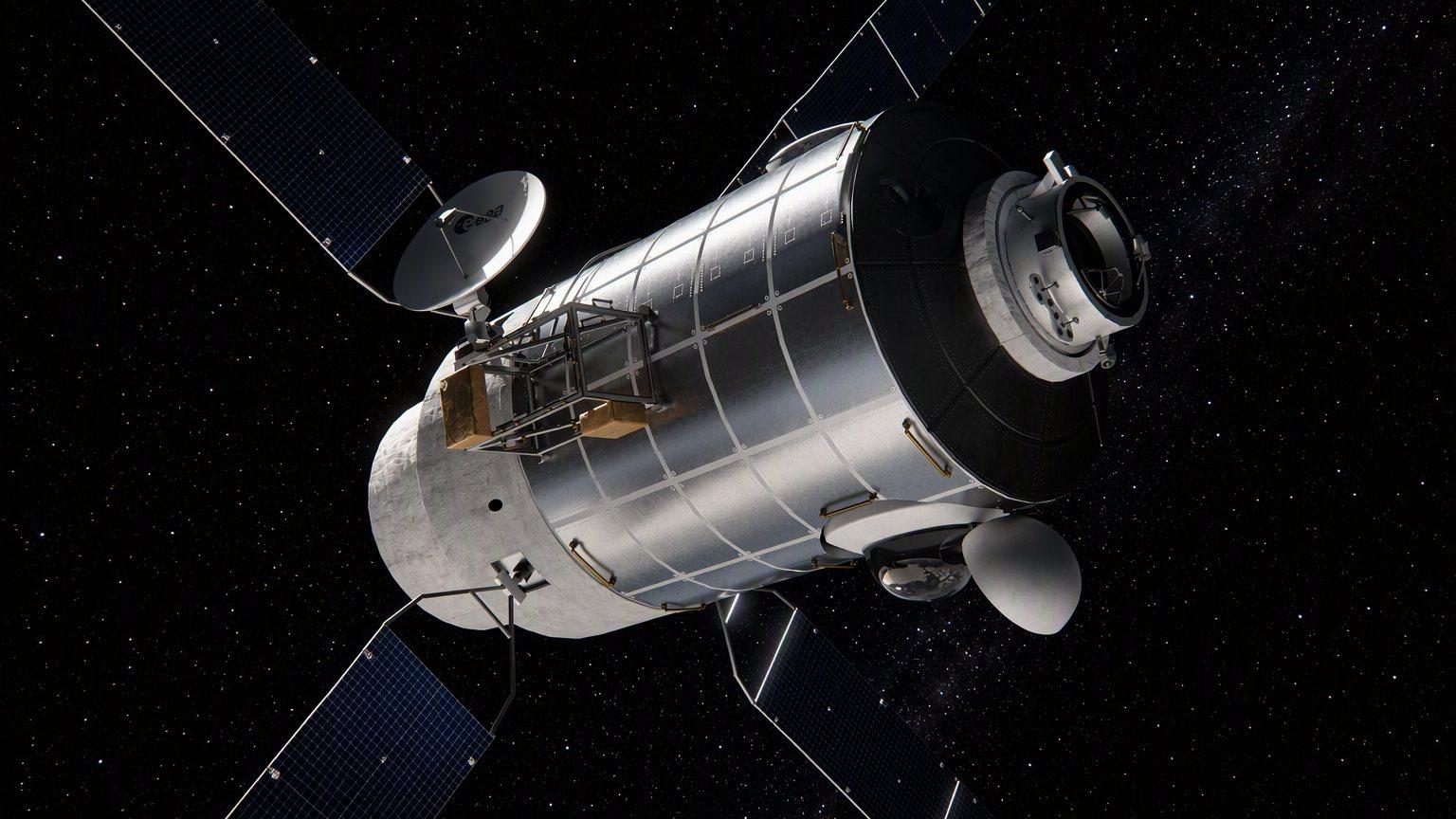
ESA did not wait for ministers to lay the technical groundwork. Two European companies have already announced crew vehicle projects.
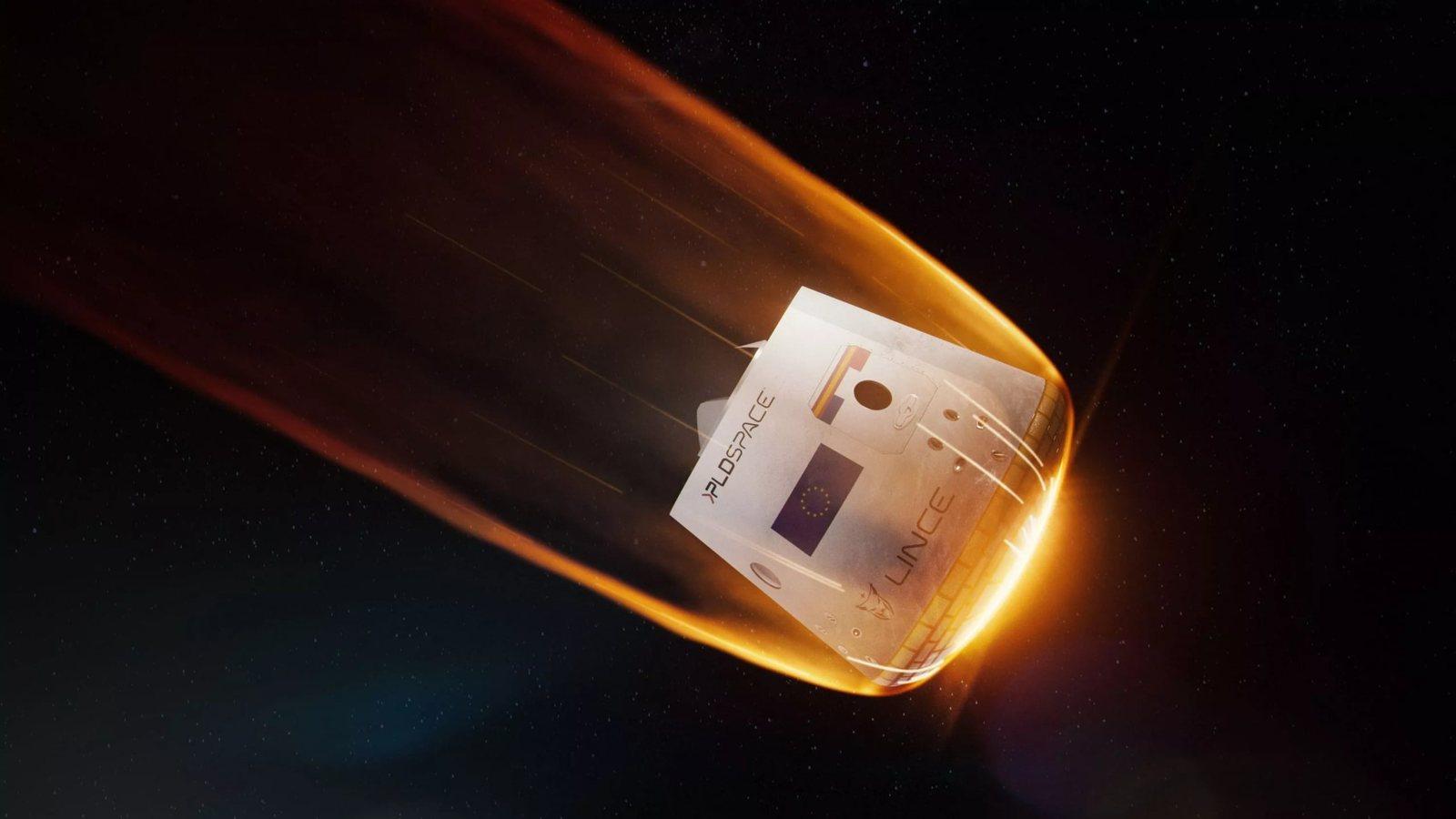
The first is The Exploration Company with its Nyx capsule. The second is PLD Space, working on a capsule called LINCE, meant to fly on its forthcoming Miura Next rocket. Neither has yet signed a crewed-vehicle development contract with the agency, but both have cleared the first hurdle, cargo transport.
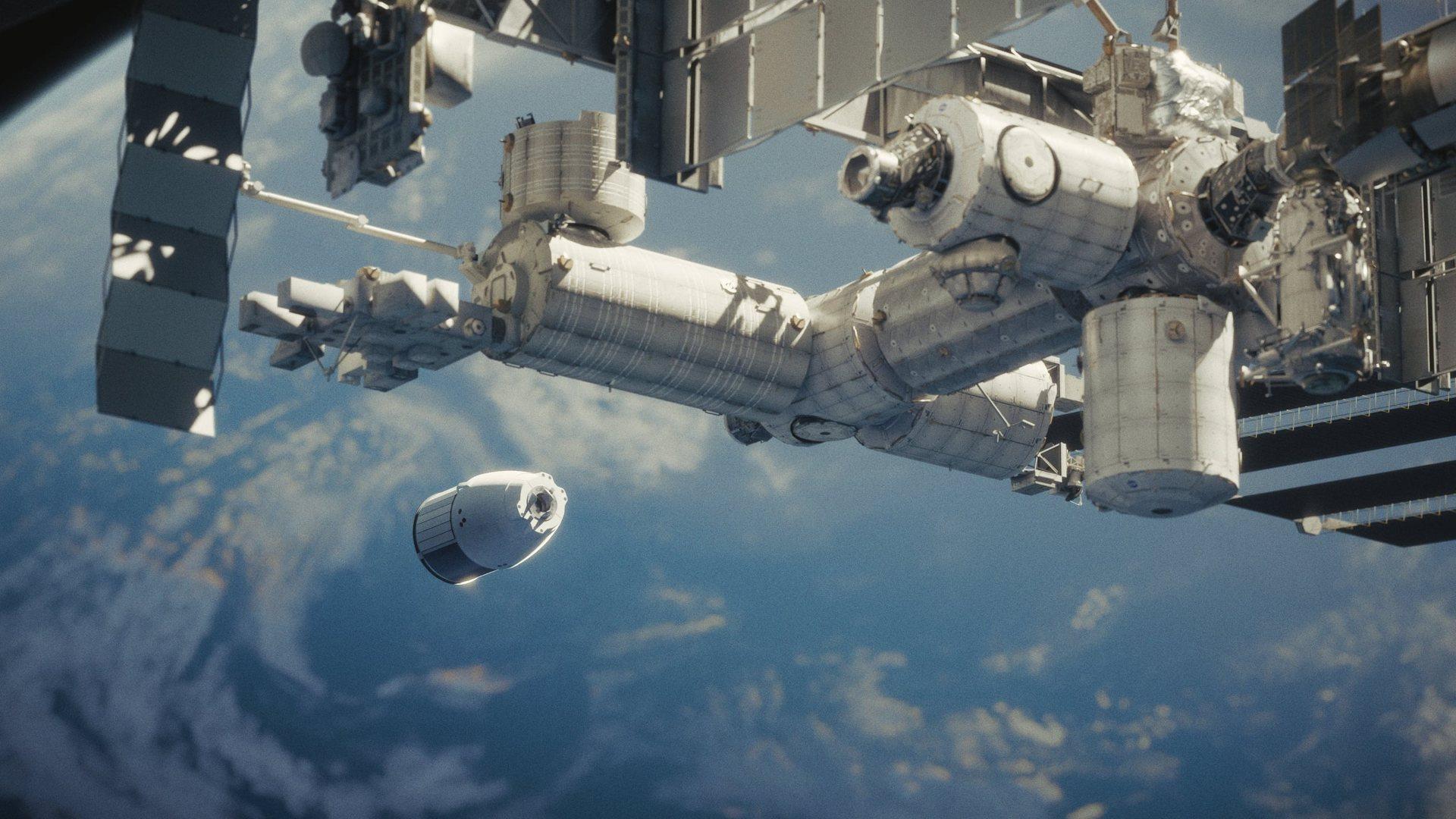
The step-by-step approach has an advantage: before daring to send a person, you send hardware. The Exploration Company's cargo capsule was picked in September 2026 for a contract worth up to €760 million under the ALADDIN programme, short for Autonomous LEO Accelerated Demo Docking to ISS Node, in plain terms a demonstration of autonomous docking with the ISS. Of that sum, €310 million funds the demonstration mission, and the remaining €450 million covers options for two more cargo missions, to the ISS or to a future commercial station.
One detail matters: the company raised 40% of the financing for that demonstration from private investors, with ESA covering the other 60%. This is the "anchor customer" model. The agency does not buy a vehicle, it buys a service, letting the company raise the rest. Nyx is to launch on an Ariane 6 and dock with the ISS no later than the second quarter of 2029, the last docking window available before the station retires.
Axiom, Starlab, Vast: three backup doors
Alongside its own station, Europe is negotiating entry tickets with private operators. In September 2026, ESA signed two documents: a memorandum of understanding with US firm Axiom Space, and a letter of intent with Starlab, a joint venture between US company Voyager Technologies and Europe's Airbus Defence and Space.
These texts are not contracts. They are discussion frameworks, deliberately non-exclusive, sketching what cooperation could cover: European astronaut flights to those stations, experiment slots for microgravity research, and the use of future European transport, both cargo and crew. How far it goes will depend on member-state decisions.
The third partner is nearly flying already. US firm Vast is preparing Haven-1, billed as the world's first commercial station, with launch planned for 2027. A European astronaut is set to join its very first expedition: ESA reserve astronaut Arnaud Prost, intended as flight test engineer. Another European, Thomas Pesquet, is named commander of a private crewed mission to the ISS, alongside Czech astronaut Aleš Svoboda and Greek flight surgeon Adrianos Golemis, a mission planned for 2027.
A European station, crewed part-time
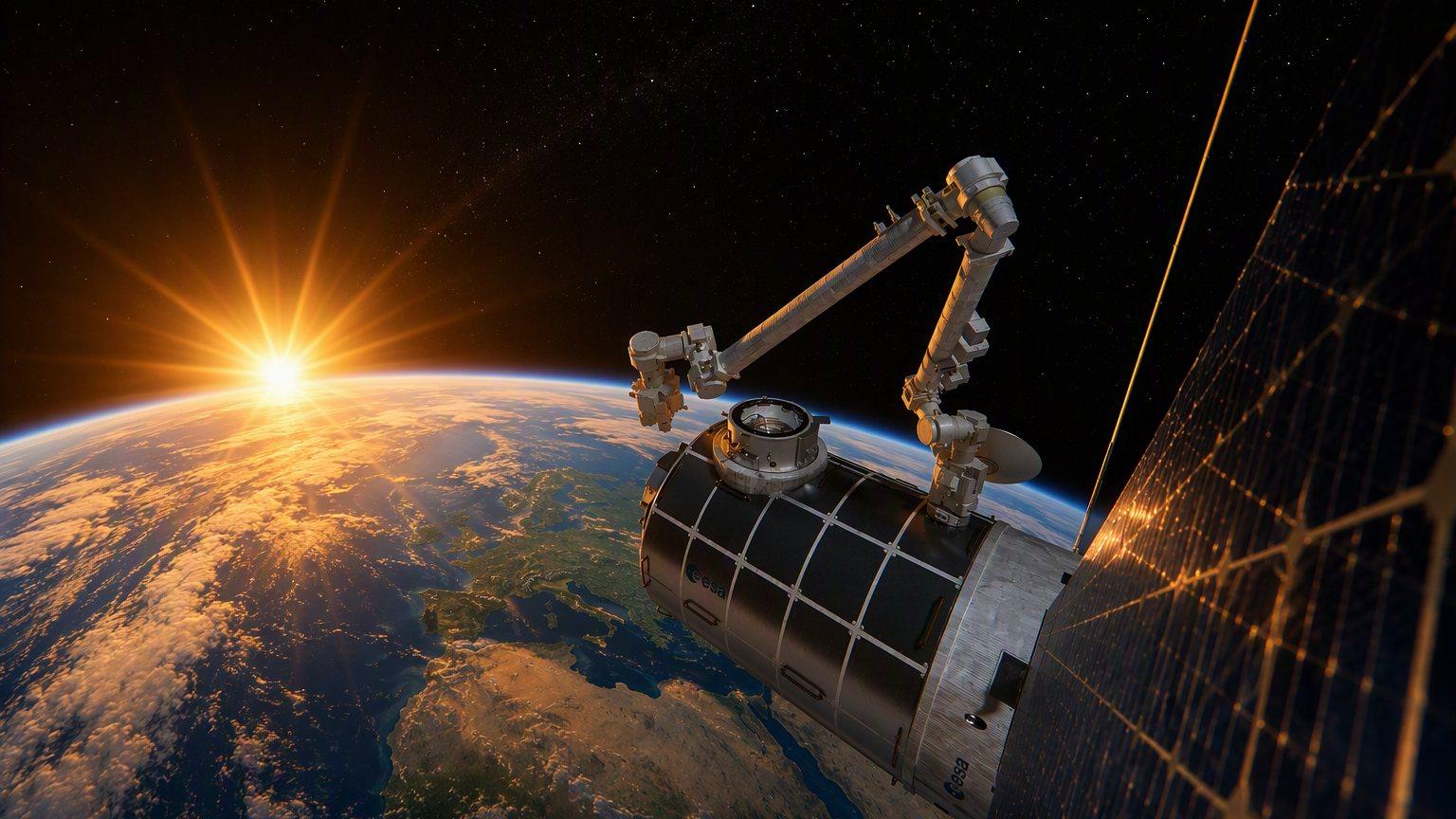
Then there is the most ambitious option: a station designed and built by Europe. In September 2026, ESA handed two parallel preliminary studies to two European industrial consortia, led respectively by Airbus Defence and Space and OHB, both based in Germany, with six other industrial and institutional players. Started in June 2026, the studies are to run for roughly nine months.
Their purpose is not to draw a definitive station, but to answer one practical question: is it feasible, technically and financially, and with which technologies and partnerships? Both consortia must propose possible architectures, the infrastructure itself, the supporting transport and the services needed to run it.
On occupancy, Aschbacher embraces a model unlike the ISS, which has been continuously crewed since 2000: "It may not be necessary that such a station is all around the clock occupied. That means we may use it for a certain time period, and for the rest of it we're using it as a robotic station automated through the operations that we have." A station that breathes with the rhythm of experiment campaigns, in short, rather than a house with the lights always on.
What this changes for Europe
The political calendar is tight. On 9 September 2026, at the International Space Summit in Paris, ministers from ESA member states endorsed a text titled "A Call to Boost European Space Exploration," a call to strengthen European space exploration. It sets three priorities: securing Europe's access to low Earth orbit after the ISS, strengthening its presence around the Moon, and using both as stepping stones towards Mars.
On that basis, the agency is preparing concrete proposals for an intermediate ministerial meeting in Rome on 15 December 2026. That is where member states will say yes, no, or not yet. The studies continue until then.
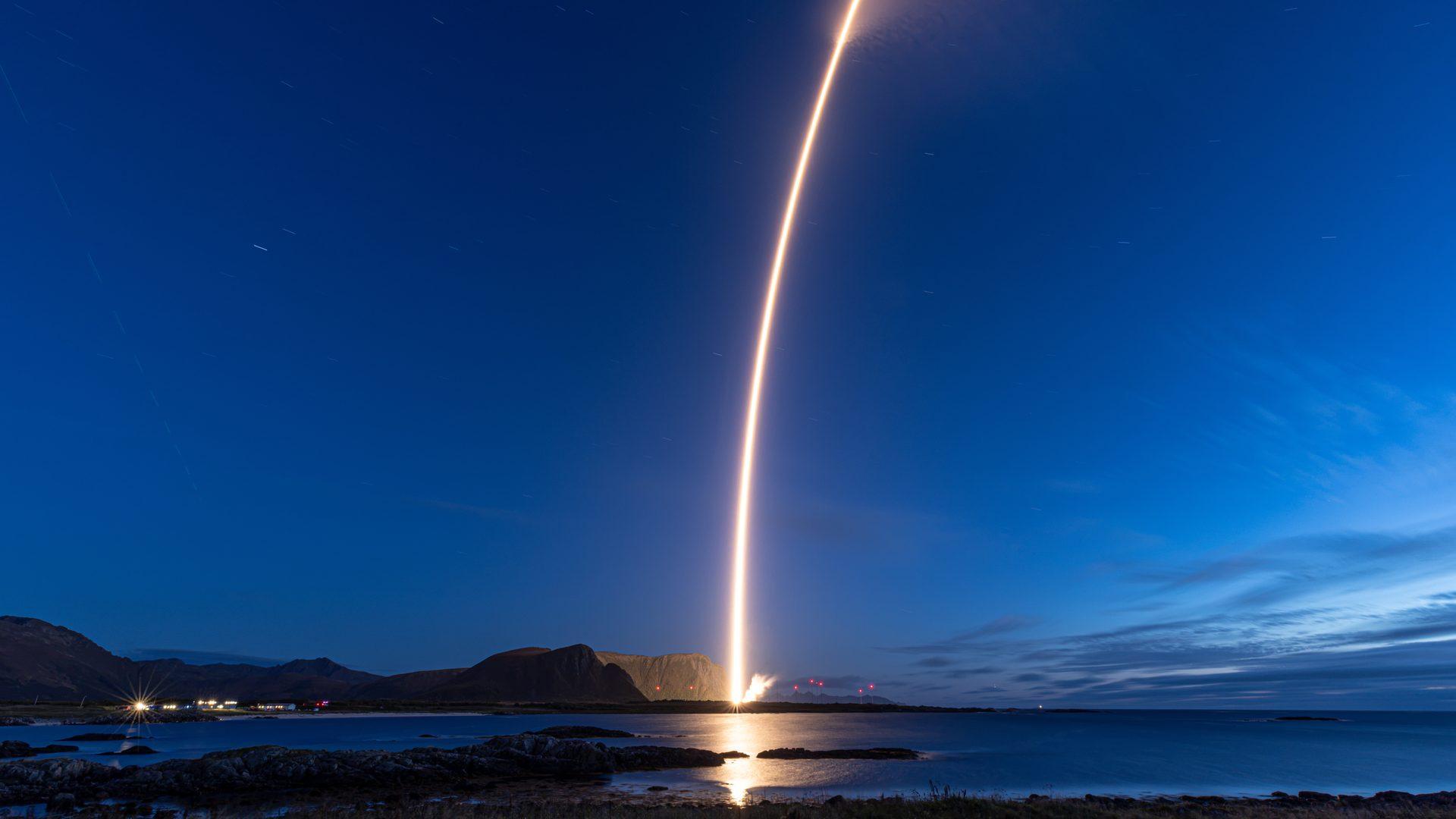
One last point deserves attention: access to orbit itself. Europe has just shown it can do it, with the first successful orbital flight of Isar Aerospace's Spectrum rocket on 5 September 2026, from Norway. But Aschbacher repeats it: its flagship Ariane 6 and the smaller Vega C are not reusable, unlike what the US industry now does. "In order to really be even more competitive on the world market, we need reusability," he says.
In other words, Europe's roadmap has three tiers. First reusable launchers, then a capsule, cargo or crewed, then the station. Each tier funds and validates the next. That is also why the ALADDIN programme, with its cargo capsule, matters: it serves as the technical stepping stone towards a crewed vehicle.
And the astronauts in all this? The stated goal goes beyond simple transport. ESA astronaut Matthias Maurer set the bar high in the same interview: "The Dragon is a very modern capsule, and I enjoyed my flight up to space in the Dragon capsule. This will be a minimum standard that I would like to have for a European capsule, but I think we can do better even. So, I would challenge my colleagues who design European capsules."
Going further
- The station now nearing retirement: the International Space Station, its 25 years of continuous occupancy and more than 3,000 experiments.
- The definitions to follow the story: space station, microgravity, Earth orbit and ESA.
- The official sources for this article: the ESA note on the station studies, the ESA release on the Nyx capsule and ALADDIN, the memorandum of understanding with Axiom Space, the letter of intent with Starlab and the NASASpaceflight report.
- The sky above you: spot the station and bright satellites with our sky map, then plan your nights with our observing guide. Share your images in our gallery.