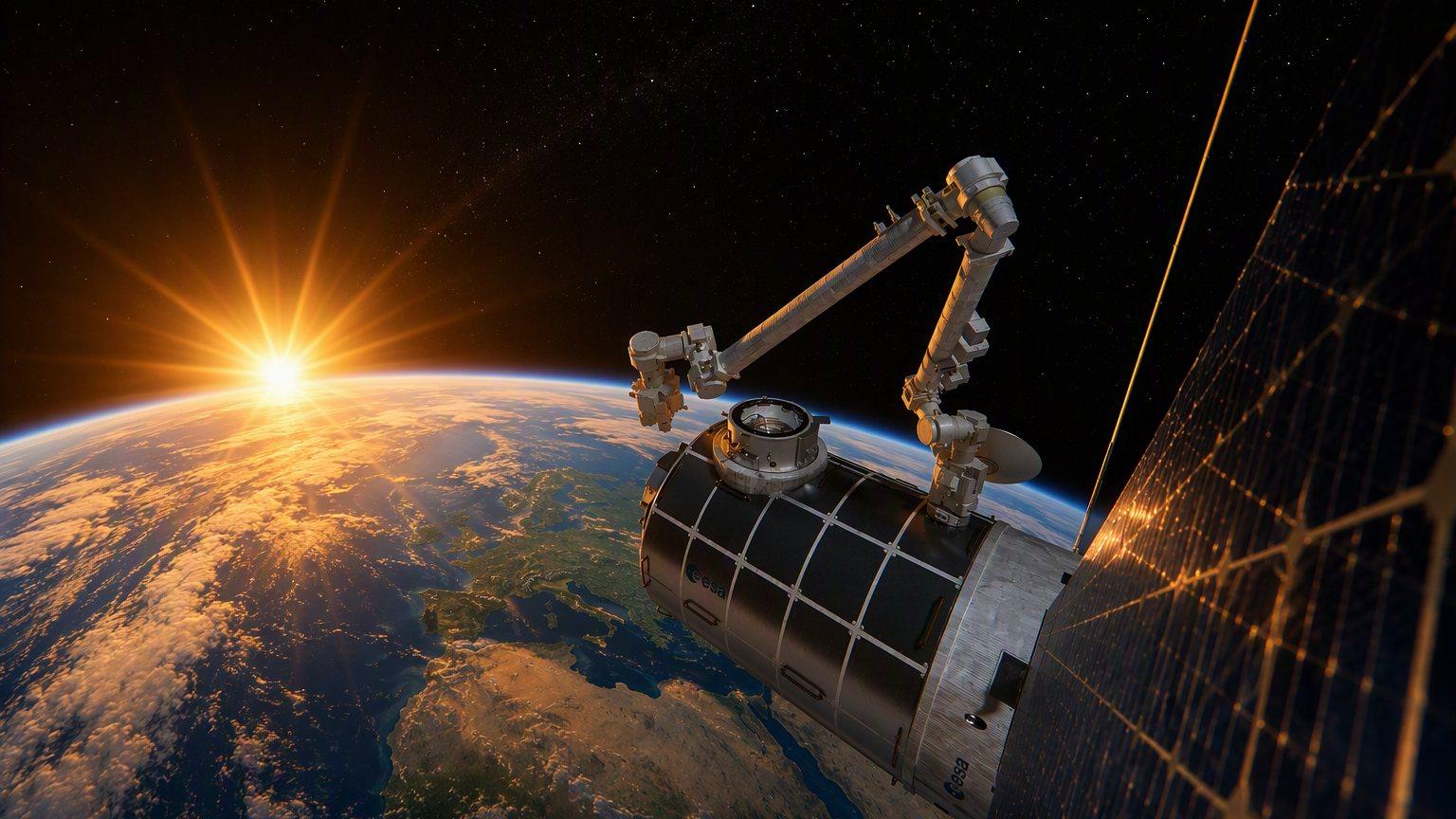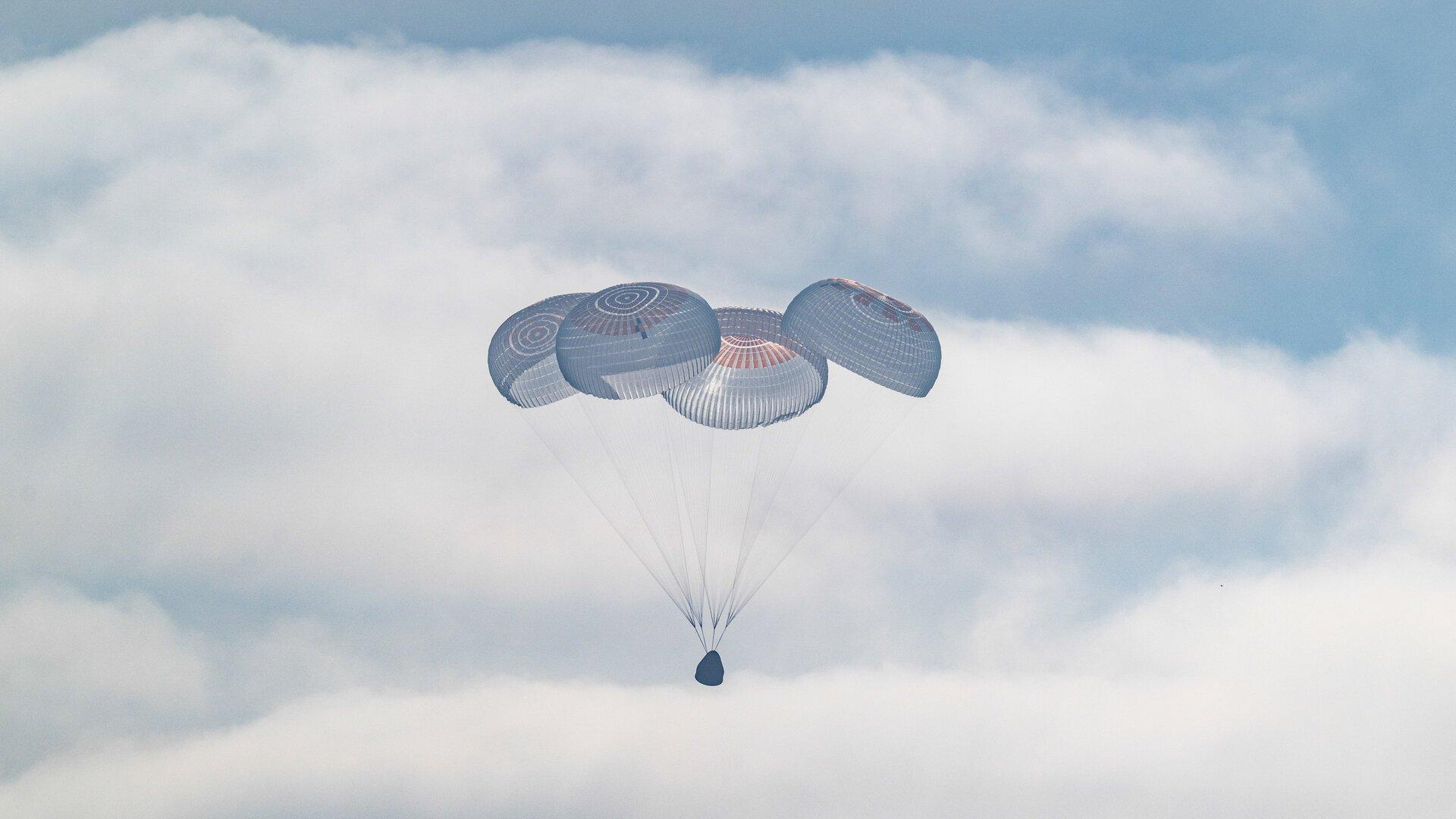
After 237 days in orbit, Sophie Adenot returned to Earth on 8 October 2026. Her Crew Dragon Freedom capsule splashed down in the Pacific Ocean off the coast of California, closing out the Epsilon mission, the longest ever flown by a European astronaut. Here is the full story: eight months of science, three spacewalks and a record that shows what a human body can take far from gravity.
237 days: what the record really means
Liftoff came on 13 February 2026 from Cape Canaveral in Florida, aboard a SpaceX Crew Dragon capsule. Docking with the International Space Station followed the next day. The clock stopped on 8 October at 15:34 GMT.
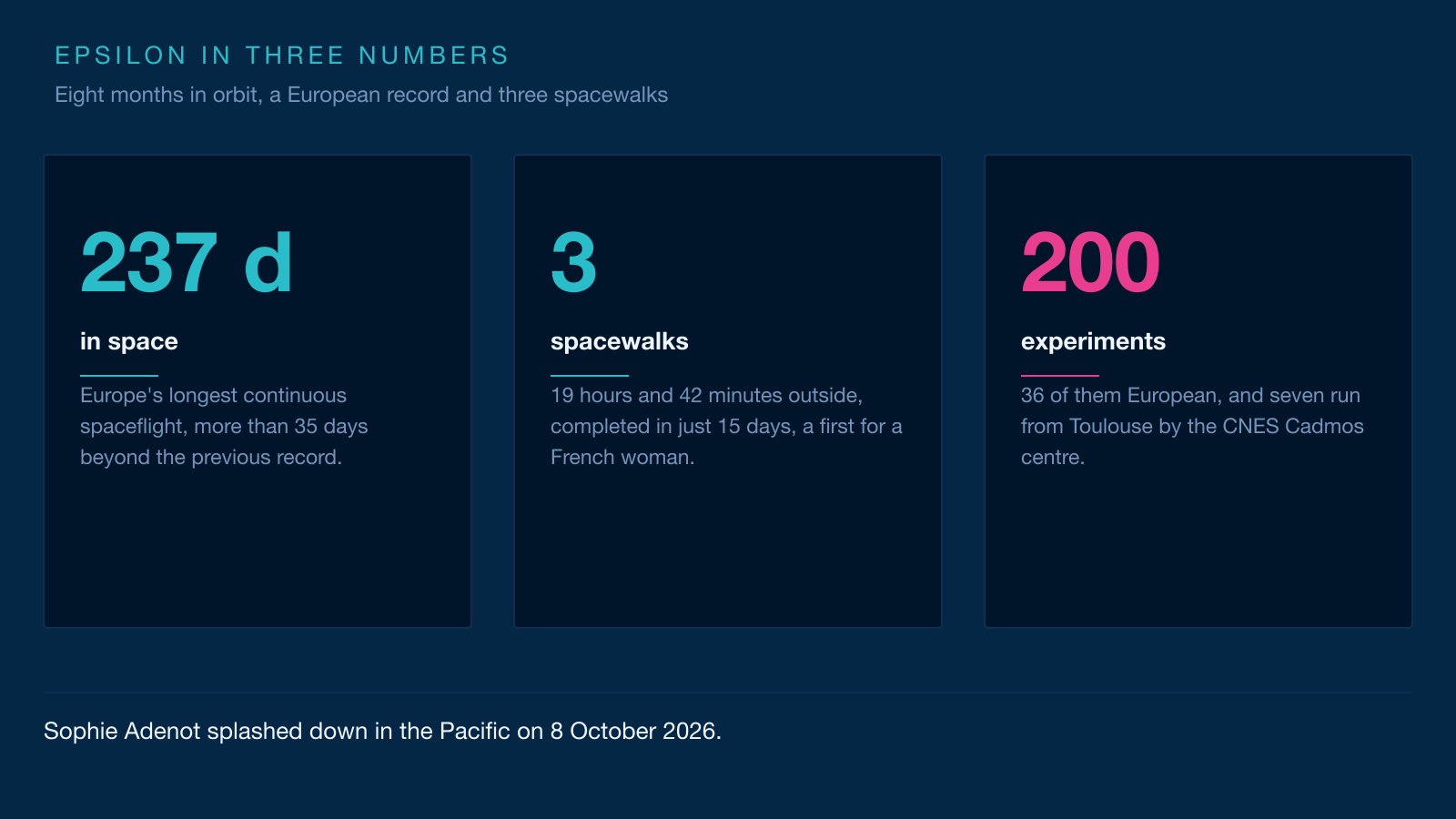
In total, ESA counts 237 days, 5 hours and 18 minutes in space. That beats the previous mark, held by Luca Parmitano, by more than 35 days. As for the three fellow members of the Crew-12 team, NASA astronauts Jessica Meir and Jack Hathaway and Roscosmos cosmonaut Andrei Fedyaev, they shared the same trip up and the same ride home.
Adenot is only the second French woman ever to live aboard the Station, 25 years after Claudie Haigneré, and the first French woman to step outside it.
The mission's very name says something about how she approached the flight. Epsilon, the Greek letter, stands for a tiny quantity in mathematics, much like an astronaut's part in the vastness of space. In astronomy it also names the fifth-brightest star in a constellation. On her mission patch, a hummingbird, one of the smallest birds on Earth, sits beside dots that represent the small things that add up.
Three spacewalks in 15 days
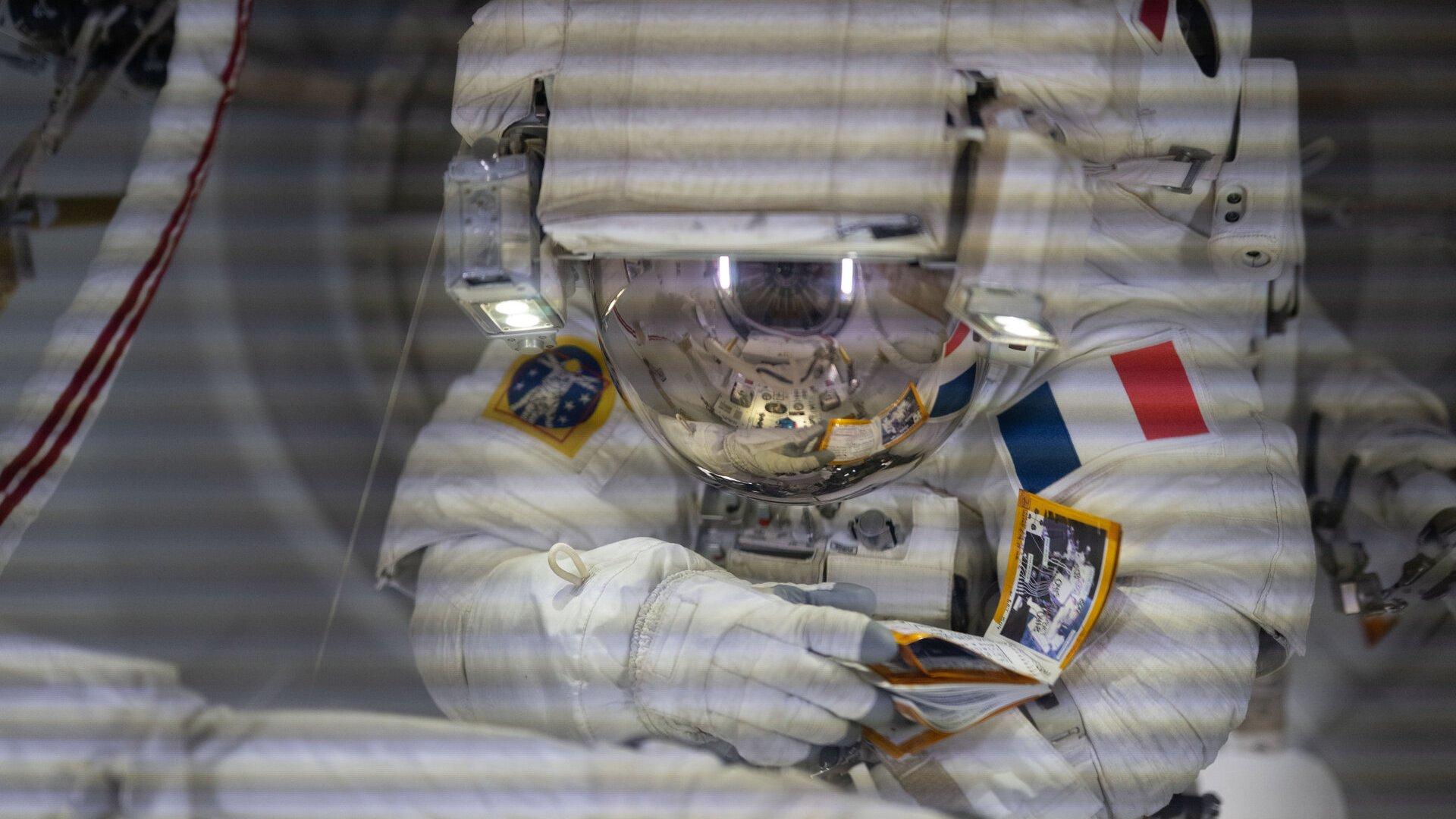
Between 18 August and 1 September 2026, Adenot suited up three times. A spacewalk, or EVA for ExtraVehicular Activity, means leaving the pressurised airlock to work in the vacuum outside. The conditions are brutal: the suit is stiff, thick gloves dull your sense of touch, and you move along the structure while always staying tethered.
The first outing, on 18 August with NASA astronaut Anil Menon, aimed to remove a faulty communications antenna called Space-To-Ground 2, which could no longer track the relay satellites the Station relies on. Seized bolts and connectors slowed the pair down, and fitting the replacement antenna had to be postponed.
A week later, on 25 August, again with Menon, the goal was to finish the job: pull the spare antenna from storage and install it. Done, and it works. "Two EVAs in two weeks, well done Sophie, you nailed it!" her crewmate called out as they climbed back inside.
The third, on 1 September with Jessica Meir, lasted 6 hours and 49 minutes. The to-do list: swap a retroreflector, the mirror-like device that helps spacecraft navigate during docking, prepare a cosmic particle detector for a future upgrade, install data relay cables, and swab samples around the airlock for NASA's MicroOrganisms experiment, which asks how far the microbes released by the life-support vents travel.
Add it up: 19 hours and 42 minutes outside, across three spacewalks in 15 days. That is a lot for a first flight. Most astronauts wait several missions to reach such a total.
Nearly 200 experiments, and a scanner that runs itself
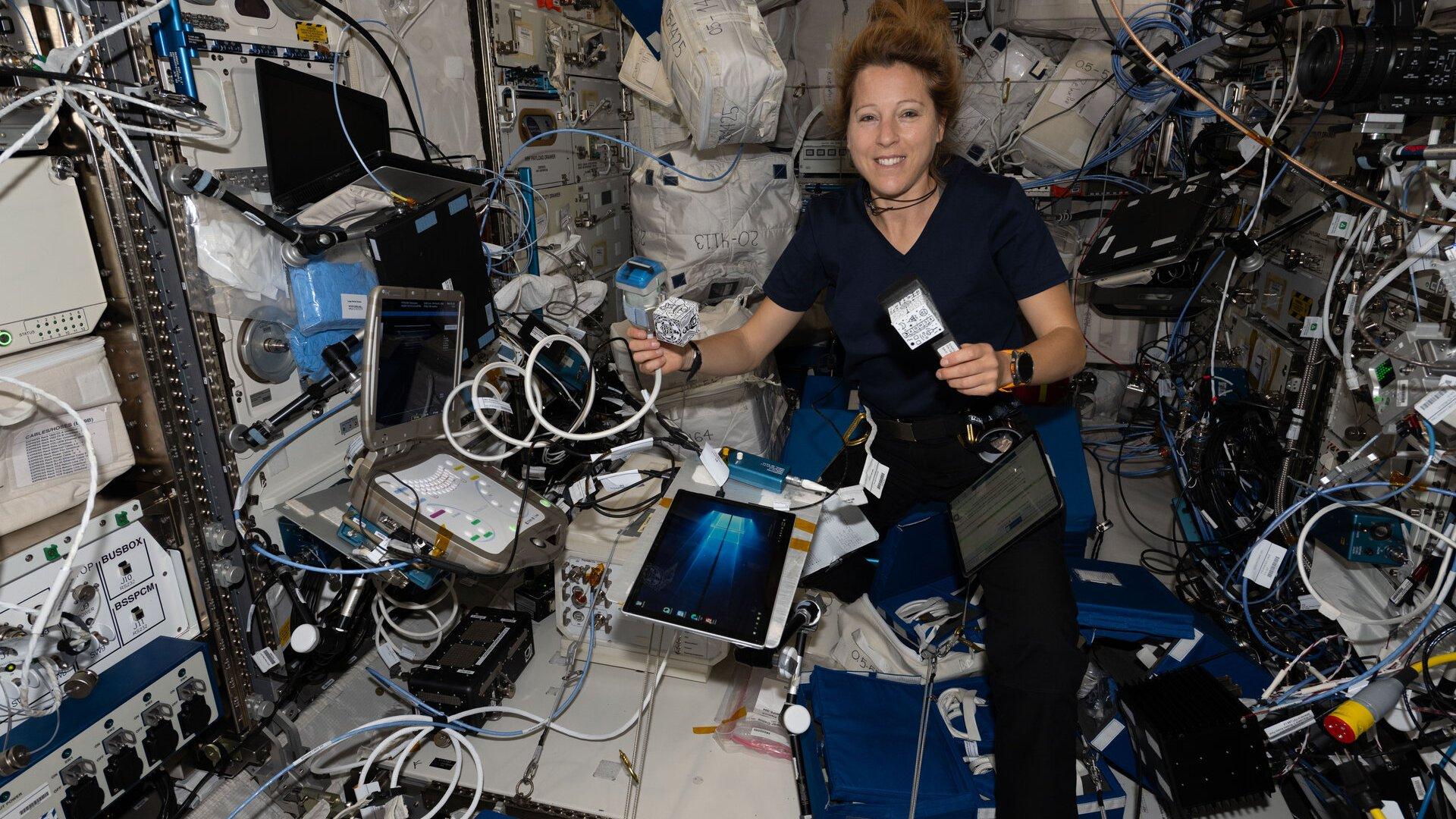
Most of a stay in orbit is not spent on dramatic spacewalks. It is spent running experiments. The Station is a laboratory where gravity all but disappears, which changes how matter, fluids and cells behave. Adenot took part in nearly 200 experiments there.
Seven of them were prepared specifically by Cadmos, the CNES centre in Toulouse that designs and operates microgravity experiments. The first was EchoFinder, run on 4 and 9 March with Jack Hathaway. The idea answers a very practical problem for distant missions. Fly toward the Moon or Mars and the signal takes too long to make the round trip for a doctor to guide an exam live. EchoFinder pairs an augmented reality interface, which shows the astronaut where to place the ultrasound probe, with artificial intelligence that recognises organs and records the images. The astronaut becomes their own operator, and the scans are sent down to doctors on Earth for reading. The same tech could help on ships, in submarines or in remote areas far from a specialist.
Several other experiments target health directly. PhysioTool measures a range of vital signs, from blood flow and pressure to heart rate, oxygen saturation, breathing and sleep, to validate sensors built for weightlessness. EchoBones uses ultrasound to probe bone density and blood flow inside bones, before and after the flight. MatISS-4 and MultISS go after bio-contamination, the microbes that settle on a spacecraft's walls and life-support systems: one tests surfaces that repel bacteria, the other spots them with multispectral imaging, meaning the scene is lit at several wavelengths, some visible and some not.
Other experiments look straight ahead to exploration. EuroSuit tests a French intravehicular suit prototype, designed so an astronaut can pull it on alone in two minutes in an emergency such as a fire or a depressurisation. Lumina proves the reliability of an optical-fibre dosimeter for measuring ionising radiation, the energetic particles that can damage the DNA inside cells. FoodProcessor explores food preservation, since today's prepared meals will not survive the five years a Mars trip would demand. And ChlorISS, the educational experiment, sprouted cress and mizuna seeds on board and in thousands of classrooms on Earth, to compare how they grow with and without gravity.
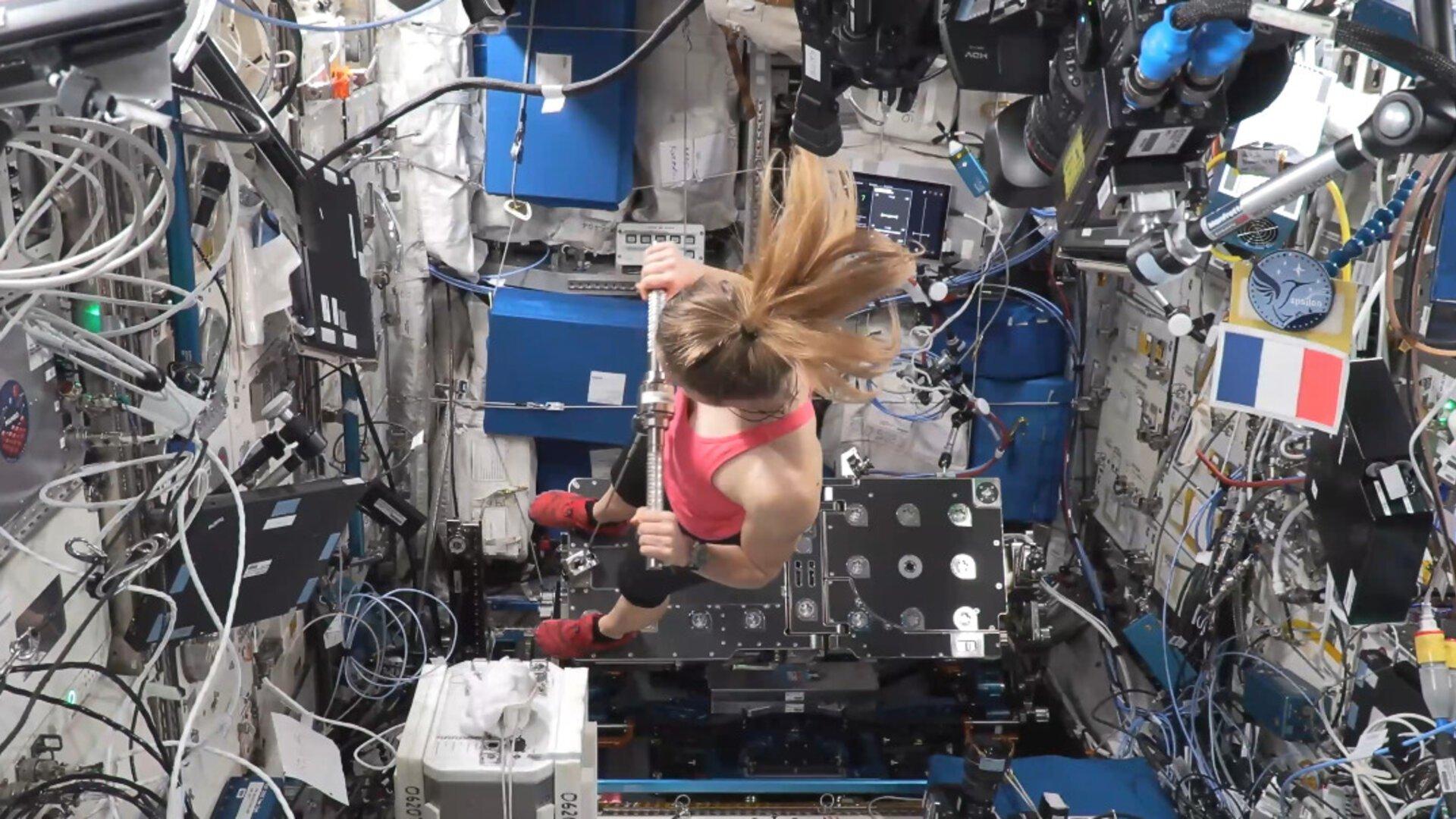
Alongside the science, two technology demonstrators got a workout. The first, E4D, is a European exercise device that packs resistance training, cycling, rowing and rope pulling into a single compact unit, with more than 30 strength exercises. It tackles two problems at once: saving space, since today's machines are too heavy and bulky for a future lunar station, and varying the daily workout that keeps muscles from wasting away in weightlessness. Adenot started her first rowing session soon after arriving and ran several sessions on the device.
The second is the Metal 3D Printer, the first of its kind in orbit. In July, Adenot retrieved its fifth sample, which held tiny satellite thrusters, the first components of their kind made in space. The long-term aim: let a crew manufacture a spare part on the spot instead of waiting for a delivery from Earth, a skill that matters more and more the further you travel.
Why the Station stays a one-of-a-kind lab
It is tempting to think a space station only matters for space. The opposite is true. The Station offers what no lab on the ground can: weightlessness that lasts for months.
On Earth, gravity is everywhere, and it constantly stirs fluids, gases and materials. Take it away and you see phenomena that are normally hidden. The Marangoni experiment, run during the mission, is a good example. It studies how a liquid film evaporates in space, and the currents that form at its surface through surface tension, the force that holds a drop of water on a glass. No ground instrument can reveal those motions, because gravity flattens them out. Understanding them matters to industry: cooling, coatings, printing, distillation.
Living things benefit from the same conditions. A cell, a bone or a muscle behaves differently when gravity no longer pulls on it, and that speeds up processes that take years on Earth. That is what makes the Station valuable for medicine: understanding astronaut bone loss helps treat osteoporosis, and testing an antibacterial dressing in space can lead to surfaces that are useful in a hospital.
Further ahead, another project is taking shape: the Station is set to end operations in 2030, and Europe is working out what comes next in low Earth orbit, without knowing yet what it will look like.
What comes next
In Cologne, Germany, Adenot reached European soil on Saturday 10 October, visibly moved. "I have been through the whole spectrum of human emotions, from the most joyful to the hardest," she said on the tarmac, adding of the Earth seen from orbit: "There are no divisions, no borders, just one precious planet that we all share."
Now comes the body's turn. After eight months of weightlessness, the body has adapted to the absence of gravity and must relearn how to live with it. ESA has planned about three weeks of recovery at the European Astronaut Centre and at DLR's envihab facility, mixing rest, family time, medical checks, physiotherapy and exercise, including pool sessions, to rebuild a back that was barely used. The phase right after landing is the most delicate, both for the astronaut's health and for the quality of the scientific data gathered after the flight.
Full recovery takes longer. Bone density, which falls by 1 to 2 per cent a month in orbit, can take up to a year to build back, and some vision problems caused by pressure changes in the head take a similar time to settle. During her stay, Adenot said her body felt like it was ageing in fast-forward: greying hair, lost suppleness, fading eyesight. The good news is that the protocol is well established: it stays standard for stays of up to a year in space.
She is not the only one who gains from it. Every recovery phase hands researchers valuable measurements, and serves as a dress rehearsal for missions that will go further, where a crew will have no doctor on the line and no Earth within easy reach.
Going further
- The outpost that hosted the flight: the International Space Station, its 25 years of continuous occupation and more than 3,000 experiments.
- The ideas behind the story: microgravity, space stations, Earth orbit and ESA in our glossary.
- The official sources for this article: ESA's Epsilon missions page, its splashdown statement, the CNES Epsilon mission page and its French experiments, plus ESA's Increment 74 experiments overview.
- The sky over your home: spot the Station and bright satellites with our sky map, plan your evenings with our observation guide, and share your images in our astrophotography gallery.