Two wave packets of the same atom: one pinned above a chip, the other dropped into the void. On September 2, 2026, the Ben-Gurion University team, joined by Ulm, Oxford and Nobel laureate Roger Penrose, published in Science Advances the first direct measurement of the quantum phase of a falling object. The verdict: Einstein and quantum mechanics still agree.
A cornerstone of gravity meets the quantum world
Start with the strongest fact. The equivalence principle, the cornerstone of general relativity, Einstein's theory of gravity, has just been put face to face with quantum matter in free fall. And it holds.
For over a century, physics has rested on two theories that never quite reconciled. Quantum mechanics describes the world of atoms. General relativity describes gravity, falling objects, orbits. Their meeting point remains an open construction site, and every test matters.
"We have no consistent theory telling us why quantum physics should fail. This experiment pushes quantum mechanics into one of its most intriguing frontiers, gravity, and shows that, once again, its predictions hold," says Vlatko Vedral, physicist at the University of Oxford and co-author of the study.
Einstein's elevator, atom edition
Let's go back to the principle itself. If you are in free fall, you no longer feel your own weight: your organs, your watch, your coffee all float around you. Gravity has not gone away, but inside your falling elevator it has no measurable effect. For an observer in free fall, gravity locally disappears: that is the equivalence principle.
The principle has survived extraordinarily precise tests on ordinary matter, with balances, lasers and satellites. Never before directly on a quantum object in free fall, though. Quantum mechanics is what makes this hard: an atom is not a marble, it is also a wave, able to split into two packets that follow different paths before recombining. Which "fall" do you measure when the object travels several trajectories at once?
Answering that question took a brand new instrument, and an entirely new way of measuring.
The Quantum Galileo: drop one wave, hold the other
The instrument is called the Quantum Galileo Interferometer, a nod to Galileo dropping balls from the Leaning Tower of Pisa to show they fall together. Here, the two balls are two wave packets of the same atom. You drop one, you hold the other, then you compare.
Everything starts with a Bose-Einstein condensate, a cloud of about 20,000 rubidium atoms cooled to 3.3 nanokelvin. For scale: the space between stars, bathed in the cosmic microwave background, sits at 2.7 kelvin. The cloud is some 800 million times colder, on the edge of absolute zero, the point where all agitation stops. At that temperature, atoms stop behaving like separate marbles and merge into a single collective wave.
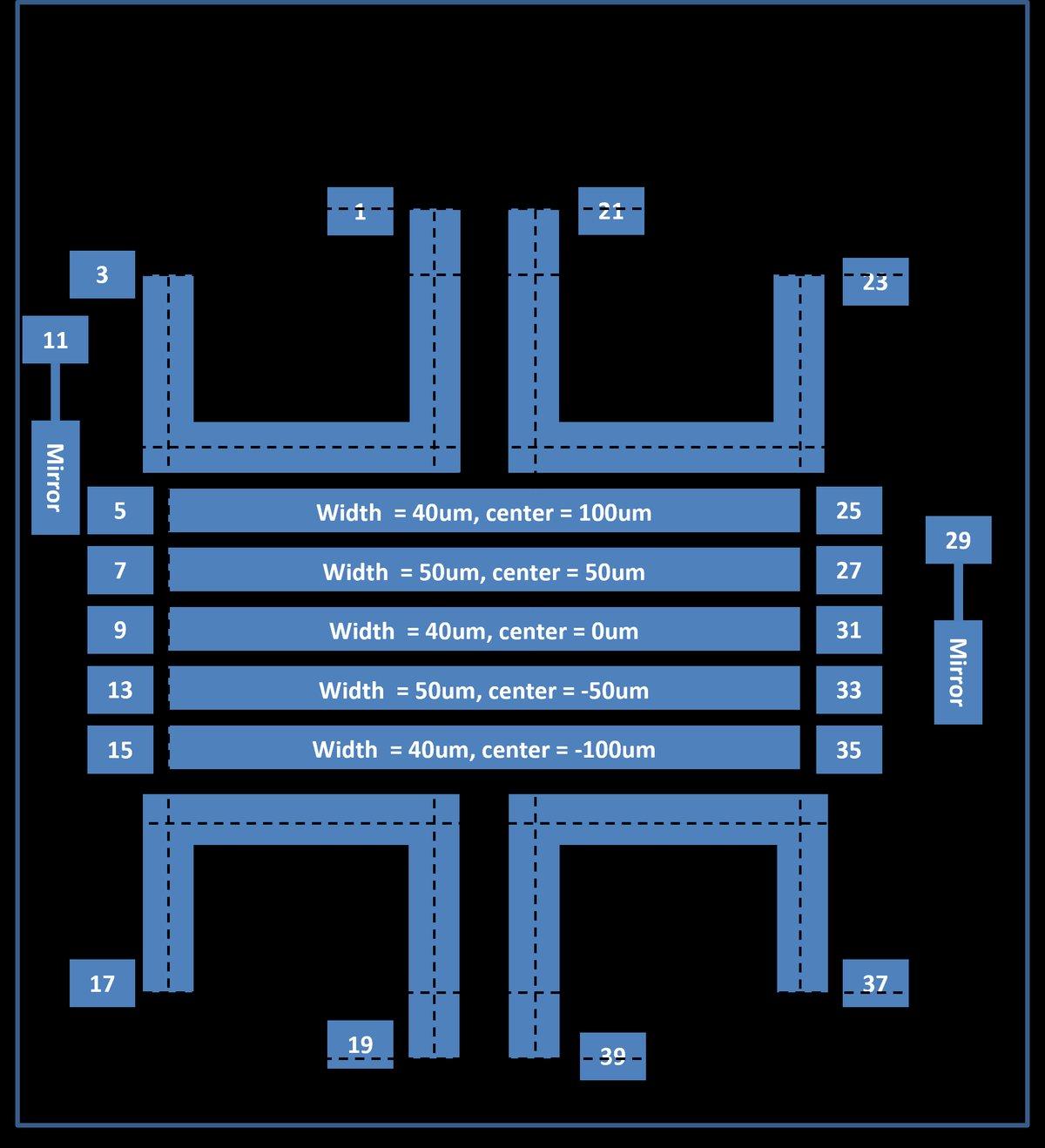
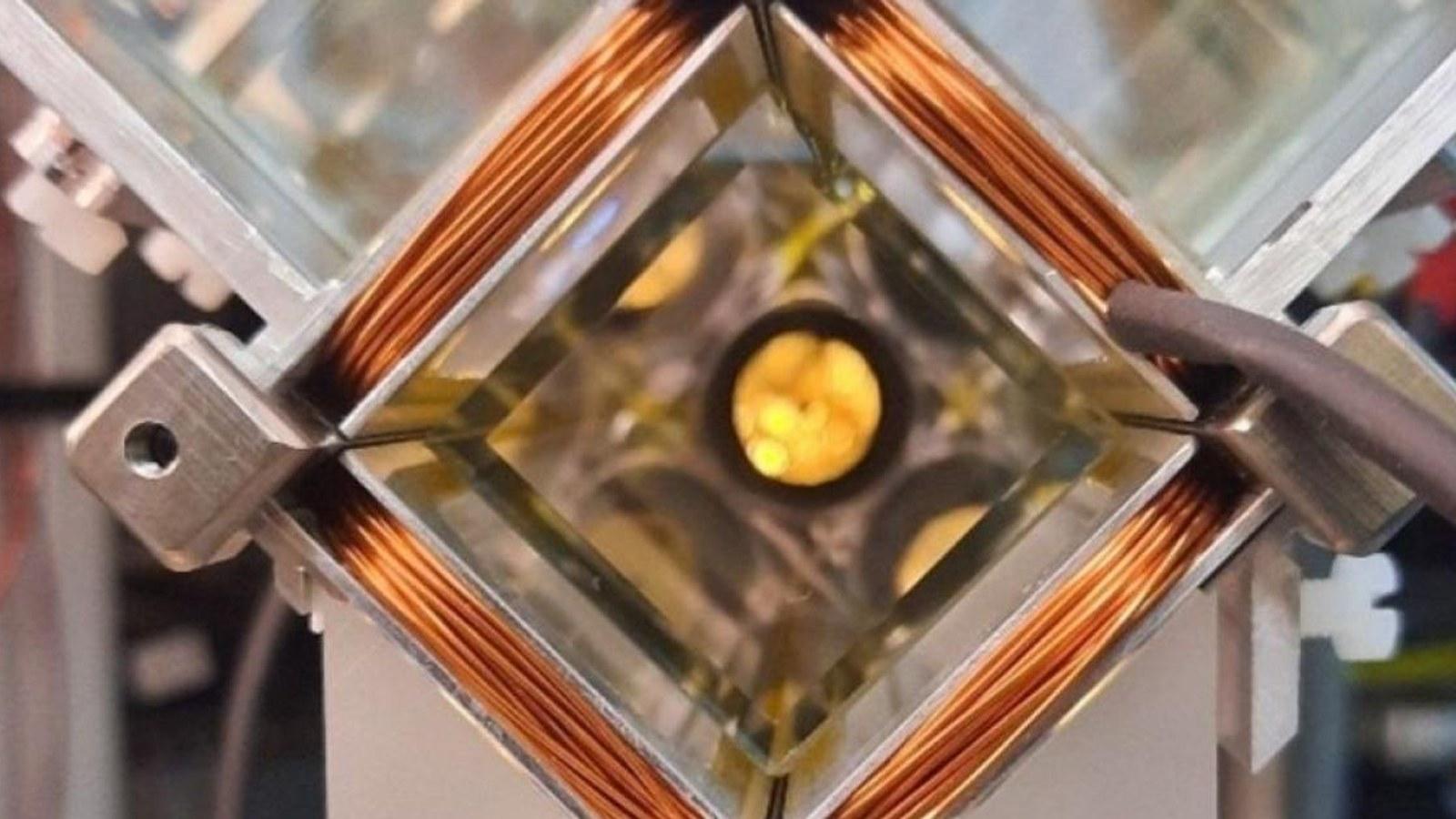
The cloud then sits above an atom chip, a silicon plate threaded with fine copper wires. The wires generate magnetic fields that trap and steer the atoms without ever touching them. Microwave pulses then split each atomic wave into two packets, two clones set off into different energy states.
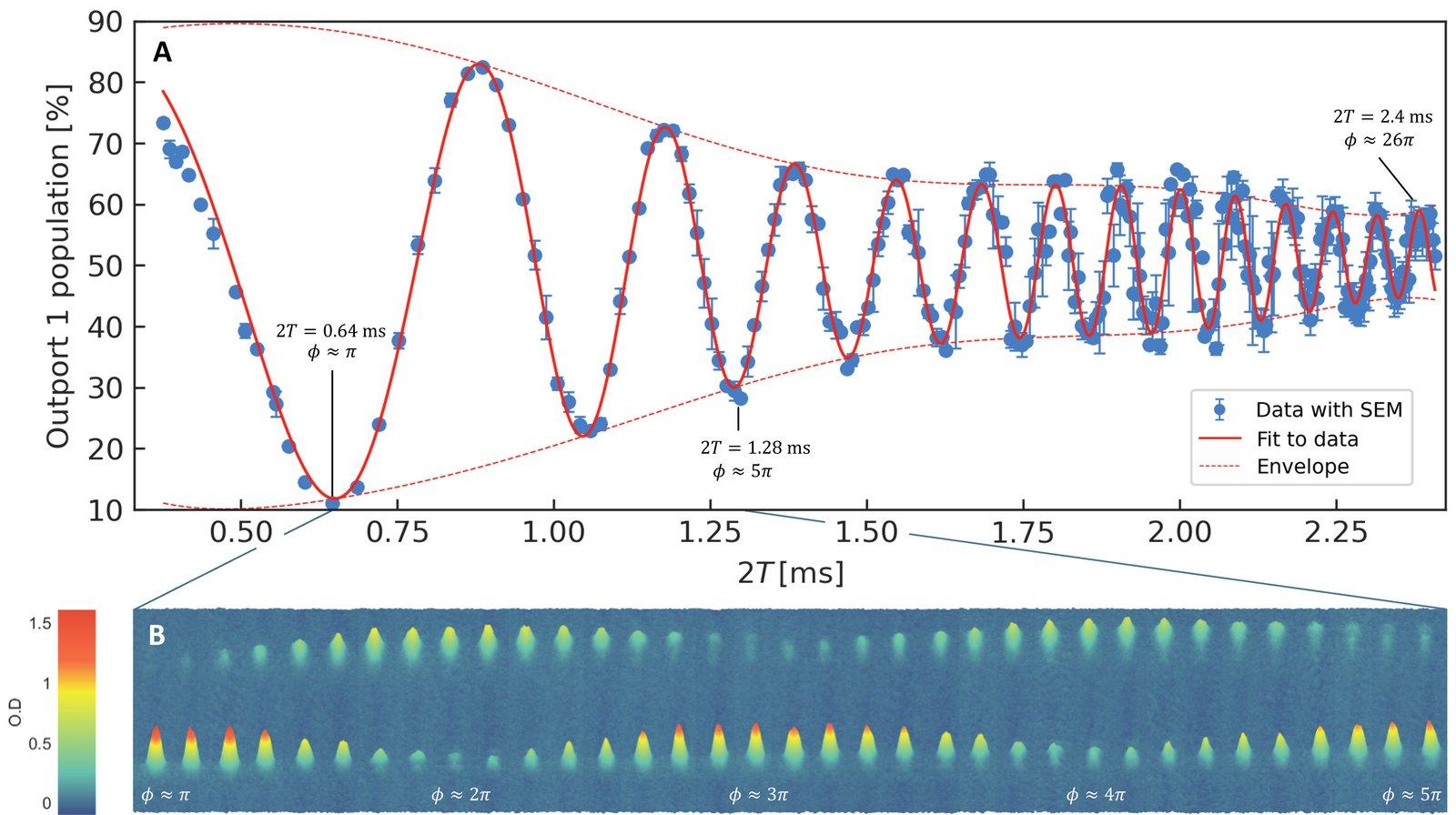
The rest plays out in three moves:
- Hold: the first wave packet stays in a state that responds to magnetic fields. Wires on the chip push it up with a force that exactly cancels gravity. It stays put relative to the lab.
- Drop: the second packet is launched upward, then switched into a state nearly blind to magnetic fields. No force applies anymore: it falls freely, like a ball thrown straight up.
- Recombine: at the end of the fall, a pulse brings the two packets back onto each other. They interfere, like two crossing sets of waves, and the fringes reveal what happened in between.
A signature that grows with the cube of time
What the team is after comes down to one word: phase. In quantum mechanics, a wave advances like a stopwatch whose hand keeps turning. If two identical waves live through different experiences, their hands drift apart. That drift, the phase, can be read in the interference fringes at recombination.
Theory predicts a very specific phase for free fall: it depends on g, the acceleration of gravity on Earth, squared, and on the cube of the fall time, all divided by the quantum of action, the constant that rules the quantum world. In plain terms: doubling the fall duration does not double the effect, it multiplies it by 8.
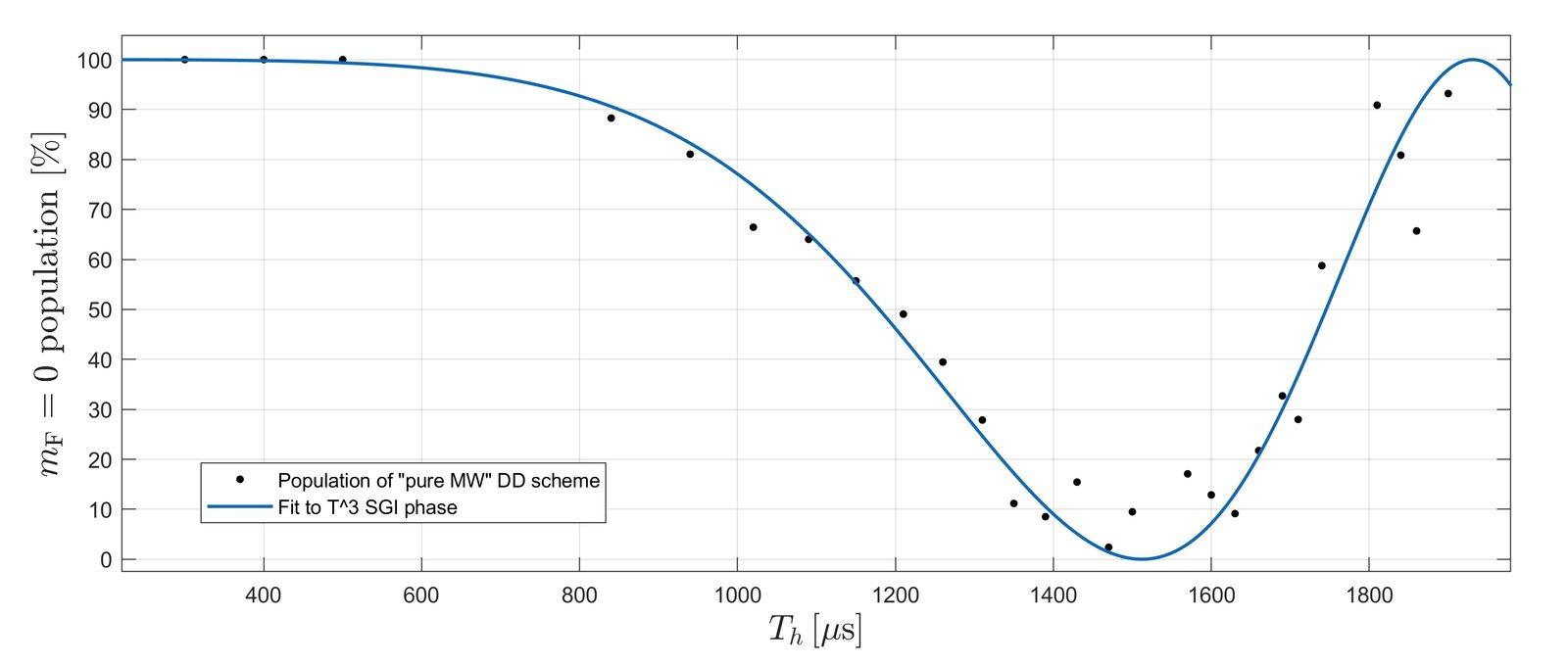
The researchers measured this drift with two independent methods. Both landed on the same value, the one predicted when the equivalence principle is applied to a quantum wave. This is the first direct measurement of the quantum phase of an object in free fall.
"This is a unique paper, in the sense that it combines a hard experiment with a far-reaching theoretical interpretation, about one of the most fundamental questions in physics: how can gravity, described by Einstein's theory of relativity, and quantum theory be unified into one understanding of the universe," explains Ron Folman of Ben-Gurion University, lead author of the study.
What it changes, and what it does not
Let's be precise about the stakes. The experiment does not unite quantum mechanics and gravity, and it does not show that gravity itself is quantum. What it establishes is solid: in the regime tested, tiny masses and short times, the equivalence principle applies to quantum matter without a hitch.
Penrose's argument still stands. The physicist has argued for decades that quantum mechanics could fail for objects massive enough, held in superposition long enough, with gravity itself forcing the superposition to collapse. The atom experiment, far too light, does not reach that regime. The answer may come from nanodiamonds, carbon crystals far heavier than an atom, which an experiment now underway at Ben-Gurion aims to hold in quantum states.
And free fall itself? On Earth it never lasts long. Aboard the ISS, NASA's Cold Atom Lab already runs clouds of cold atoms in prolonged weightlessness, where the fall never ends. That is one natural direction for these tests: atom interferometers in space, probing the gravity-quantum interface without ever seeing the fall interrupted.
Where to go next
- Key notions: the interferometer, the tool that compares waves, and microgravity, the prolonged weightlessness of orbital labs.
- These cold atoms fall in orbit too: aboard the ISS, the Cold Atom Lab stretches free falls that the Ben-Gurion chip can only hold for a fraction of a second.
- The night sky needs no lab: our interactive sky map and its observing guide.
- Sources for this article: the University of Oxford release, the Science Advances paper (DOI 10.1126/sciadv.aec8045) and its open-access arXiv version.