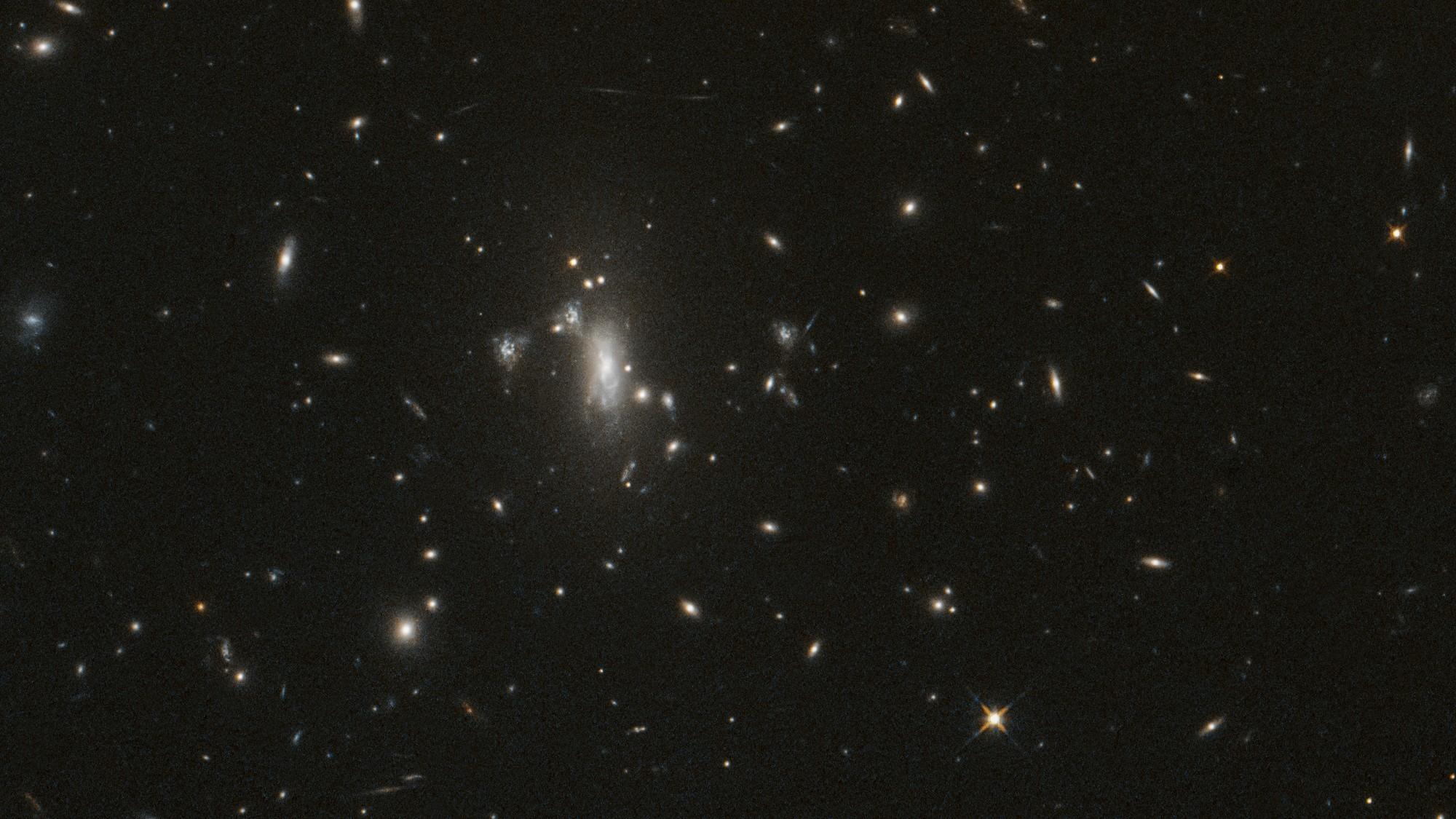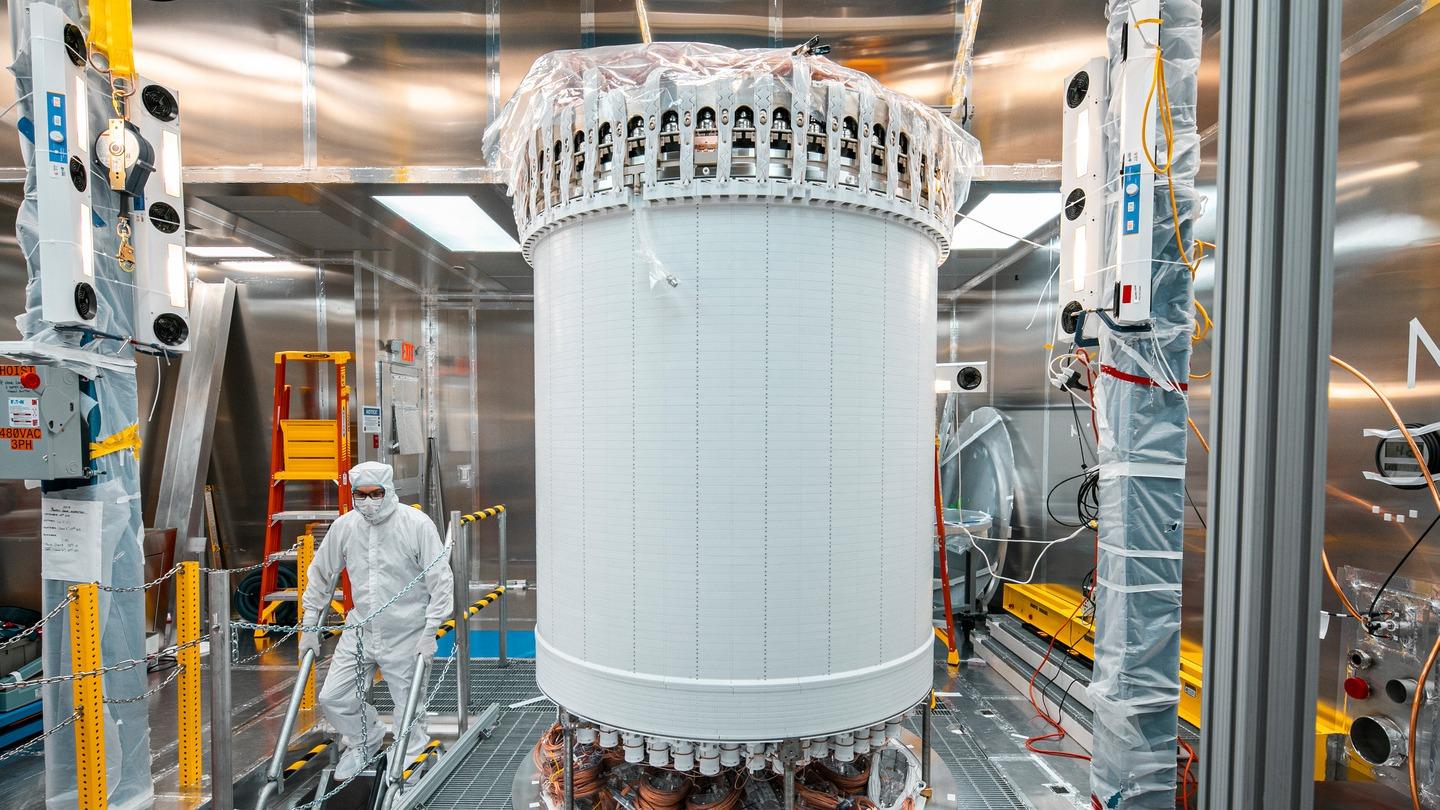
On September 4, 2026, an international team led by the University of Queensland released Unite, the largest supernova catalog ever assembled: 2,884 stellar explosions collected over 30 years. Combined with the other great measurements of the cosmos, these data no longer fit the standard cosmological model. And they revive a question that has been shaking up cosmology: is dark energy, the force accelerating the expansion of the universe, changing with time?
30 years of explosions, one catalog
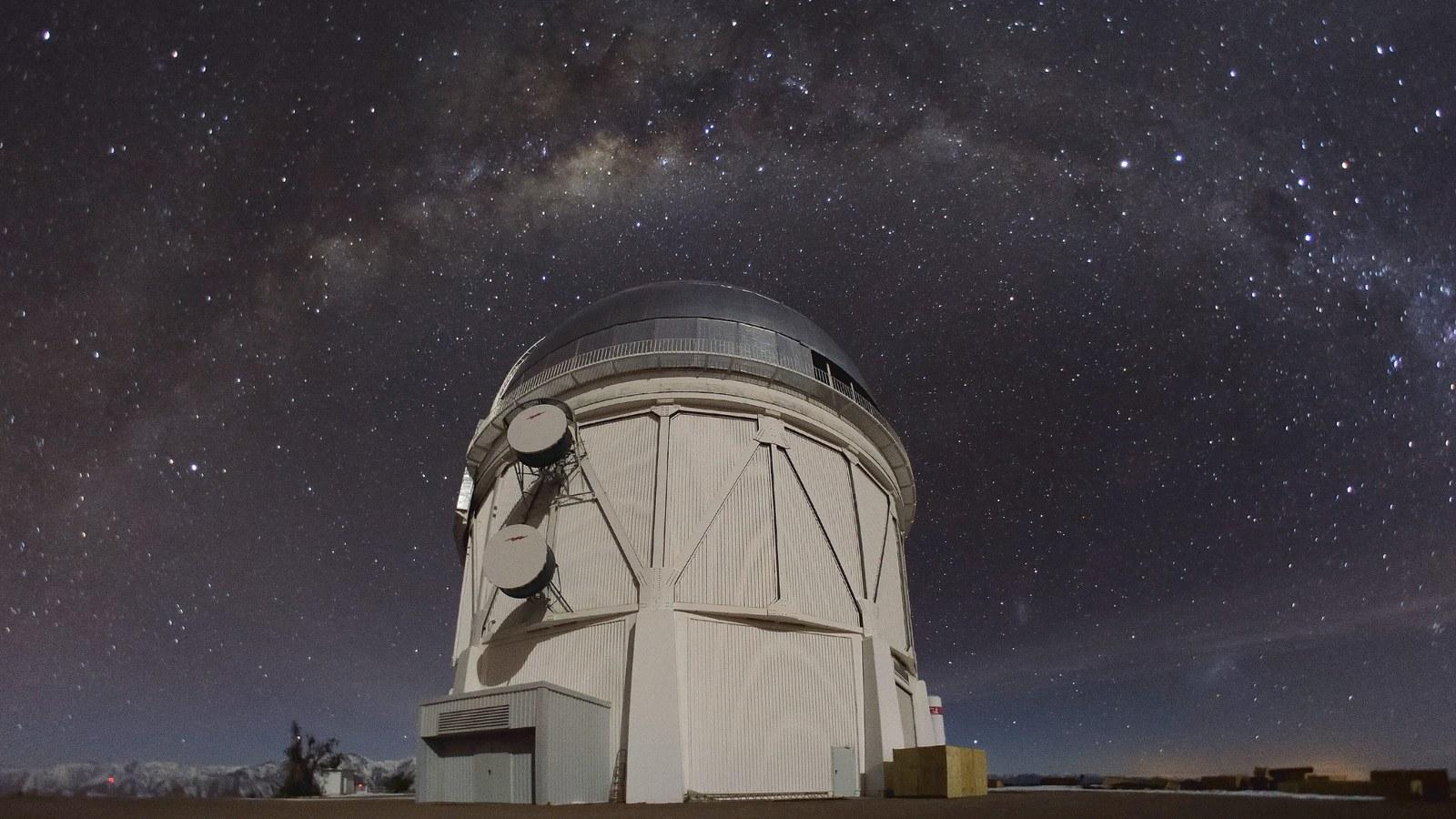
Start with the number: 2,884 Type Ia supernovae, a record. The catalog's name says what it took: Supernovae Unite, the merger of two compilations that had never been joined, Pantheon+, the reference for past surveys, and DES-SN5YR, five years of Dark Energy Survey data published in 2024. Most of the new data comes from that survey, run with the DECam camera mounted on the Víctor Blanco Telescope atop Cerro Tololo in Chile.
Merging two catalogs is not a copy-paste job. Every telescope sees differently, every observing era carries its own flaws. So the team reprocessed everything under one set of rules: same modeling of the explosions, same selection of supernovae, same bias corrections. In practice that means going back through the historic observations with what we know today. "We've rebuilt three decades of astronomical observations into a single, consistent framework," says Ryan Camilleri, a PhD candidate at the University of Queensland and lead author of the study.
The reprocessing runs deep. The cosmic dust that dims the explosions was recalculated. The mass of the host galaxy, which affects the apparent brightness of the supernovae, was re-measured for over 98% of the sample under a single framework. Even the subtle effects of gravitational lensing, the bending and magnification of light as it sneaks past massive objects on its way to Earth, were folded in. "Our project sets a new global benchmark in supernova cosmology and gives the sharpest picture yet of how the universe has expanded over time," Ryan Camilleri adds.
Measuring the universe with exploding stars
Why use supernovae to probe the universe? Because one kind of them shines in a nearly predictable way. A Type Ia supernova is the explosive death of a white dwarf, a dead star the size of Earth that pulled too much matter from a neighboring star. At a mass threshold that is almost the same in every case, it blows up, and the blast always releases roughly the same amount of light.
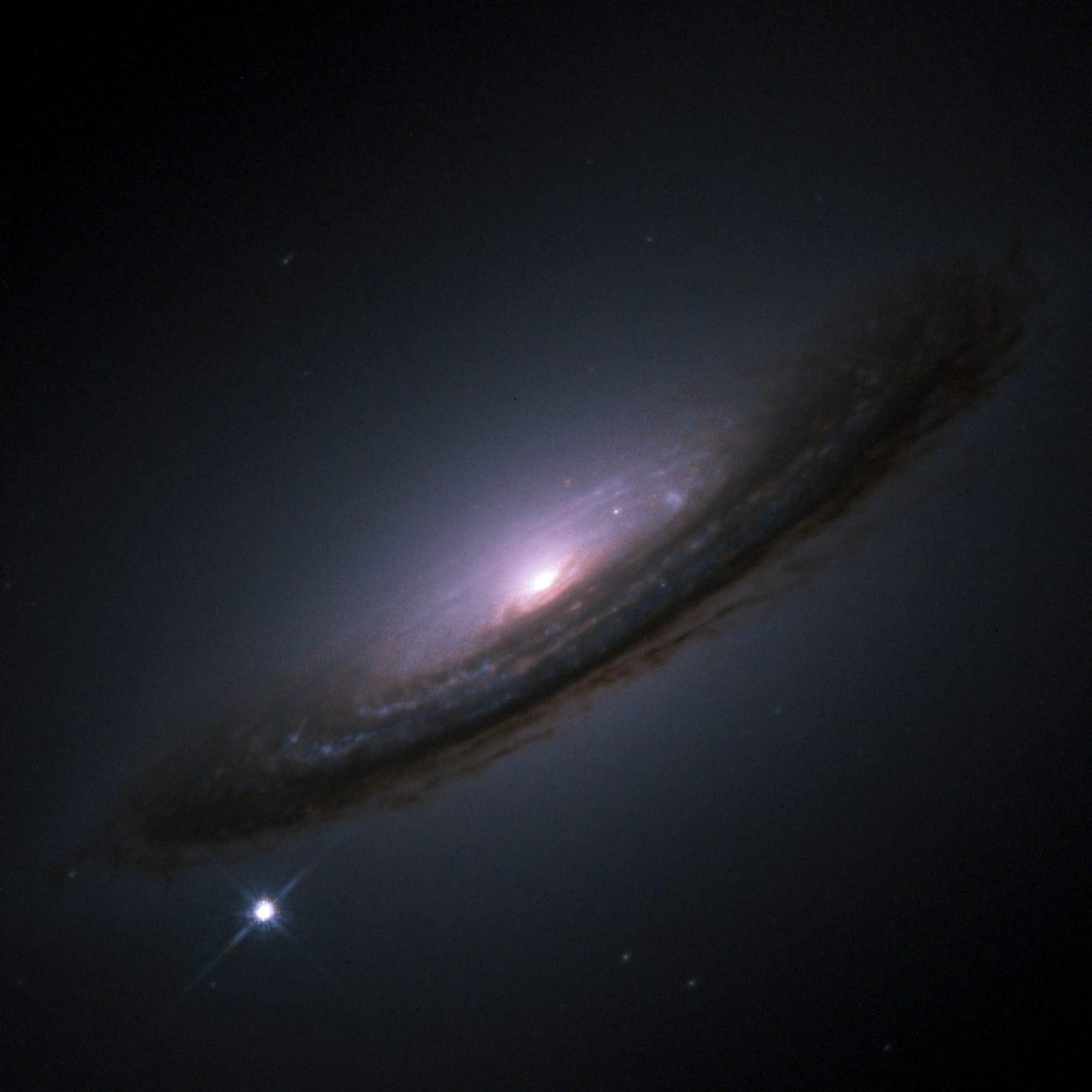
That makes it a standard candle, a lighthouse whose true power we know. Compare the light it should emit with the light you receive, and the difference gives you its distance. Picture 60-watt bulbs scattered through the night: how bright each one looks tells you how far away it sits. When astronomers spotted supernova 1994D in the galaxy NGC 4526, 50 million light-years away, they could measure its distance exactly this way.
The second piece of the puzzle is speed. Light from a distant galaxy arrives redshifted, stretched by the expansion of space itself. The more the red is stretched, the faster the galaxy recedes. Crossing distance with speed for every supernova yields the history of the expansion, a curve called the Hubble diagram, the centerpiece of the study just published.
This is the very method that revealed, in the late 1990s, that the expansion of the universe is speeding up. A discovery awarded the Nobel Prize in Physics, and one that installed the idea of a dark energy pushing space to stretch. Today, 2,884 supernovae are re-examining that verdict with unprecedented precision.
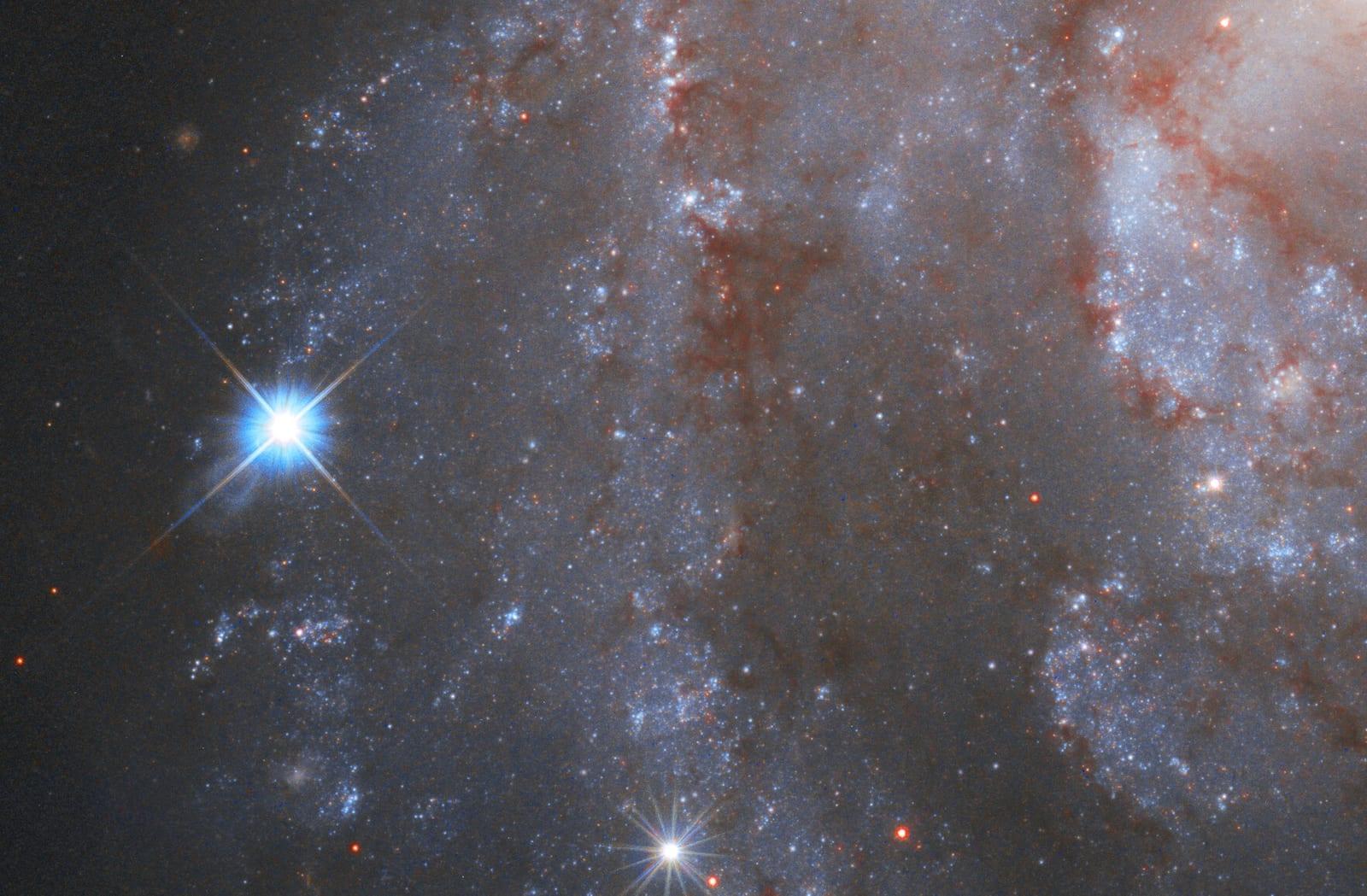
What the numbers say: a model that wobbles
Supernovae alone are not enough. The team crossed its catalog with two other probes of the universe. First the cosmic microwave background, the oldest light in the universe, released when the cosmos was only 380,000 years old: a baby picture, mapped by ESA's Planck mission, that anchors the models. Then baryon acoustic oscillations, pressure waves born in the incandescent matter of the first moments, now frozen into the layout of galaxies like a cosmic ruler. The DES and DESI surveys measure that ruler across millions of galaxies.
Each probe weighs the contents of the universe at a different epoch. And when you put them all together, one number refuses to fit. The standard model, called ΛCDM, rests on two pillars: cold dark matter, and a frozen dark energy that never changes. In that model, the parameter describing the behavior of dark energy is exactly -1. The combined data instead give -0.861 today, with a trajectory that drifts over time, captured by a second parameter at -0.60.
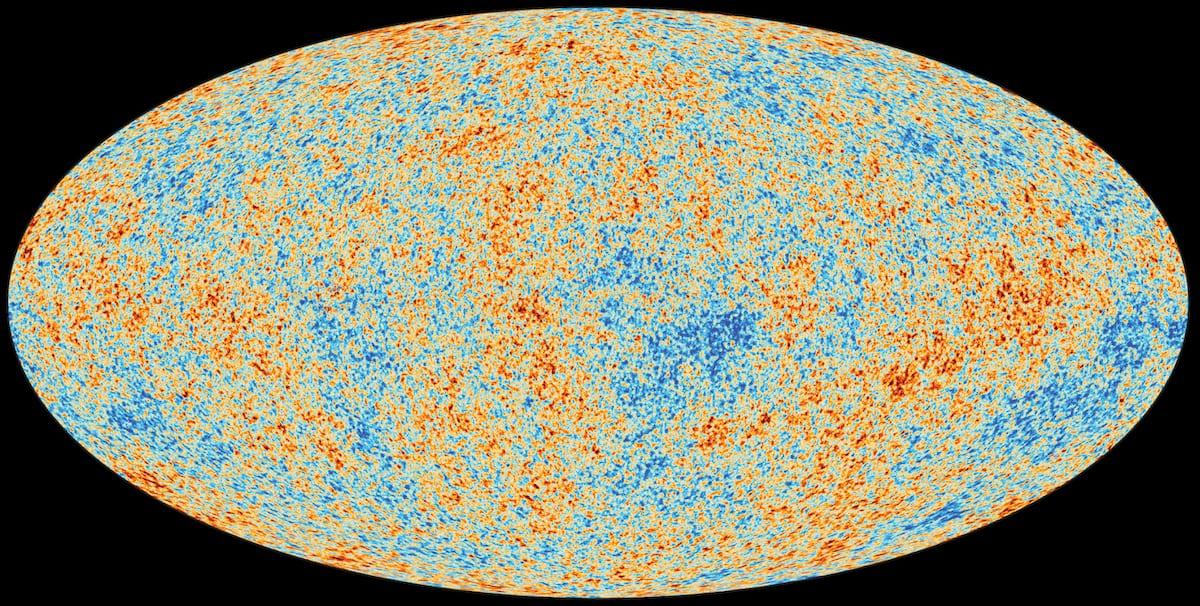
The detail that lands hardest: when dark energy is forced to stay constant, the measurements from the cosmic microwave background and those from the supernovae and galaxies strongly disagree. When dark energy is allowed to vary, the tension eases. The flexible model fits the data better than the rigid one.
How strong is the hint? Cosmologists use sigma, a measure of how solid a statistical signal is. A discovery demands 5 sigma, about a 1 in 3.5 million chance of being wrong. Here, the frequentist analysis, the method that compares the data to a model and asks how often such a deviation would happen by pure chance, gives 2.5 to 3.1 sigma depending on the estimate used. That is between 1% and 0.2% odds of a statistical fluke. A Bayesian analysis, which weighs the plausibility of the models in light of the data, finds only a weak preference. In short: a serious, consistent hint, but not the discovery of the century. Not yet.
What comes next: DEBASS, DESI and Roman
This result did not fall out of nowhere. Dark Energy Survey data released in 2024 already carried a first whisper of evolving dark energy. And DESI, the spectrograph mapping the sound relics of the early universe, flagged the same kind of deviation in its surveys. "Two completely independent measurements have found hints of time variation in dark energy, challenging the standard model," says Tamara Davis, professor at the University of Queensland and co-author of the study. The direction of the deviations differs a little between the two surveys, but evolving dark energy is now on both tables.
The Roman mission, launched in late August, will survey supernovae from space with unprecedented precision, and its science program includes precisely this measurement of dark energy. The hunt continues on the ground too. Every new batch of supernovae, every millimeter of precision gained on the cosmic ruler, pushes the significance toward the 5 sigma threshold.
If dark energy really evolves, the standard model will have to give ground, and theorists will rewrite the equations. Tamara Davis sees more than a cosmology problem here: understanding how this force behaves could help reconcile gravity, the theory of stars and galaxies, with quantum physics, the theory of atoms. Two immensely successful theories, each in its own realm, that still refuse to talk to each other. A force that changes with time might be the thread to pull.
Going further
- The concepts at the heart of this story: supernovae in our glossary, and dark matter, the other invisible pillar of the standard model.
- Want to see these exploding stars for yourself? Our interactive sky map shows the galaxies to watch, and our observing guide teaches you how to find them.
- Hunting exploding stars also shows in our astrophotography gallery, galaxies and nebulae included.
- The official sources for this article: the University of Queensland release, the main paper on arXiv and the companion paper on host-galaxy masses.