Can a star give birth to planets after it dies? On October 5, 2026, a team at the University of Warwick said yes, with chemical evidence to back it up. Reanalysing 25 years of archives from the Hubble Space Telescope, the researchers found niobium around the white dwarf HS 0209+0832, an element forged only in a star's final moments. The best explanation: a giant planet built from that expelled material, a second-generation world. It is the first candidate of its kind ever spotted.
A signal that sat in a drawer for 25 years
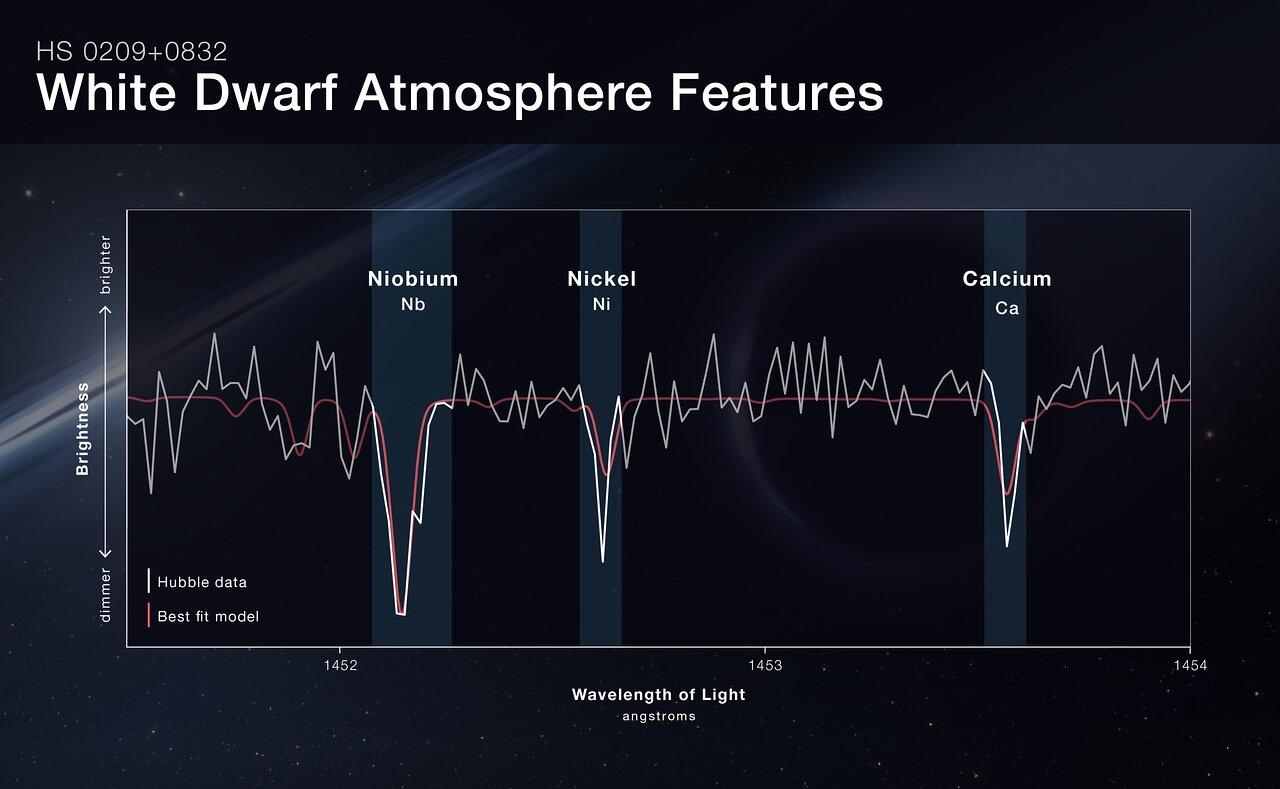
In 1999, Hubble pointed at the star HS 0209+0832 with its STIS ultraviolet spectrograph. The instrument returned a remarkably rich spectrum, packed with more than 200 absorption lines, the dips in light that betray the presence of chemical elements. But about 100 of those lines matched nothing known. Unable to identify them, astronomers filed them as a dead end.
Twenty-five years went by. Jamie Williams, a doctoral student at the University of Warwick, reopened the data with an updated atomic database and fresh eyes. The verdict: most of the orphan lines belong to niobium, a metal used on Earth in jewellery and some medical imaging devices, but never before seen around a white dwarf. "When Jamie asked me about niobium, I was truly gobsmacked, as that element had not been reported in any other white dwarf analysed to date," says Boris Gänsicke, an astronomer at Warwick and a co-author of the study.
That leaves the question of where the niobium came from, and there the story gets interesting.
Niobium, a witness that cannot lie
A white dwarf is the bare core of a Sun-like star. After burning through all of its fuel, the star swells into a red giant, then sheds its outer layers and leaves behind an ultra-dense ember. The whole sequence unfolds in four steps.
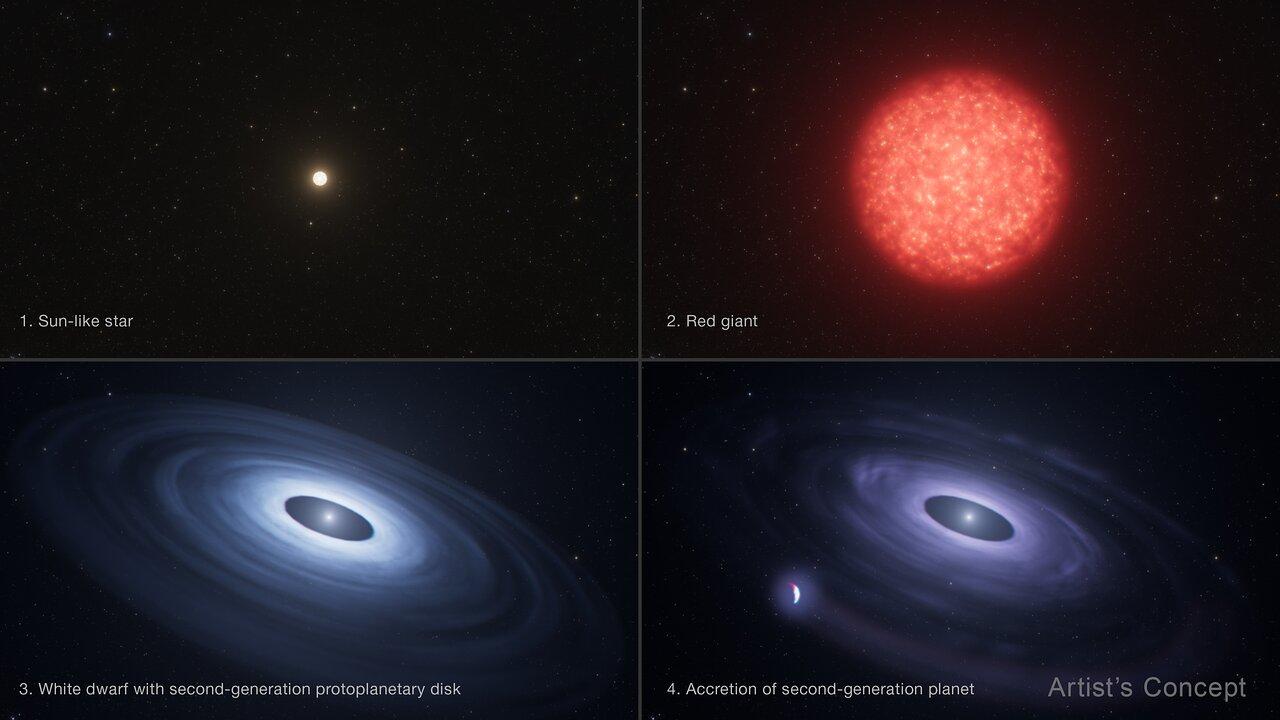
Niobium has one property that makes it the perfect witness. As Nicholas Stone, a theoretical astrophysicist at the University of Wisconsin-Madison and a member of the team, puts it, elements heavier than iron "are not formed in the cores of stars by thermonuclear fusion. Instead, these heavy elements can only be synthesised in the exotic conditions that briefly emerge inside dying stars." Niobium is a signpost of a star's death throes, and of its innards being flung into space.
That is why the metal points to a birth rather than to simple contamination. Most white dwarfs that pull in material do so from the debris of rocky planets shattered after their star died. Those fragments look like the bodies of our Solar System, rich in silicon and iron. The material falling onto HS 0209+0832 is the opposite: no iron, almost no silicon, plenty of nickel, copper and zinc, and above all niobium. Its makeup matches no object known in the Solar System.
A planet born from the ashes, 6 million kilometres out
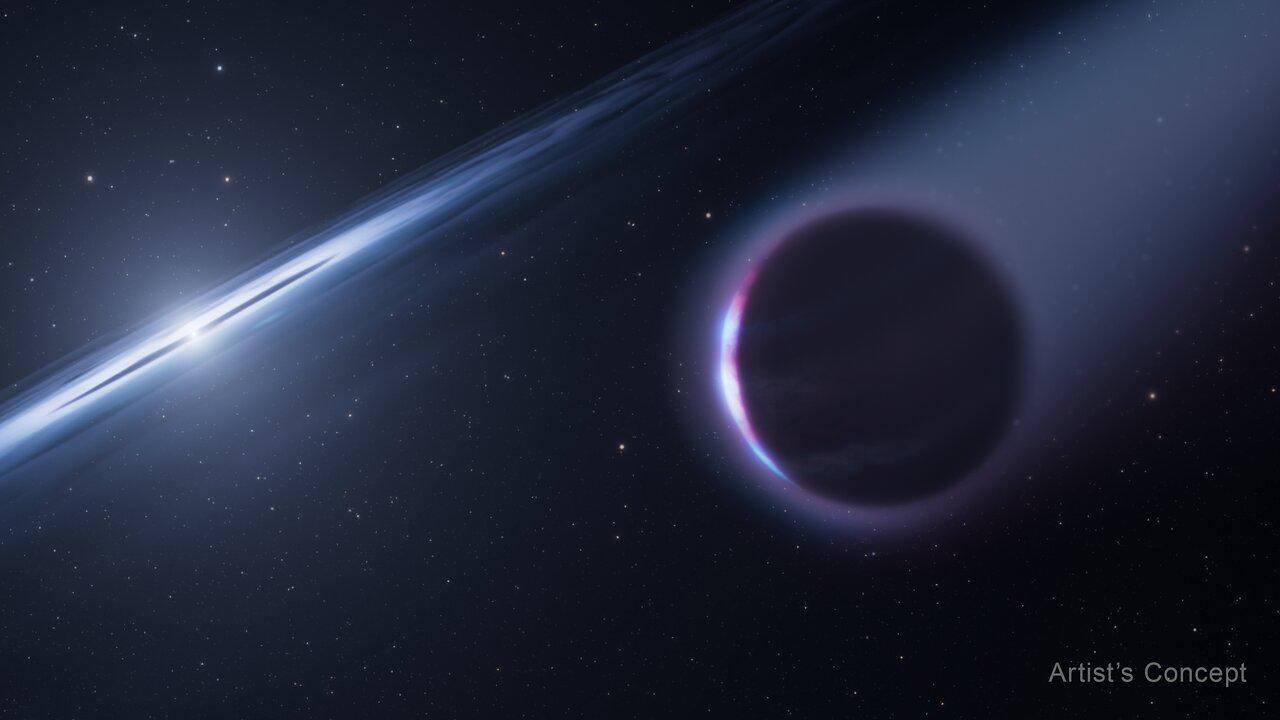
The envelope a dying star throws off is rich in carbon and in elements built by slow neutron capture, niobium among them. If part of that material gathers into a disk around the leftover ember, it can collapse into a brand-new planet. That is the team's hypothesis: a giant planet, the size of Jupiter, formed after the star died.
A brightness measurement completes the picture. NASA's TESS satellite watched HS 0209+0832 for four months, in 2021 and again in 2023. In those data, the team found a periodic variation in the star's brightness: a cycle of 4.399 days, with a tiny amplitude of 0.12%. There are two ways to read it. Either the planet's scorching day side and its night side pass across our view in turn, or a tail of evaporated gas, much like a comet's, crosses our line of sight. Either way, the numbers put the planet about 6 million kilometres from the white dwarf, far closer than Mercury is to the Sun.
A star still hot enough to boil away its planet
The white dwarf HS 0209+0832 is young, only 5 million years old, and still burns at 35,000 °C. At that temperature it blasts the planet with extreme radiation that peels off its atmosphere. The escaping gas does not vanish for good: it falls back onto the star as a rain of nickel, copper, zinc and niobium. That recycling is what makes the scene visible. Without it, the niobium would stay hidden inside the planet.
The whole chain then closes on itself: material from a dead star, locked into a young planet, returns to the star, where Hubble detects it. The niobium found in the star is, quite literally, a piece of the planet.
What it changes in our cosmic story
The discovery moves a line we thought was fixed. The death of a star was supposed to close the chapter on its planets. Here, that death opens a new one: the white dwarf becomes the cradle of a fresh world. "Rather than the white dwarf stage being a kind of epilogue to the story of a star and its planets, this research points to the systems we are familiar with only being the first chapter of a potentially much longer tale, with some new characters showing up," Williams says.
He also expects this candidate to survive. Once the white dwarf has cooled and settled, the planet will sit in a stable habitable zone for millions of years. That raises a dizzying question: how many dead stars host second-generation worlds, and for how long do those worlds stay warm? Nobody knows yet. Williams will spend the coming years using Hubble to hunt for more, hoping to build up statistics on these objects.
The result did not come from a spectacular observation, but from a rereading. An archive from 1999, an updated atomic database and a doctoral student's hunch were enough to reopen a quarter-century-old case. "Scientific discovery is not a straight path," Gänsicke notes. "It often needs that magical moment when people discuss big questions on their minds and realise that together they can find unexpected answers."
Going further
- The spacecraft in this story: Hubble, whose archives delivered the signal, and TESS, whose brightness monitoring sealed the planetary lead.
- The concepts behind the story: exoplanet, spectroscopy, ultraviolet and atmosphere in our glossary.
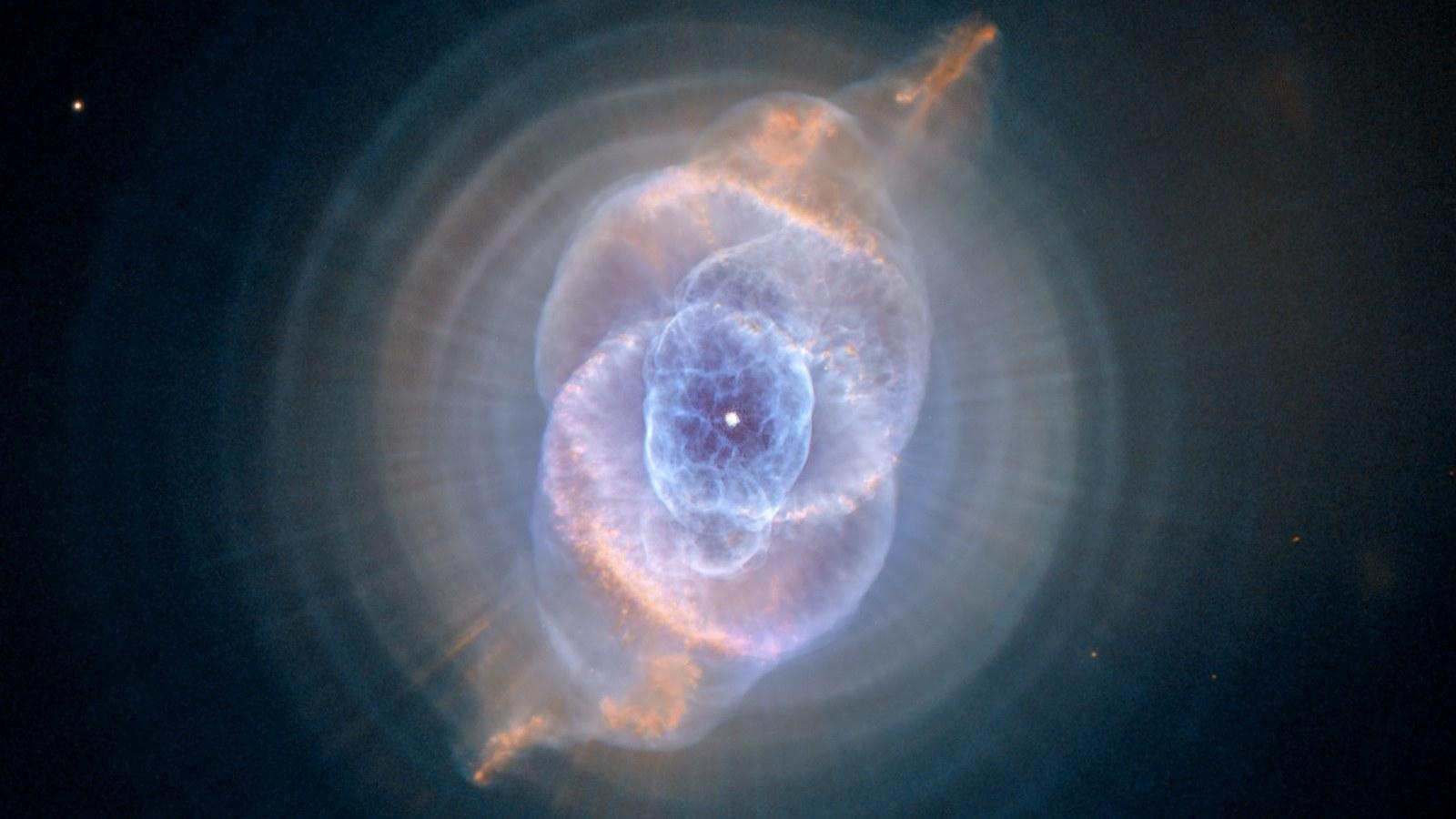
- To observe a dying star for yourself, the Cat's Eye Nebula can be found with binoculars using our interactive sky map, while our observing guide explains how to go further with an amateur telescope. The astrophotography gallery shows what a well-equipped amateur captures.
- The sources for this story: the Williams et al. study in Nature Astronomy (October 5, 2026), the NASA release and the ESA/Hubble release.