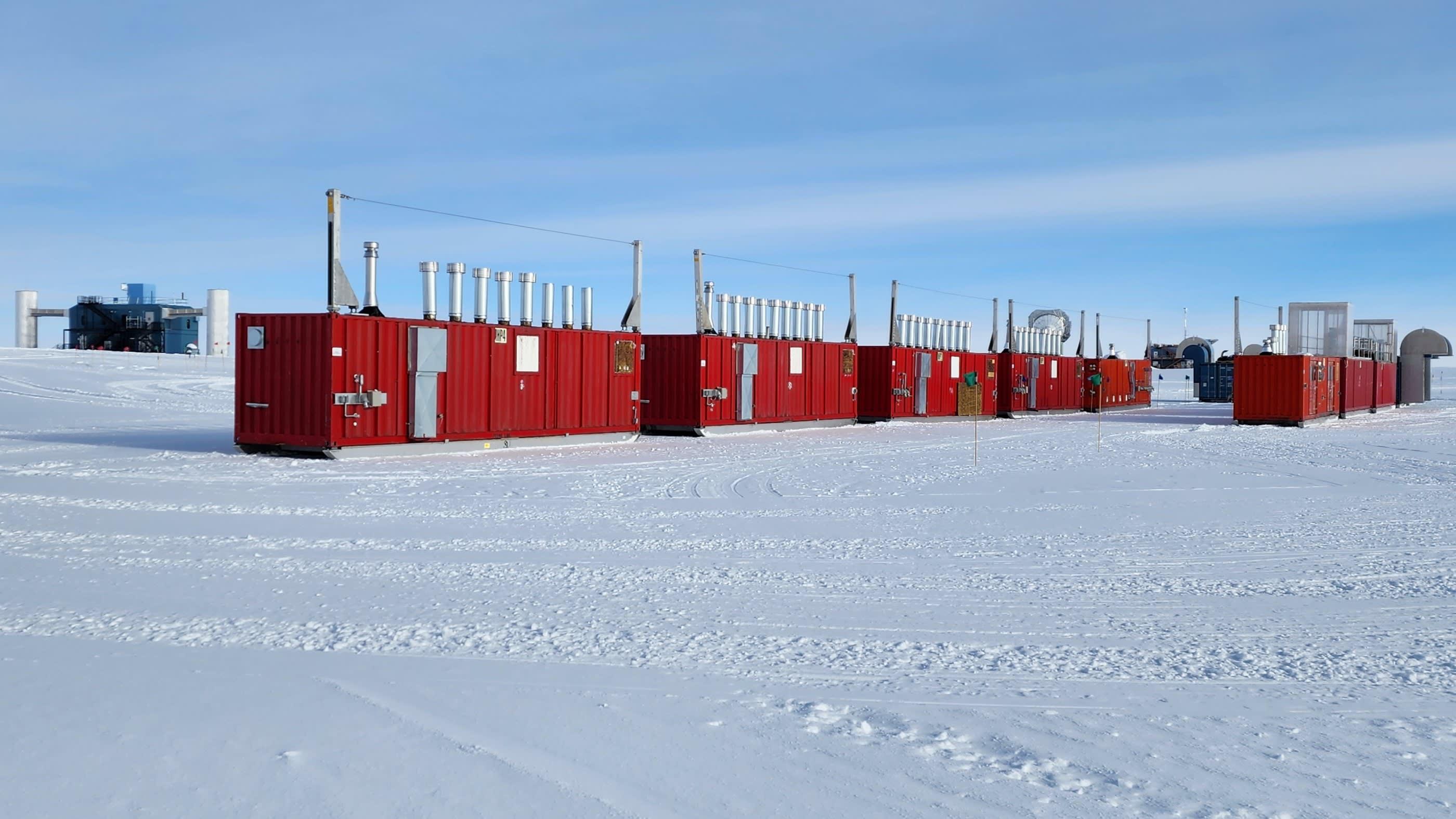
On September 19, 2026, at 6:52 UTC, something crossed a cubic kilometer of ice buried under the South Pole. A high-energy neutrino, most likely from deep space, that left behind the trail of a charged particle. Within minutes, IceCube pushed the alert out to observatories around the world. Signals like this one arrive about twenty times a year, so there is nothing extraordinary about it. What it does say is remarkable: to catch the most elusive particle in the universe, physicists turned Antarctic ice into a telescope.
A particle crossed the ice
Let us start with what we know, and with what we do not.
On September 19, 2026, at 6:52:15 UTC, the IceCube detector recorded a "track" event. That means a long straight line of light inside the ice, the signature of a muon, the heavy particle a muon neutrino produces when it strikes an atom. The system placed the event in its "Gold" stream, the one whose alerts are astrophysical neutrinos roughly half the time, the rest being atmospheric background. Its false alarm rate is 0.5 events per year, which means a signal of this kind shows up about once every two years purely by chance.
The reconstructed direction points to right ascension 111.05° and declination +6.43°, with an accuracy of about 0.3 degree. For scale, the full Moon spans half a degree of sky, so the origin region is smaller than the lunar disk. No gamma-ray source in the Fermi LAT catalog, the list of emitters compiled over sixteen years by NASA's Fermi space telescope, falls inside that patch.
Over the hours that followed, the collaboration combed through 1,000 seconds of data centered on the event, then a full two days. The result: zero further events of this kind in the region. The statistical figure attached to that search, called a p-value, comes out at 1.00. A p-value of 1 means what you observe matches exactly what the expected background would produce on its own. In other words: nothing beyond chance.
Plainly put: IceCube watched an interesting particle go by, but nothing proves a source is shining at that exact spot in the sky. That is how these alerts normally play out. They do not hand over a finished discovery, they hand a lead to an entire community of telescopes, which swings toward the region within minutes and looks for a counterpart: visible light, X-rays, radio waves.
Where neutrinos come from
A neutrino is, first and foremost, a ghost of the particle family. It belongs to matter, like the electron, but it carries no electric charge and its mass is so tiny that scientists long assumed it had none. The consequence: almost nothing stops it. Magnetic fields do not bend it, dust does not absorb it, a concrete wall does not slow it down.
Francis Halzen, a physicist at the University of Wisconsin and principal investigator of IceCube, summed it up in the statement that followed the first detection of astrophysical neutrinos, in 2013: "It is gratifying to finally see what we have been looking for. This is the dawn of a new age of astronomy."
That trait makes the neutrino an unmatched messenger, because the universe hides its most violent phenomena behind screens of gas and dust. Neutrinos, by contrast, leave the heart of those engines and reach us without swerving. Which leaves one question: what builds them?
- The Sun, first of all. The fusion that turns hydrogen into helium in its core produces neutrinos by the billion. About 65 billion of them cross every square centimeter of Earth each second, and nobody feels a thing.
- Supernovae, when a massive star collapses. In 1987, detectors recorded a burst of neutrinos from supernova SN 1987A a few hours before its light arrived. The signal raced out through the exploding star, at a moment when light was still trapped by matter.
- Earth's atmosphere, continuously. Cosmic rays, particles arriving from space, smash into air nuclei and produce stray neutrinos. That is the background detectors have to strip away.
- Earth and reactors, through radioactive decay. The first neutrino ever detected, in 1956, came from a nuclear reactor.
- Cosmic accelerators, the ones astronomers care about most. These are active galactic nuclei, blazars and other monsters able to push particles to energies no human machine can reach.
Those accelerators pose a decades-old puzzle. They fire cosmic rays, protons and atomic nuclei, but these charged particles get bent by the magnetic fields of space. By the time they reach Earth, their path has been twisted in every direction, like a car that drove in circles before arriving. There is no way to trace it back to the starting point.
Neutrinos travel straight. When a cosmic ray strikes matter or light near its source, the collision produces neutrinos and gamma rays. Photons can be absorbed along the way. Neutrinos carry on. They are breadcrumbs scattered along the path of cosmic rays, and IceCube picks them up.
Catching a particle that goes through anything
How do you trap something that goes through everything? You wait for it to take a wrong turn. A neutrino can cross light-years of lead without flinching, but every so often, very rarely, it slams straight into an atom. The collision throws off charged particles, and those, tearing through the ice faster than light itself travels there, emit a bluish wave of light: Cherenkov radiation.
That light is to sound what a supersonic bang is to air. An aircraft flying faster than sound builds a cone of shock wave, hence the bang. A charged particle moving faster than local light does exactly the same thing with photons. In ice, light travels at about 76 percent of its speed in vacuum, a quarter slower, while the muon keeps almost all of its speed. It therefore outruns the light around it and trails a blue cone behind.
The whole detector is built around that cone.
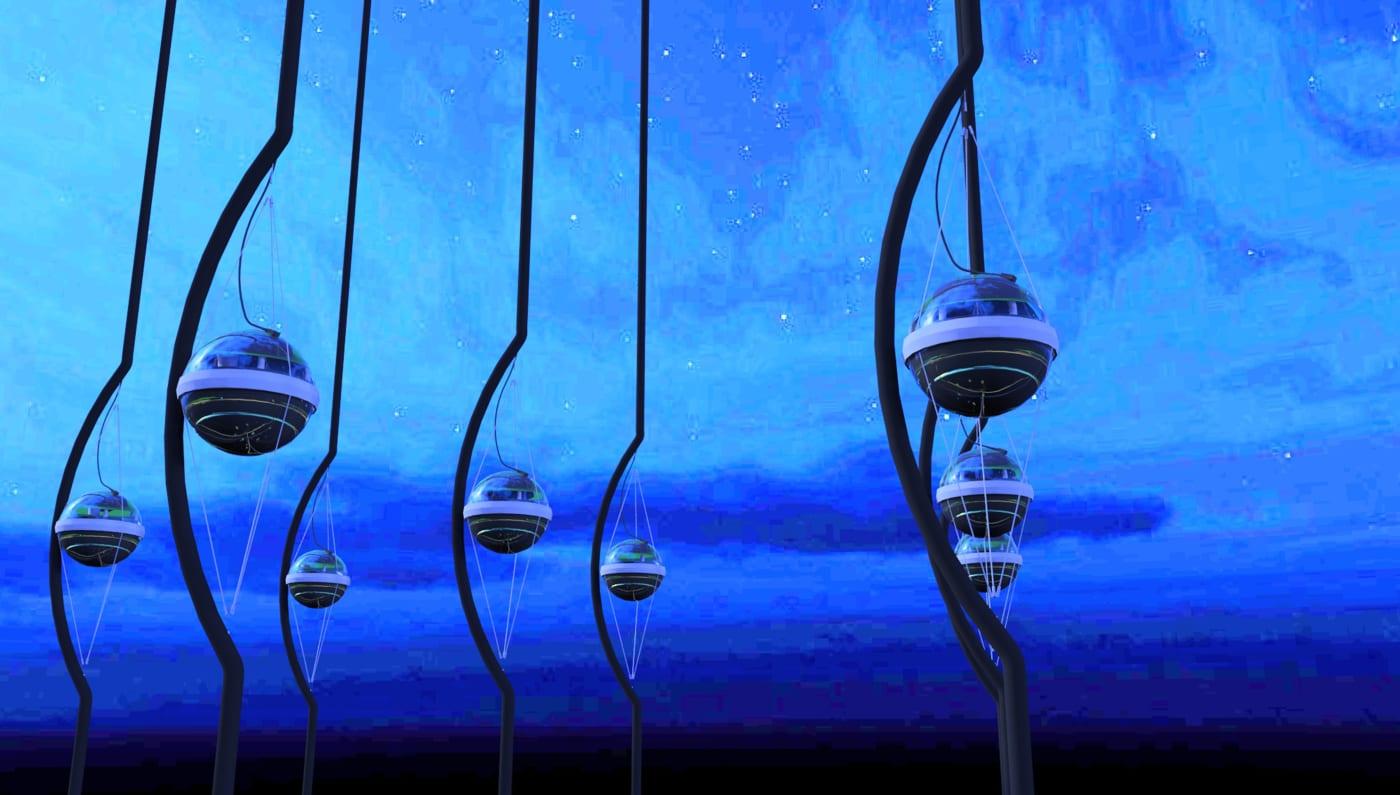
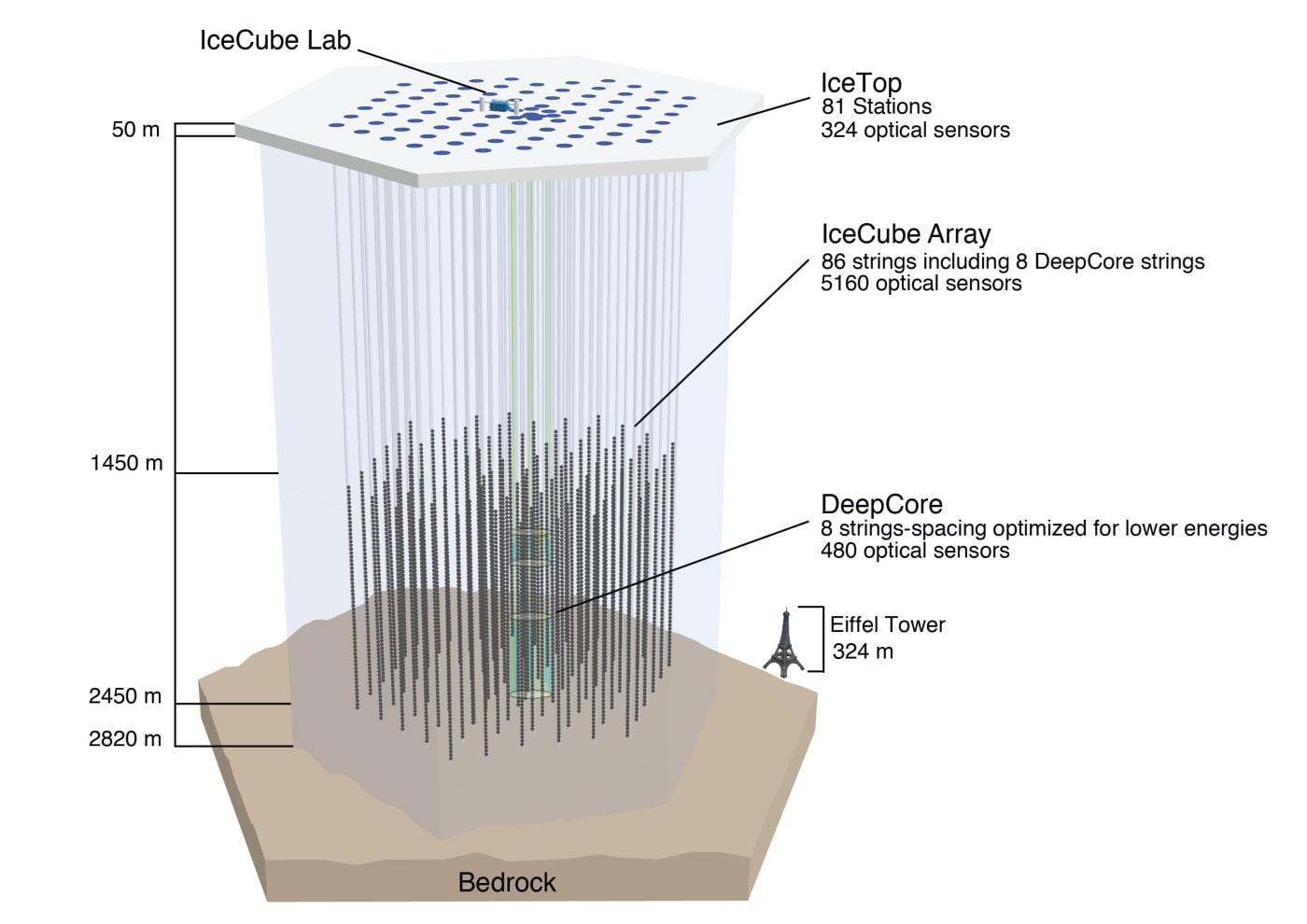
IceCube fills a cubic kilometer of ice, from 1,450 to 2,450 meters below the surface, near Amundsen-Scott Station at the South Pole. Into 86 holes melted with hot water, the collaboration lowered 86 strings of 60 sensors each: 5,160 glass spheres fitted with a photomultiplier tube, a device that turns a handful of photons into an electrical signal. A cubic kilometer is about a billion tons of ice, the volume of 400,000 Olympic swimming pools.
Three safety nets complete the setup.
- Depth. A kilometer and a half of ice filters out most cosmic rays, which would otherwise mimic a neutrino signal.
- The surface array. IceTop, 81 stations sitting above the detector, spots showers of particles from the sky and flags them as background.
- The algorithms. Every event is reconstructed by software that untangles the trail and rules out look-alikes.
On top of that sits DeepCore, a cluster of eight tightly packed strings at the center of the detector, spaced 70 meters apart instead of 125. That extra density drops the detection threshold to around 10 GeV, a million times less energy than IceCube's most energetic neutrinos, which exceed 10 PeV. That is where the collaboration studies neutrino oscillations, the switch from one neutrino family to another during flight, a process that betrays a tiny but non-zero mass.
Once a trail is captured, two shapes are possible. A long thin streak, called a track, cutting across the whole volume, is a muon and therefore a muon neutrino, and its direction can be pinned down to better than one degree. A compact blob, called a cascade, contained within a few meters, is an electron or tau neutrino, with a better energy measurement but a far fuzzier direction.
IceCube sends out around 26 alerts a year, about ten of them Gold. The sky position is released as a probability map, and partner observatories can swing toward the region within minutes.
What the ice has already seen
The September 19 alert takes its place in a run of observations that, over fifteen years, have founded a new branch of astronomy.
In 2013, IceCube identified 28 very high-energy neutrinos, between 30 TeV and 1.2 PeV, whose origin could not be the atmosphere. The result, ruling out a pure background explanation at more than 4 sigma, marked the first solid evidence of astrophysical neutrinos. Since then, the collaboration has piled up about 700,000 neutrinos between 100 GeV and 1 PeV, with a purity above 99 percent against stray muons.
In 2017, a neutrino of roughly 290 TeV struck IceCube at the same time as a gamma-ray flare seen by the Fermi telescope, in the direction of the blazar TXS 0506+056, 4 billion light-years away. It was the first time a neutrino and a beam of light pointed to the same celestial object. A later archive analysis revealed a burst of neutrinos from the same source between 2014 and 2015.
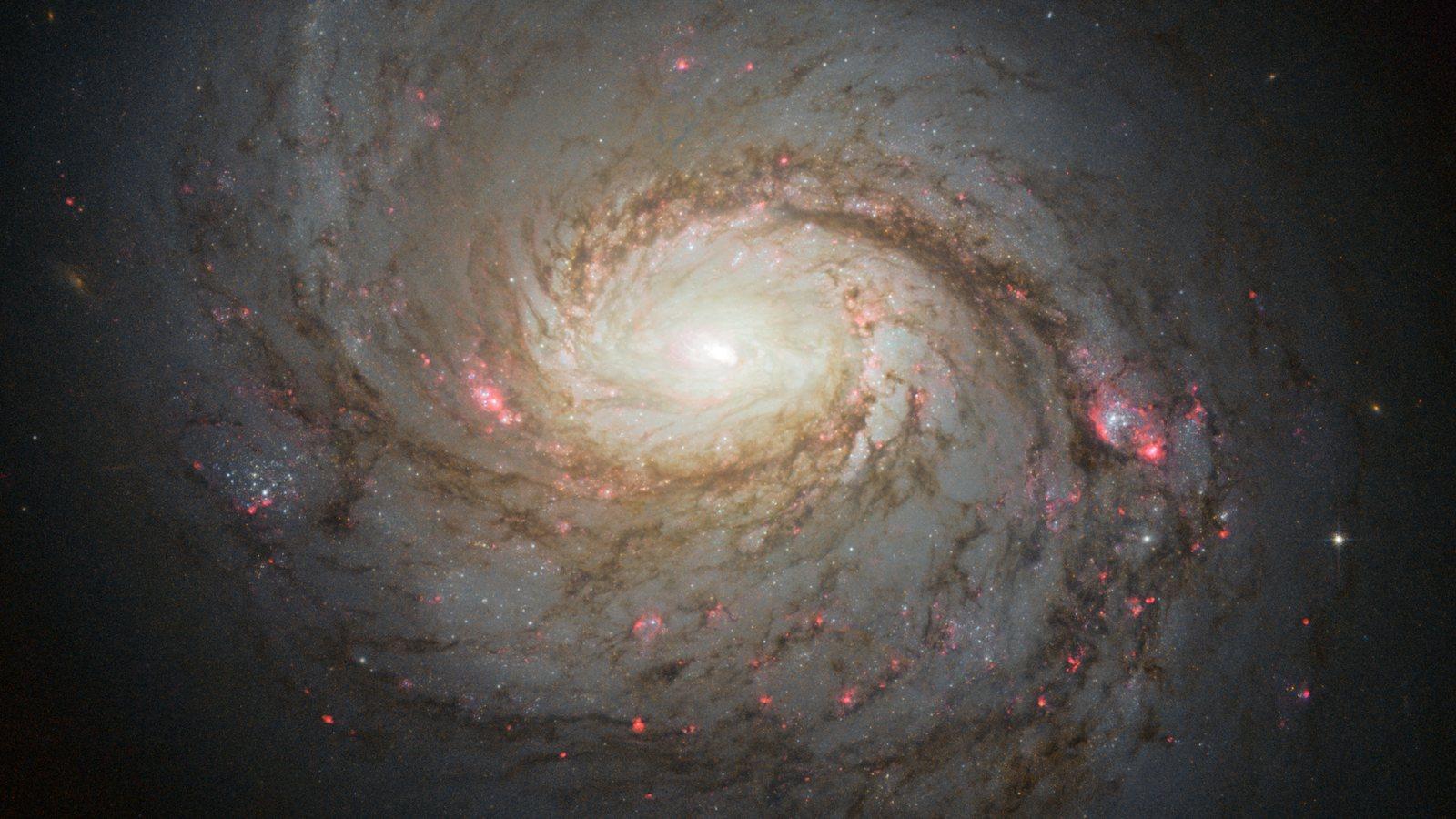
In 2022, IceCube found neutrinos coming from the active galaxy NGC 1068, better known as Messier 77, about 47 million light-years away. Across a decade of data, 80 events around the TeV range cluster within 0.18 degree of its core, a concentration significant at 4.2 sigma. That galaxy hosts a supermassive black hole devouring the matter around it, and the neutrinos come from its innermost region, the part light never escapes.
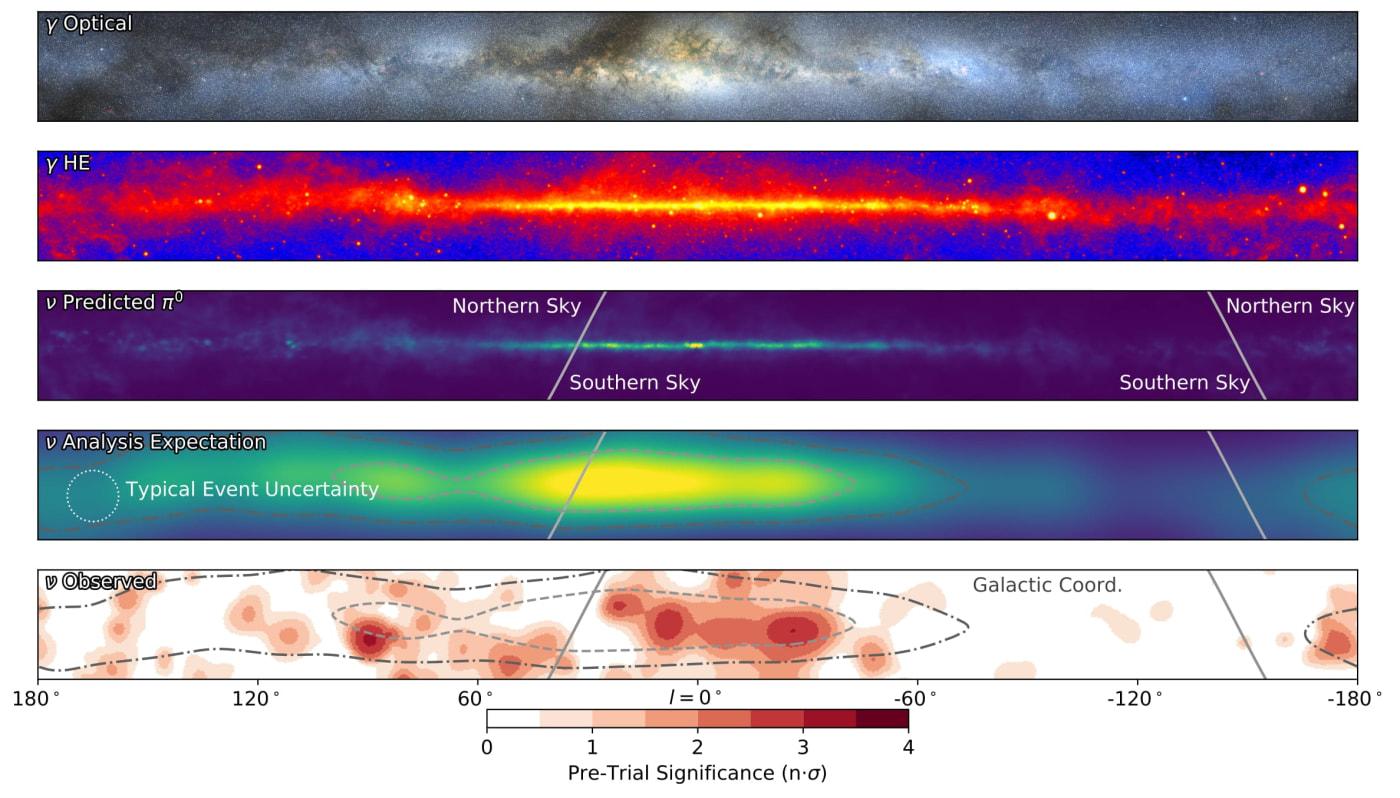
In 2023, finally, IceCube produced the first image of our own galaxy made with neutrinos. Applying machine learning to ten years of data, the collaboration identified emission along the plane of the Milky Way, where cosmic rays strike interstellar gas. Our galaxy appeared, seen through particles of matter, at a significance of 4.5 sigma.
A new window on the universe
These results all share one logic. Where a conventional telescope sees an object through the light it emits, a neutrino detector sees the inside of a hidden particle accelerator. A black hole wrapped in gas and dust stays a blur in visible light, yet it gives away its activity through neutrinos.
On the practical side, the next chapter is already playing out on the ice. Over the 2025-2026 austral summer, the collaboration deployed six new strings of more sensitive sensors, five of which are working today, bringing the observatory to more than 5,500 modules in 91 boreholes. Known as the IceCube Upgrade, the array should improve detection of the lowest-energy neutrinos and allow a fresh analysis of the fifteen years of archived data. The next project, IceCube-Gen2, would multiply the instrumented volume by eight for a fivefold gain in source sensitivity. It remains under study, with no construction funding so far.
In August 2026, the U.S. National Science Foundation renewed the observatory's operations and maintenance contract for five years and 53 million dollars. The message is clear: the hunt for neutrinos is only getting started, and the September 19 alert is one more line in an already crowded notebook.
Going further
- Understand the particle: the neutrino and multimessenger astronomy in our glossary.
- The giant black holes behind neutrino sources: the supermassive black hole, and the galaxies that host them on the Hubble page, whose image of NGC 1068 illustrates this article.
- Light from compact objects, another messenger: the Chandra telescope and its X-ray observations.
- You will not spot neutrinos through an amateur telescope, but the sky itself is worth a look tonight: our interactive sky map and its observing guide.
- The official sources for this article: the IceCube-260919A circular and its follow-up search on NASA's GCN network, the IceCube alert documentation, along with IceCube releases on astrophysical neutrinos, NGC 1068 and the Milky Way, and NASA's explainer on neutrinos.
- The video: Uncharted Cosmos: Mapping the Universe with IceCube, on IceCube's official channel.