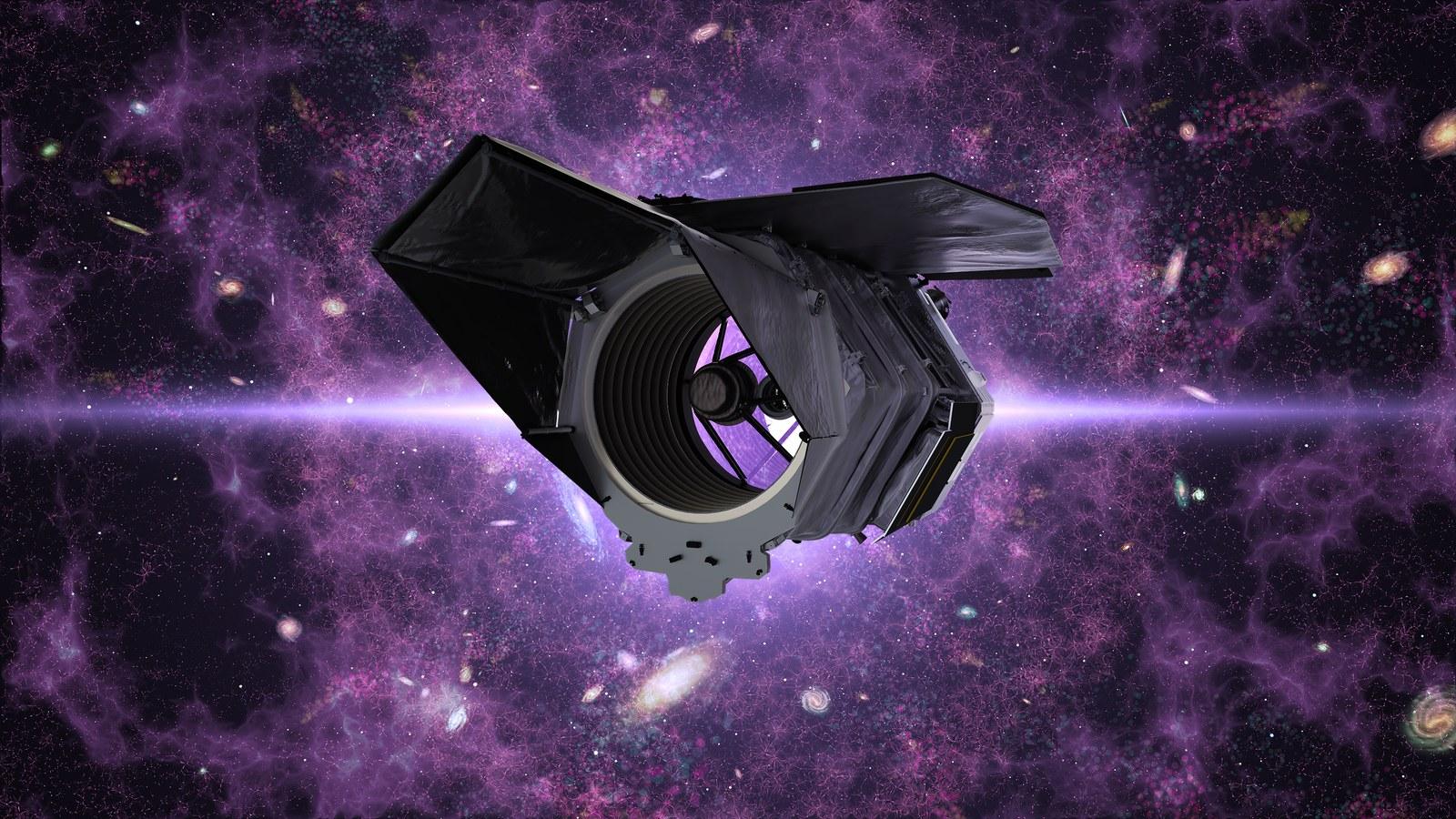
Finding a second Earth is the grand slam of modern astronomy. The catch: nearly half of the Sun-like stars in our solar neighborhood, true solar twins, live in pairs. And current methods can barely search those double systems. A NASA mission concept named SHERA, for Searching for Habitable Exoplanets with Relative Astrometry, proposes to fix that with a 22 cm telescope, a gravitational measuring rod and a measurement precision that borders on science fiction.
Half of the nearby stars, an unexplored desert
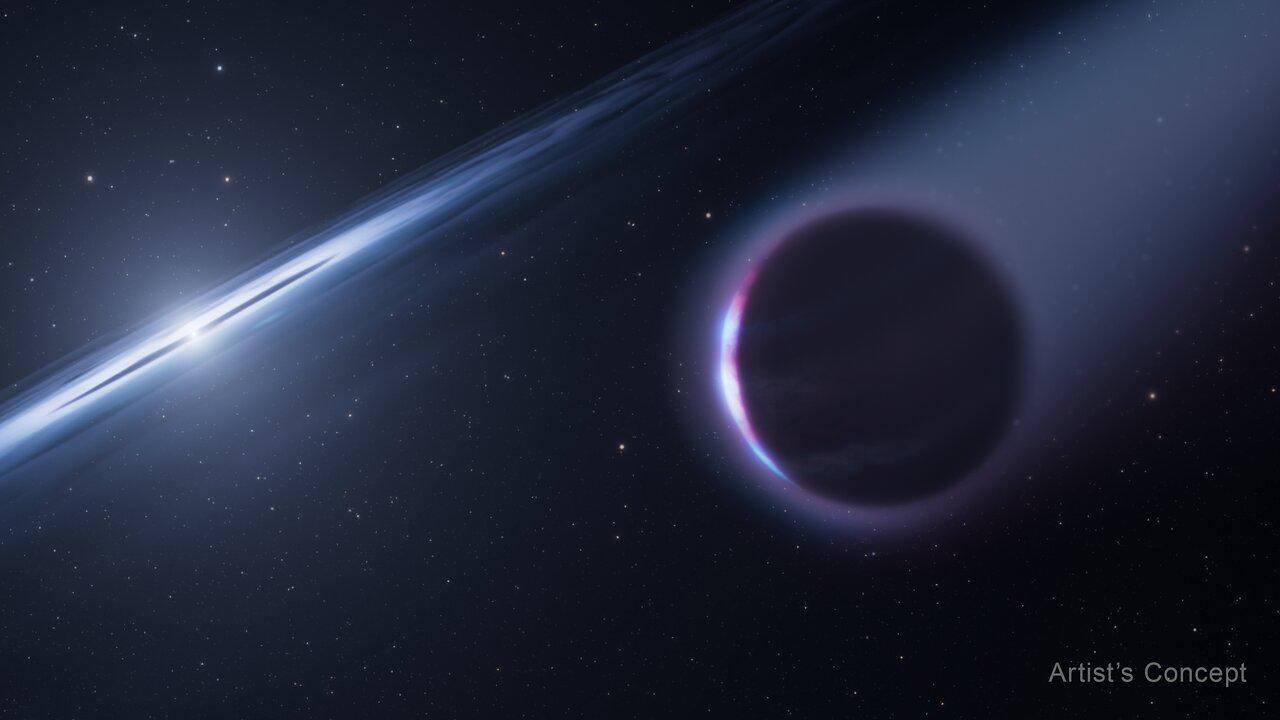
Start with a surprising figure: nearly 50% of nearby Sun-like stars, true twins of our own star, are not alone. They orbit in pairs, sometimes more, systems astronomers call binaries. The closest system to us, Alpha Centauri at 4.3 light-years, is a triple: two Sun-like stars, A and B, plus a distant red dwarf, a small, faint and cooler star. In other words, the most accessible "Earth 2.0" candidates in the Galaxy may hide inside systems nobody surveys.
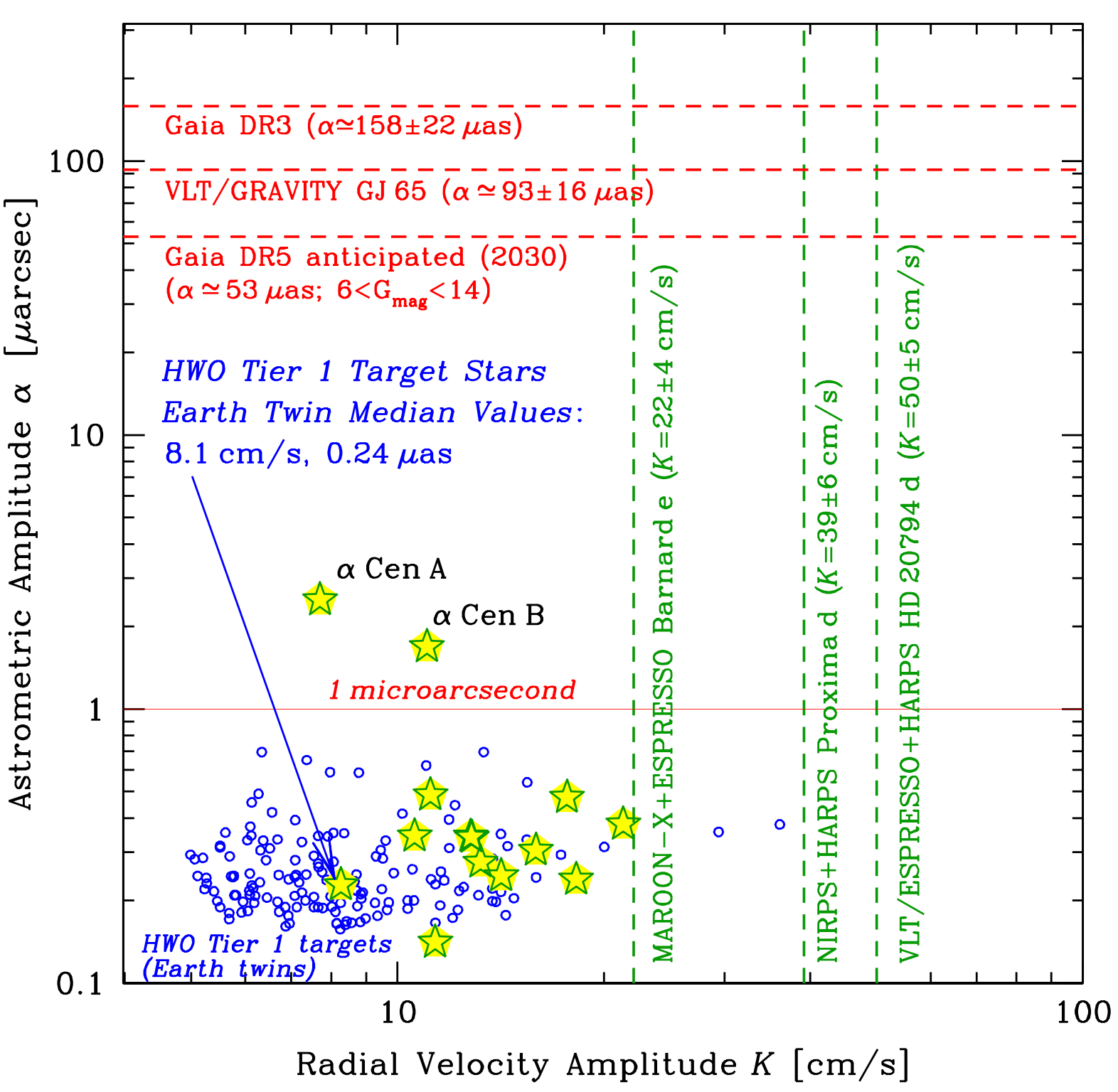
The reason for this unexplored desert is technical. Transit, the method that made Kepler famous, requires perfect alignment: from our point of view, the planet has to cross exactly in front of its star. Yet an Earth-sized planet blocks only about 100 parts per million of a Sun-like star's light, one ten-thousandth of the glow. As for radial velocity, the technique that tracks a star's gentle back-and-forth as its planets tug on it, a rocky planet in the habitable zone, the band of orbits where water can stay liquid, would shift its star by a mere 9 cm/s, a pace that would take a full day to cover about 8 km. And the world's best spectrographs, the instruments that split light into a rainbow to measure such motions, stall around 50 cm/s, hampered by the spots and ripples stirring the stars' own surfaces.
Relative astrometry: the binary as a measuring rod
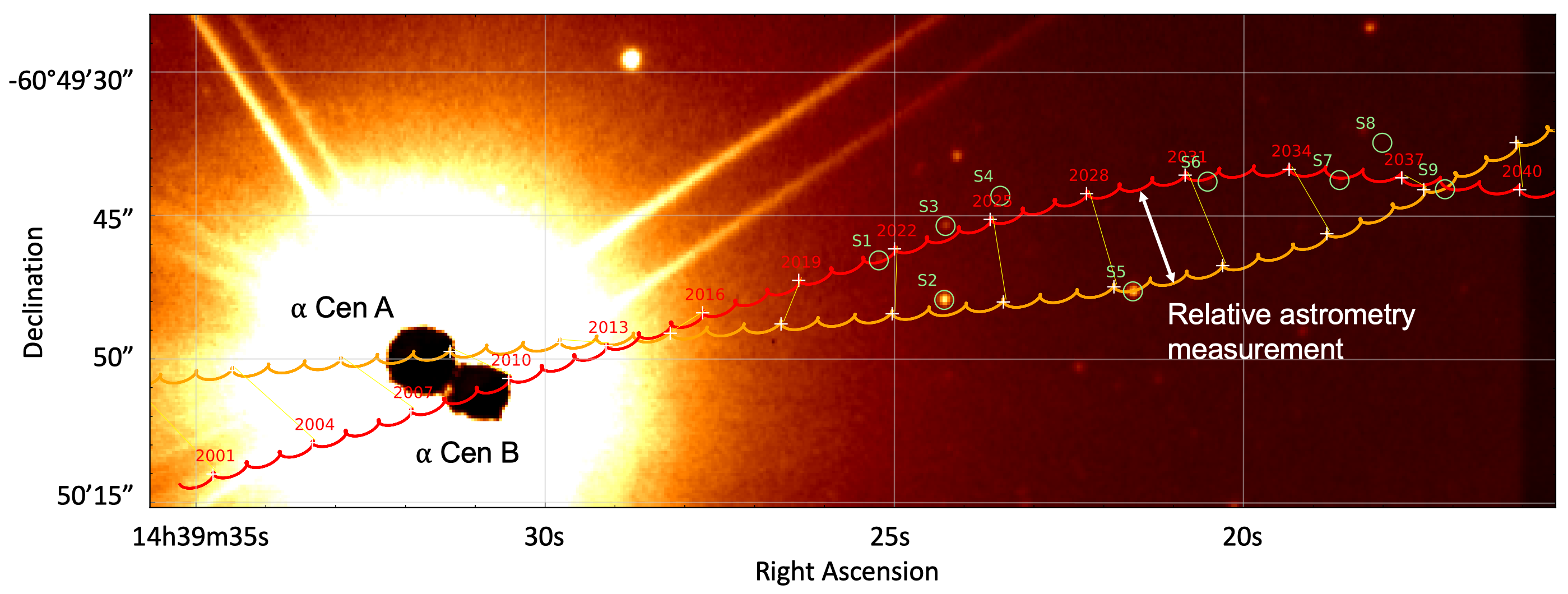
SHERA's solution is elegant, and it borrows from astrometry, the art of measuring where stars sit in the sky. Instead of measuring a star's position against a background reference field, the way Gaia does at about 100 microarcseconds, SHERA measures the distance between the two stars of a single binary. To picture the unit: a microarcsecond is the angle a human hair would span when seen from 20,000 km away. Two gravitationally bound stars are a measuring rod that travels with you: optical errors and background noise cancel out, because both lights cross the same instrument at the same time.
If one of the two stars hosts a planet, it wobbles around the common center of mass, the couple's balance point, like two skaters circling each other. That back-and-forth repeats at the planet's orbital rhythm and makes the distance between the two stars swing. SHERA would track the signal day after day with a targeted precision of 0.5 to 1.1 microarcseconds depending on the target, roughly 20 times better than Gaia.
A diffractive pupil etched with an electron beam
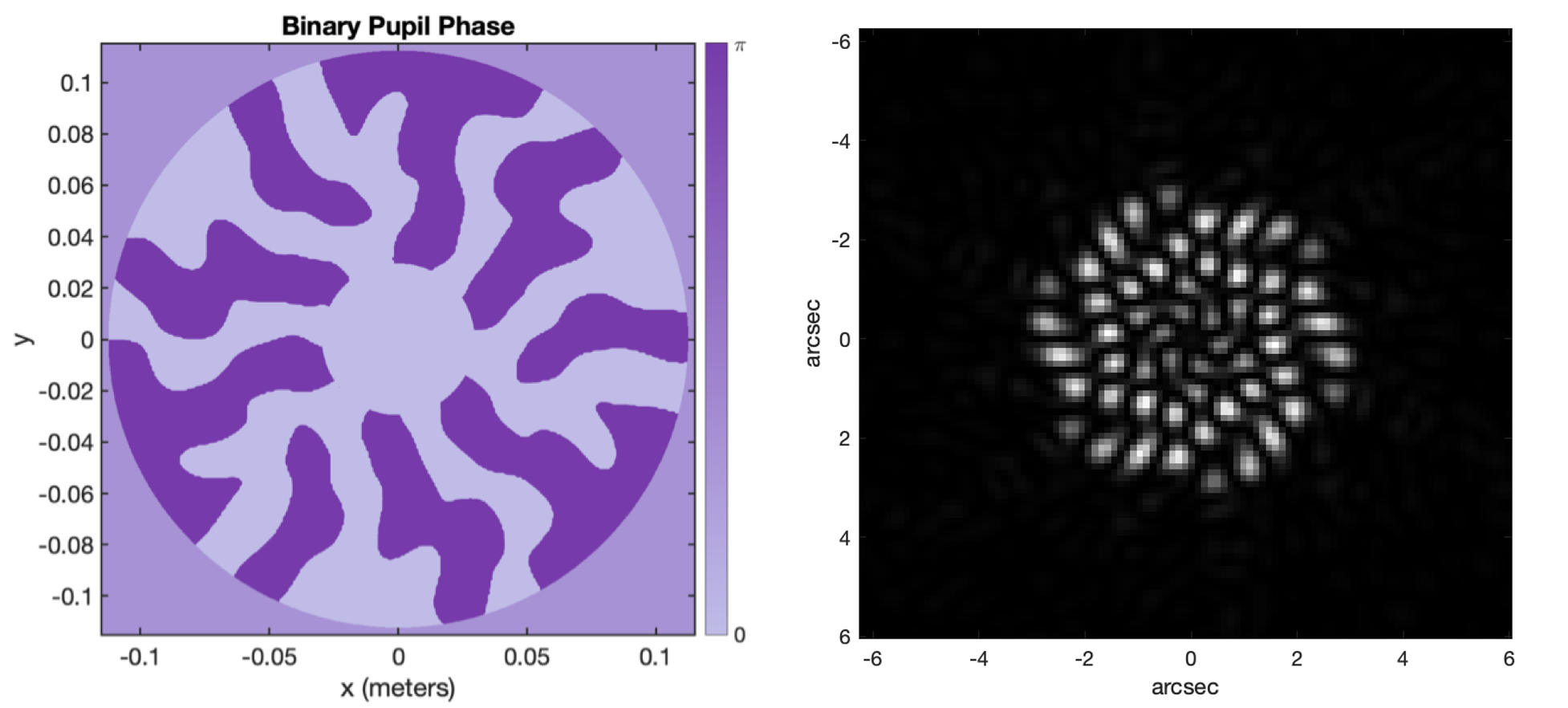
How does a 22 cm telescope, smaller than an amateur's, reach such precision? The answer lies in an etching. SHERA's primary mirror carries a diffractive pupil: a microscopic checkerboard of tiny steps etched into the glass by electron-beam lithography, the same technique used to make smartphone chips. That mask bends the stars' light and spreads it into a regular, known pattern on the detector, the light-sensing chip that replaces film.
That pattern serves three purposes. It acts as an internal ruler, continuously measuring the optics' deformations. It spreads light over multiple detector zones, smoothing out manufacturing defects in the sensor. And it monitors the average color of the incoming light, telling a planetary signal apart from a starspot, a dark patch crossing the star's face that slightly shifts its hue.
The target list: 7 systems, 14 stars, 4 planets expected
SHERA would target 14 stars in 7 nearby binary systems, all within 17 parsecs, the astronomers' unit of distance, about 55 light-years. All G and K types, two families of stars similar to the Sun, slightly hotter for the G, slightly more orange for the K. At the top of the list: Alpha Centauri A and B, with a claimed sensitivity of 0.4 Earth masses, a world between Mars and Venus, the best of the whole sample. Then 61 Cygni, 70 Ophiuchi, 36 Ophiuchi, Xi Bootis, p Eridani and the HR 2667/2668 pair.
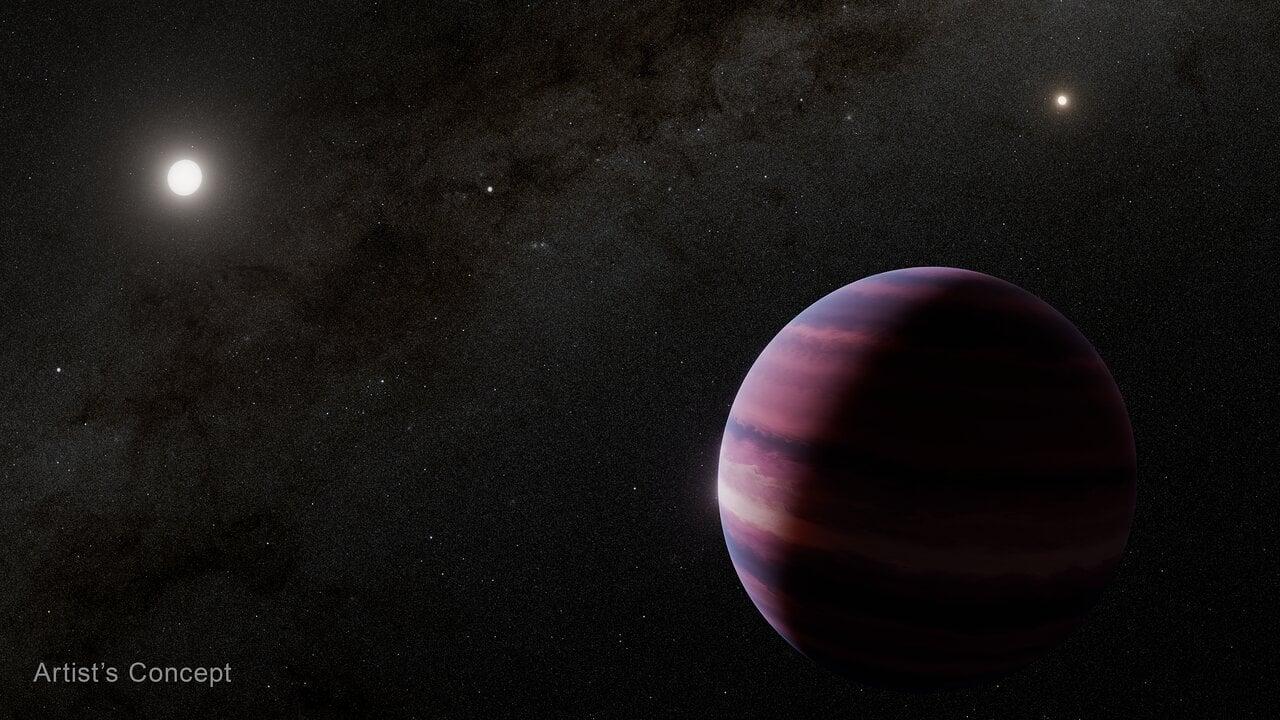
Translating to 3-year orbits what Kepler learned about how often planets occur, the share of stars hosting at least one, the team expects 4 ± 2 small planets of less than 4 Earth masses in the habitable zone. The result counts even if it is a void: if SHERA found 0 or 1, it would statistically prove that binaries form far fewer rocky planets than single stars.
What it changes for the search for life
SHERA is more than a planet hunter. It is also a scout for NASA's future giant. Among the 14 targets, 13 appear on the priority-1 list of the Habitable Worlds Observatory (HWO), the 6 to 8 m observatory NASA hopes to launch in the 2040s to photograph Earth twins.
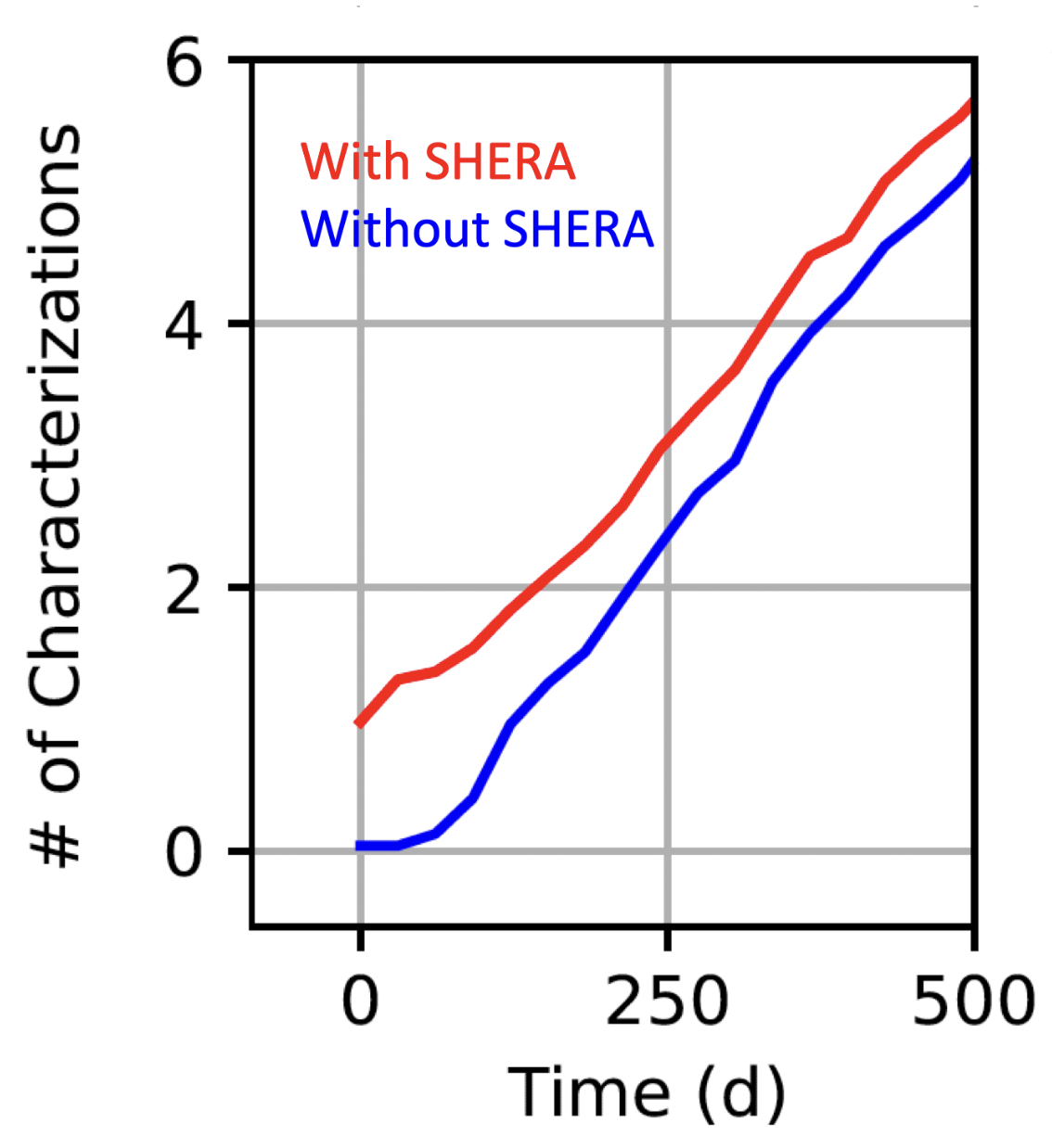
The payoff is economic. A simulation in the paper shows that if SHERA discovers 3 planets around high-priority targets, the observing time HWO needs to study a given number of planets in detail, size, atmosphere, drops by 40%. In an observatory where each hour costs tens of thousands of dollars, that is no small change. Knowing in advance that a planet exists, and on what orbit, spares years of pointing at empty stars.
Another dividend: combined with ground-based radial velocity measurements, SHERA's astrometry would reconstruct the full 3D geometry of these systems, the tilt of the orbits, their shape, the masses of the players. A dynamic laboratory for understanding how double stars shape planet formation, an open question ever since the first exoplanets were found on S-type orbits, circling just one of the two stars.
Going further
- The catalog entry for the spacecraft that measures the sky: Gaia, the world reference in space astrometry, whose precision SHERA aims to beat by a factor of 20.
- Key notions: exoplanet, habitability and spectroscopy.
- The official sources: the scientific paper Christiansen et al., arXiv:2608.04250 and the mission concept page at IPAC/Caltech.