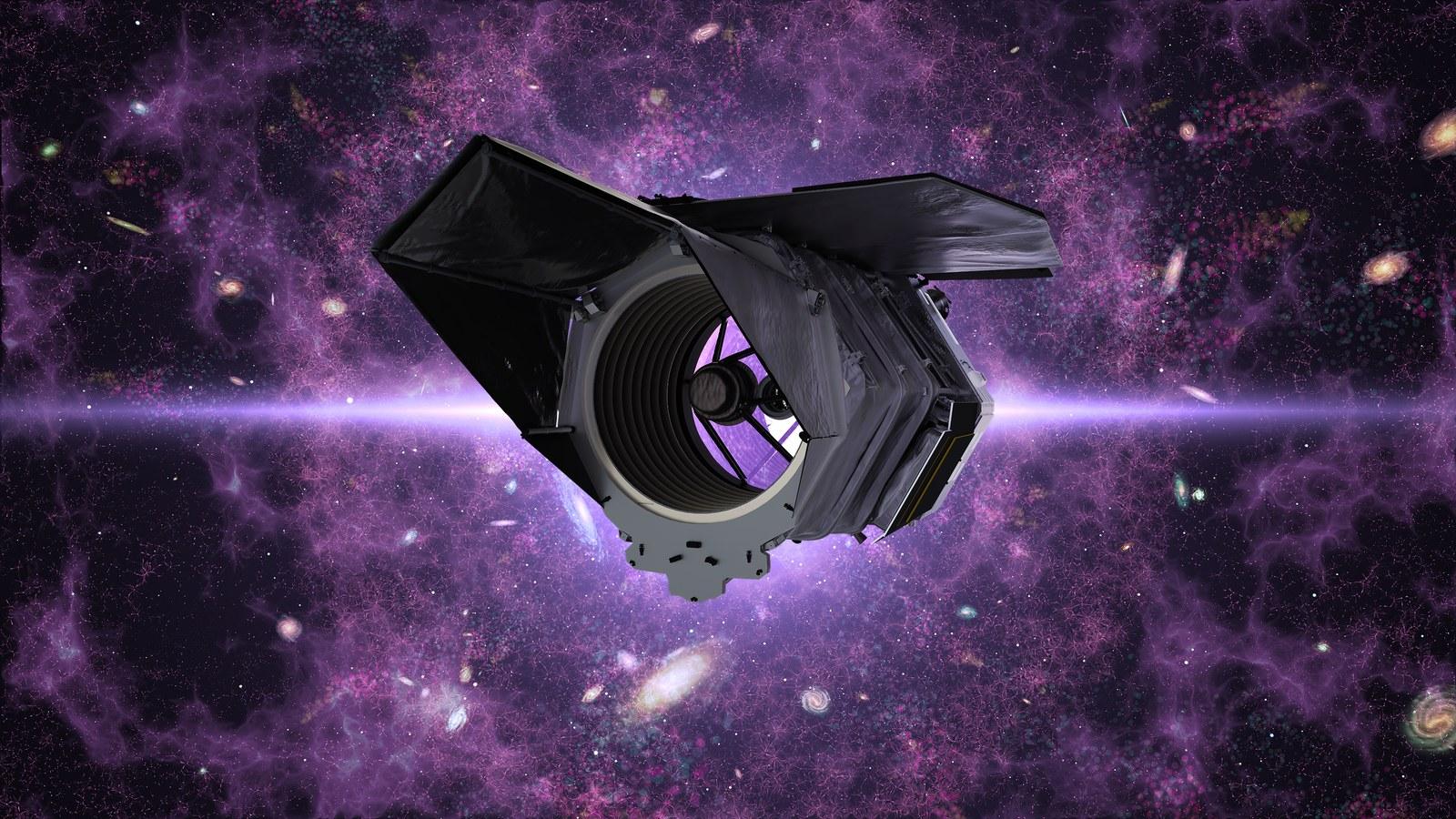
On October 14, 2026, the Nancy Grace Roman Space Telescope team announced it had finished checking out the observatory's main instrument, its wide-field camera. Over several weeks, engineers put every component through its paces, then corrected the telescope's focus. The result: optics performing nearly 30% better than planned, and a coronagraph that has regained its sharpness as well.
63 nanometers instead of 90: the wide-field camera beats its own spec
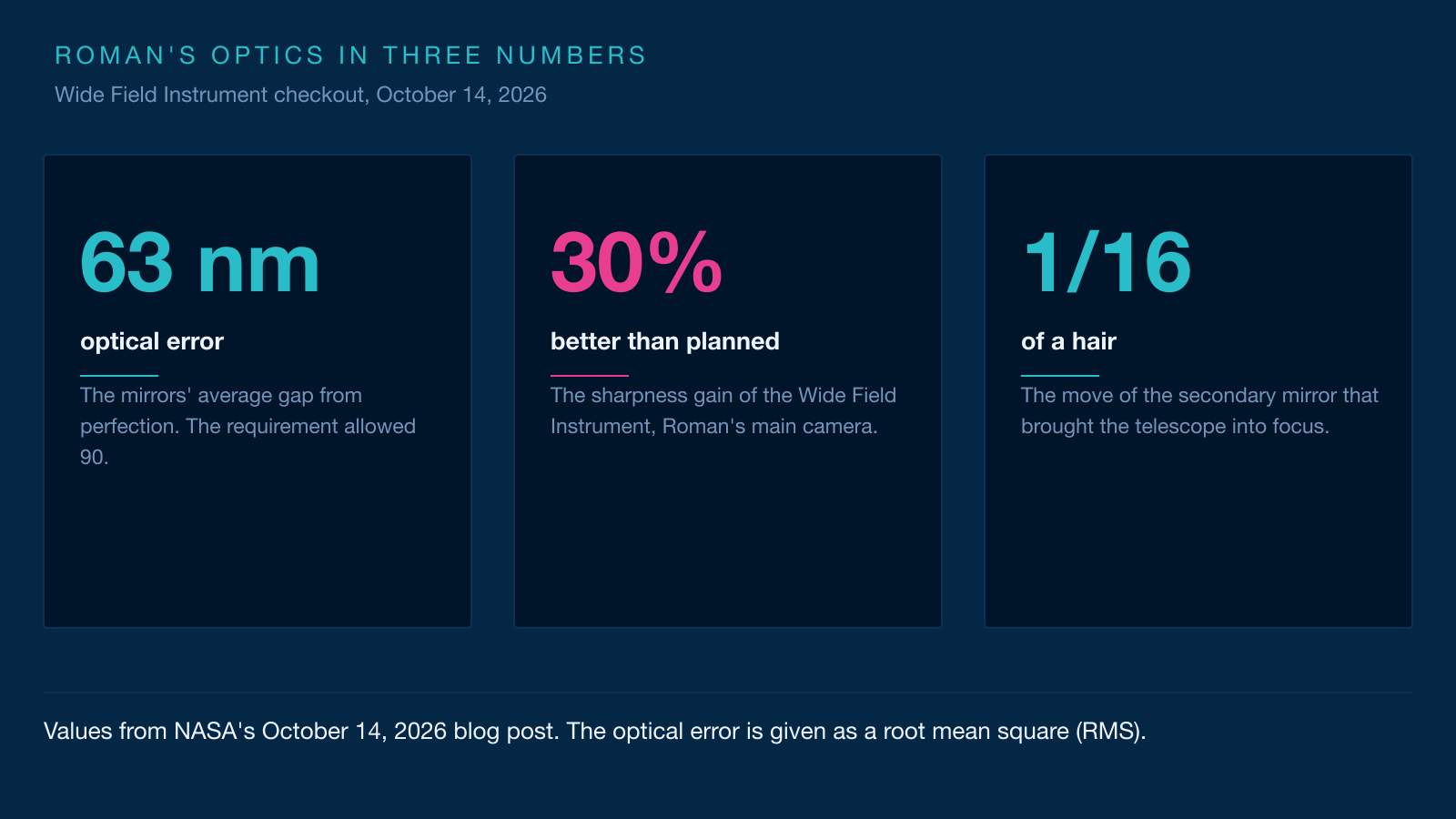
Start with the number that says it all. The Wide Field Instrument's optical error now stands at 63 nanometers, measured as a root mean square. One nanometer is a billionth of a meter, about a million times thinner than a human hair. The mission's requirement allowed roughly 90 nanometers. The mirrors therefore outdo what was asked of them, with a gain close to 30%.
It helps to know what this "optical error" actually is. A perfect surface would be smooth down to the scale of atoms. In reality, every mirror drifts from that ideal by a tiny amount, and those ripples blur the image ever so slightly. Engineers measure them in nanometers, as an average across the whole image. The lower the figure, the more stars stay pin-sharp and the more detail distant galaxies keep. At 63 nanometers, Roman is working at a precision its teams hoped for but never dared to demand.
That result came out of a weeks-long campaign. The instrument was switched on in September 2026. Engineers first checked the 18 detectors one by one, the sensors that turn light into an electrical signal, along with all their electronics. They then ran the element wheel, a mechanism that slides filters and other tools in front of the detectors to sort light by color, much like the tinted gels over a theater spotlight. Next they lit every internal LED in the calibration system, tiny lamps whose brightness and hue are controlled from the ground. These measure how each detector responds to different light levels, so the team can correct for uneven sensitivity.
"Calibrating an instrument is like tuning a piano or guitar before a concert," said Maxime Rizzo, a Wide Field Instrument systems engineer at NASA's Goddard Space Flight Center. "You adjust everything until it's just how you want it, then leave the settings alone so it performs consistently while you use it."
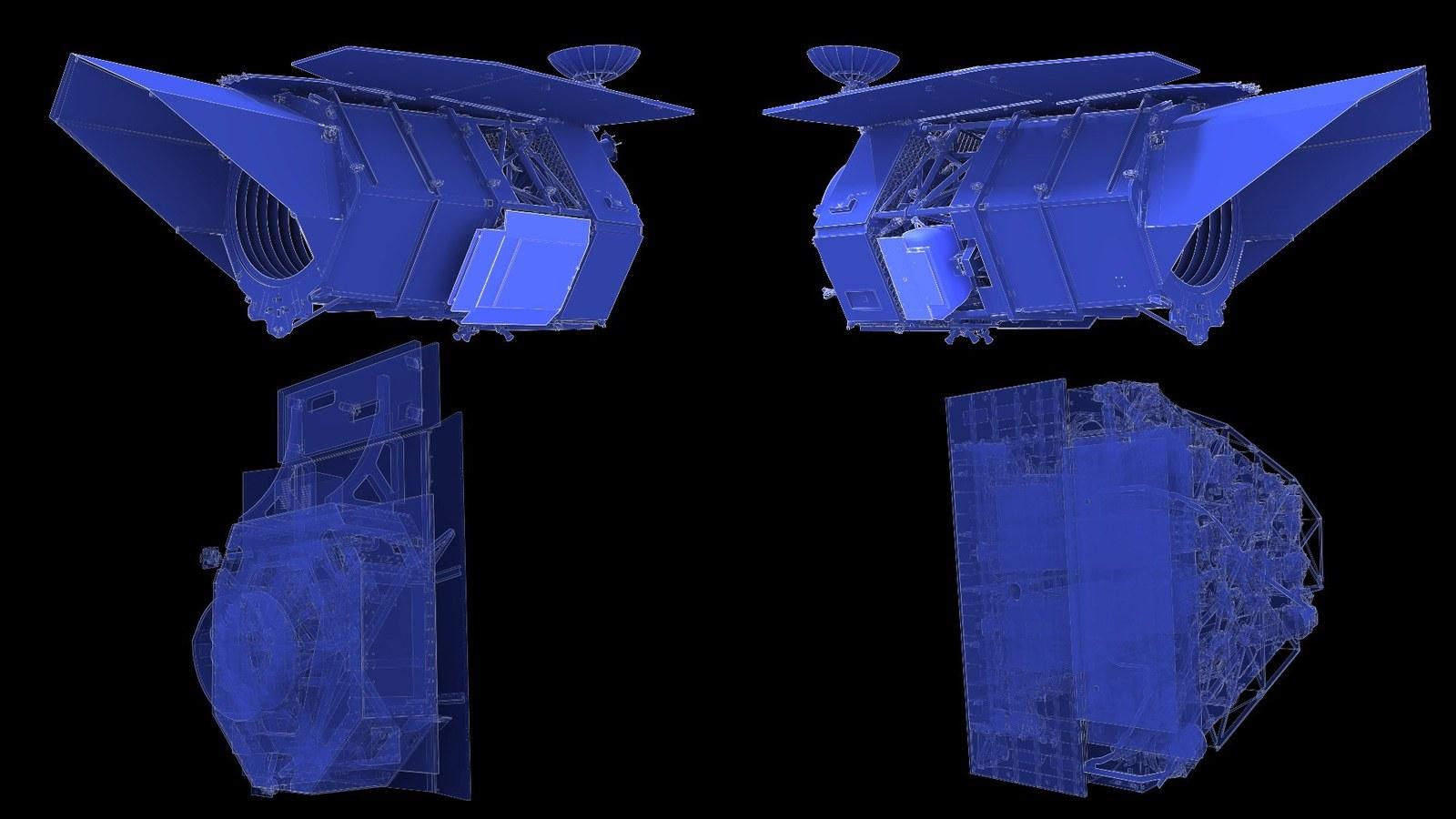
The trickiest step comes last. The alignment mechanism, kept locked in a stowed position during launch so nothing could shift, was deployed to its predicted best-focus position. Finally, engineers put the thermal system through its paces, the hardware that holds each component at its working temperature. An instrument whose temperature drifts will warp, and a warp of a few nanometers is enough to spoil an image.
"All of Roman's sweeping surveys will rely on the Wide Field Instrument," said Dave Hickey, a Wide Field Instrument systems engineer. "Many of the mission's primary goals, like studying dark matter and dark energy, wouldn't be possible without it. So it's both exciting and a huge relief to see that it's working well."
One-sixteenth of a hair to tune a 2.4-meter mirror
Then there is the obvious question: why adjust anything at all? According to the engineers, the answer lies in the gap between a test floor and outer space.
Before launch, Roman's optical assembly was built and tested at Goddard and by contractors at L3Harris and BAE Space and Mission Systems. "The telescope's performance was excellent even before we began adjusting the alignment of all the mirrors," said Matthew Bolcar, Roman's optical systems lead at Goddard. The testing and modeling came out so precise that only small corrections remained to reach near-perfect alignment.
So why did any correction remain? Because no ground facility reproduces exactly what a telescope faces in orbit. "Our ground testing couldn't exactly reproduce the environment Roman would experience in space, such as the absence of gravity," Bolcar said. "And there are also slight differences in temperature variations and moisture content." Launch shakes the hardware, weightlessness relaxes the stresses, temperatures shift. Each of these nudges the optics by a few nanometers.
The fix was therefore as minuscule as the problem. "We moved the secondary mirror by about one-sixteenth of the diameter of a human hair," said Alden Jurling, a senior optical engineer working on Roman at Goddard. The move slightly changed the height of the secondary mirror above the primary, the distance between the two surfaces.
Jurling's analogy is worth pausing on. Scale that height up to the Empire State Building, the 381-meter New York skyscraper. The change would then be a little less than what you would get by stacking a single U.S. penny on top of the tower's tip. A coin balanced on a skyscraper's spire, that is the adjustment that cleaned up the entire image.
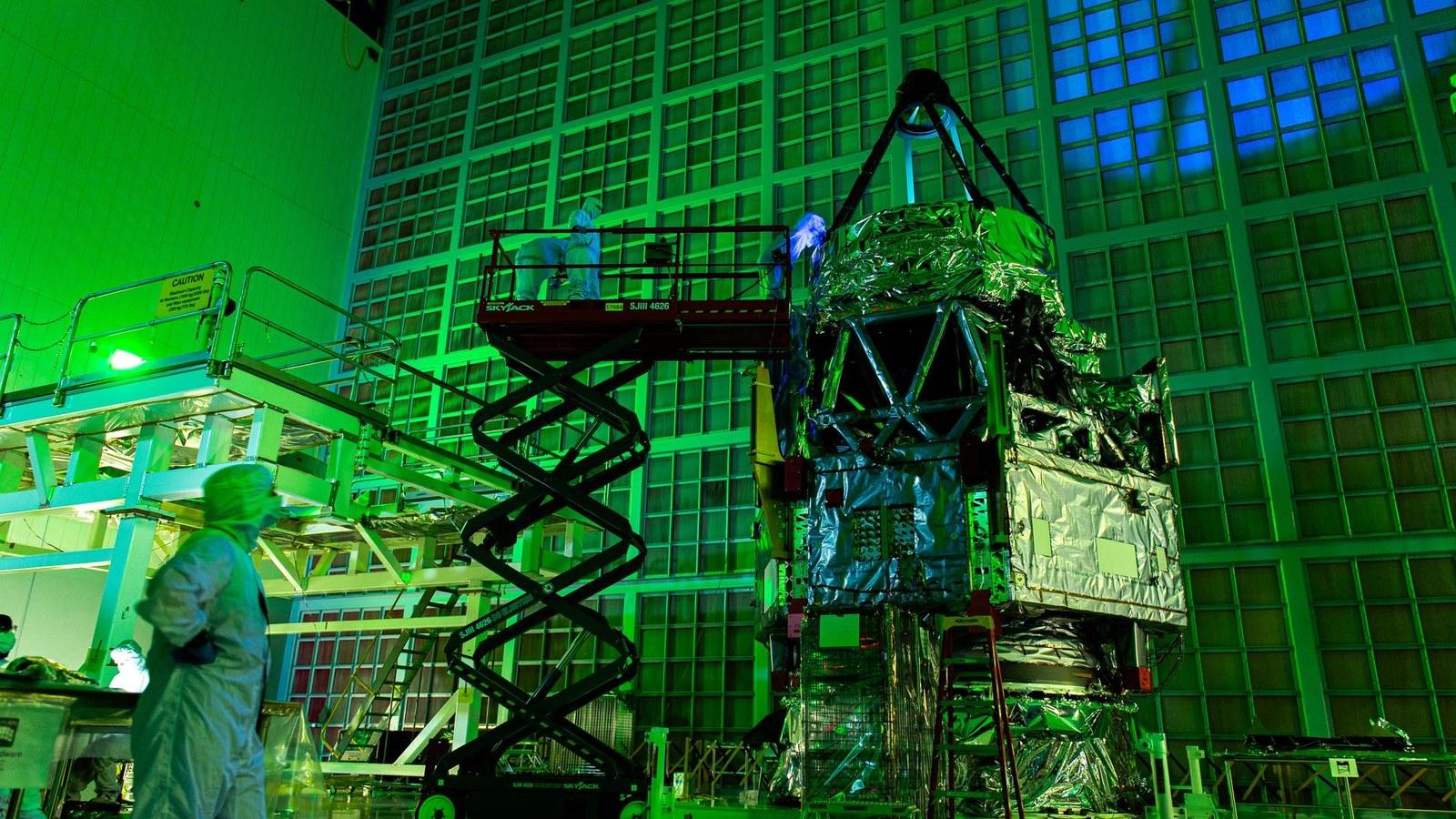
"All of the images from Roman's cosmic surveys will be even sharper than we expected," Jurling said. "It's a great outcome from years of careful modeling, precision metrology, and testing."
What it changes: sharper images, and a dress rehearsal for the coronagraph
That sharpness is no mere engineering detail. It decides what Roman can measure. The wide-field camera must photograph billions of galaxies to map dark matter, the invisible ingredient that makes up roughly 85% of the universe's mass, and to track the expansion of space through dark energy, the mysterious engine speeding galaxies apart. Every nanometer shaved off the optical error makes the shapes of distant galaxies a little more reliable to measure, and the final map a little truer.
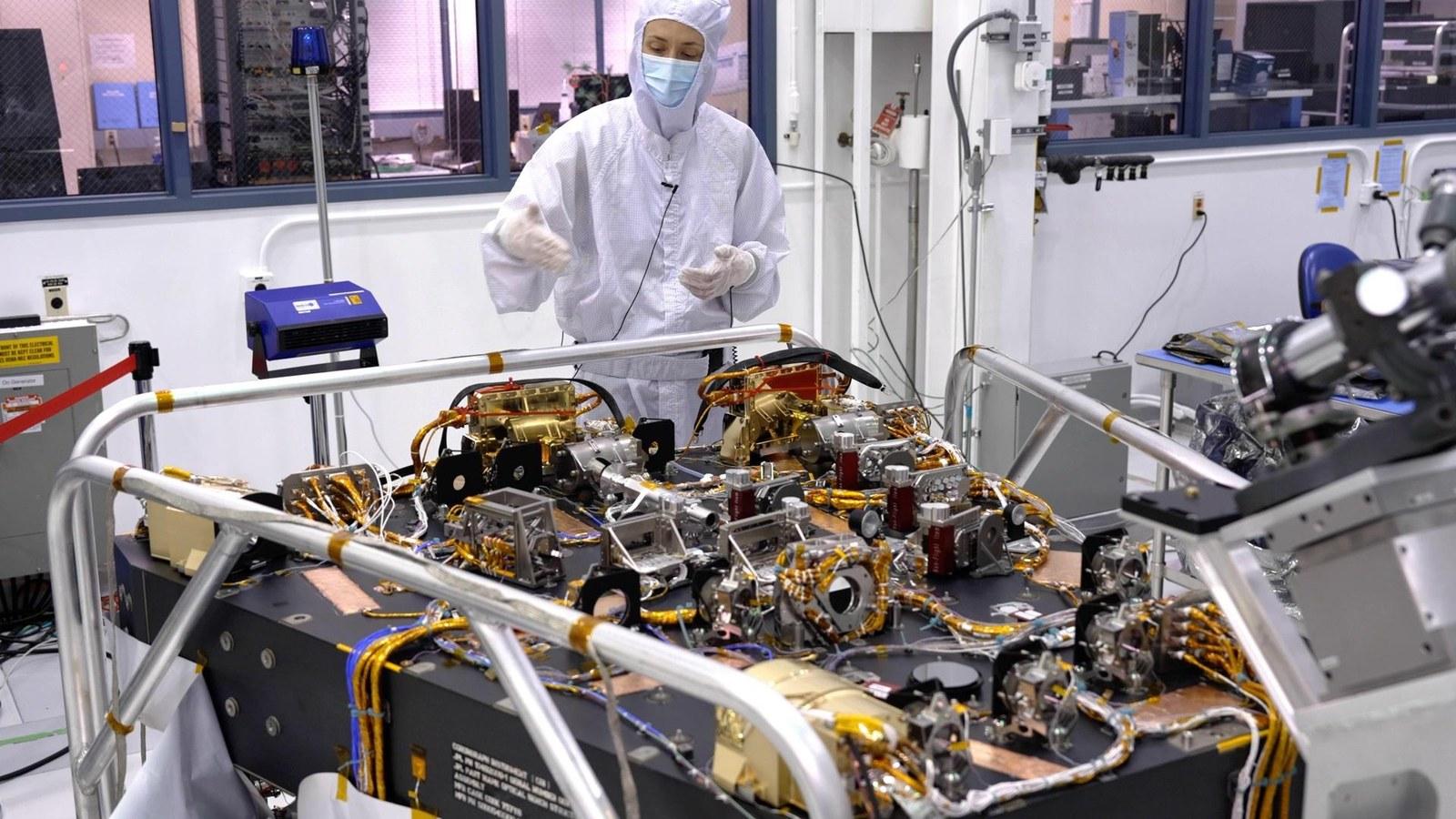
The second instrument had a story of its own. The coronagraph's first images came back slightly out of focus, though far less than the team had feared, which made the correction straightforward. This coronagraph is the internal mask that snuffs out a star's glare to reveal the planets around it, like a hand raised in front of a streetlamp to spot the fireflies nearby. The goal: image giant planets a billion times fainter than their star.
Since the adjustment, its performance meets the team's high expectations. Two tasks remain before the big demonstration: fine-tuning the camera and pinning down the best settings for its deformable mirrors, computer-controlled mirrors that reshape in real time to match every ripple in the incoming light. Once those settings are locked in, the coronagraph will attempt to block a star's light for good and reveal what surrounds it. That test is expected in the coming weeks.
All told, the commissioning sequence is running as planned. Roman launched on August 30, 2026, and is heading for Lagrange point L2, a gravitational balance point 1.5 million kilometers from Earth where the pull of the Sun and Earth cancel out. The first science images are still expected in early 2027. They will arrive with optics better than predicted, and that will show in every frame.
Going further
- Follow the telescope behind this adjustment: Nancy Grace Roman, with its full mission page, history and key figures.
- The concepts worth knowing: space telescope, coronagraph and infrared.
- The infrared light Roman hunts is invisible to the eye, but the sky is out tonight: our interactive sky map, our observing guide and the astrophotography gallery.
- The official sources for this article: NASA's October 14, 2026 blog post on the instrument checkout, the Roman mission page and its commissioning tracker.