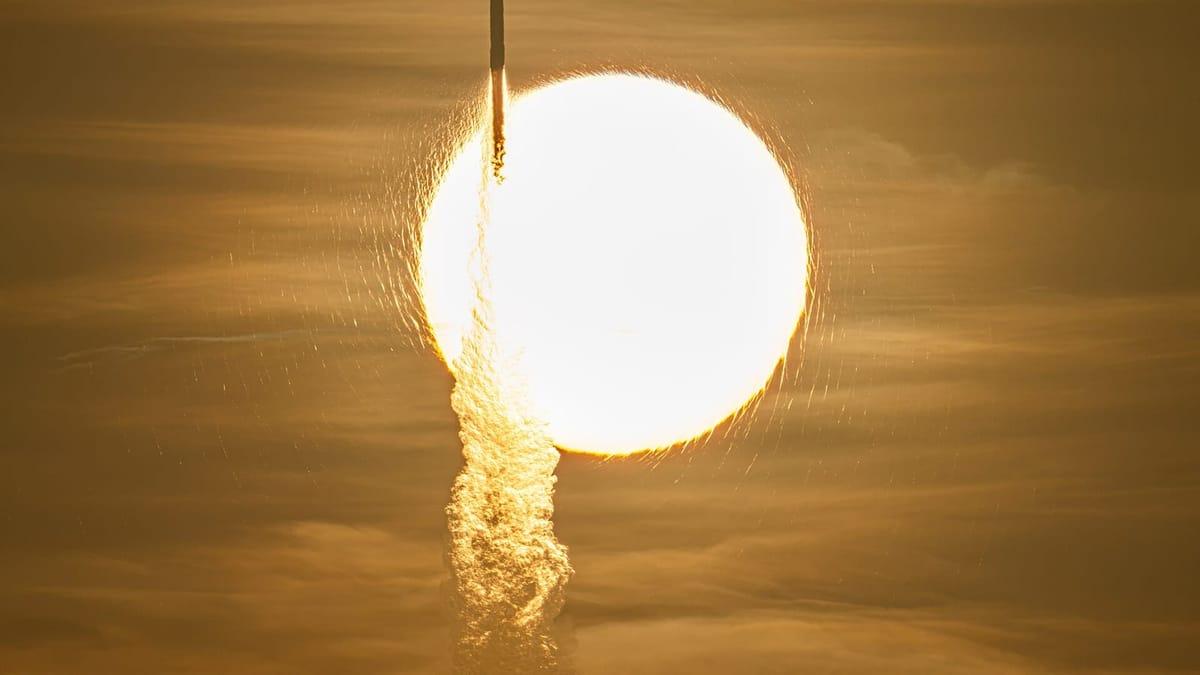
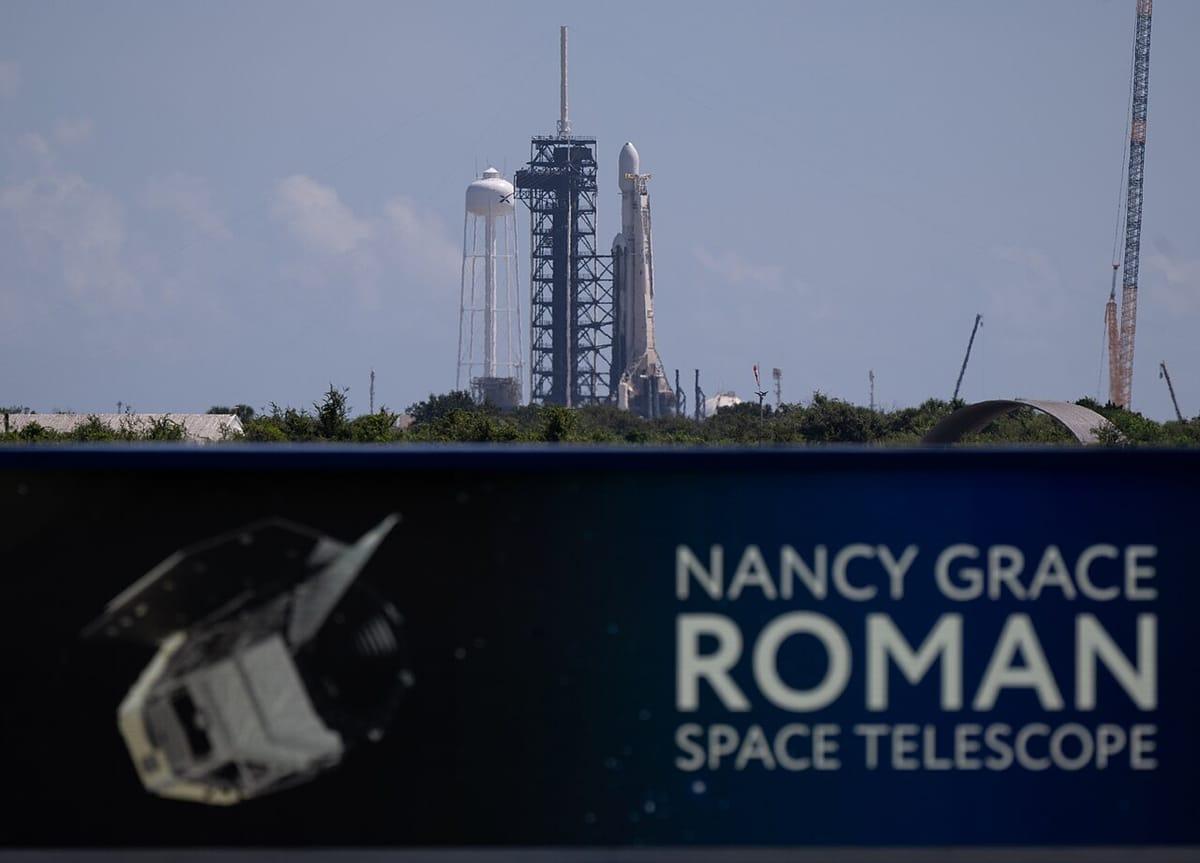
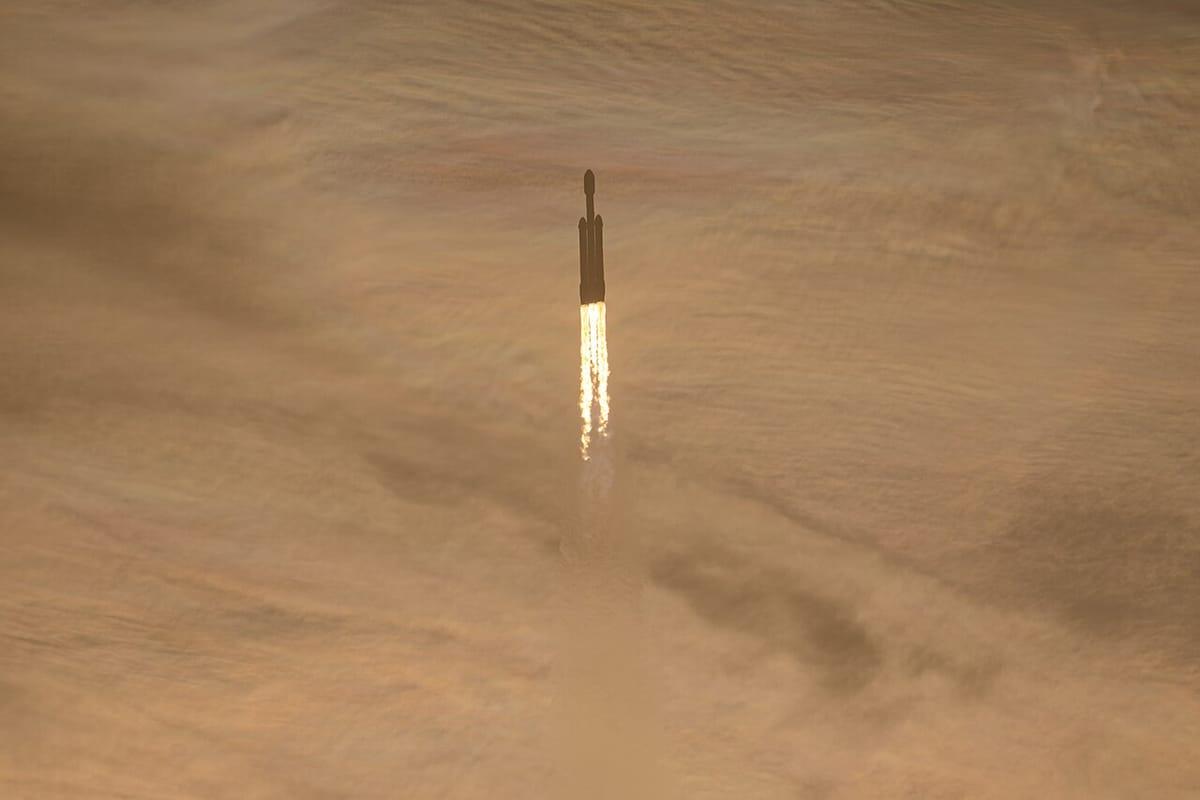
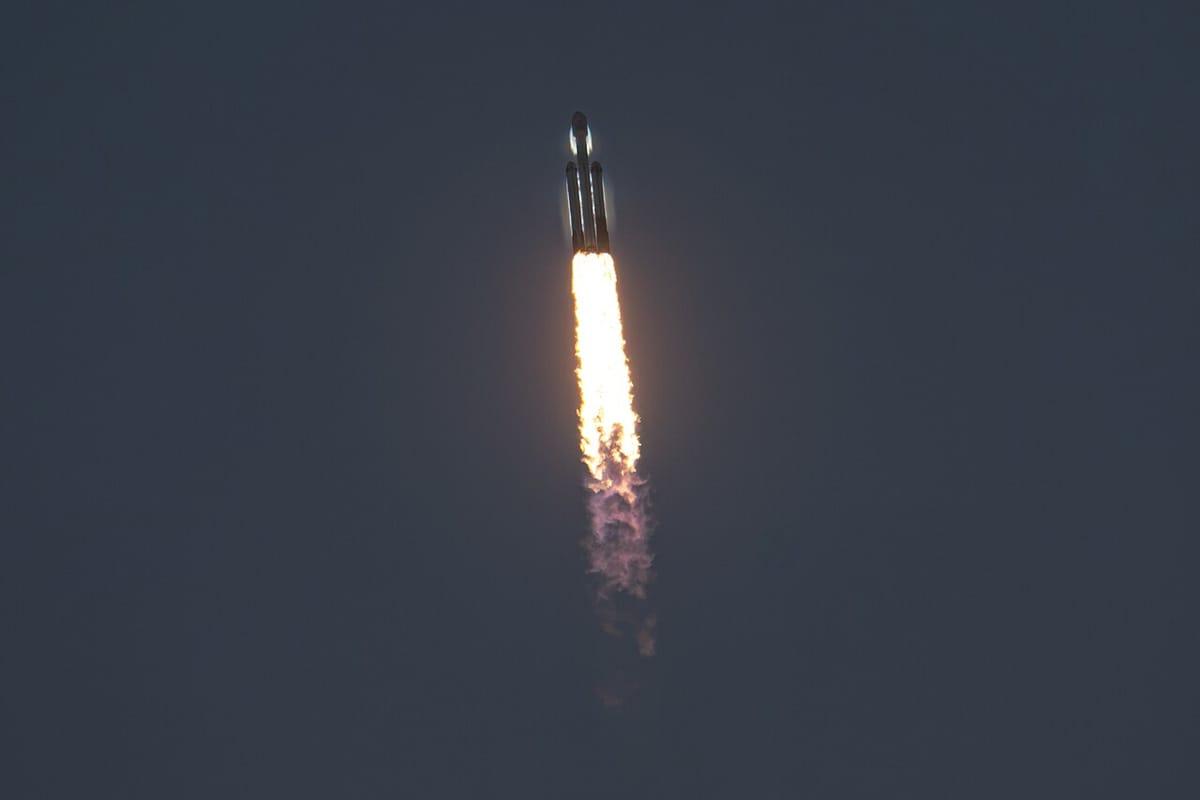
On August 30, 2026 at 7:26 a.m. EDT, a Falcon Heavy, SpaceX's giant rocket, roared off pad 39A, Apollo 11's pad, carrying the most anticipated telescope of the decade: the Nancy Grace Roman Space Telescope. Thirty-one minutes later, the observatory was flying solo toward the L2 Lagrange point, a gravitational balance zone 1.5 million kilometers from Earth where the Sun's pull and Earth's pull cancel out. Its mission: map billions of galaxies and hunt for invisible planets around distant stars.
Why everyone cares about a camera, not just another telescope
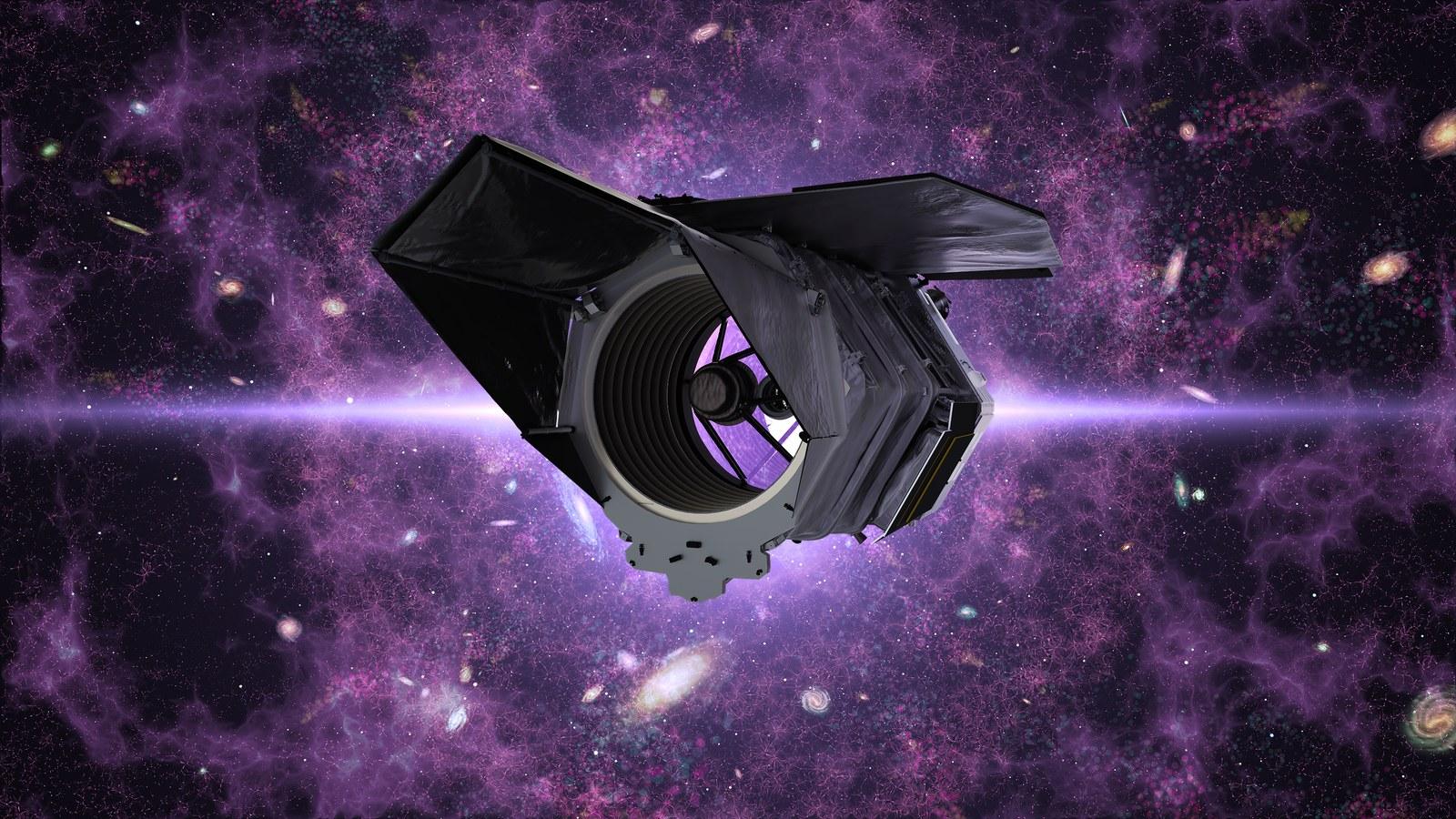
Let's start with the essentials. Roman is not just another telescope: it's a panoramic infrared camera, built to see the glow given off by cool objects, a light our eyes cannot detect, fitted with a 2.4 m mirror, the same size as Hubble's. The difference lies in the field of view, the patch of sky captured in a single shot. Where Hubble admires a detail, Roman photographs an entire region of the sky: about 100 times wider, with the same sharpness. The result: a survey speed up to 1,000 times higher.
Another way to put it: where Hubble would take decades, Roman will complete its atlas in five years. Its Wide Field Instrument, the WFI, carries eighteen 4K detectors, each about the size of a cracker, NASA notes, for a total of 300 million pixels. It will produce up to 1.4 terabytes of data per day, the equivalent of more than 200 DVDs, a record for a NASA astrophysics mission.
The mirror that came from a spy satellite
A delightful detail: Roman's 2.4 m primary mirror, the piece that gathers light, was never ordered by NASA. In the 2000s and 2010s, two military reconnaissance telescopes, "spy satellites" with oversized optics built to watch the ground from orbit, were handed over to the agency by the NRO, the National Reconnaissance Office, the US agency in charge of spy satellites. One of them became Roman's optical heart.
The mission itself nearly never flew. Between 2019 and 2021, three consecutive presidential budgets proposed canceling it, but Congress kept it funded every time. Fittingly, it was in the middle of this budgetary wilderness that the mission received its current name.
Who was Nancy Grace Roman, the "mother of Hubble"?
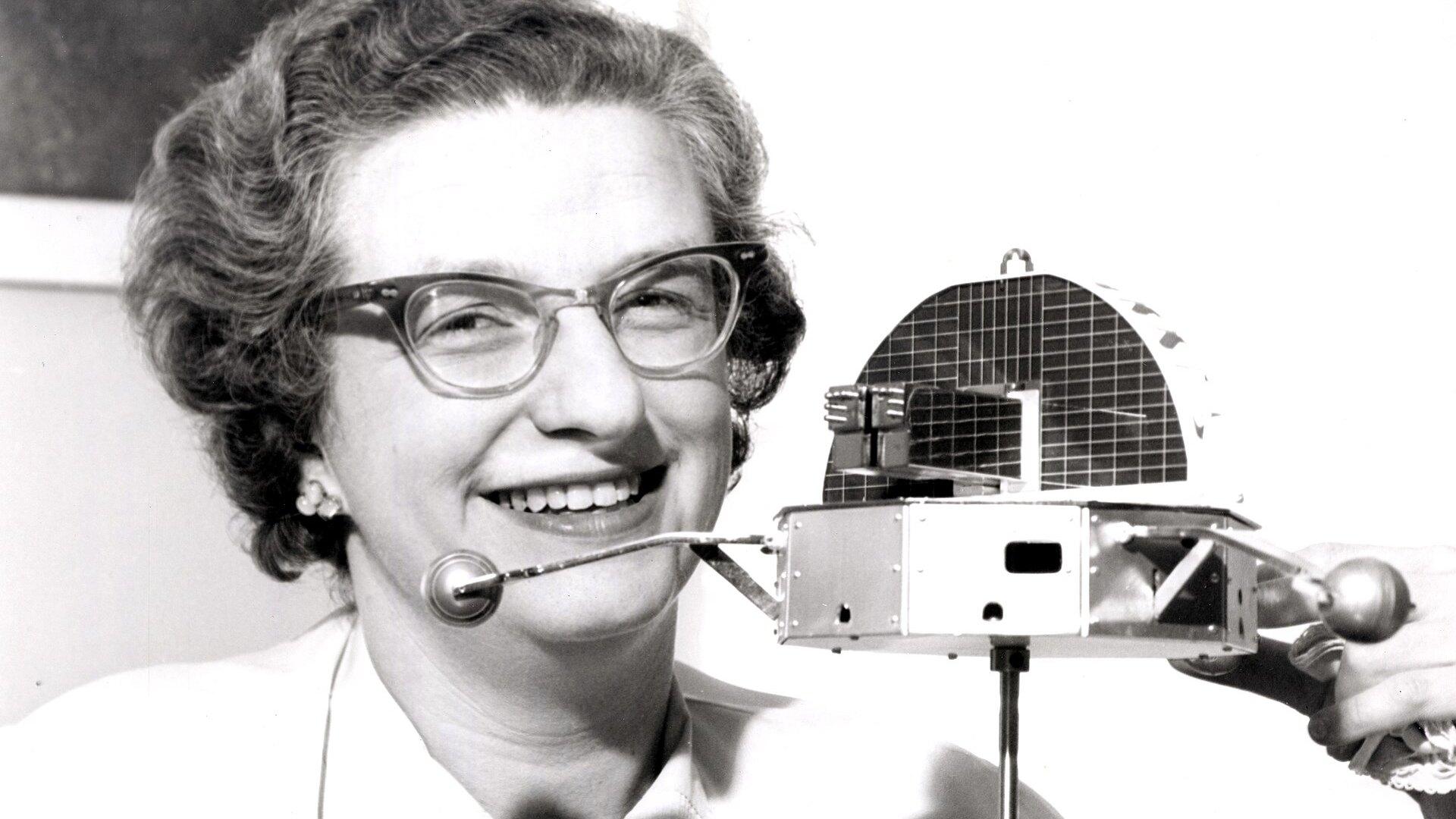
The observatory began life as WFIRST, and has carried the name Roman since 2020. On May 20 of that year, NASA renamed it in honor of Nancy Grace Roman, the agency's first chief of astronomy, who died in 2018 without seeing the telescope fly. She joined NASA in 1959, barely six months after the agency was founded, and it was she who set up the committee tasked with envisioning a great space telescope, then convinced NASA leadership and Congress to make it a priority. Hence the "mother of Hubble" nickname, given by her peers.
Her life reads like a movie. Born in Nashville in 1925, she wanted to be an astronomer from middle school onward, despite the warnings: the head of Swarthmore College's physics department tried to dissuade her, conceding only that she "might make it". A doctorate in astronomy from Chicago in 1949, research on stellar compositions, then a lucid bet: knowing a woman would almost never get tenure at a university, she joined the Naval Research Laboratory, then NASA. There, she gave up her own research to build the agency's astrophysics program from scratch. Under her leadership came the Orbiting Astronomical Observatories, the International Ultraviolet Explorer and the COBE satellite, which earned two of its leaders the 2006 physics Nobel.
The choice of name comes down to one sentence from Jim Bridenstine, NASA administrator at the time: without Roman's leadership and vision, the agency would never have launched the "most powerful and productive space telescope in the world". Giving her name to the successor of Hubble and Webb is a way of granting a pioneer the recognition her era so often denied her. Dates and quotes: NASA press release, May 20, 2020.
Goal #1: understanding why the universe's expansion speeds up
In 1998, two teams of astronomers measured the universe's expansion, the swelling that pushes galaxies apart, through supernovae, stars that explode at the end of their lives, and stumbled on an anomaly: the expansion is accelerating. The mysterious engine was dubbed "dark energy", about 70% of the universe's content, and we still don't know what it is. That's Roman's first assignment.
The telescope will observe about 100,000 Type Ia supernovae, stars that explode at the end of their lives with a peak brightness that is almost always the same, which makes them reliable distance beacons: know a lamp's true wattage and how bright it looks, and you can tell how far away it sits. By measuring their brightness and redshift, a stretching of light toward redder wavelengths caused by the universe's expansion, out to nearly 10 billion light-years, researchers will trace the expansion history and test whether dark energy is truly a "constant" or evolves over time.
The other side of the cosmology program: mapping dark matter. To catch it, astronomers use its effect on light: its gravity bends light rays like a lens and slightly stretches the images of distant galaxies, a phenomenon called gravitational lensing. By observing more than a billion galaxies, Roman will measure these distortions. The outcome: a high-resolution map of dark matter, which outweighs ordinary matter five to six times yet stays invisible, giving off and reflecting no light at all.
Goal #2: the exoplanet harvest via microlensing
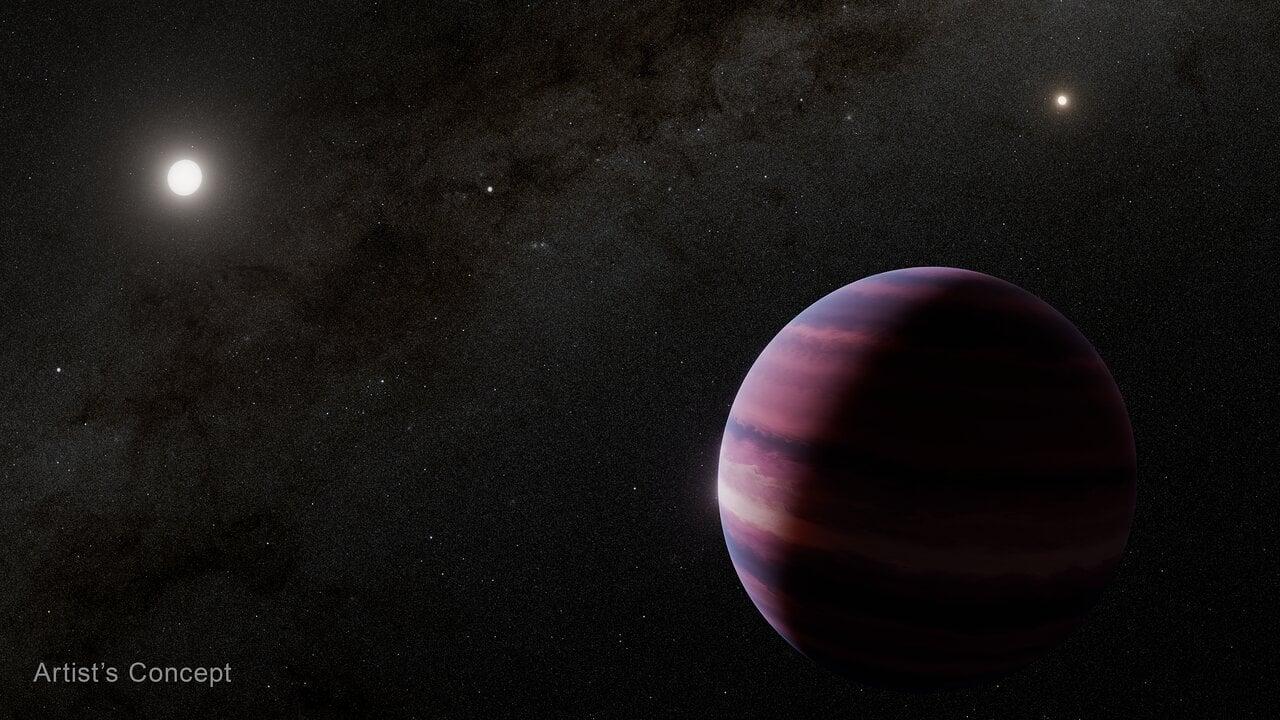
Another assignment, quieter but just as spectacular: the census of "cold" planets, those orbiting far from their star, a population that the classic methods struggle to reach, such as the transit, the tiny eclipse a planet causes as it crosses its star (the method used by Kepler), or radial velocity, the slight wobble planets impose on their star. In total, Roman should reveal about 100,000 exoplanets, planets orbiting other stars, a notable share of them "free-floating" worlds drifting without a star.
The technique is called gravitational microlensing, and it rests entirely on alignment. When a foreground star passes almost exactly in front of a background star, its gravity acts as a natural magnifying glass and brightens the star behind it. If the lensing star hosts a planet, the light curve, the nightly record of the star's brightness, shows an extra spike: the planet's signature.
For 440 days spread over the mission, Roman will stare at the center of our galaxy, its crowded central bulge, roughly every 12 minutes. Such a wide field of view makes it possible to monitor tens of millions of stars at once: that's what turns the hunt for distant planets into a statistical science.
Goal #3: the coronagraph, a step toward detecting life
Third instrument on board: a coronagraph, a mask that blocks a star's light, the way you cup your hand in front of a streetlamp to spot the fireflies around it, to reveal its surroundings. Target: photograph Jupiter-like giant planets one billion times fainter than their star, a contrast like spotting a candle next to a lighthouse. A feat of active optics, mirrors steered by computers: every deformation of the mirror is corrected in real time.
Why does it matter? Because the next generation of telescopes, the Habitable Worlds Observatory concept, will aim straight for exoEarths: rocky planets in the habitable zone, the band of orbits around a star where liquid water can exist. Roman demonstrates this technology under real space conditions. If it works, the search for signs of life on distant worlds will have its flight plan.
Three ways to follow Roman right now
Roman will share much of its data publicly, including with amateurs. No need to wait for 2027:
- Our mission catalog entry: we track Roman in our spacecraft catalog. Position, status, key figures and official sources are centralized there.
- The first images: expected in early 2027, when NASA will release them. As with Webb, expect a spectacular first batch.
- Citizen science: with 1.4 TB of data per day, NASA relies on machine learning tools, software that learns to spot patterns from examples, and citizen volunteers to sift through discoveries. You can take part.
While waiting for the first images, a word on celestial mechanics: the L2 Lagrange point, where Roman will park, is a gravitational balance point 1.5 million km away, a spot where the Sun's pull and Earth's pull nearly cancel out, exactly where the James Webb Space Telescope has operated since 2022. A sunshield protects the instruments, like a giant parasol. Infrared astronomy demands total darkness, because anything warm glows faintly and would blur the images.
Learn more
- The full mission entry: Nancy Grace Roman, key figures, history and news.
- Useful definitions to follow the mission: exoplanet, coronagraph, supernova and space telescope.
- The mission's official pages (sources for this article): NASA Science and the launch press release.
- The scientific coverage of the surveys: STScI, Roman (official survey figures and design).
- The launch video: NASA, Roman launch coverage.