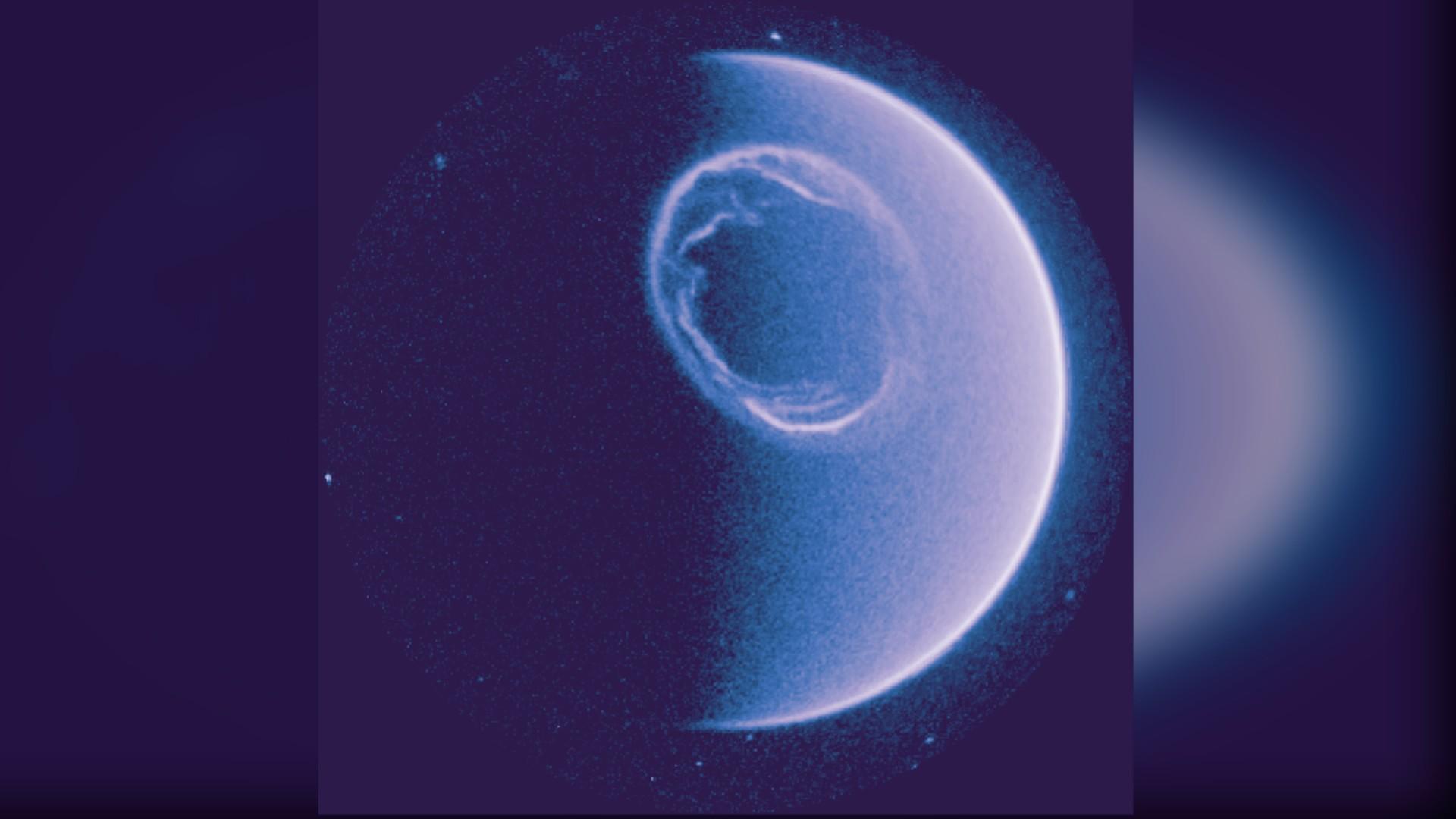
On 30 September 2026, the Smile mission shared its first harvest of images. Its ultraviolet camera caught the full ring of northern lights around the North Pole, something no spacecraft had done since 2008. A week earlier, on 23 September, the European Space Agency and the Chinese Academy of Sciences cleared the spacecraft to begin science operations. Here is what those first images show, and why they matter.
The whole auroral ring, unseen by anyone since 2008
For 18 years, no spacecraft had imaged the entire ring of northern lights in ultraviolet light. The last to do it was TIMED, a NASA probe launched in 2001 to study the upper atmosphere. Smile closes that gap, as ESA confirms in its article of 30 September 2026.
A word on what the camera actually sees. Ultraviolet is light more energetic than blue, invisible to the human eye. Auroras give off plenty of it, because particles from the Sun excite the nitrogen and oxygen of the upper atmosphere, which then release that energy as light. Imaging in ultraviolet therefore reads the activity above the poles directly, with no interference from clouds or daylight, as explained on our page about the aurora.
The ultraviolet camera, known as UVI for ultraviolet aurora imager, was switched on on 16 July 2026. Its very first image dates from 4 August. The first video goes back further, to 24 July. It runs for 58 minutes, from 00:00 to 00:58 Universal Time, and shows the ring of light rippling around the pole. Those ripples reveal an auroral substorm, a brief jolt in Earth's magnetic shield.
What a substorm says about the invisible shield around us
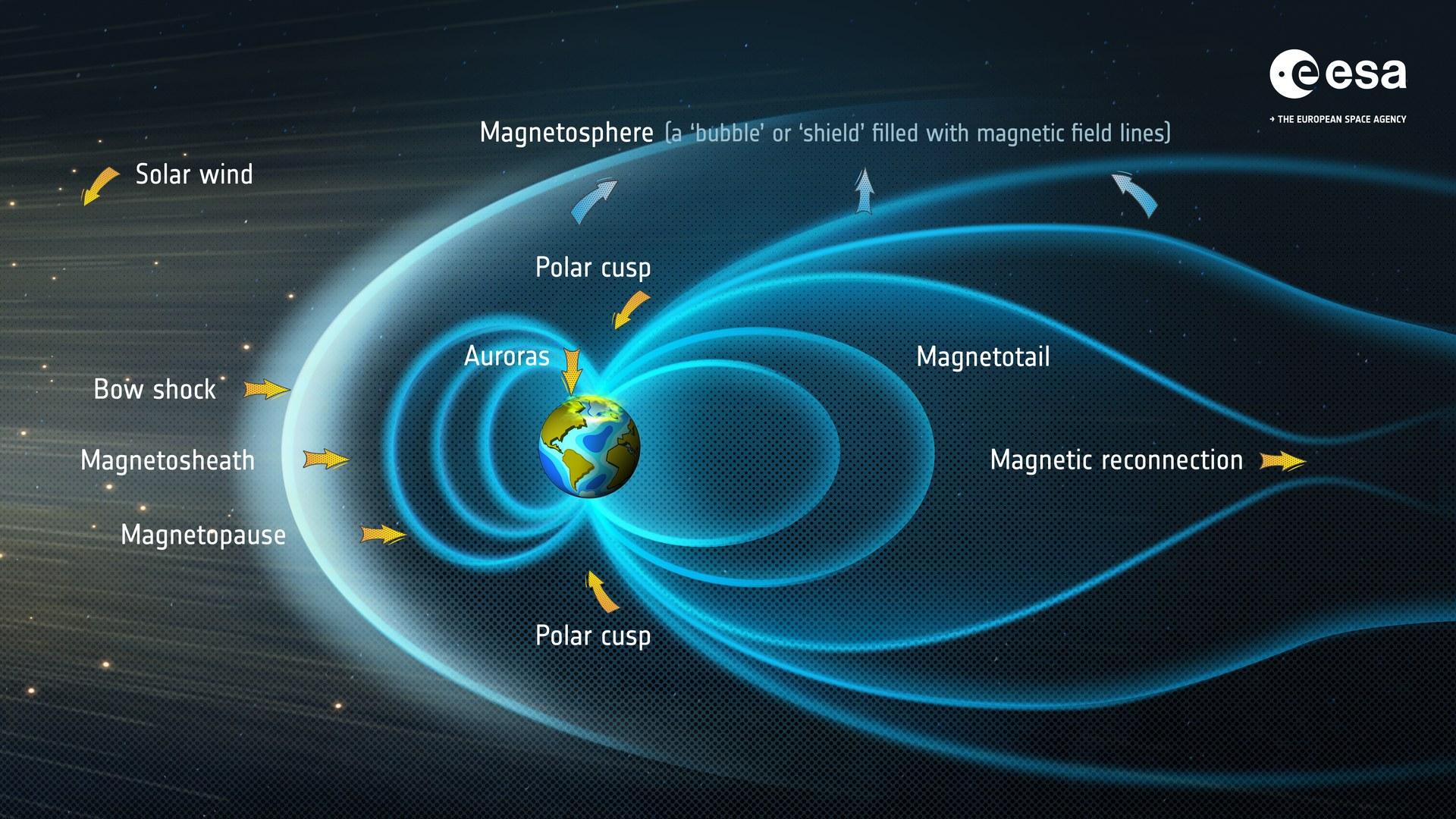
To read the image, picture an invisible bubble. Earth sits inside a magnetic field, a region of influence that stretches far into space. That bubble is the magnetosphere. The Sun, for its part, blows a constant stream of charged particles, the solar wind. Without the bubble, that wind would long ago have stripped away our atmosphere, and Earth would look like Mars.
Most of the time, the magnetosphere takes the hit without flinching. But sometimes the solar wind pushes harder. The magnetic field lines, the invisible curves that channel particles, get compressed and then pinch together. Like an overstretched rubber band snapping, they release a burst of particles towards both poles. Those particles strike the upper atmosphere and light up the auroras. That jolt is what we call a substorm.
Substorms are hardly rare. ESA expects about 300 of them over the mission's planned three years. They are even more common right now, because the Sun is at the most active point of its 11-year cycle. Watching a single one is not enough to understand the mechanism. You have to follow them from start to finish, every time, and that is exactly what Smile can do.
45 hours straight: the orbit that makes it possible
Earlier satellites could only watch the auroras in stretches of about 15 hours at best. Yet a geomagnetic storm lasts two to three days. So the full picture, from onset to fading out, always slipped through the cracks. Smile fills that gap with a very unusual orbit.
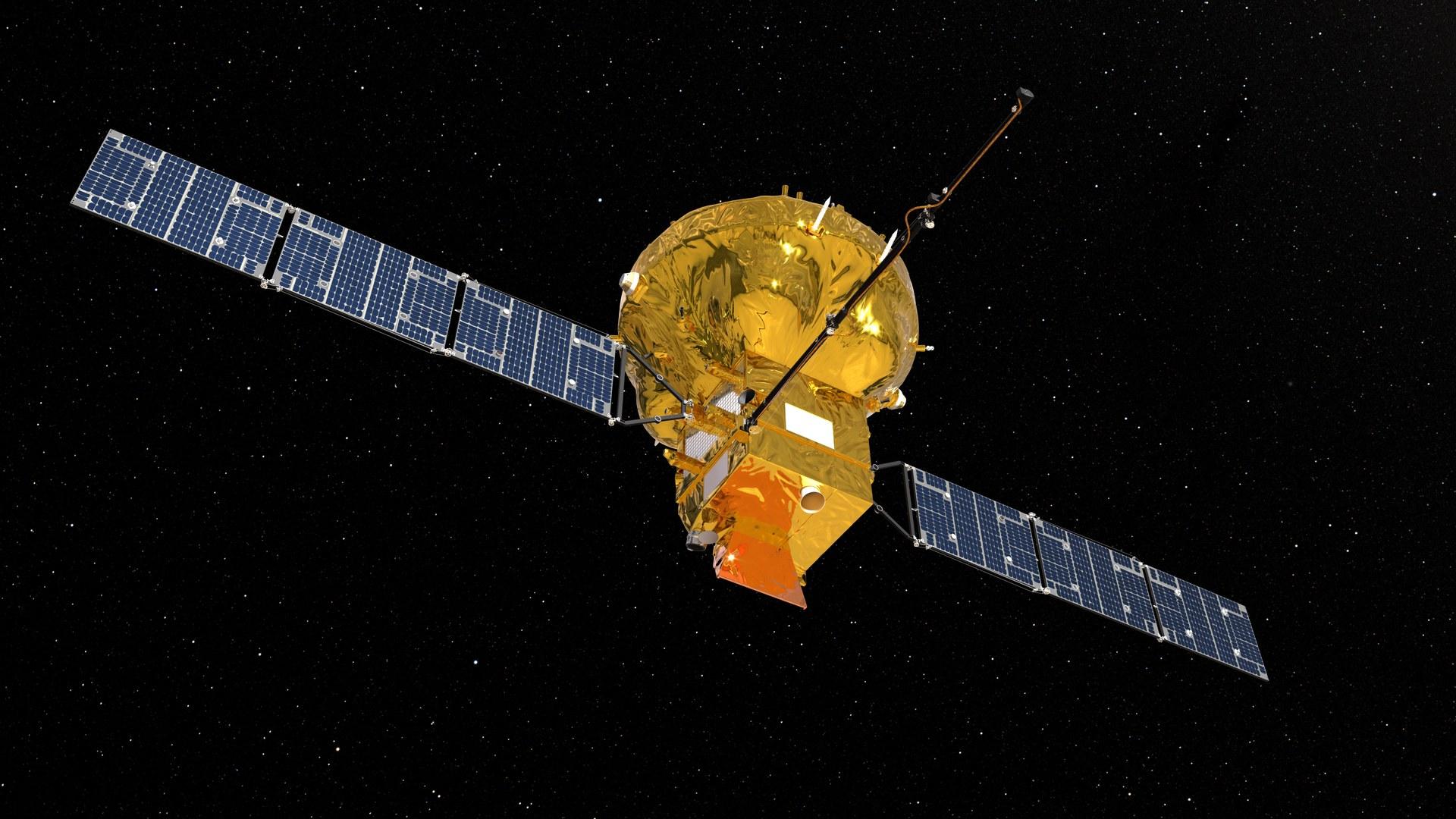
The spacecraft travels far from Earth, climbing above the North Pole to about 121,000 km, close to a third of the distance to the Moon. From up there, its field of view takes in the entire polar ring, and it can film it for 45 hours straight. It then drops to about 5,000 km above the South Pole. That descent is for sending data: the closer a satellite is to a ground station, the faster the transfer. Every two days, Smile makes the trip, gathering data in the north and delivering it in the south.
X-rays, ultraviolet, magnetism and ions: Smile's toolbox
Four instruments on board work as a team. The X-ray camera, SXI for soft X-ray imager, is meant to pinpoint where the solar wind strikes the magnetic shield. It is Europe's main contribution, built in the United Kingdom by the University of Leicester and several British laboratories. UVI, the ultraviolet camera led by China, shows the response on the aurora side. The magnetometer MAG measures the magnetic field around the spacecraft. And the light ion analyser LIA counts and sorts the charged particles moving through the region.
SXI switched on successfully, but one setting still needs work. When it points at Earth, the camera currently catches too much stray light, meaning unwanted light arriving from the side. Teams are adjusting parameters and software remotely. The situation should improve on its own: as northern winter sets in, the North Pole emits less light, and the spacecraft drifts steadily away from Earth. The stray light should reach a minimum in mid-October. That is when SXI is expected to deliver its first proper image of the magnetopause, the boundary where the solar wind meets Earth's magnetic field.
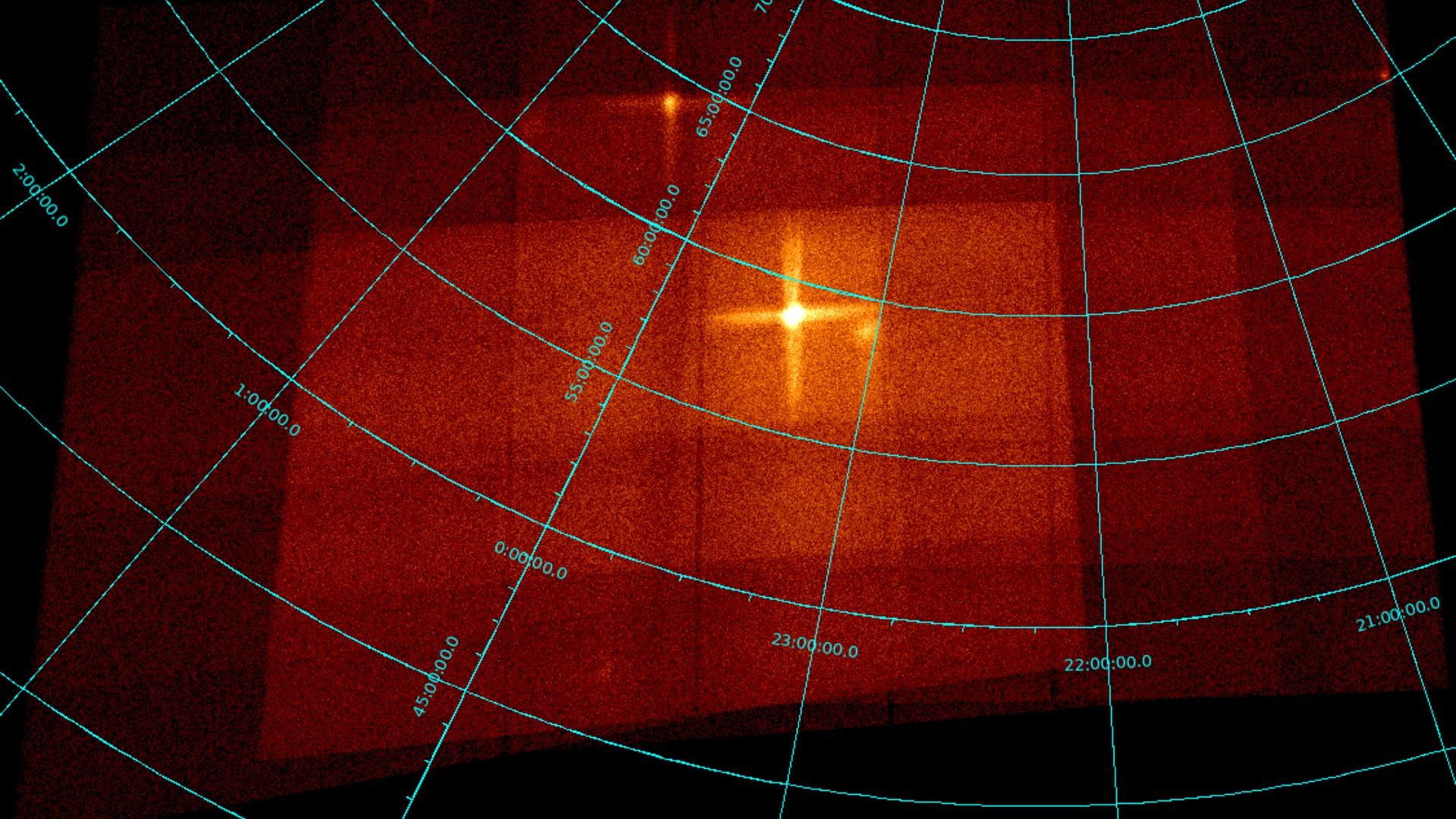
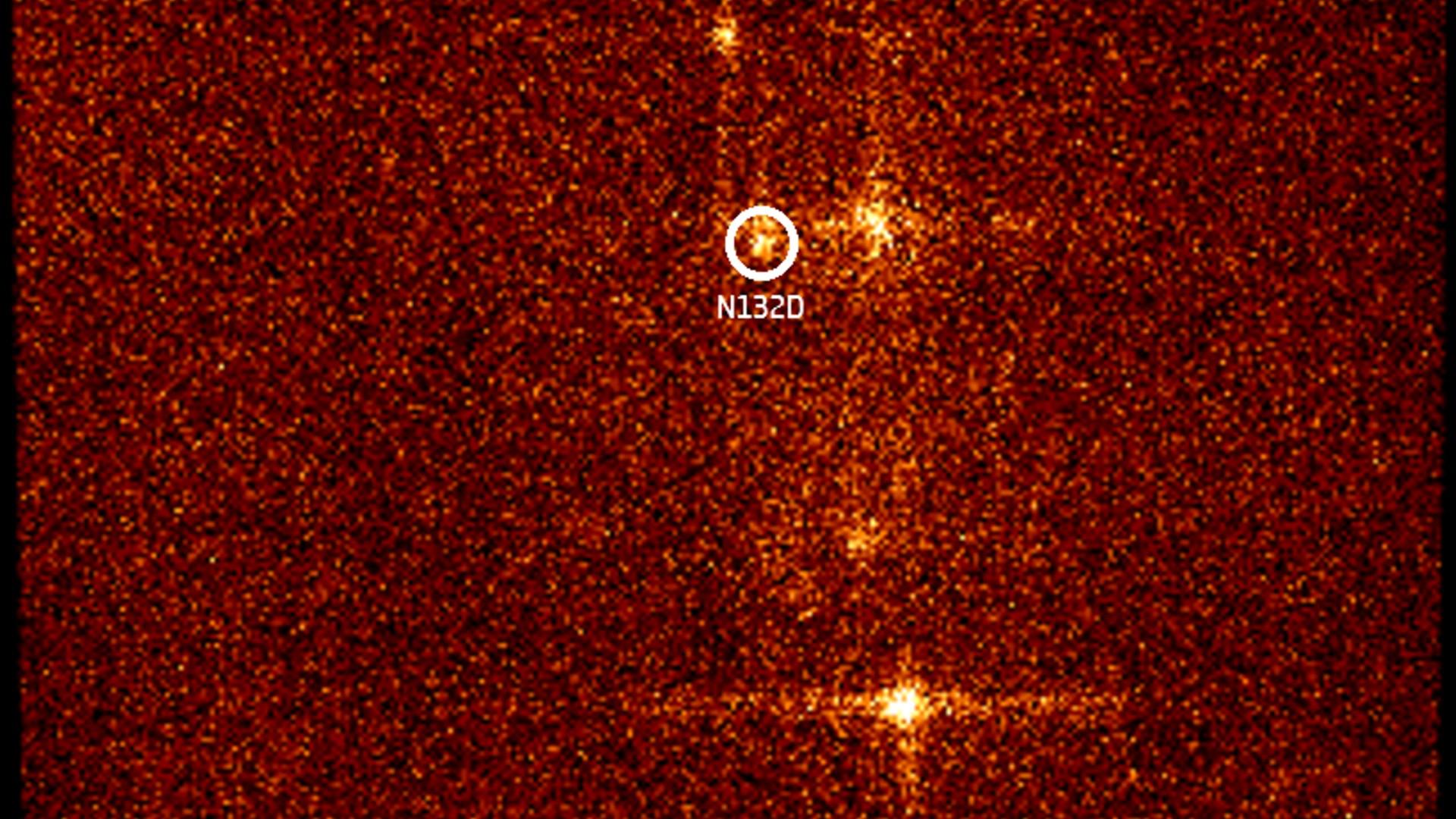
To check that SXI works, teams pointed it at the deep sky. Two test images have been released. The first shows Cassiopeia A, the remains of a star that exploded about 11,000 light-years away. The second shows a supernova remnant in the Large Magellanic Cloud, a dwarf galaxy next to our own, about 160,000 light-years away. These objects make ideal test targets, because their gas, heated to millions of degrees, shines brightly in X-rays.
Going further
- The Sun and space weather are part of the catalogue: see the page for SOHO, which watches the Sun around the clock, and for Parker Solar Probe, which dives into the solar corona.
- The concepts behind the story: magnetosphere, solar wind, aurora and ultraviolet.
- Next step for amateur astronomers: the northern lights are a high-latitude pursuit, so start with our observing guide, then find clear nights with the sky map.
- The sources for this article: Science begins for Smile, the first ultraviolet footage and the first ultraviolet image, Smile's ultraviolet vision, Smile's X-ray vision and the Smile mission page.
- Want to share your own shots of the sky? The astrophotography gallery gathers reader images at the bottom of the News page.