The Sun is not alone. Around it, within 50 light-years, models place a handful of black holes born from the collapse of massive stars. Nobody has ever seen a single one. A team at Fudan University, in Shanghai, went digging through Gaia data to track them down. It comes back with five candidates and a cautious conclusion: they are probably not black holes.
Hundreds of millions of black holes, almost none in sight
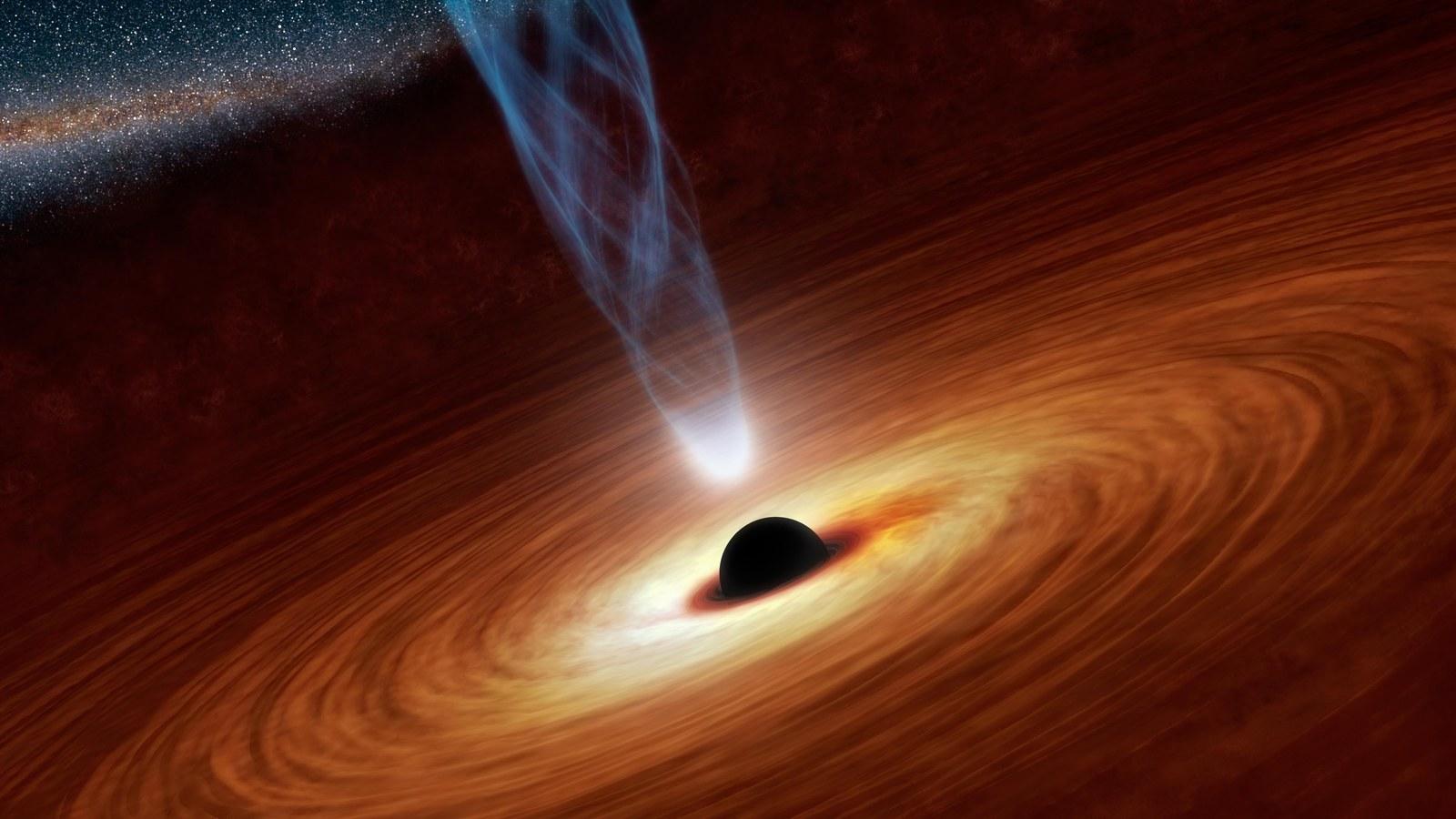
A very massive star does not end as ashes. When its core gives way, nothing holds it back any more, matter collapses on itself and a black hole forms, an object a few times the mass of the Sun, so dense that even light cannot escape it. The Milky Way should hold between 100 million and 1 billion of them. And most of them should be isolated, with no companion star.
The problem fits in one sentence: a black hole emits nothing on its own. Everything we know about these objects comes from the matter around them. The best known ones pair up with a star. Gas from the companion falls towards the black hole, wraps into a disk, and that disk grows so hot that it shines in X-rays, in visible light and sometimes in radio waves. Gaia has revealed three of them in a few years, including Gaia BH1, about 1,500 light-years from the Sun. Isolated, with nothing to swallow, the same objects turn into black patches on a black background.
A black hole only shines if it swallows something
Between the stars, there is matter. Hydrogen atoms, dust grains, a few molecules, an assembly so thin that we take it for empty while it fills the Galaxy. A black hole crossing that fog captures a share of it. The gas falls in, heats up and radiates, all the harder as the matter arrives fast and in quantity.
The authors worked out what that radiation would be worth for a stellar black hole sitting in our neighbourhood. The result depends on a single parameter, the density of the gas around it. Elsewhere in the Galaxy, clouds are dense and accretion runs at full tilt. Here, the interstellar medium is so spread out that the expected flux drops below the threshold of every instrument in service today, and of those still to come.
Interstellar clouds, the only gas supply around
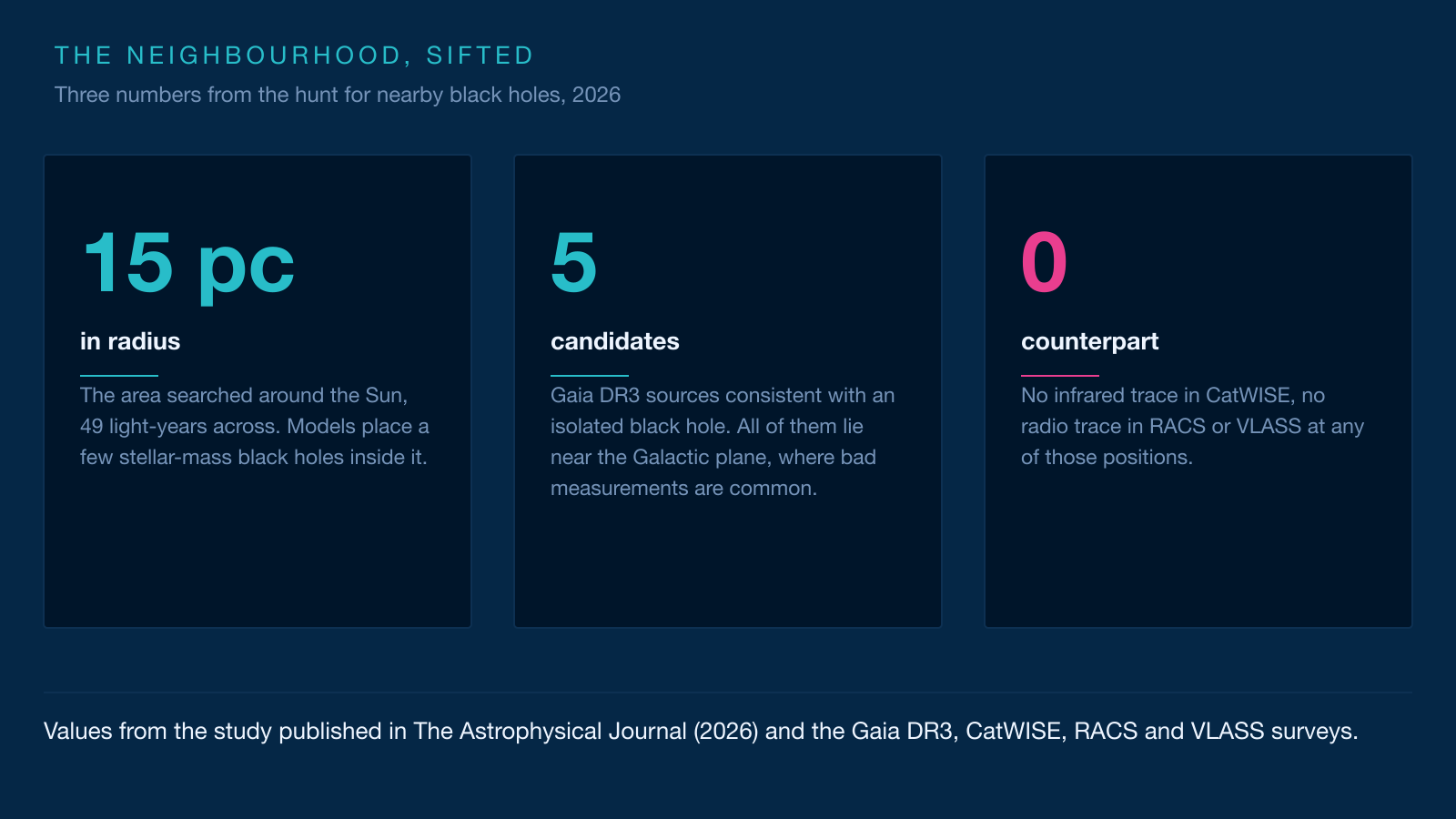
The Sun sails through an archipelago of partly ionised gas clouds, separated by near-perfect vacuum. The nearest, the Local Interstellar Cloud, partly wraps around us. Together, those clouds fill between 5 and 20% of the volume of the 15 parsecs we care about.
That is where everything is decided. Outside those clouds, an isolated black hole would have nothing to feed on in a detectable way. Inside, the density is enough: the same object should give itself away, faintly but for real. In other words, a black hole within 50 light-years only stands a chance of being visible if it sits in that archipelago, which already leaves four chances out of five that it hides in nothing at all.
Why the usual method does not work here
The other route would be purely gravitational. A mass, even an invisible one, shifts the stars around it. We measure that shift, we deduce the mass. That is how Sgr A*, the giant black hole at the centre of the Galaxy, was weighed, by following the orbits of the stars circling it for decades.
In our neighbourhood, the method runs into scarcity. Stars there are too far apart for an isolated black hole to move them in a measurable way. The authors set it aside without hesitating. That leaves microlensing, which watches for the brightening of a background star when a mass passes in front of it. That is how the only isolated black hole ever confirmed was found, OGLE-2011-BLG-0462, about 5,000 light-years away, with a mass of about 6 solar masses. But the method needs a chance alignment, returns a single event, and says nothing about the closest objects.
Five candidates, and a doubt that comes down to the Galactic plane
The team therefore turned to Gaia DR3, the catalogue of 1.8 billion stars. Its search targets sources whose properties betray an accreting black hole with no visible companion. Six sources come out of the sieve. One is dropped, too consistent with a brown dwarf, that object too light to ignite the nuclear reactions that make a star shine.
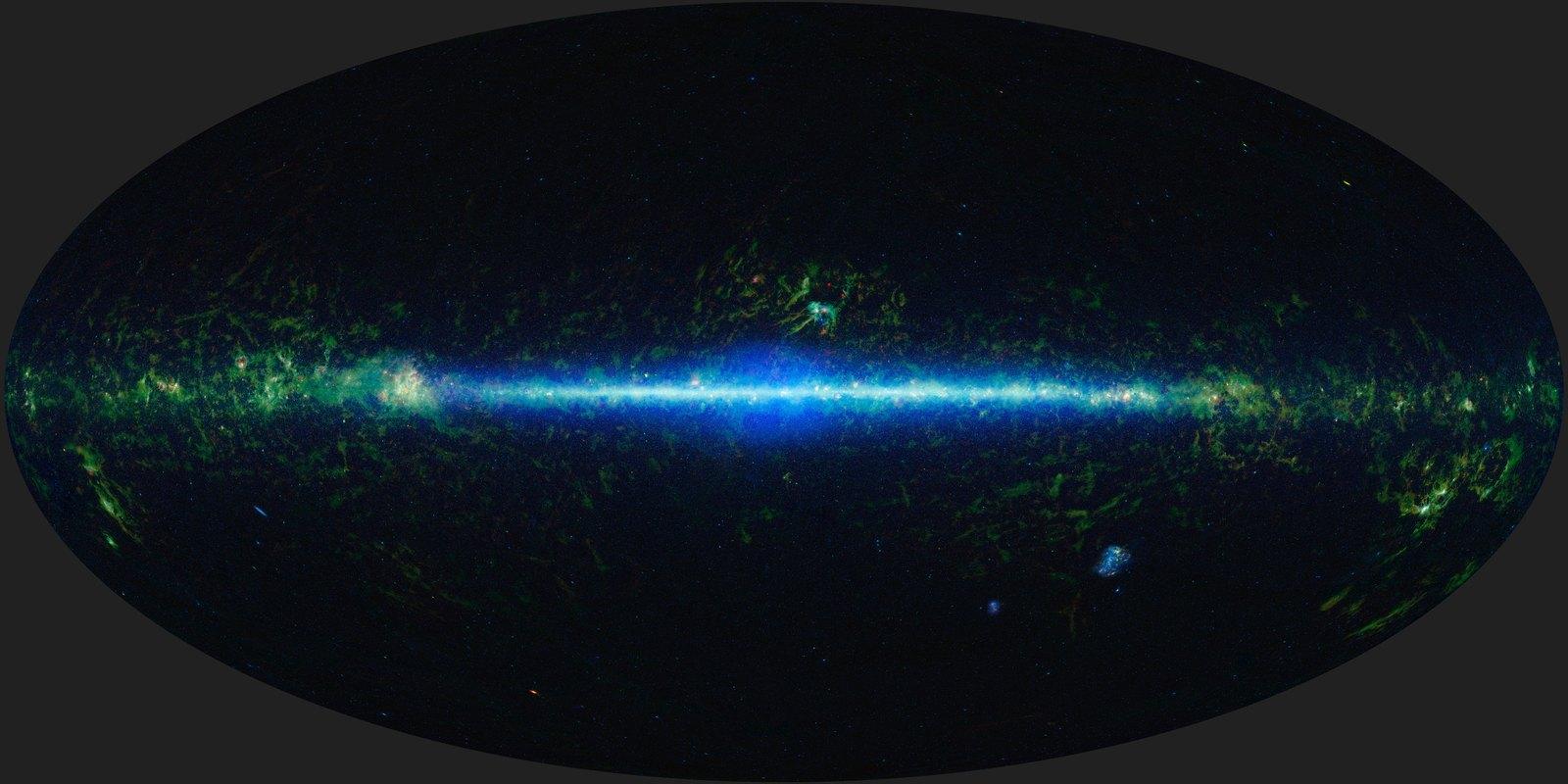
Five remain, all within 15 parsecs. But their distribution raises a flag: the five sit near the plane of the Milky Way, the band where stars swarm. And that is exactly where Gaia measures worst. A faint unresolved star in the field, an unmodelled binary, and the astrometric solution spins out of control. For the authors, those five sources are probably measurement artefacts, not black holes.
The infrared and radio test, then hope for SKA
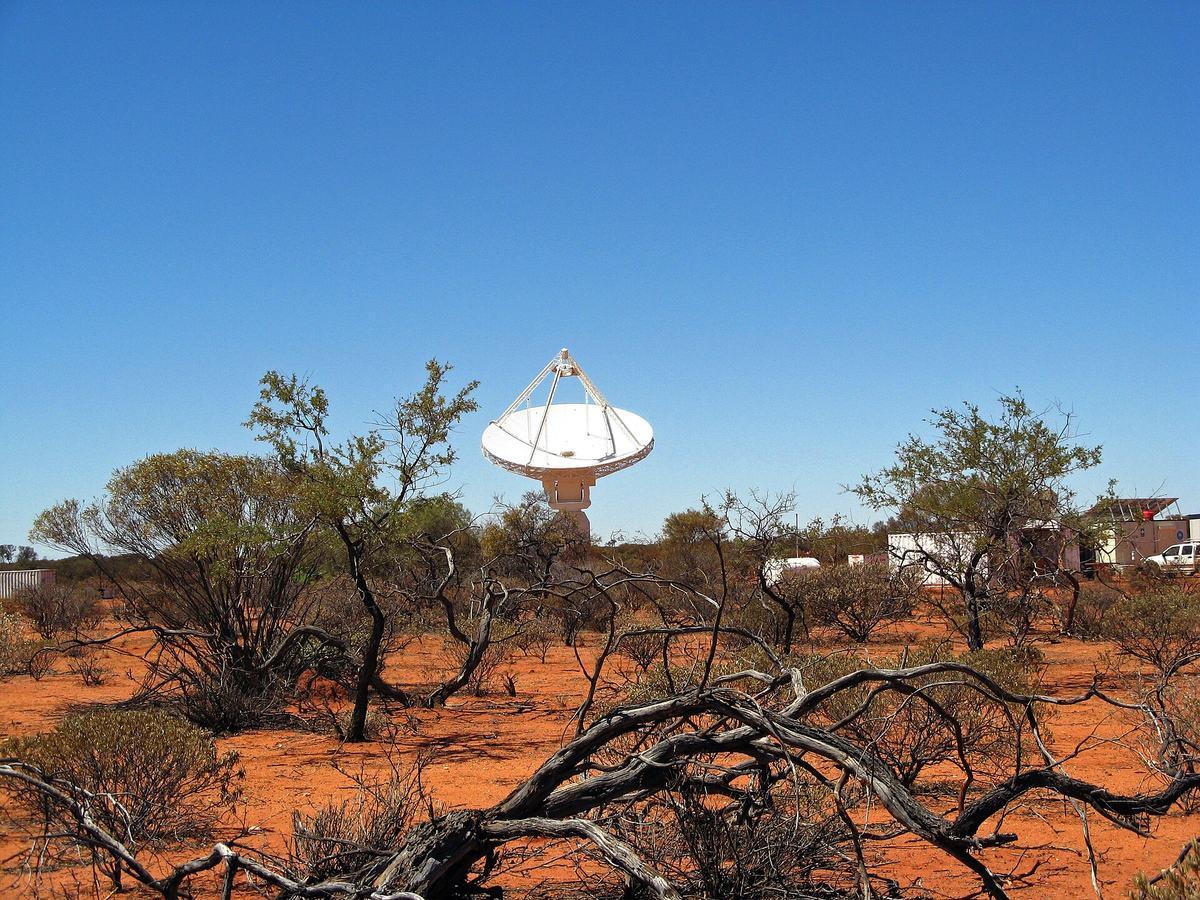
Sitting on a doubt is not enough. A black hole that swallows gas must radiate in the infrared and in the radio range. The authors therefore matched the positions of the five candidates against three large sky surveys. CatWISE, an infrared catalogue built on data from NASA's WISE satellite. RACS, a radio survey run with the Australian ASKAP array. And VLASS, the survey of the Very Large Array, in New Mexico.
Nothing. No counterpart at any of those five positions. And the absence carries weight: the thresholds of these catalogues sit very close to the fluxes predicted by the models. If the sources were black holes swallowing the interstellar medium, CatWISE should have seen them.
The conclusion therefore reads in the negative. The Sun's neighbourhood probably holds no black hole detectable through its accretion. Which does not mean there is none. A silent object, outside any dense cloud, would stay invisible, and will stay so until an instrument drops below current thresholds.
The authors do not close the case. They argue for follow-up at several wavelengths at once, radio, optical and X-rays, the only way to rule out the other possible interpretations. And they expect a great deal from SKA, the large radio telescope under construction in Australia and South Africa, with a new batch of data due in early 2027. Its sensitivity should reach sources far fainter than any we can see today.
Until then, the nearest black hole we know of stays 1,500 light-years away, and it gives itself away through the star it drags along. An isolated black hole at 50 light-years, on the other hand, would have nothing to betray it. Except one day, in the data of a radio telescope.
Going further
- The study in The Astrophysical Journal: Searching for Isolated Black Hole Candidates within 15 pc of the Solar System in Gaia DR3, also available as a preprint on arXiv.
- The only isolated black hole ever confirmed, OGLE-2011-BLG-0462, reanalysed with Hubble: a mass of 6 solar masses.
- On the site: our sky map to find the plane of the Milky Way, and our observing guide.