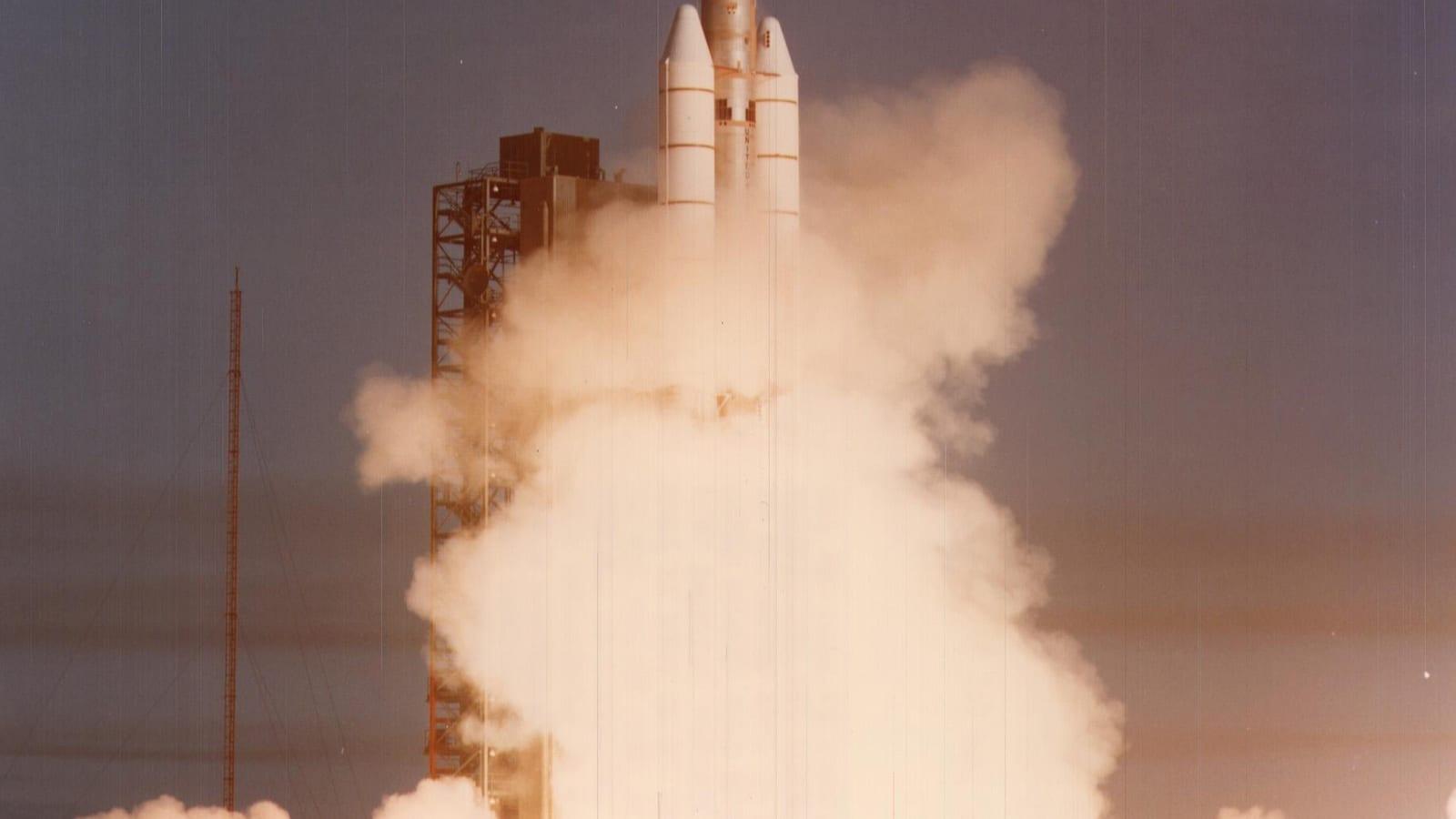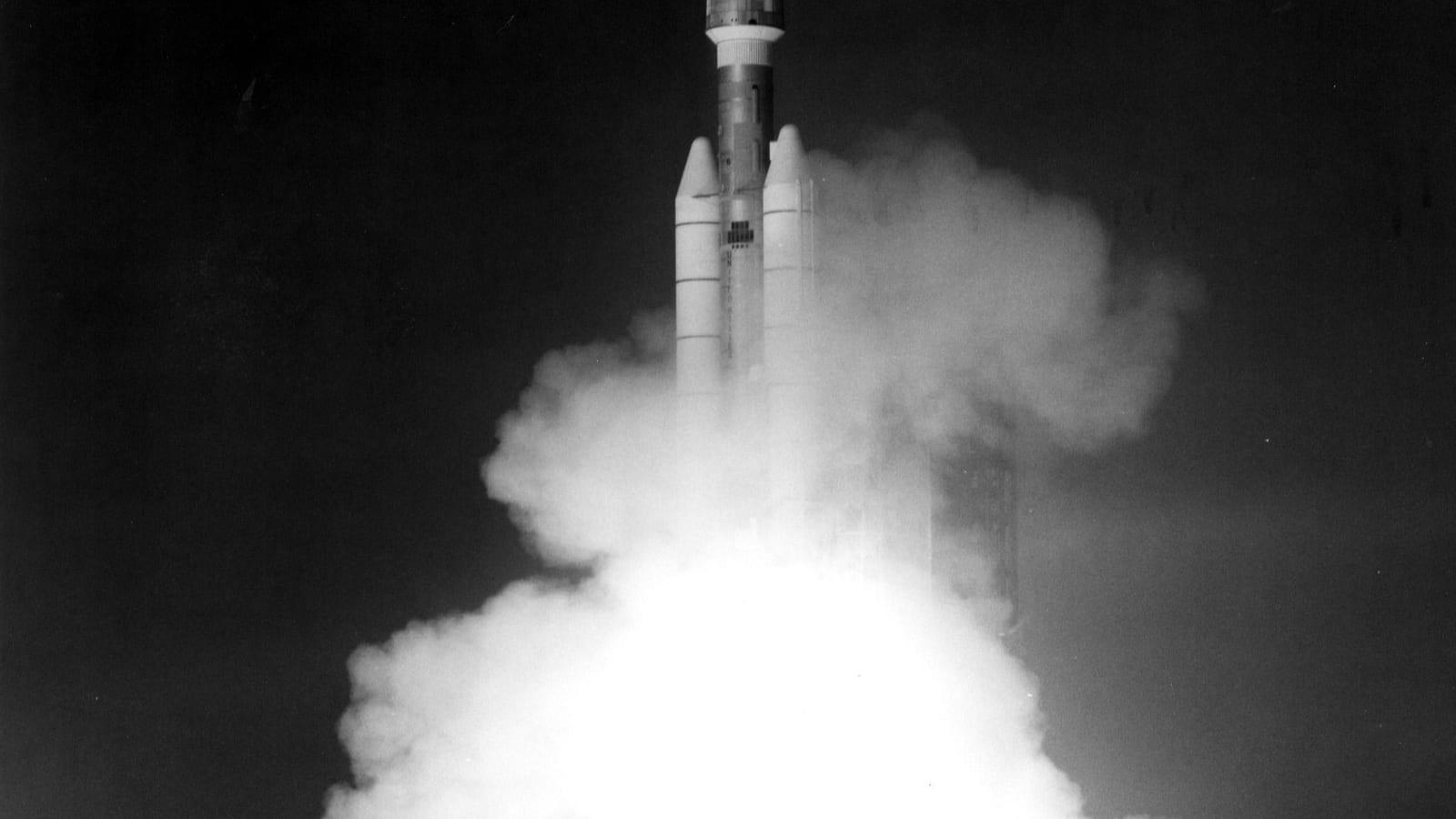
On August 20, 1977, a Titan IIIE-Centaur rocket climbed away from Cape Canaveral with Voyager 2. Sixteen days later, on September 5, its twin Voyager 1 followed. The two spacecraft were nearly identical. Yet the one called number one went second. That was not a scheduling accident: the two probes were flying different routes, and one of them had to arrive first.
This article opens the special week Tracker-1 is devoting to Voyager 1, as the spacecraft approaches its first light-day from Earth on November 18, 2026. To understand that milestone, we have to go back to a planetary alignment that comes once every 175 years, and to a project NASA almost never launched.
A rendezvous that comes once a century
Jupiter, Saturn, Uranus and Neptune orbit the Sun at different distances and speeds. Every so often, they gather on the same side of the Sun, along an arc tight enough for a spacecraft to hop from one to the next. The configuration repeats about once every 175 years. The launch window opened in the late 1970s, between 1976 and 1980.
The trick that makes the journey possible is called a gravity assist. A planet is moving around the Sun. A spacecraft that passes behind it is swept along by that motion, like a swimmer carried by a current. The planet loses a little orbital energy, the probe gains a lot. String several encounters together and a spacecraft can visit planet after planet without carrying all the fuel it would need to do the same work with engines.
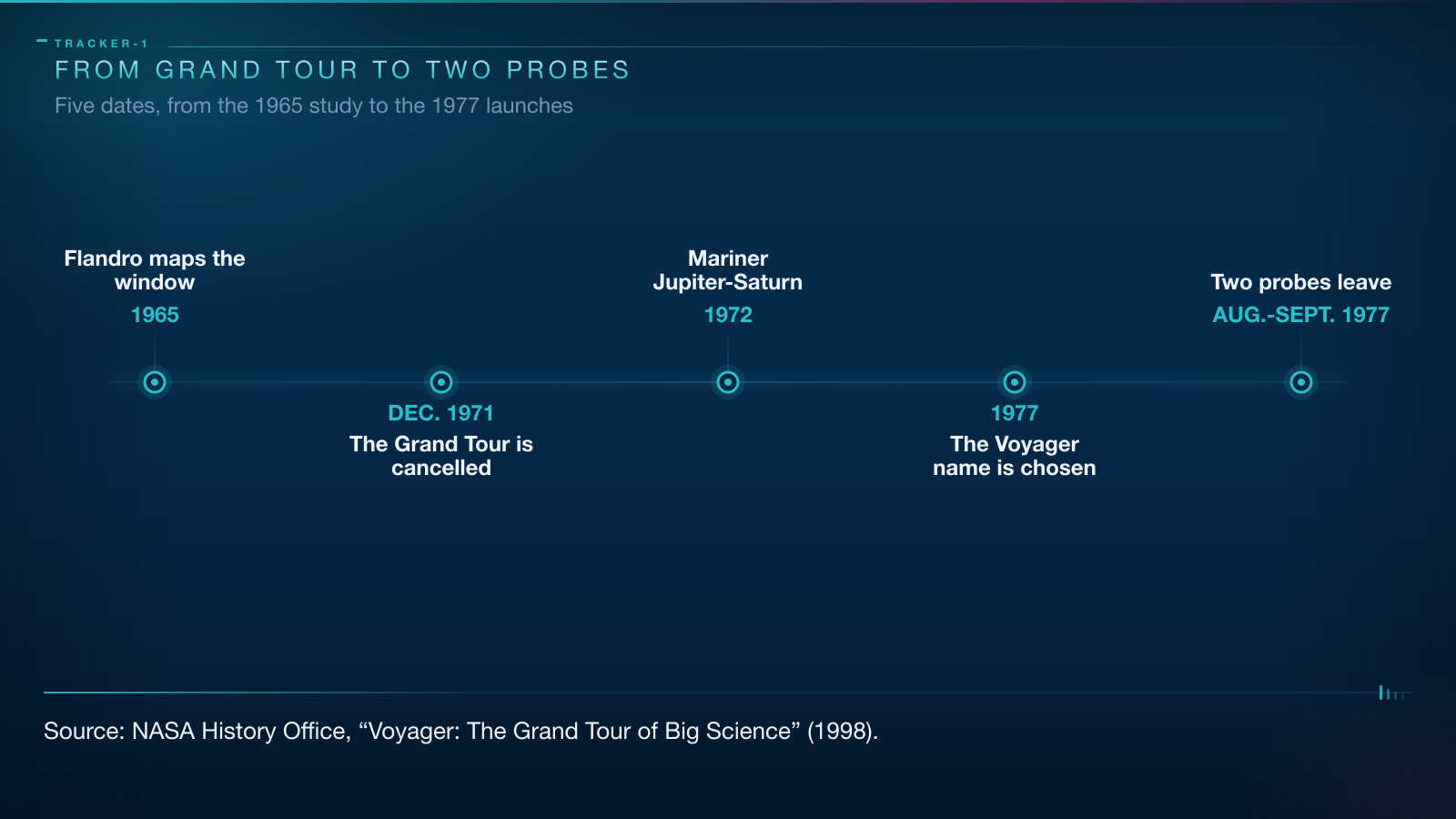
In 1965, Gary Flandro, an engineer at the Jet Propulsion Laboratory (JPL), studied how Jupiter's gravity could shorten the trip to the outer planets. His work fed a larger idea, the Grand Tour, which called for several spacecraft to visit all five outer planets, from Jupiter to Pluto. The launch windows were close. NASA wanted to seize them.
The Grand Tour swallowed by the budget
JPL proposed a dedicated spacecraft called TOPS, for Thermoelectric Outer Planet Spacecraft. The program called for four launches, two to Jupiter, Saturn and Pluto in 1976 and 1977, two to Jupiter, Uranus and Neptune in 1979. The bill was heavy: $750 to $900 million for the four missions, plus $106 million for launch vehicles.
In December 1971, NASA and the Office of Management and Budget deleted the funds for the TOPS Grand Tour. The budget picture had changed. NASA was coming down from the Apollo peak and had to pay for the Space Shuttle. The JPL development group was not disbanded. It was redirected to a smaller mission, with a Mariner-class spacecraft, to Jupiter and possibly Saturn.
The replacement was called Mariner Jupiter-Saturn. In February 1972, the Space Science Board of the National Academy of Sciences endorsed it unanimously. Congress followed. The four-spacecraft Grand Tour became a two-spacecraft mission, derived from the Mariner family, with Jupiter and Saturn as its main targets. The dream of the four giants was not dead. It was put aside.
Two spacecraft, two trajectories
The two probes came off the same assembly line. They carried the same instruments, the same large dish antenna and the same radioisotope generators. Their missions, however, diverged from the start. One was to fly past Titan, Saturn's largest moon, whose thick atmosphere fascinated scientists. The other was a backup, on a trajectory that kept the door open to Uranus and Neptune.
The first probe, the future Voyager 1, was the one aimed at Titan. The flyby was a rare opportunity: Titan is the only moon in the solar system with a dense atmosphere. To meet it at the right angle, the spacecraft had to pass behind Saturn, which bent its path out of the ecliptic, the plane in which the planets orbit the Sun. Once on that slope, it could no longer reach Uranus and Neptune.
The second probe, the future Voyager 2, flew the backup trajectory. If Voyager 1's Titan flyby failed, it could be redirected to try. If it succeeded, Voyager 2 could carry on to the ice giants. On the eve of launch, NASA dropped the name Mariner Jupiter-Saturn and adopted Voyager. The two spacecraft kept mission numbers, not launch numbers.
August 20, September 5: number one goes second
Voyager 2 left first, on August 20, 1977. Voyager 1 followed on September 5. Sixteen days apart. At first glance the numbering looks reversed. It is not: Voyager 1 was the probe meant to reach Jupiter first, and its more direct trajectory gave it a decisive lead.
The two routes were not equivalent. Voyager 1's path was faster and straighter toward Jupiter and Saturn. Voyager 2's was longer, with a bend that set up the later visit to Uranus and Neptune. The result: leaving second, Voyager 1 cleared the asteroid belt before its twin and overtook it on December 15, 1977. From that day on it stayed ahead, and it became the most distant human-made object.
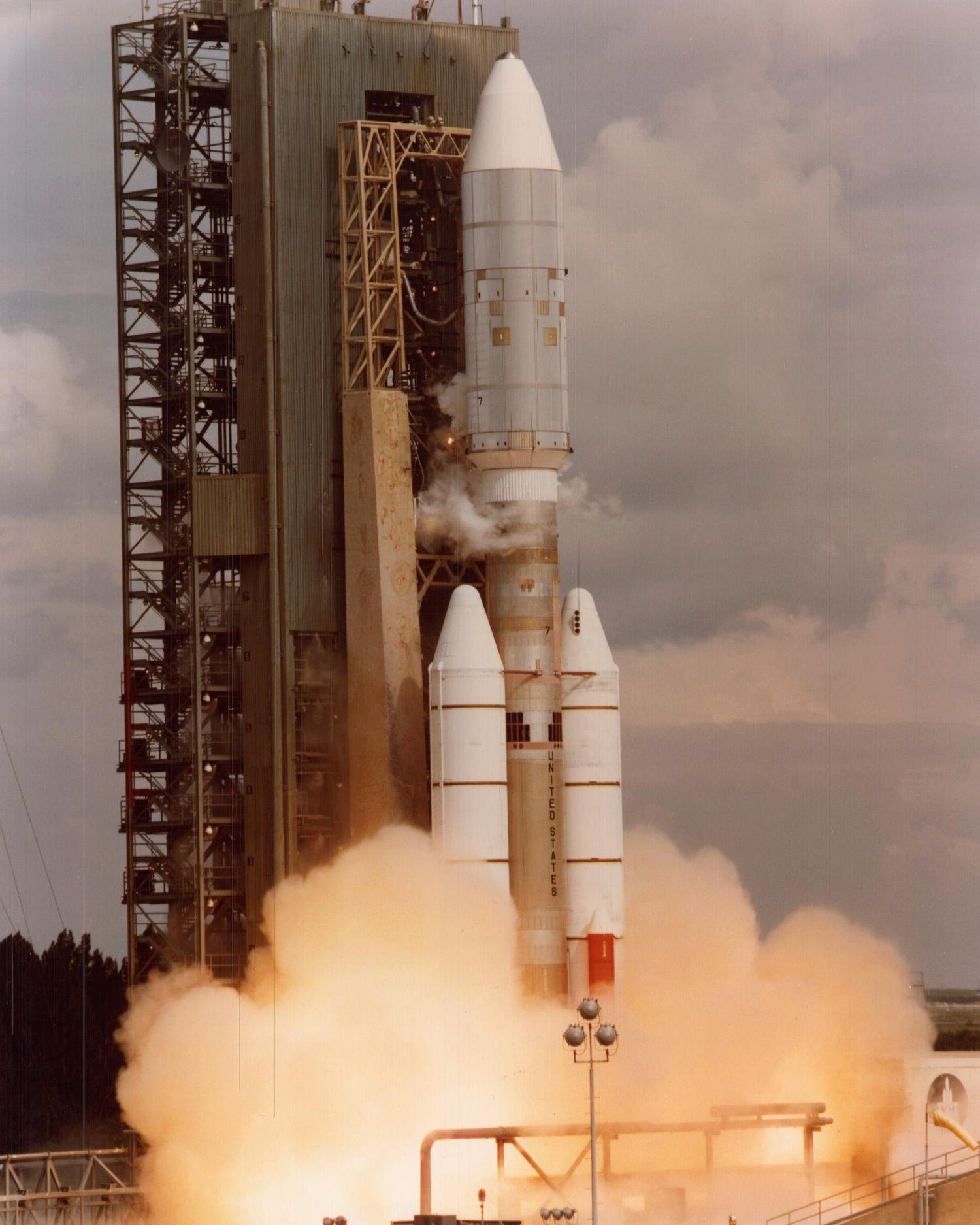
The launch dates were not a matter of convenience. They followed from the two trajectories and the positions of the planets. A window that opened too late would have jeopardized the Titan flyby for one probe, and the Uranus and Neptune option for the other. The two departures of summer 1977 were a tight sequence, set by an astronomical appointment that will not come around again before the end of the twenty-second century.
What that launch made possible
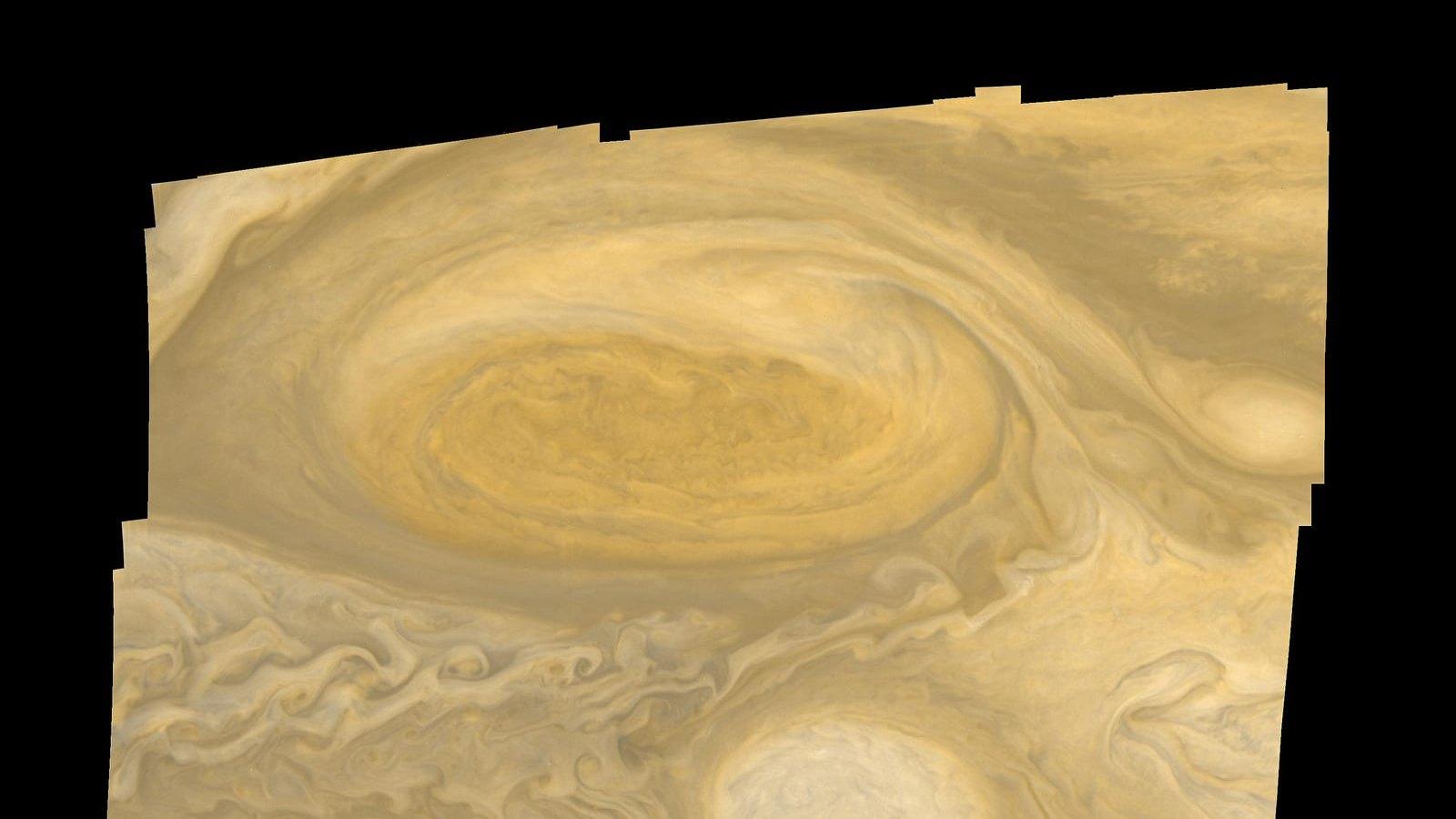
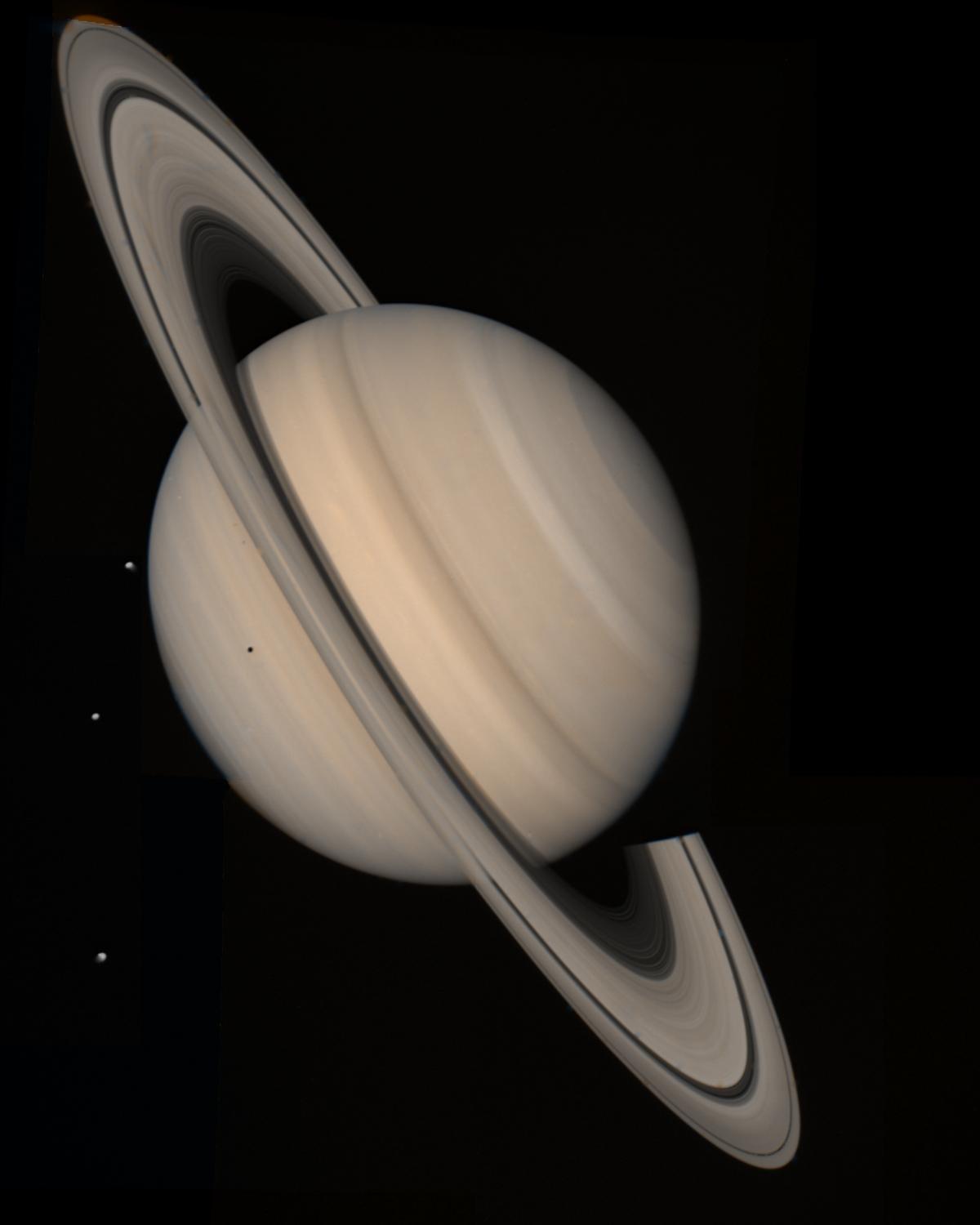
Voyager 1 reached Jupiter on March 5, 1979, passing 280,000 kilometers from the cloud tops. It found a faint ring around the planet and two new moons, Thebe and Metis. It photographed volcanoes on Io, the first active volcanoes seen anywhere beyond Earth. At Saturn, on November 12, 1980, it came within about 126,000 kilometers, skimmed past Titan and found five new moons and a new ring.
The Titan flyby bent it north, out of the plane of the planets. Uranus and Neptune were left out of reach. Voyager 2 carried on. After Jupiter and Saturn, it visited Uranus and then Neptune, and it remains the only spacecraft to have approached either ice giant. The four-spacecraft program was cancelled, but the Grand Tour did happen, in two stages and with two machines.
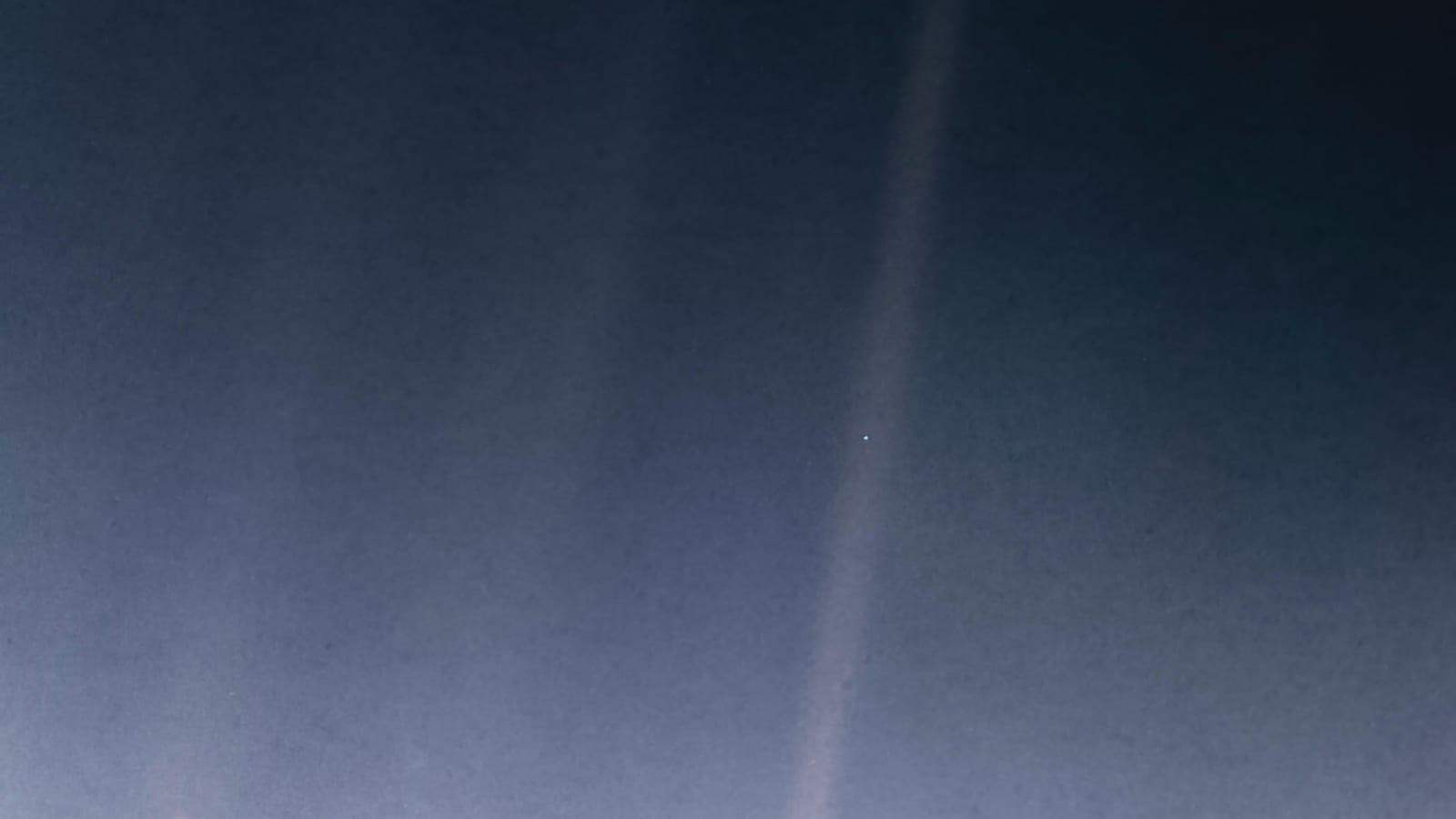
Forty-nine years after that departure, Voyager 1 is still flying. On November 18, 2026, it reaches one light-day from Earth, the distance light travels in twenty-four hours. Its signals now take a day to reach us, and the reply takes another day. The probe that left second has become the farthest one, and Tracker-1's special week tells the rest of the story, from Jupiter to the Golden Record, from the Pale Blue Dot to interstellar space.
Going further
- The mission pages for Voyager 1 and Voyager 2, tracked live on the site dashboard.
- The key concepts behind the story: space probe, Jupiter and the solar system.
- The official sources: NASA's Voyager mission, JPL's Voyager 1 page and NASA's history chapter, “Voyager: The Grand Tour of Big Science”.
- The rest of the special week: Tracker-1's latest stories.