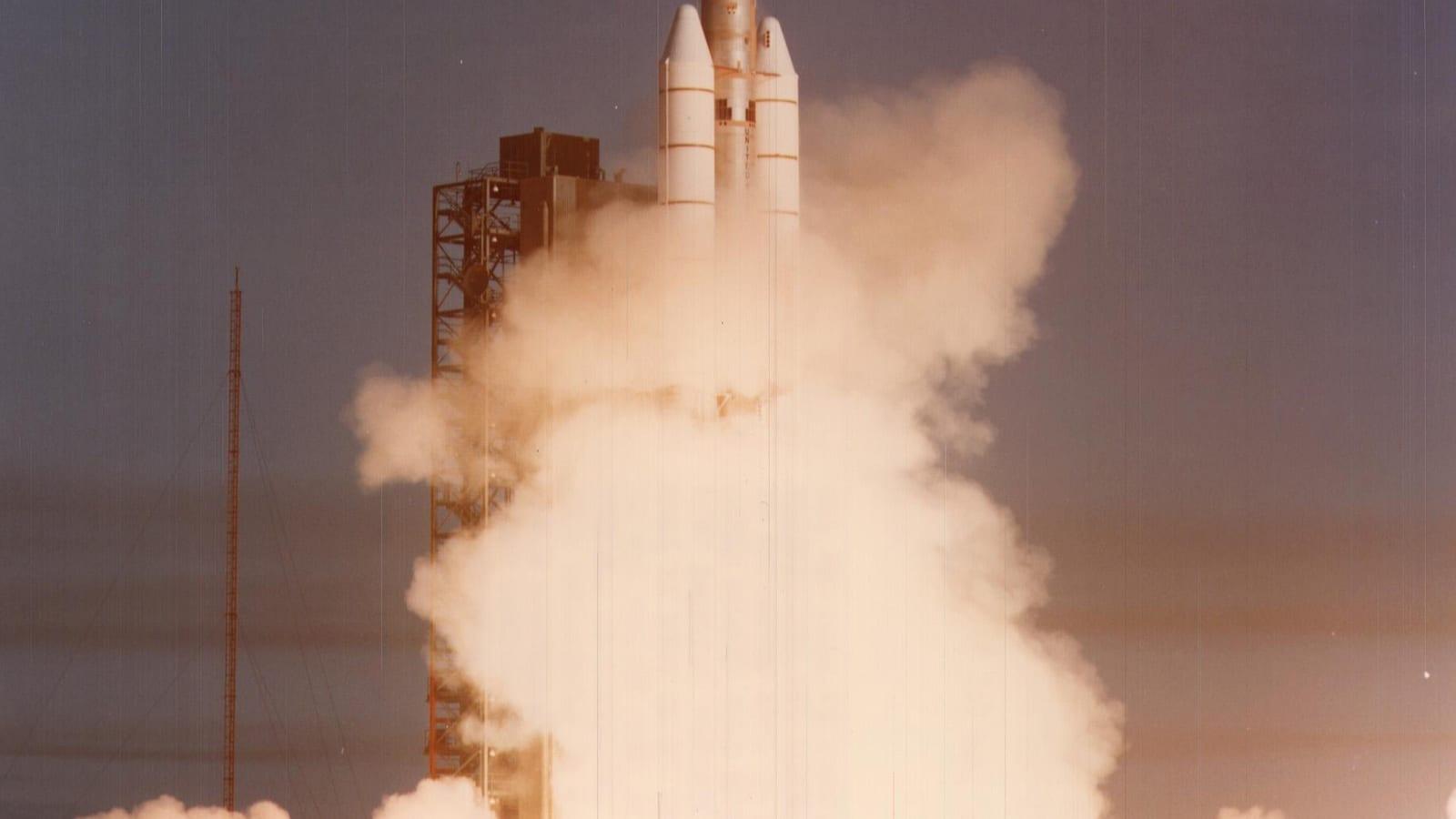
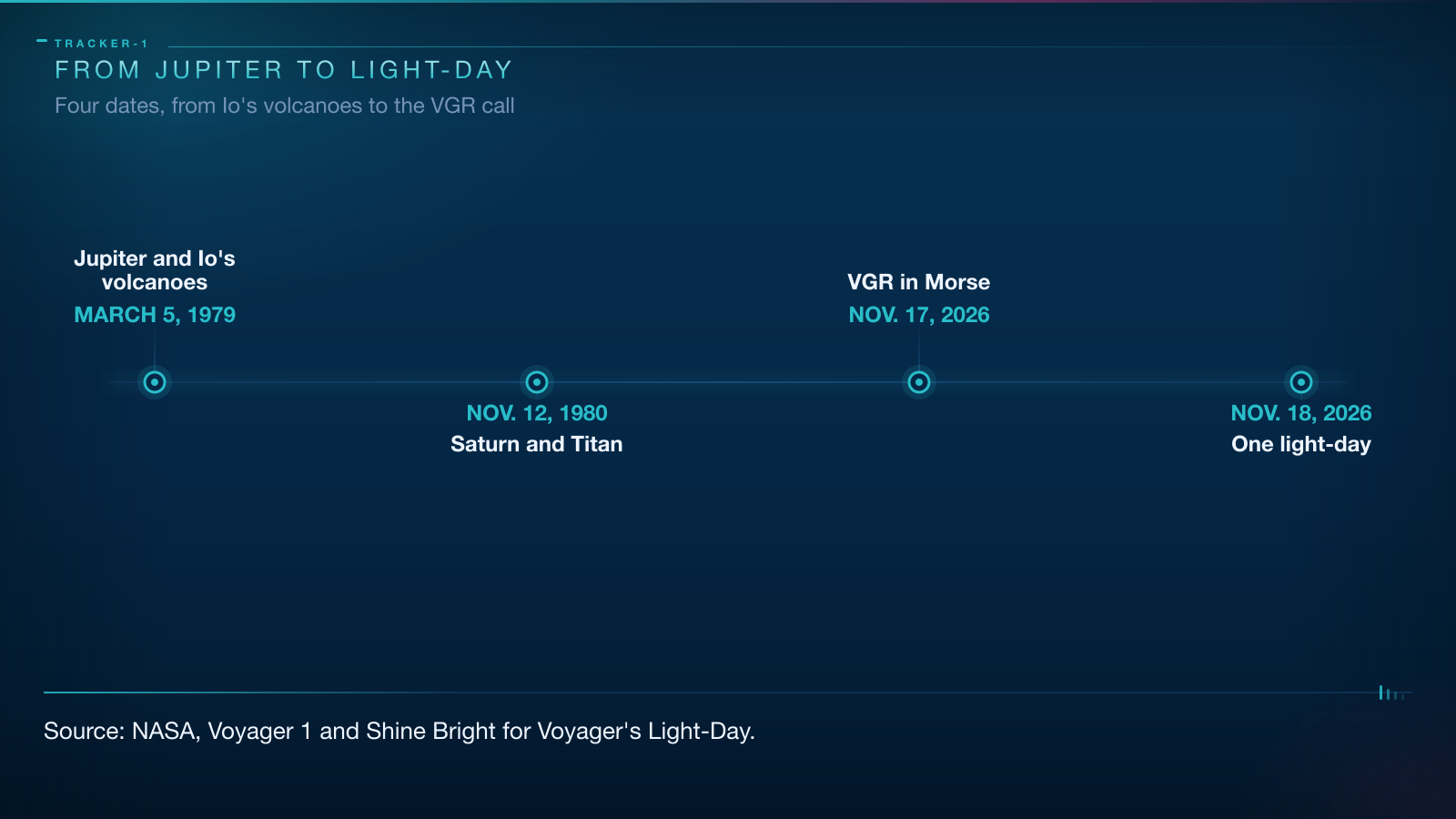
On March 5, 1979, at 12:05 UTC, Voyager 1 passed 280,000 kilometers from Jupiter's cloud tops. The images that arrived over the following days upended planetary science: on Io, a moon everyone thought was dead, a plume of material rose above the horizon. It was the first time active volcanoes had been seen anywhere beyond Earth. The textbooks had to be rewritten.
Twenty months later, on November 12, 1980, the spacecraft skimmed Saturn, then Titan, and left the plane of the planets. This article continues Tracker-1's special week. Tonight, November 17, NASA invites the public to flash VGR in Morse code at the sky. Tomorrow, November 18, Voyager 1 reaches one light-day from Earth.
Jupiter, the first shock
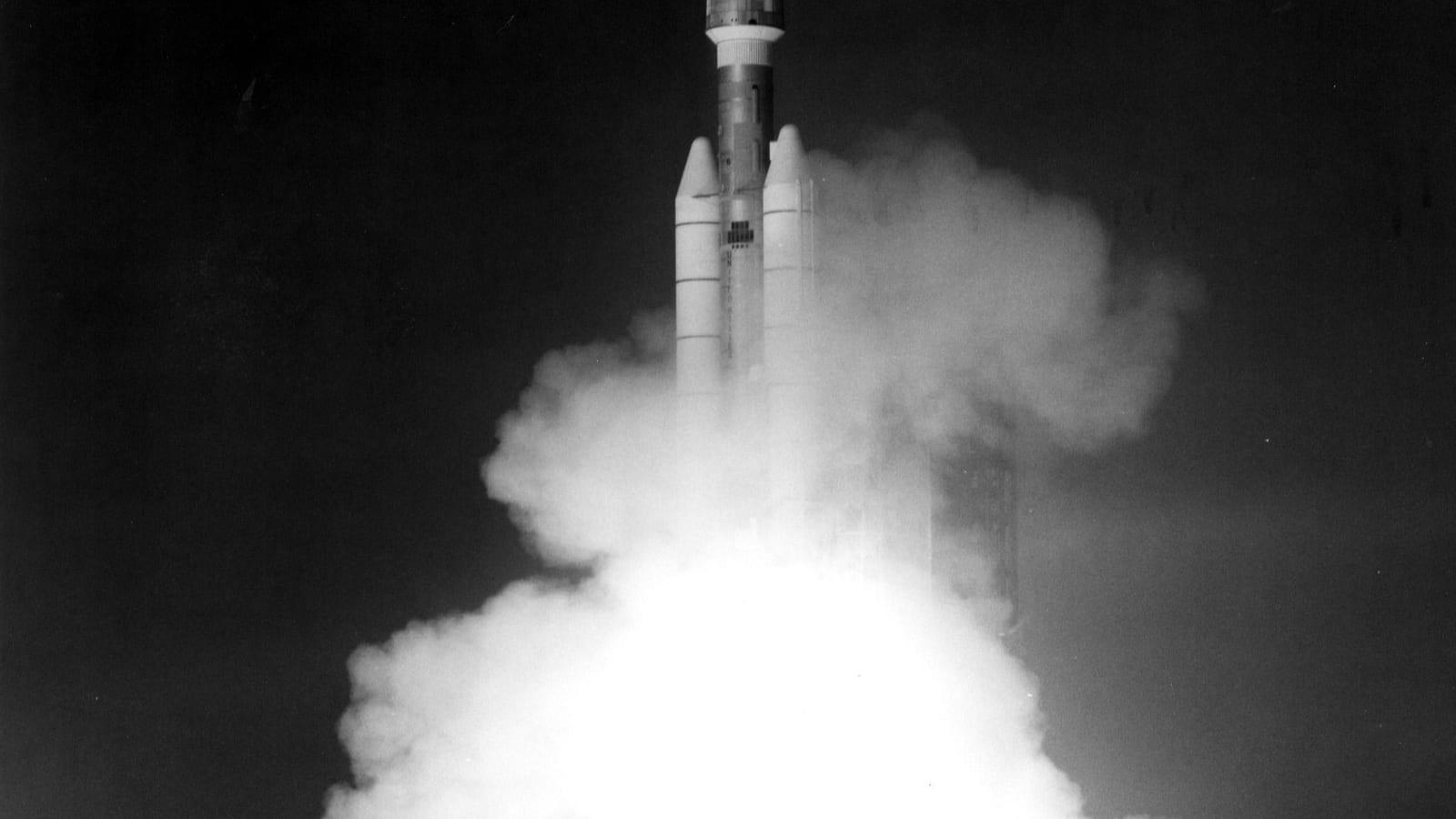
Voyager 1 was not the first probe to approach Jupiter. Pioneer 10 and Pioneer 11 had gone before and shown a planet more turbulent than expected. Voyager 1 arrived with sharper cameras and a flood of data that went far beyond the earlier flybys.
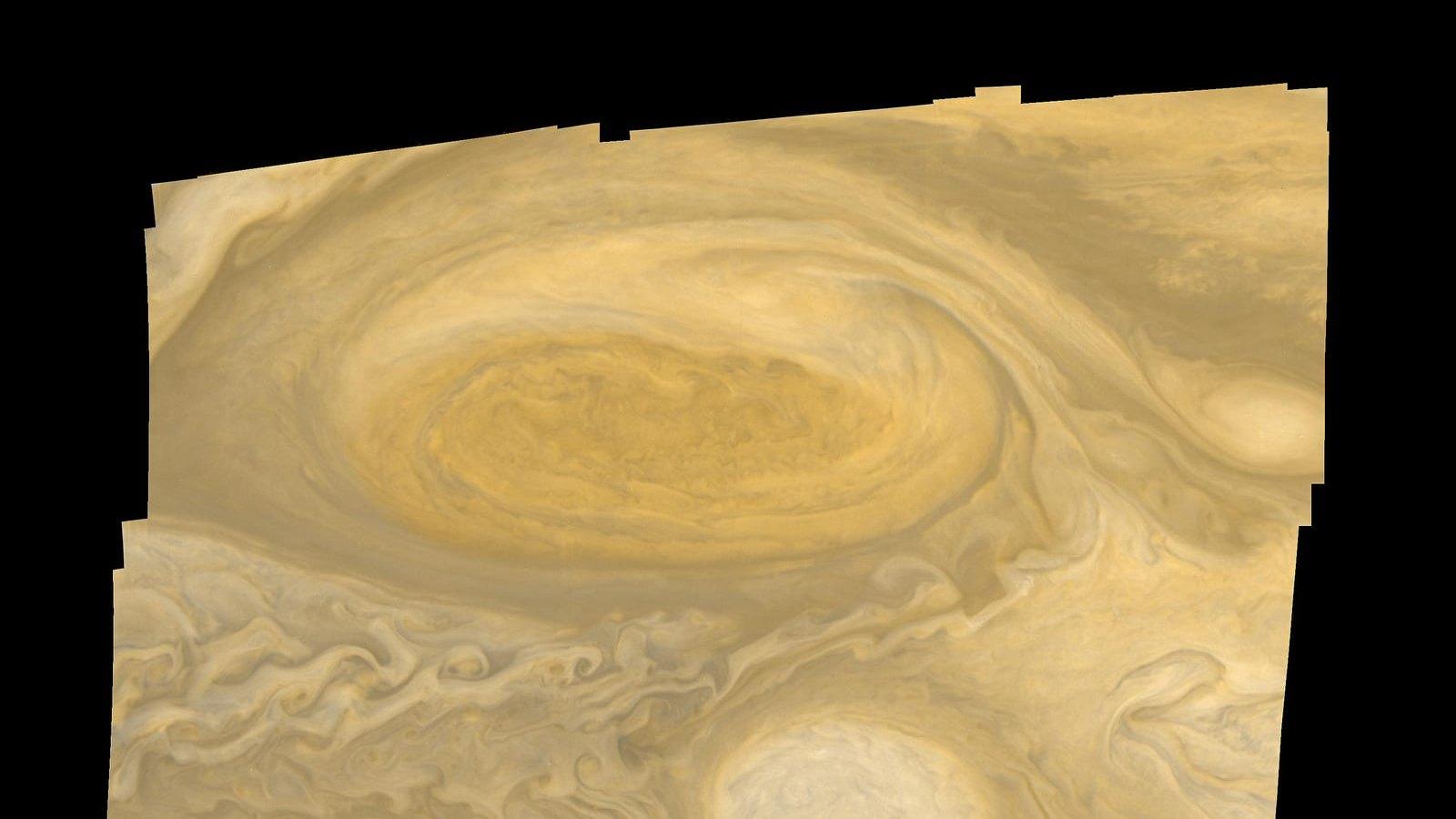
On March 5, 1979, it passed 280,000 kilometers from the clouds. It found a faint ring around the planet, invisible from Earth, and two new moons, Thebe and Metis. Images of the Great Red Spot, a storm wider than Earth, showed eddies and cloud bands of unexpected complexity.
But the real shock came from Io. On the images, a plume of material rose above the moon's limb. Io was not a dead, frozen world. It is the most volcanically active world in the solar system, with hundreds of volcanoes and lava fountains tens of kilometers high. The discovery opened a whole chapter of comparative planetary science.
Saturn and the price of Titan
On November 12, 1980, Voyager 1 reached Saturn. It passed about 126,000 kilometers from the planet, skimmed Titan and found five new moons and a new ring. Saturn's rings, already known, revealed complex structures, gaps and "shepherd moons" that keep some rings well defined.
Titan was the other prize. The moon is wrapped in a thick atmosphere that completely hides its surface. Voyager 1 measured an atmosphere made of 90 percent nitrogen, with methane and complex hydrocarbons. Those molecules suggested that prebiotic chemistry might be happening there. Titan became a natural laboratory for the chemistry that precedes life.
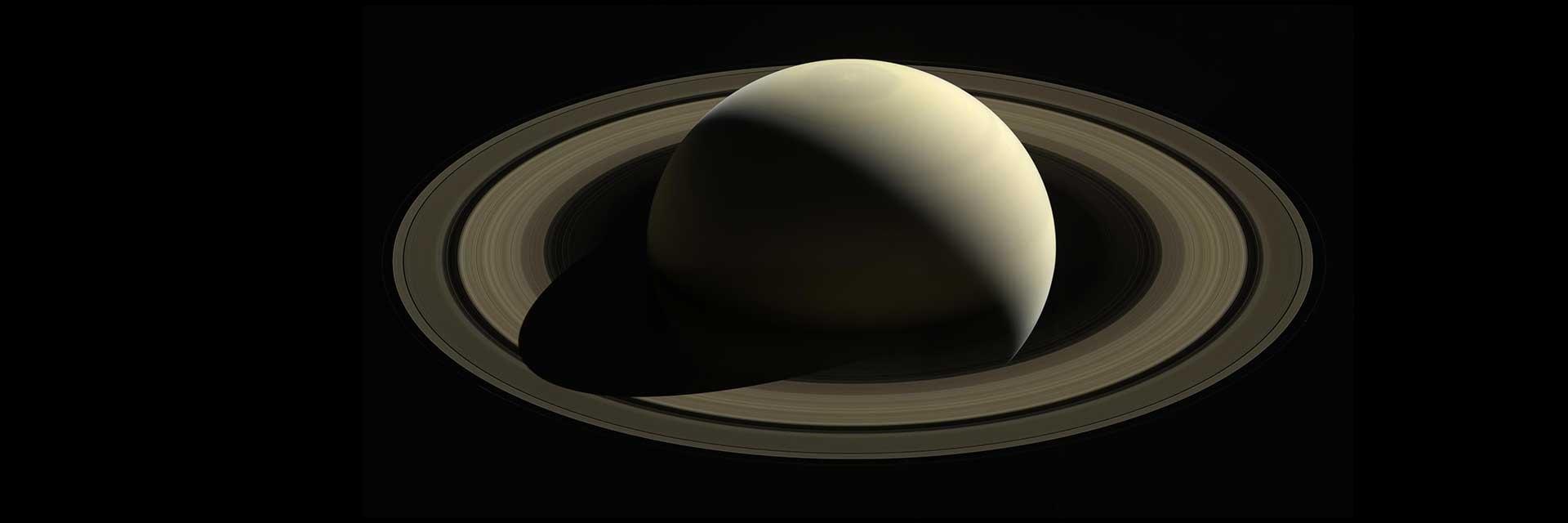
The Titan flyby had a price. To meet the moon at the right angle, the spacecraft had to pass behind Saturn, which tilted its path north, out of the ecliptic plane. Once on that slope, it could no longer reach Uranus and Neptune. The requirements of the Titan flyby ruled out the ice giants. Voyager 2 carried on with the Grand Tour and visited them.
Voyager 1 headed north at about 3.5 astronomical units per year, a little over 500 million kilometers a year. It would never meet another planet. Its mission became an exploration of the interplanetary medium, and then of interstellar space.
What the textbooks had to rewrite
Before 1979, Io was a white dot in the catalogs, one more moon around Jupiter. After Voyager 1, it was a volcanic world, kneaded by the tides of Jupiter and its neighboring moons. Before 1980, Titan was a mysterious moon, hidden behind an atmosphere that could only be guessed at. After, it was a laboratory of organic chemistry, with a nitrogen atmosphere and hydrocarbons that exobiologists wanted to study.
Saturn, too, had been known only through its rings and a few moons. Voyager 1 revealed five more and a new ring, and showed that the rings are dynamic objects, shaped by resonances and shepherd moons. The planetary science textbooks could not stay as they were.
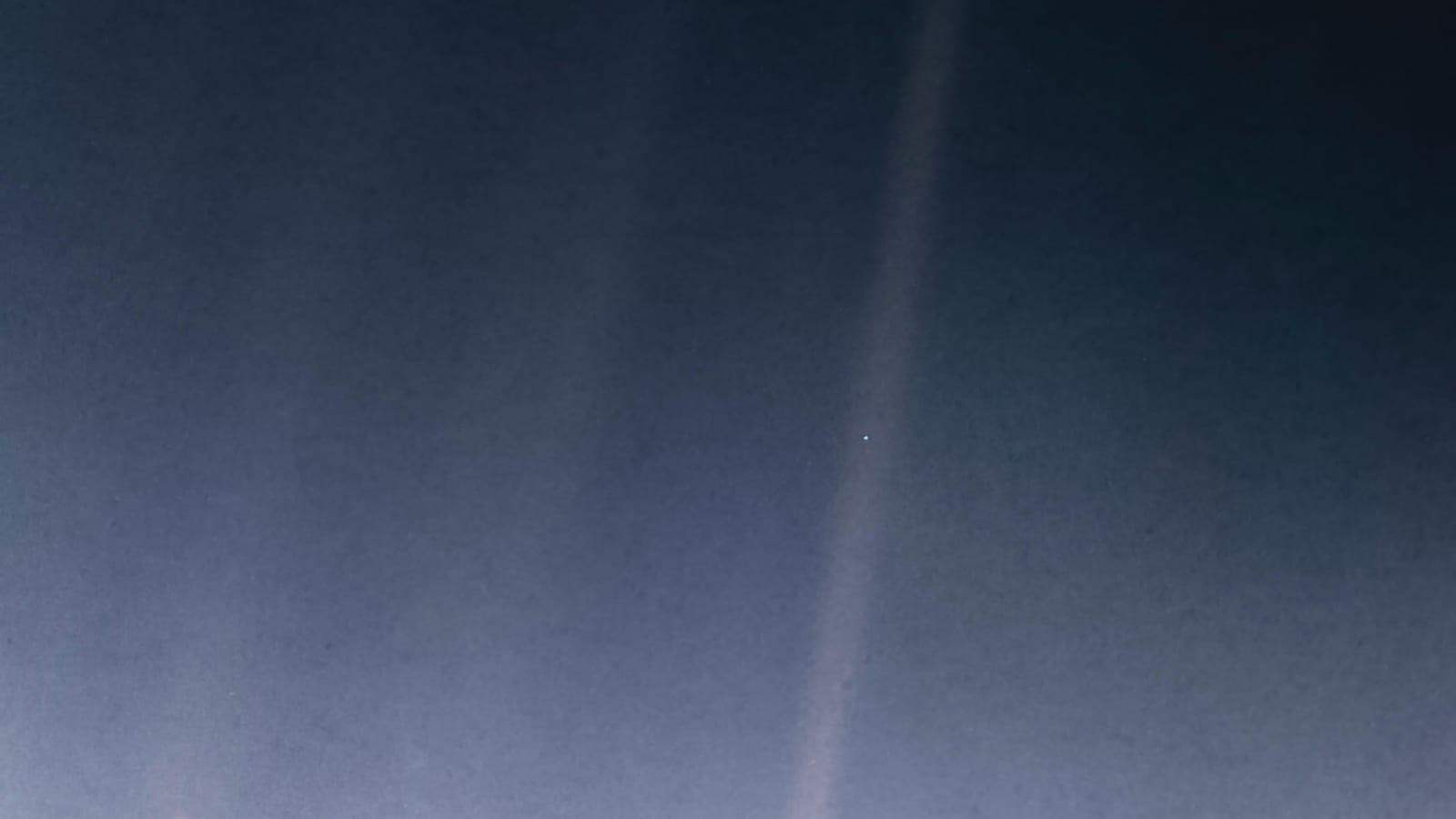
The harvest did not stop there. Voyager 1's cameras returned tens of thousands of images, along with data on magnetic fields, plasma and particles. The probe turned Jupiter and Saturn into physical worlds, with an atmosphere, rings, moons and a history. That is the story the rest of the special week tells, from the Golden Record to the Pale Blue Dot.
Tonight: VGR in Morse
Tonight, November 17, 2026, NASA invites the public to celebrate Voyager 1's light-day. After sunset, the idea is simple: point a flashlight, a phone or a glow stick at the sky and send the three letters VGR in Morse code. A tiny gesture, on the scale of the spacecraft, for an anniversary that has never happened before.
The next day, November 18, Voyager 1 will be one light-day from Earth, the distance light travels in 24 hours. No other human-made object has gone that far. Its signal will take 24 hours to reach us, and the reply another 24 hours. Tonight, the light you send skyward will never reach it. It is not meant to. It is meant to remind us of the distance.
Going further
- The mission pages for Voyager 1 and Voyager 2, tracked live on the site dashboard.
- The key concepts behind the story: space probe, Jupiter and the solar system.
- The official sources: NASA's Voyager 1 page, the Io page and the VGR operation page.
- The rest of the special week: Tracker-1's latest stories.