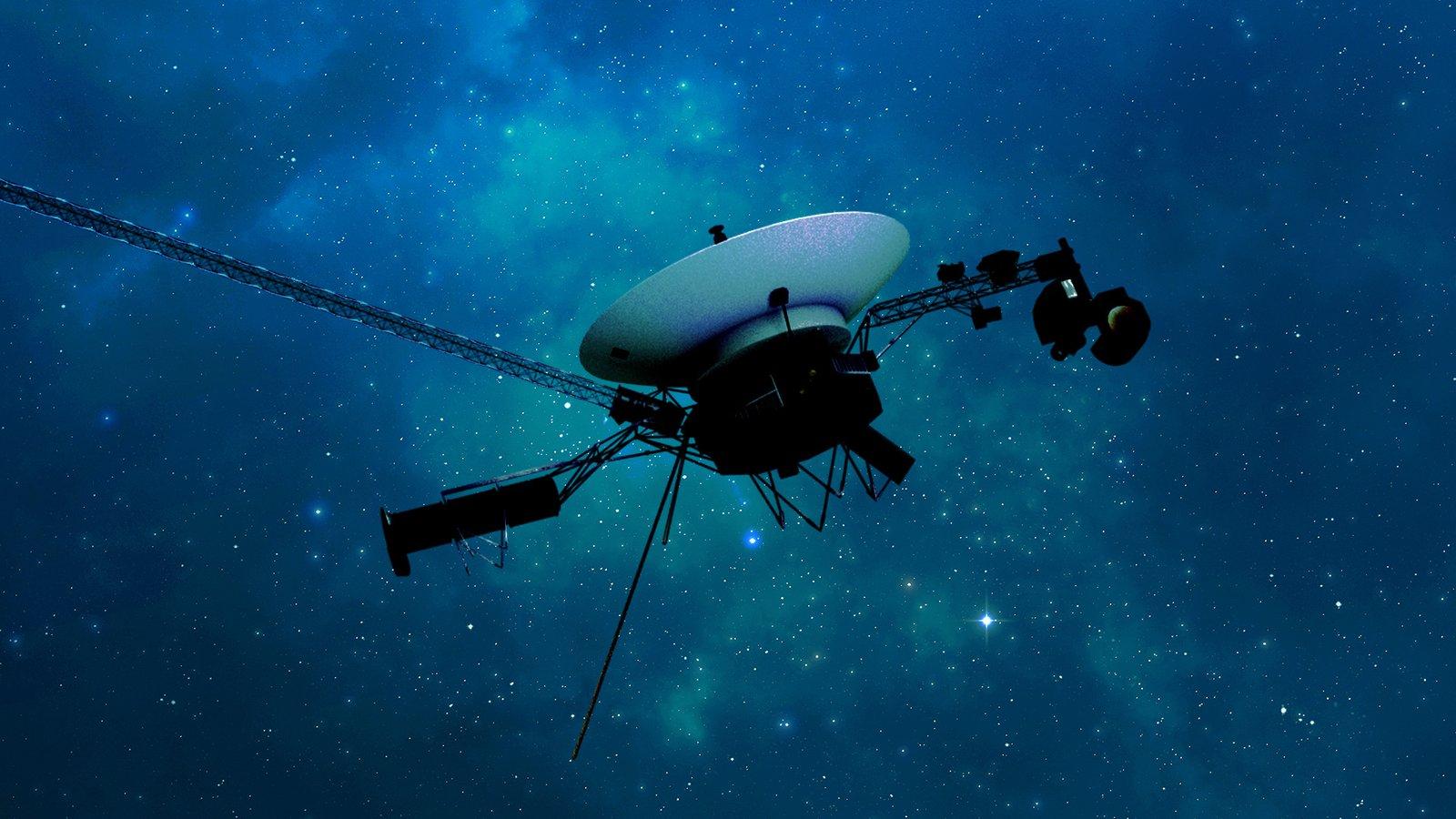
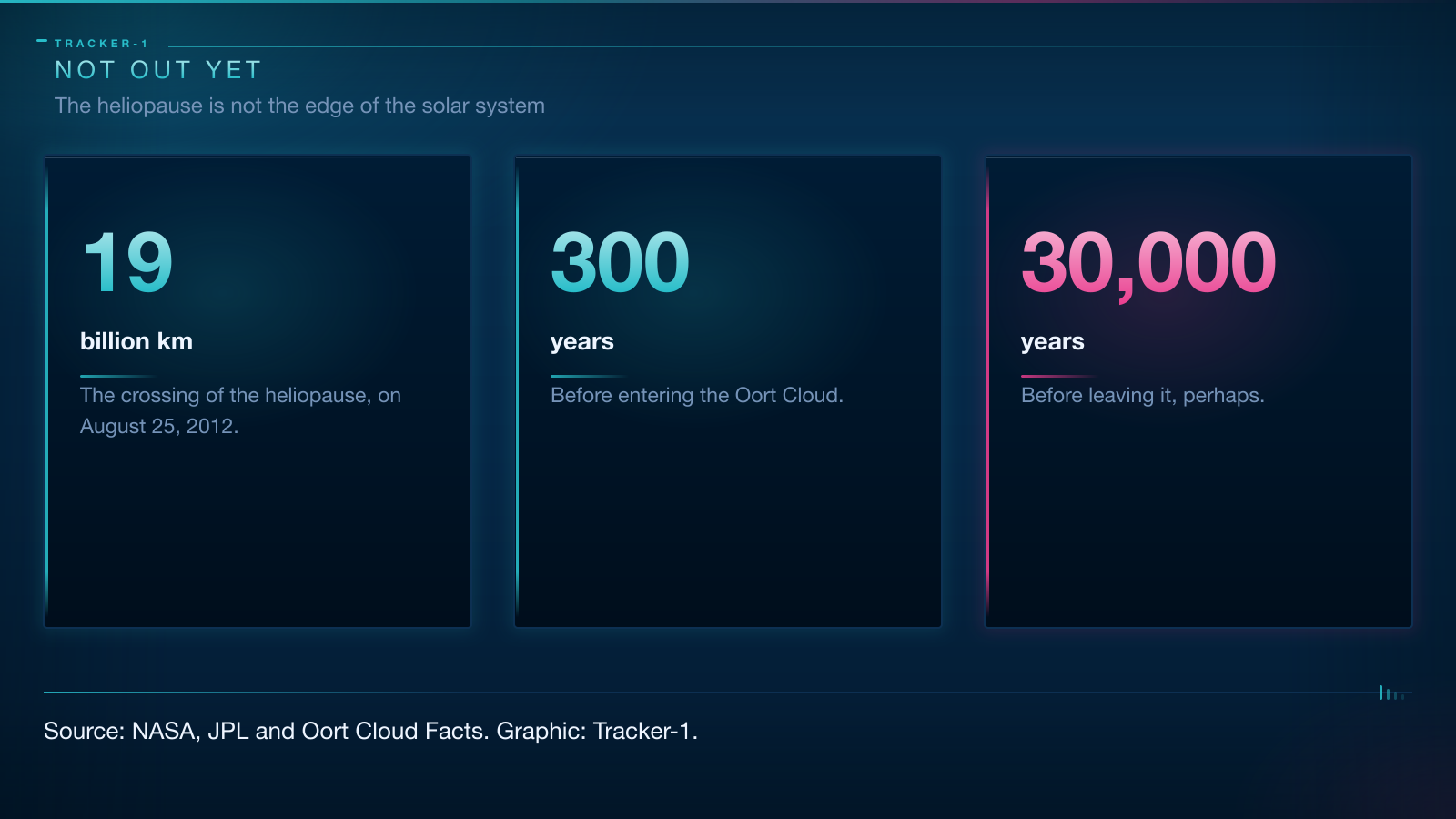
On August 25, 2012, about 19 billion kilometers from the Sun, Voyager 1 crossed the heliopause. The probe left the bubble of solar wind that surrounds the Sun and entered interstellar space. Confirmation only came in September 2013, thanks to plasma measurements. A year to understand what the probe had crossed.
This is the penultimate article in Tracker-1's special week. It explains the boundary, the confirmation, and the nuance people often forget: Voyager 1 has not left the solar system in the broad sense.
August 25, 2012
The Sun does not only shine. It blows. Its wind, a flow of charged particles, inflates a huge bubble around the solar system, the heliosphere. That bubble shields the planets from part of the interstellar radiation. At its edge, the solar wind slows, thickens, and gives way to the interstellar medium. That edge is the heliopause.
Voyager 1 crossed it on August 25, 2012, about 19 billion kilometers from the Sun. The probe was 36 years old. Launched in 1977, it had flown past Jupiter and Saturn, then headed north, out of the plane of the planets. It became the first human machine to measure interstellar space directly.
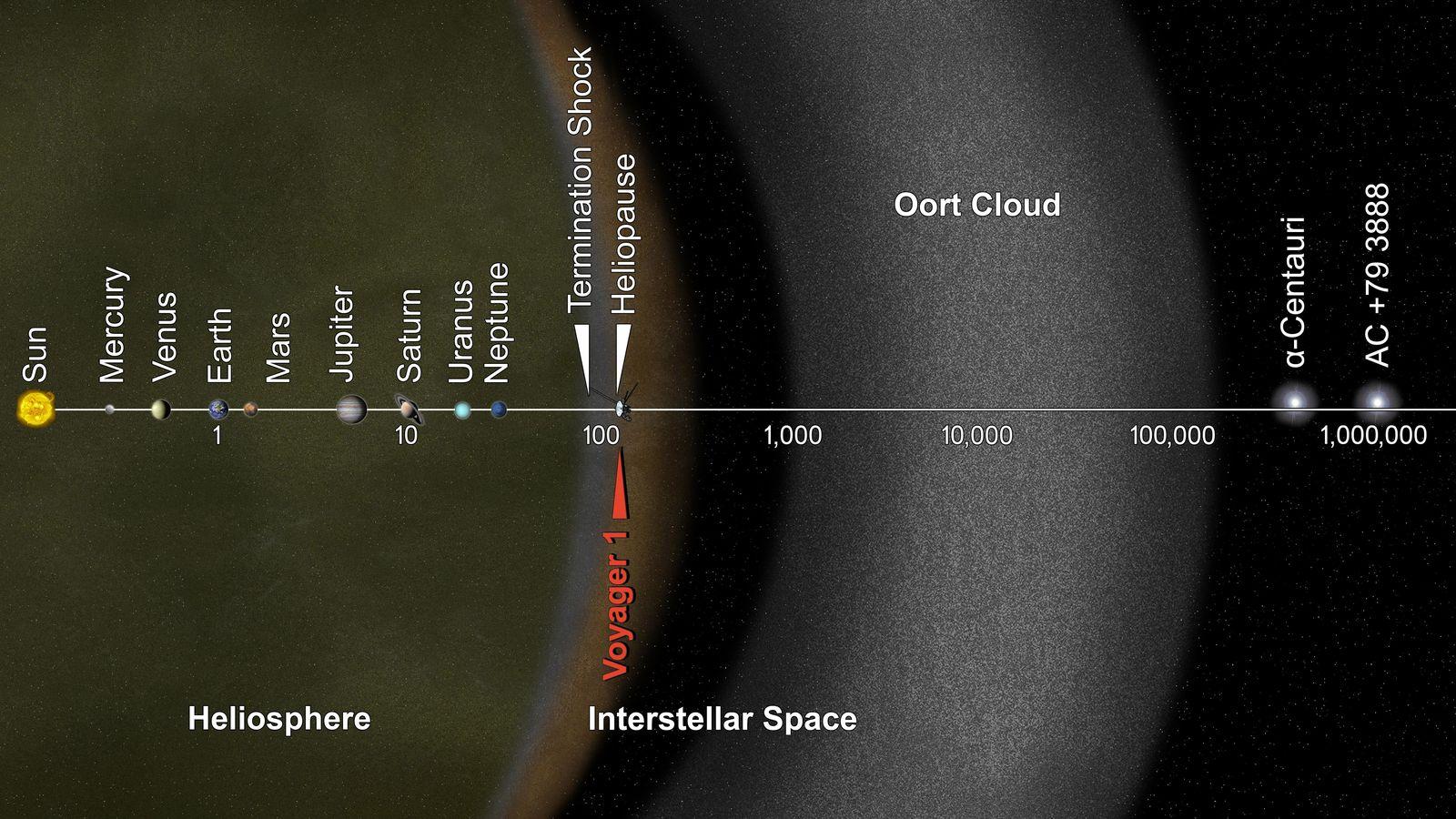
The crossing is not a wall. The heliopause is a thick transition zone where solar wind particles and interstellar particles mix. The probe did not feel it as a single shock. Its instruments recorded gradual changes, then a switch. That switch is what the teams tried to date.
Confirmation from plasma
Plasma is the key. Voyager 1's plasma wave instrument listens to electron oscillations in the medium. In the heliosphere, the plasma is hot and thin. In interstellar space, it is colder and denser. By analyzing those oscillations, scientists can estimate the plasma density around the probe.
The measurements showed that Voyager 1 had crossed over. NASA announced the crossing in September 2013, after checking the data. The delay was not administrative. The teams had to understand what the probe had crossed, and distinguish a real change of medium from a local fluctuation.
The boundary is not only about plasma. It also marks the limit of the Sun's magnetic influence. Beyond it, particles and fields come from interstellar space. Voyager 1 is the first probe to measure them in place, and the only one with Voyager 2 to have sampled that medium.
Not out of the solar system yet
This is where the nuance matters. Voyager 1 has left the heliosphere, but it has not left the solar system in the broad sense. The solar system does not end at the heliopause. It extends to the Oort Cloud, an immense bubble of comets and icy objects that surrounds the Sun and remains bound to it by gravity.
The Oort Cloud begins between 2,000 and 5,000 astronomical units from the Sun. It extends to 100,000 astronomical units, a quarter to half the distance to the next star. At its current speed, about a million miles a day, Voyager 1 will not enter the Oort Cloud for 300 years. It will not leave it for perhaps 30,000 years.
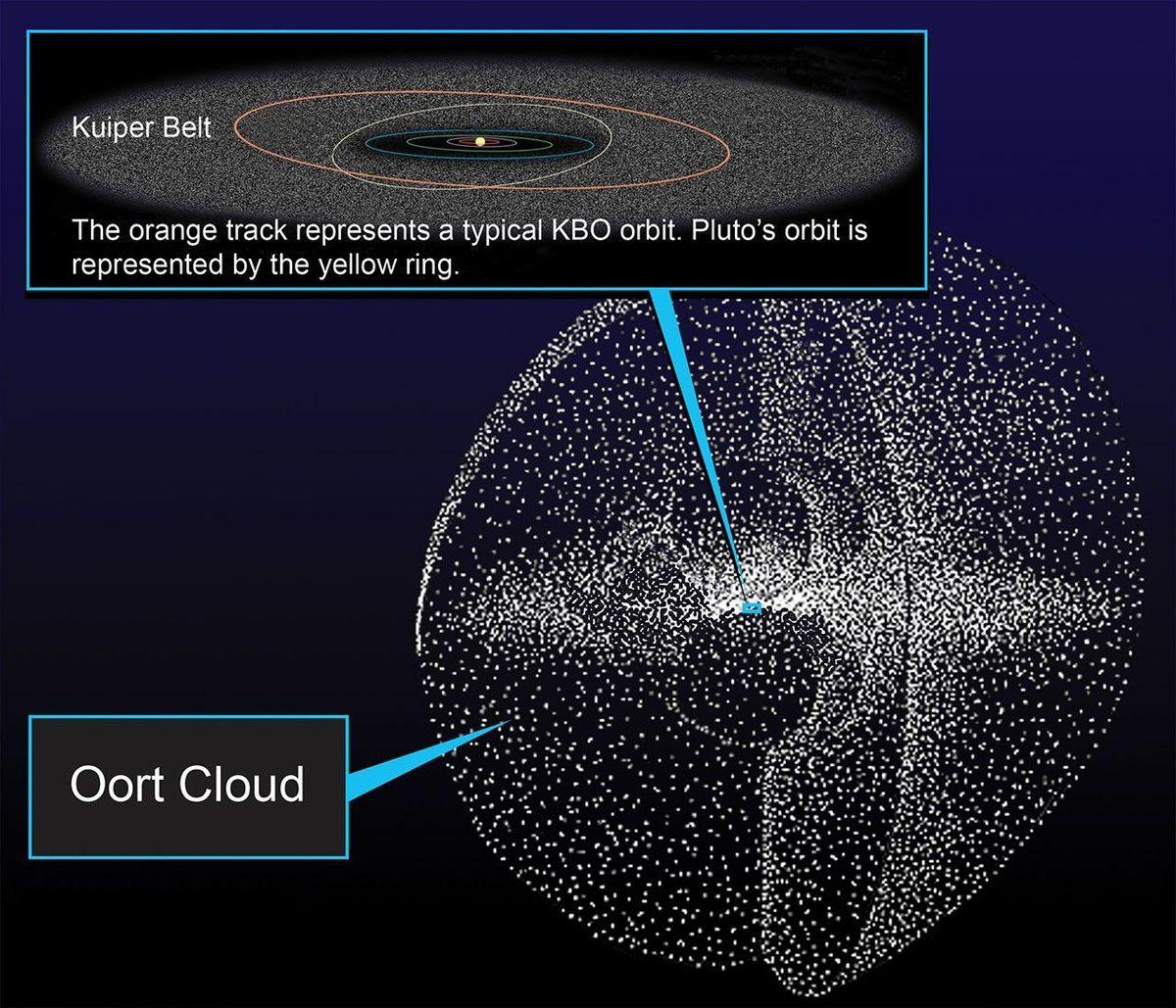
So Voyager 1 is in interstellar space, but still within the Sun's gravitational reach. The two boundaries do not coincide. One is plasma and magnetic, the other is gravitational. That is the difference between leaving the bubble and leaving the solar system.
What it changes
The crossing has a simple meaning: for the first time, a human machine has measured the medium between the stars. The instruments detected particles, fields, waves. They showed that interstellar space is not empty, and that the heliosphere filters it.
Voyager 1 is still transmitting. It is farther still today. The probe is aging, its instruments are shutting down one by one, and its power is declining. That is tomorrow's article: how it is kept alive.
The crossing into interstellar space is not an arrival. It is one threshold, then another. The Oort Cloud waits, very far away. Voyager 1 still has time, and so do we.
Going further
- The mission pages for Voyager 1 and Voyager 2, tracked live on the site dashboard.
- The key concepts behind the story: space probe and the solar system.
- The official sources: NASA's Voyager 1 page, JPL's infographic and the Oort Cloud facts.
- The plasma wave instrument: Johns Hopkins Applied Physics Laboratory.
- The rest of the special week: Tracker-1's latest stories.