On Wednesday, November 18, 2026, at 10:16 UTC, Voyager 1 becomes the first human-made object one light-day from Earth. Light takes 24 hours to reach us from the probe. So does its signal. At 25.9 billion kilometers, the farthest of our machines is now a day away, and its reply two.
This article is the pivot of Tracker-1's special week. It explains what a light-day is, how the Deep Space Network still listens to the probe, and what that distance looks like at the scale of the solar system.
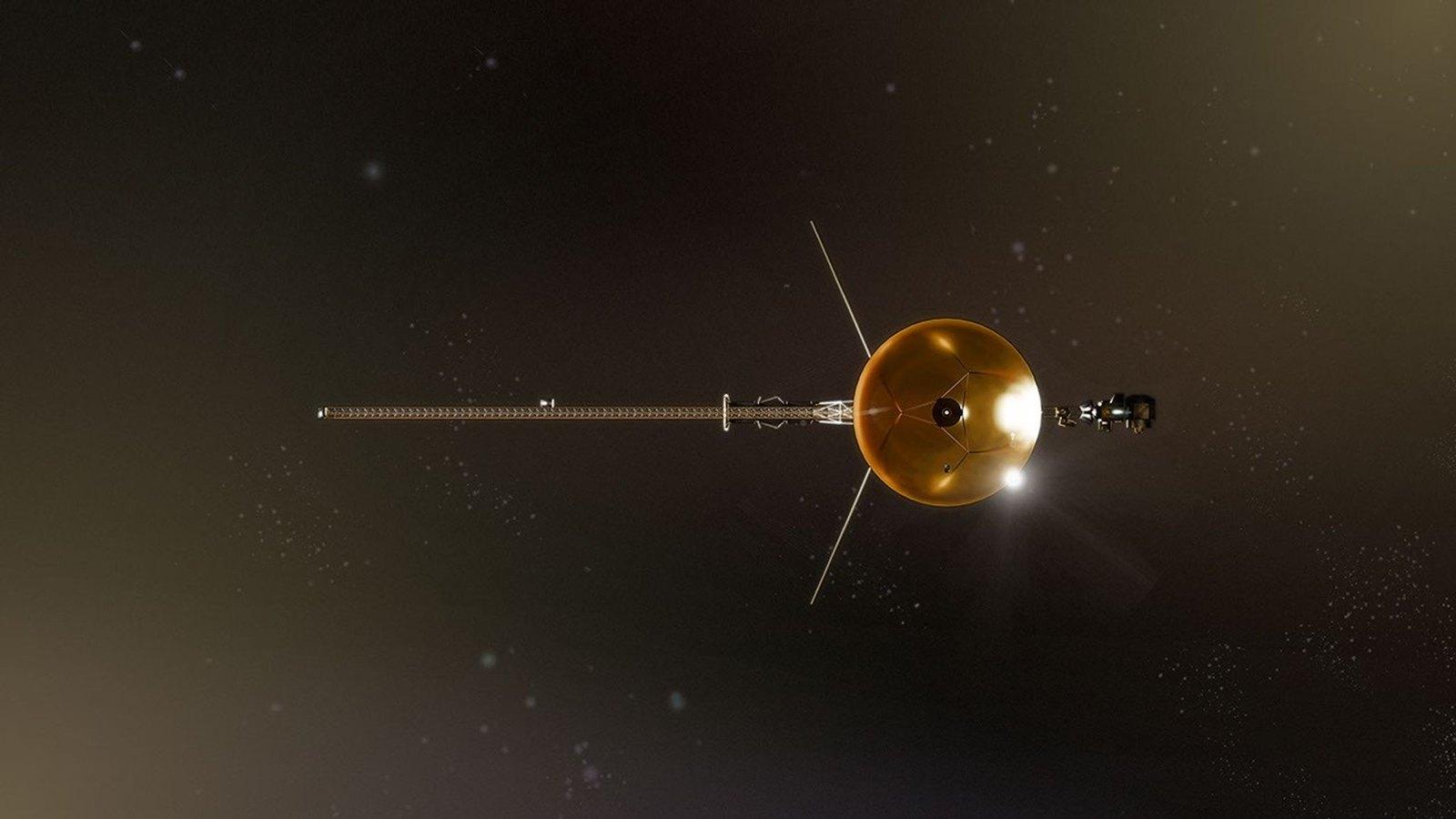
A light-day is a distance
The phrase sounds like a duration. It describes a distance: the distance light travels in 24 hours. The numbers are dizzying. One light-day is 25,902,068,356 kilometers, about 173 times the distance between Earth and the Sun. In miles, it is 16.1 billion.
To get a sense of scale, light takes 1.3 seconds to reach us from the Moon, 8 minutes and 20 seconds from the Sun, anywhere from 3 to 22 minutes from Mars depending on where the two planets are, and 4 hours and 10 minutes from Neptune. A light-day is 24 hours. The probe is farther than Neptune, and the signal reaching us today left yesterday.
The word day is misleading. A light-day is not the time light takes to reach Voyager 1, even though the two now coincide. It is a unit of distance, like the light-year, only shorter. On November 18, the probe's distance reaches that value, and the signal travel time becomes, by construction, 24 hours.
How we still talk to it
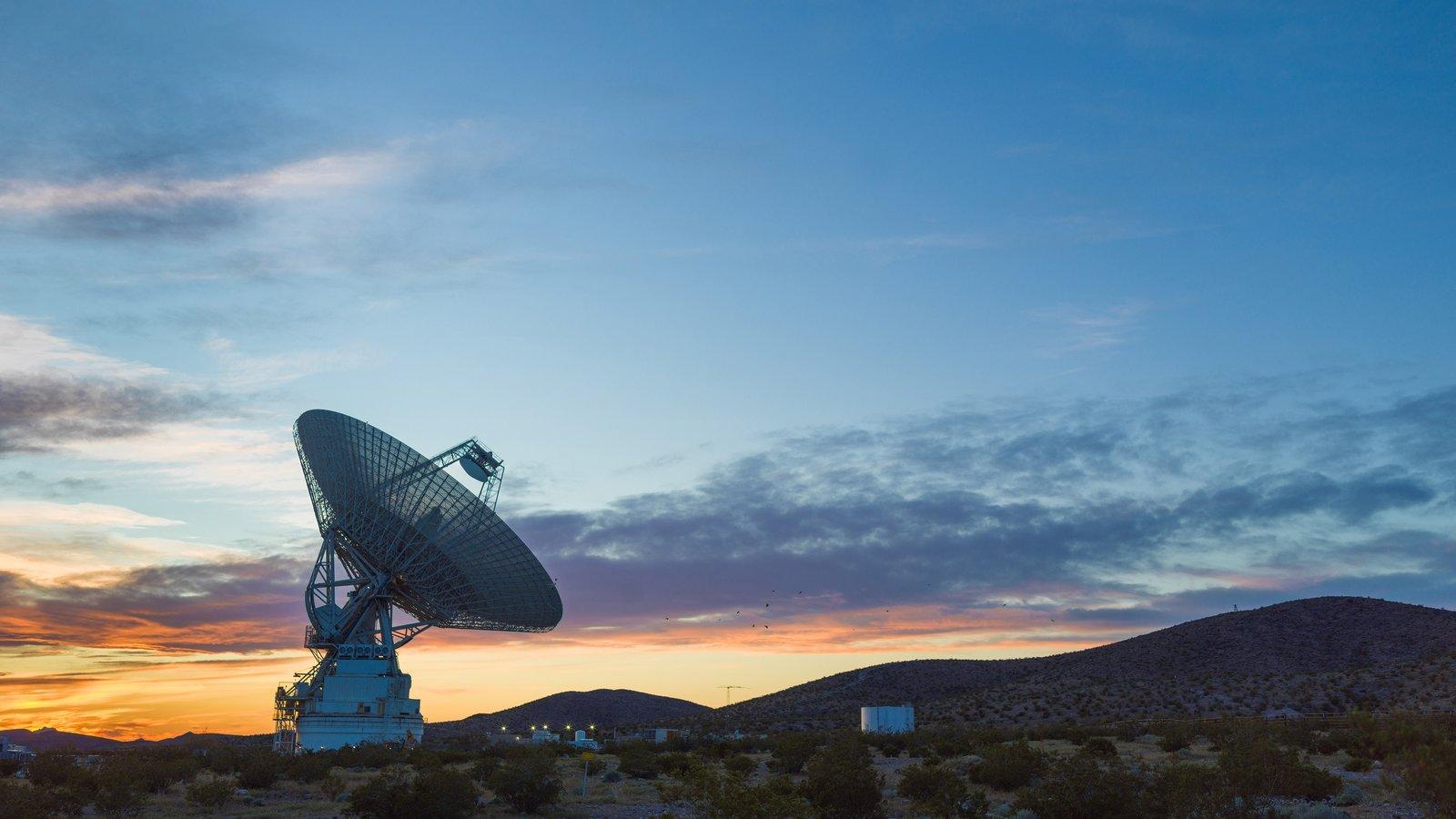
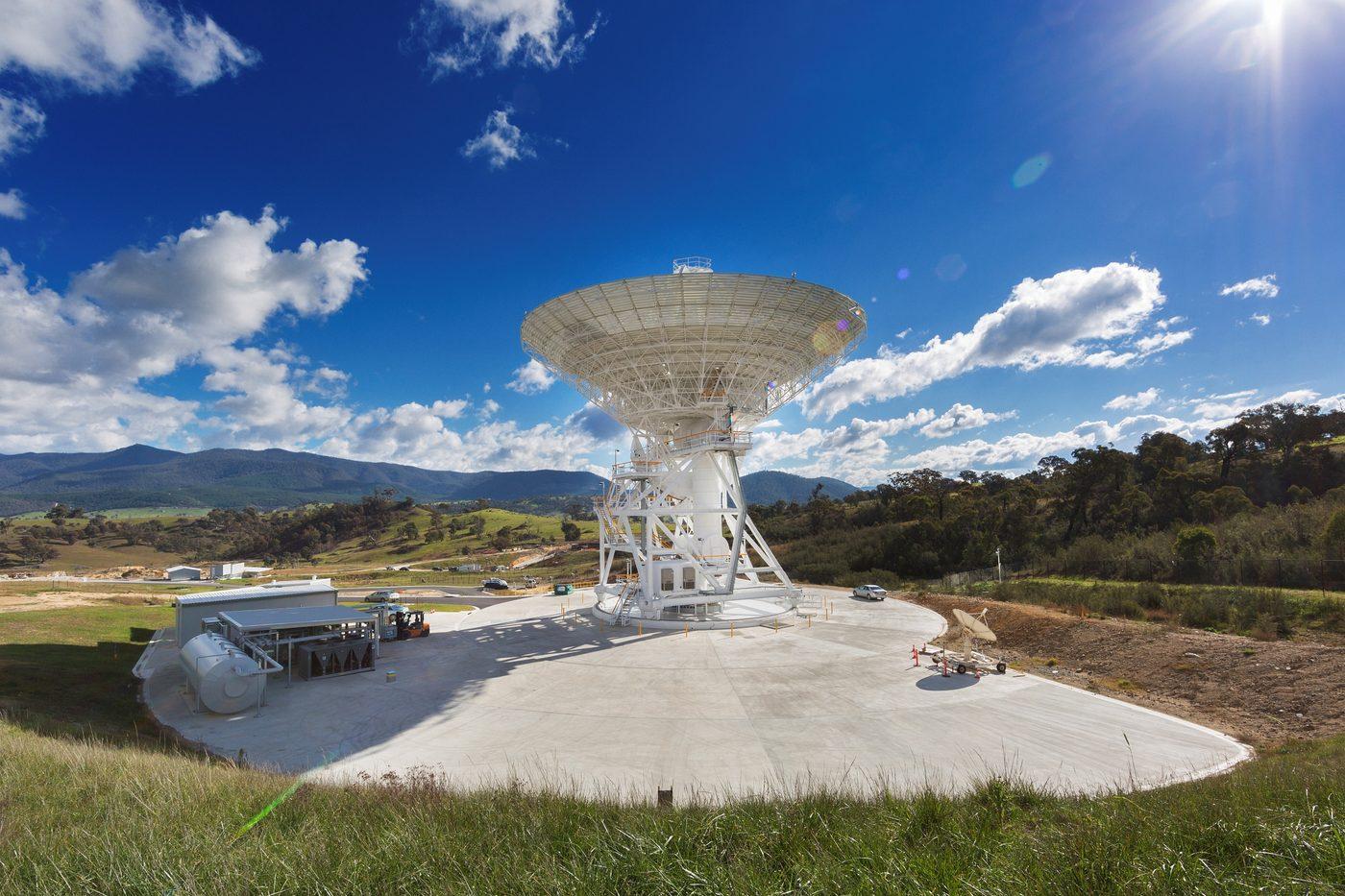
At this distance, radio is the only link. Voyager 1's signal travels at the speed of light, but it arrives extraordinarily faint. It takes extreme antennas to catch it. That is the job of the Deep Space Network, NASA's scientific telecommunications network, the largest and most sensitive of its kind in the world.
Each site has one huge 70-meter dish, one 26-meter antenna and several 34-meter antennas. The 70-meter dishes are the largest and most sensitive in the network. Their receivers detect signals of extraordinary weakness, after a 24-hour trip through the void. Without them, the probe would have been silent long ago.
The conversation is slow. A command sent from Earth takes a day to arrive. The probe executes it, then sends its answer, which takes another day to come back. A round trip therefore takes nearly 48 hours. Teams have to plan ahead, send commands at the right moment and wait two days to know whether everything worked. That is the price of distance.
Where Voyager 1 is
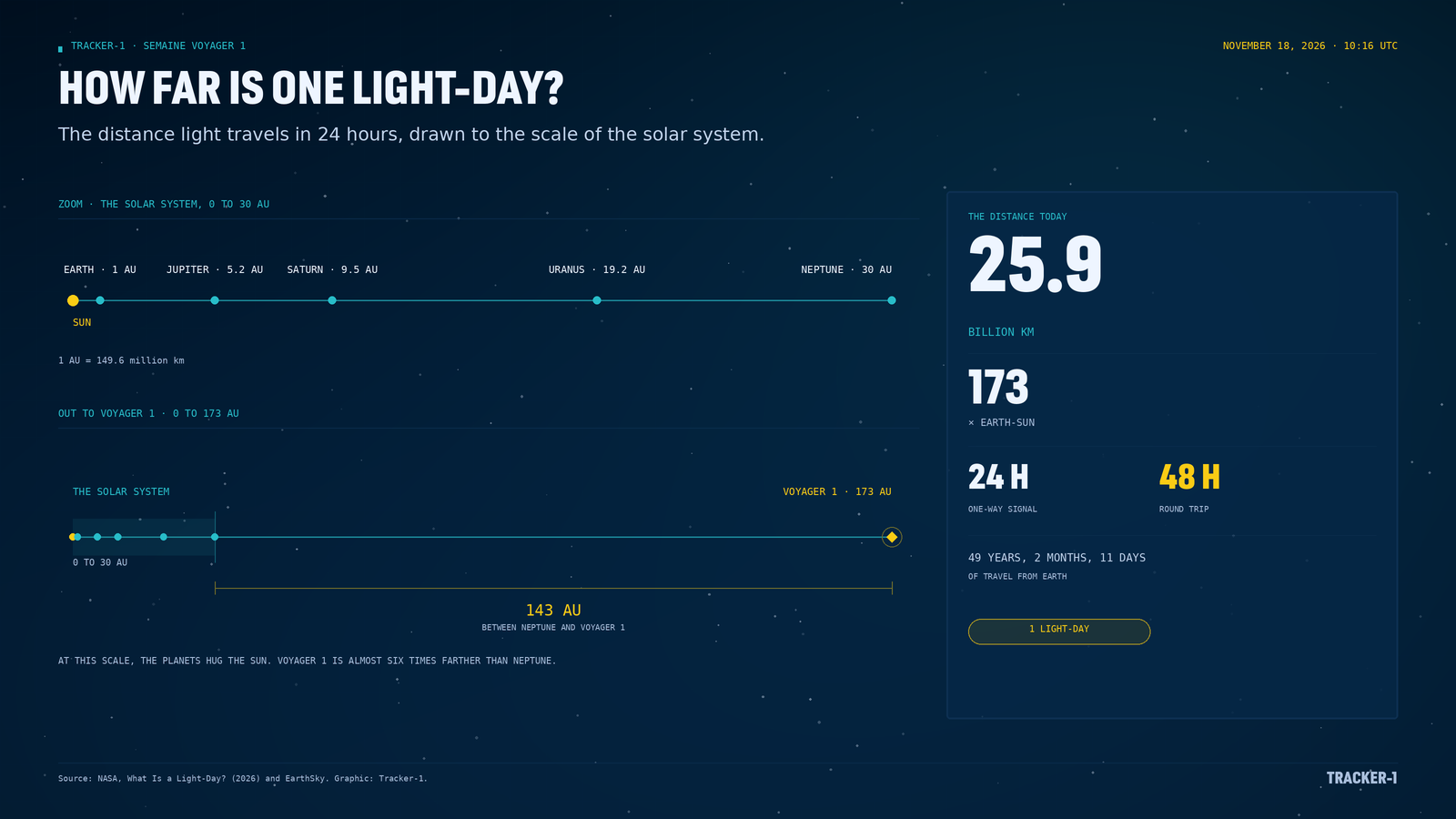
To grasp the distance, you have to draw it. The infographic below puts two scales side by side. The first zooms in on the solar system, from 0 to 30 astronomical units, with the orbits of Earth, Jupiter, Saturn, Uranus and Neptune. The second goes all the way out to Voyager 1, at 173 astronomical units.
The contrast is brutal. On the second scale, the planets hug the Sun, within the first 30 units. Voyager 1 is 143 units farther out, almost six times the distance of Neptune. Light takes 4 hours and 10 minutes to reach us from Neptune, and 24 hours from the probe. The solar system fits in a handkerchief, and the probe is already somewhere else.
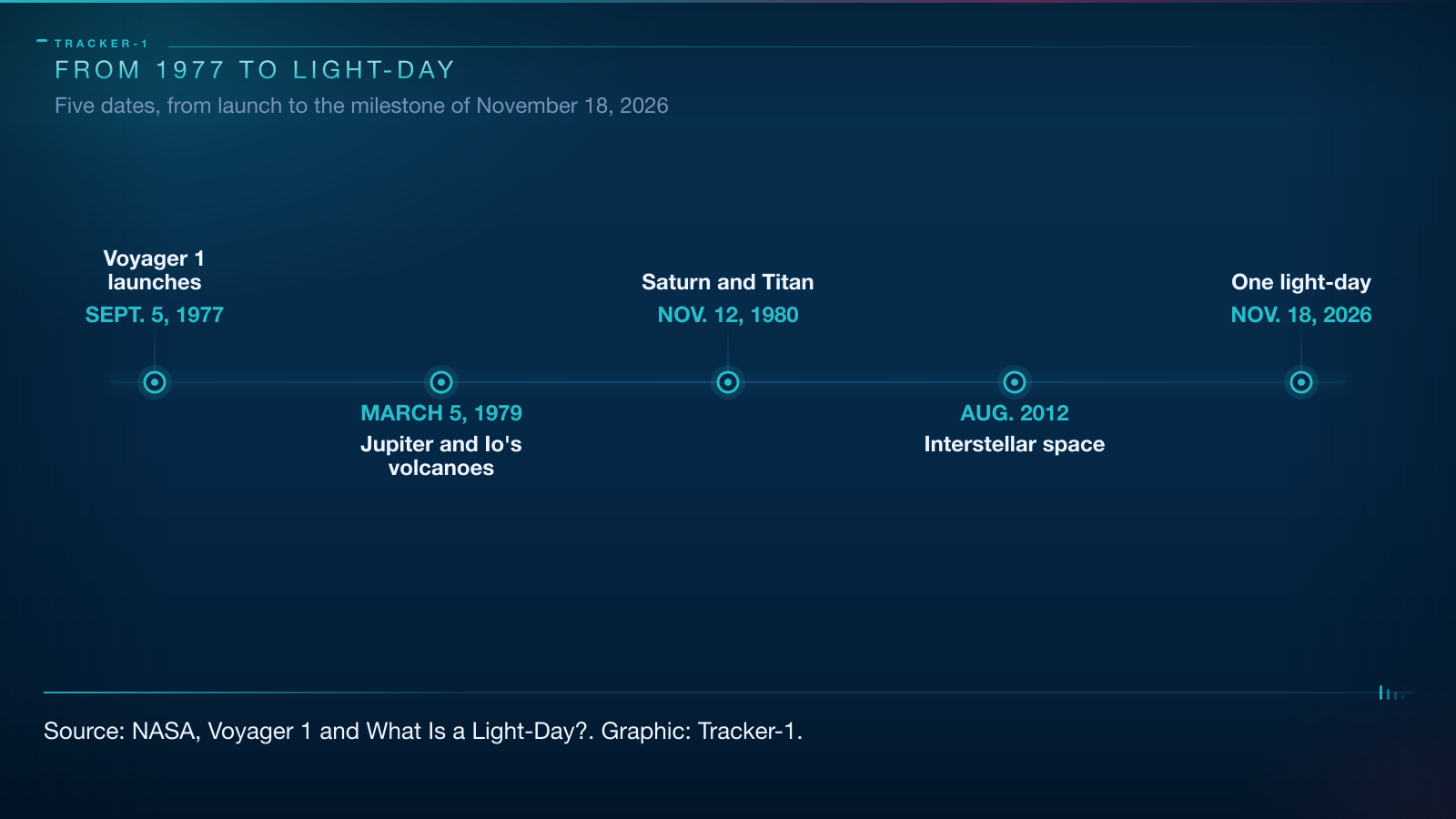
The journey took time. Launched on September 5, 1977, Voyager 1 needed 49 years, 2 months and 11 days to travel one light-day from Earth. Its twin, Voyager 2, left earlier and took a longer road, past Uranus and Neptune. It will reach the same milestone in November 2035. Between the two lie nine years and a different trajectory.
What this milestone changes
A light-day is a frontier in the way we count. Until now, the distances of the solar system were measured in light-minutes, from the Moon to the Sun, from Mars to Neptune. Voyager 1 moves to the next unit. Its signal is no longer counted in minutes, but in hours. The probe left the solar system in the sense of the planets long ago, and crossed into interstellar space in August 2012.
The Deep Space Network will keep listening as long as the probe transmits. Its generators lose power every year, and its instruments are switched off one by one. But the link holds. Every day, the 70-meter dishes point at a spot in the sky where a 722-kilogram machine, launched nearly half a century ago, is talking back at the speed of light.
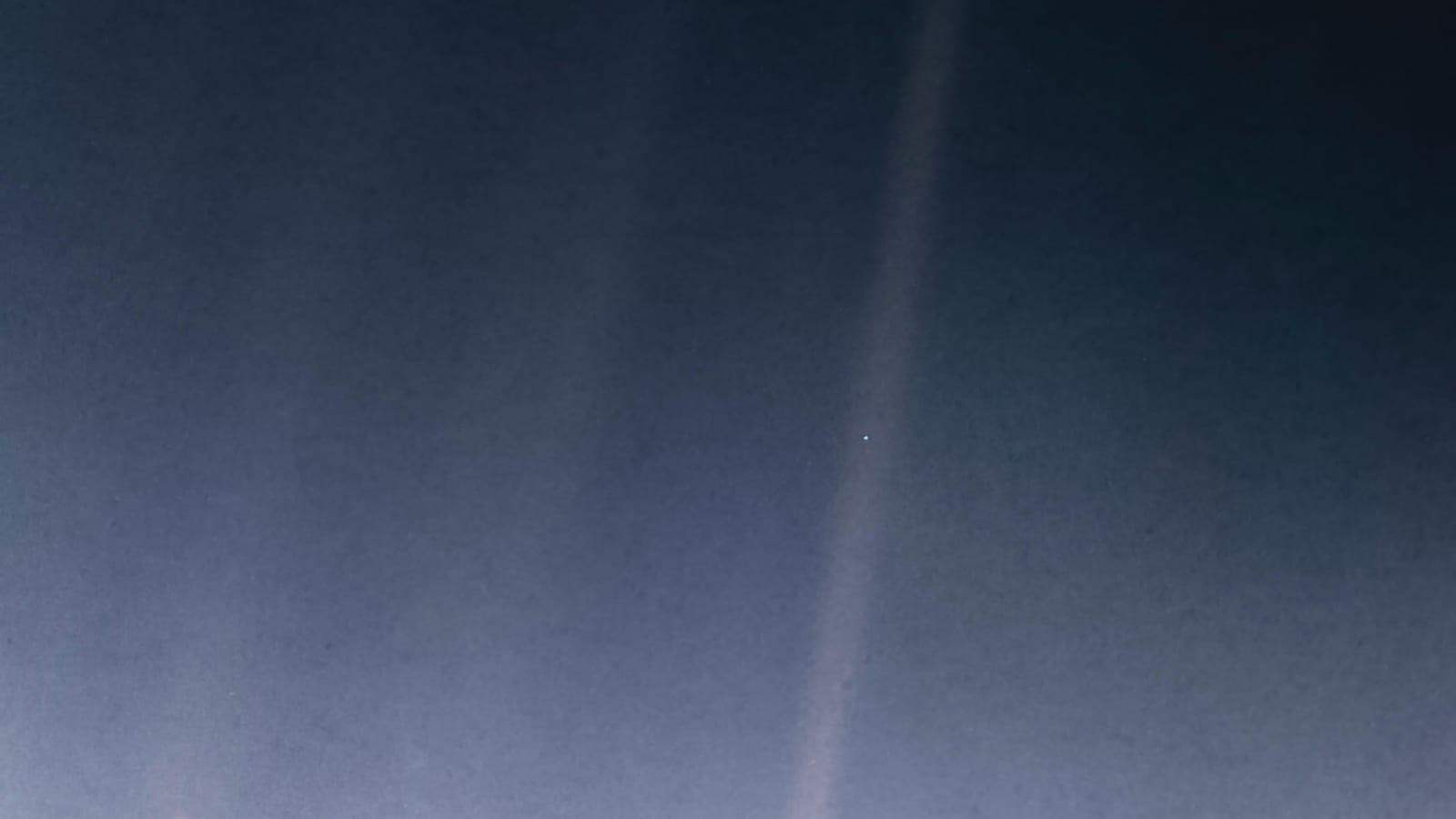
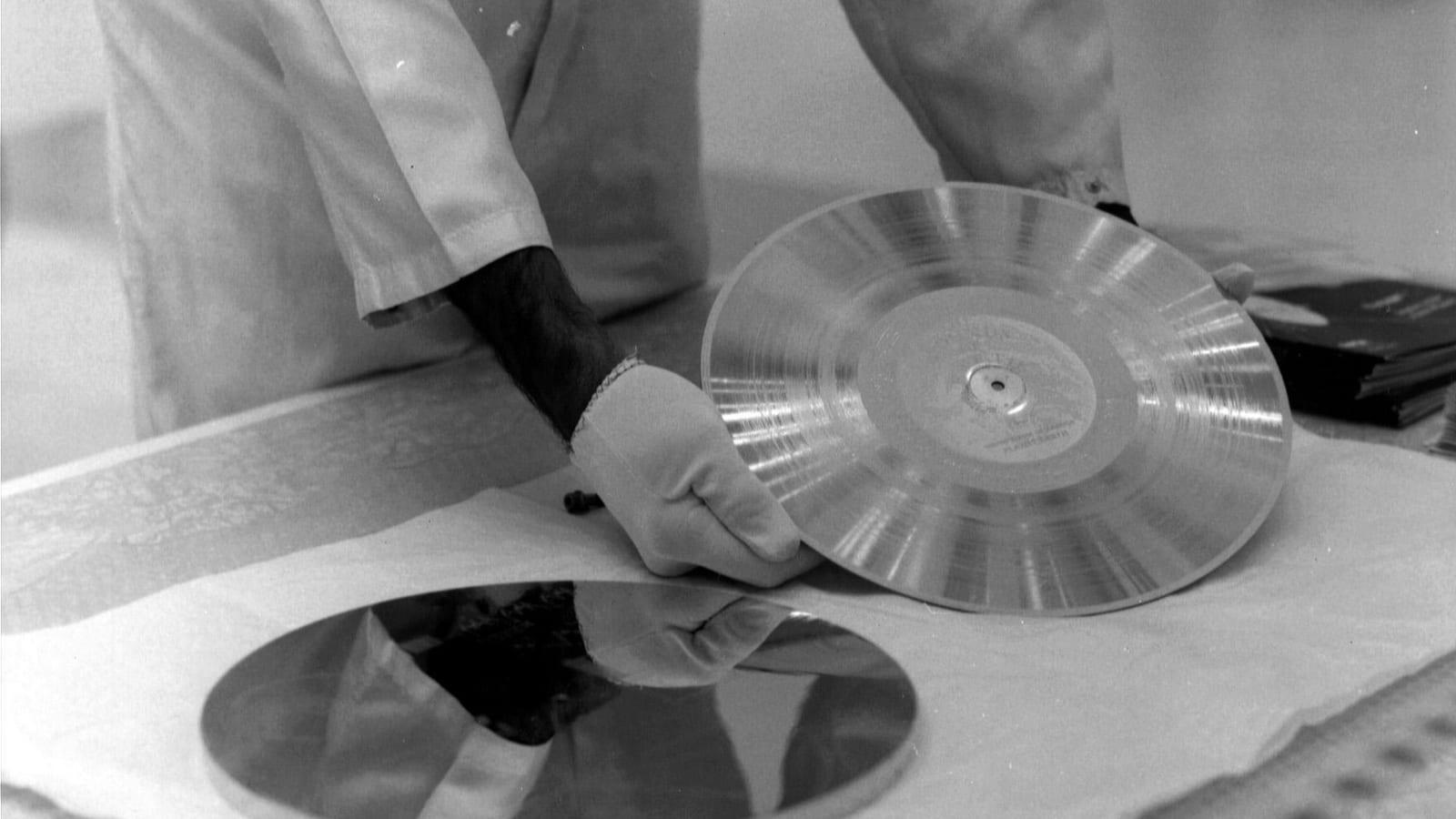
The rest of the special week tells what the probe carries and what it has seen. On Thursday, the Golden Record and its message for possible extraterrestrials. On Friday, the Pale Blue Dot, the picture of Earth reduced to a single pixel. On Saturday, the crossing into interstellar space. On Sunday, the repairs at 25 billion kilometers. The light-day is not an ending. It is a new unit for telling the rest of the story.
Going further
- The mission pages for Voyager 1 and Voyager 2, tracked live on the site dashboard.
- The key concepts behind the story: space probe and the solar system.
- The official sources: NASA's light-day page and the Deep Space Network page.
- The context and figures: EarthSky's article of November 17, 2026.
- The rest of the special week: Tracker-1's latest stories.