Comets have long been cast as cosmic couriers. Rich in organic molecules, they were thought to have delivered the chemical building blocks of life to the early Earth. A team at the University of Cambridge has now tested that idea with the latest generation of models. The verdict: a successful delivery would take a one-in-a-million event. The study, published on 28 October 2026 in Scientific Reports, even makes Mars a more promising target than Earth.
A dirty snowball full of life's building blocks
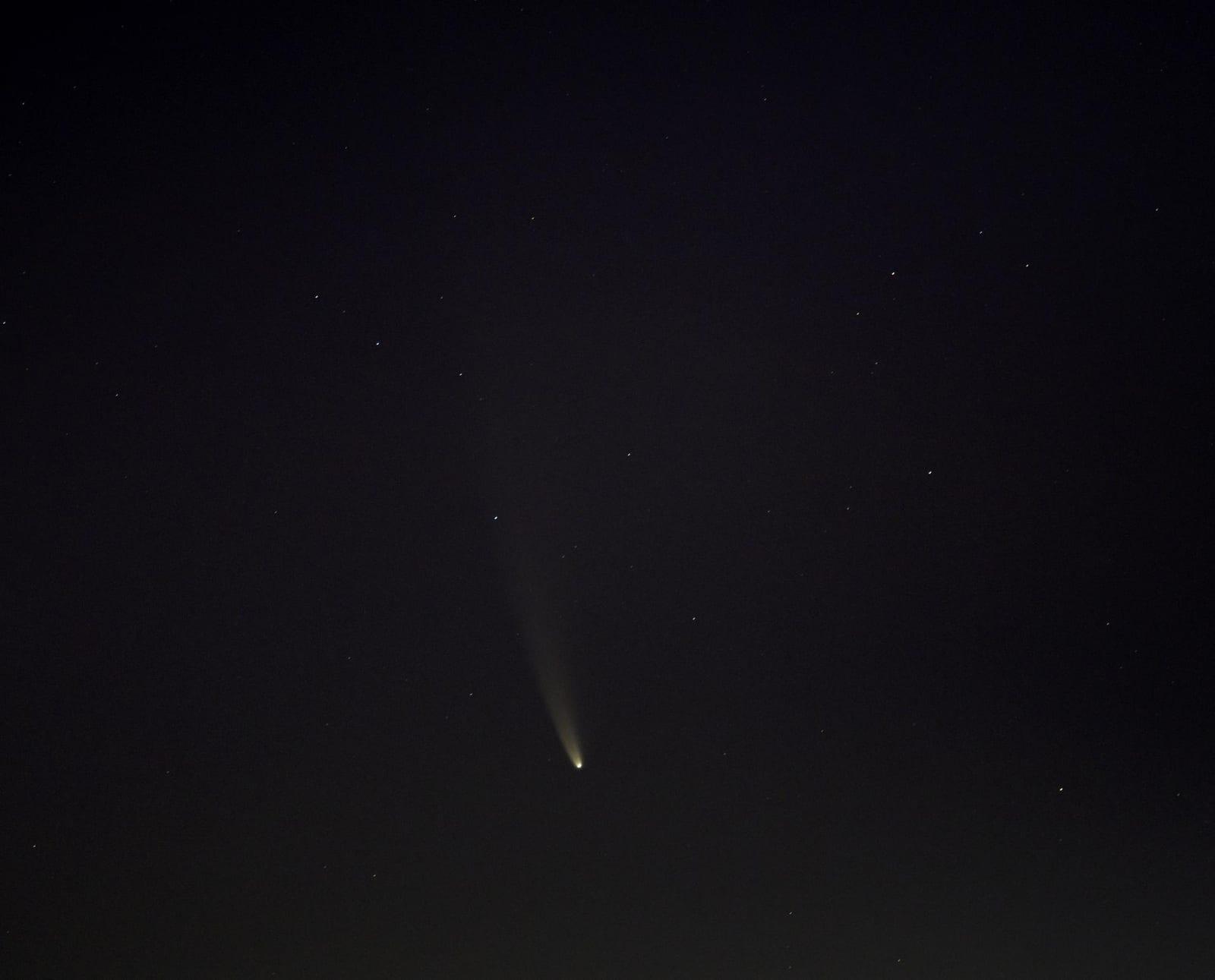
A comet is a mix of ice, dust and organic matter. Astronomers often call it a dirty snowball. As it nears the Sun, the ice turns to gas and releases a bright cloud, the coma, followed by a tail. That gas carries molecules that matter for the chemistry of life.
The most important is hydrogen cyanide, or HCN. Its molecule combines one hydrogen, one carbon and one nitrogen atom. It makes up about 0.1% of a comet's water vapour and can reach 30 millimoles per litre locally. That is the concentration at which laboratory experiments build lipids, sugars and the building blocks of DNA. The team used HCN as its test case. Its carbon-nitrogen triple bond makes it one of the most heat-resistant organic molecules in the mix. If HCN cannot survive an impact, more complex and more fragile molecules such as glycine have even less chance.
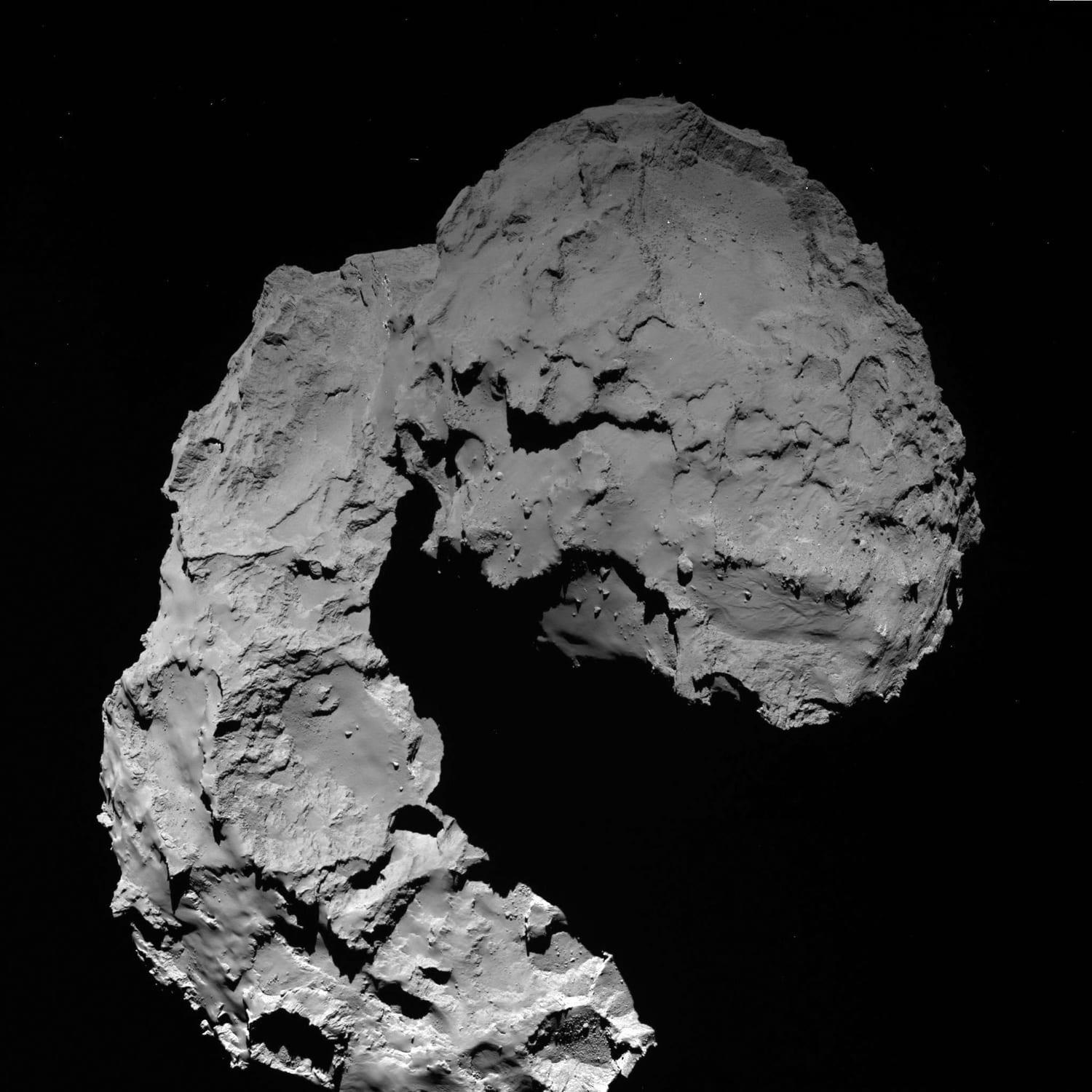
The idea that comets seeded Earth is nearly a century old. It rests on a simple observation: comets carry molecules that surface chemistry makes poorly. In 2023, Richard Anslow and several co-authors proposed a way to slow them down. In a tightly packed planetary system, a comet can bounce from one planet to the next and lose speed at each encounter. The question was whether that scenario applies to the Solar System.
On arrival, the atmosphere and the shock do the sorting
The first filter is the atmosphere. A comet is low in density and weak. As it crosses the air, it dumps its energy into the atmosphere and breaks apart. The models show that, even with a 1-bar atmosphere, the pressure at sea level on Earth, comets smaller than 100 metres burst at altitude and scatter their molecules over a wide area. Comets arriving at a shallow angle cross a thicker column of air and are even more vulnerable.
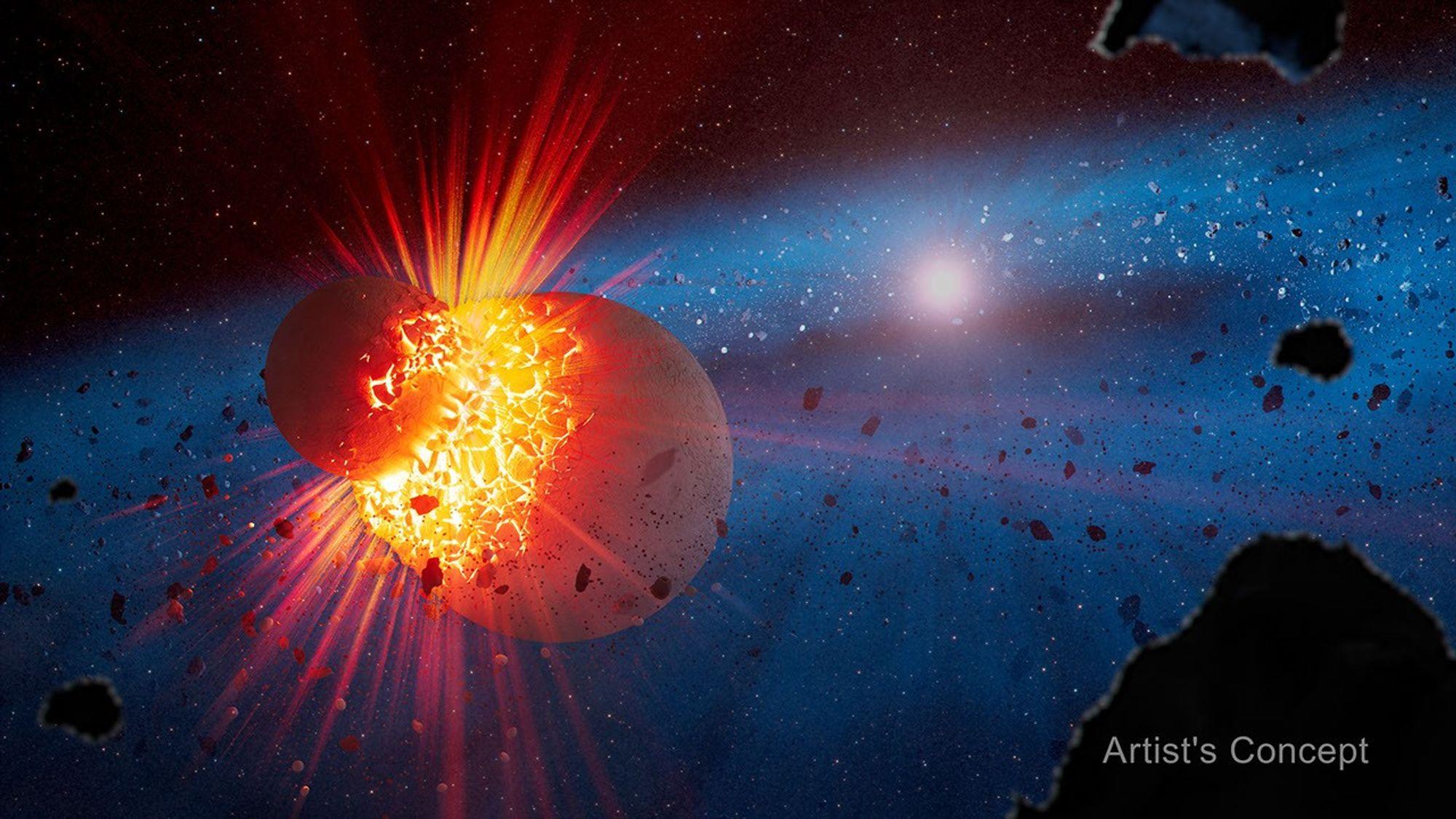
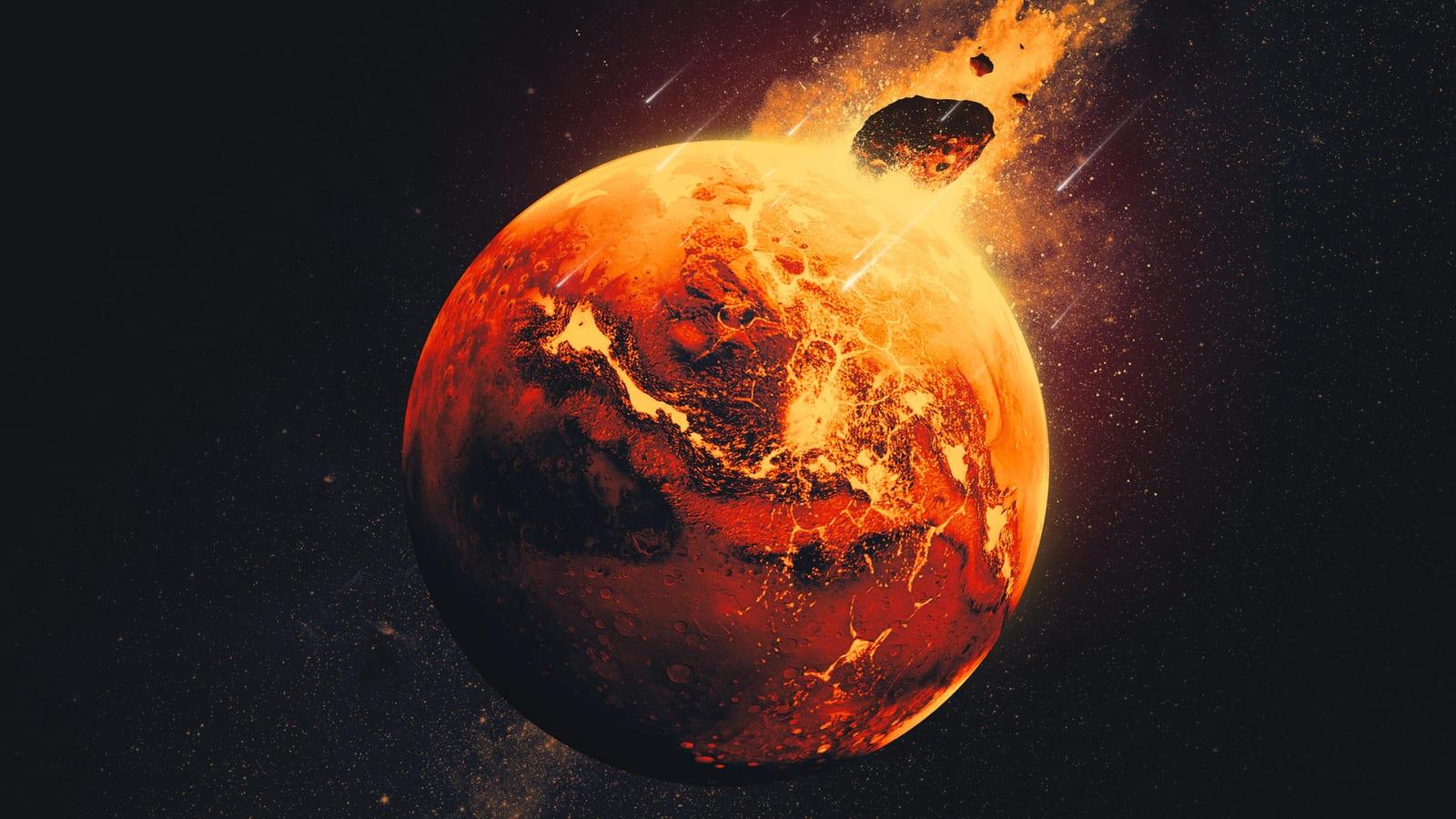
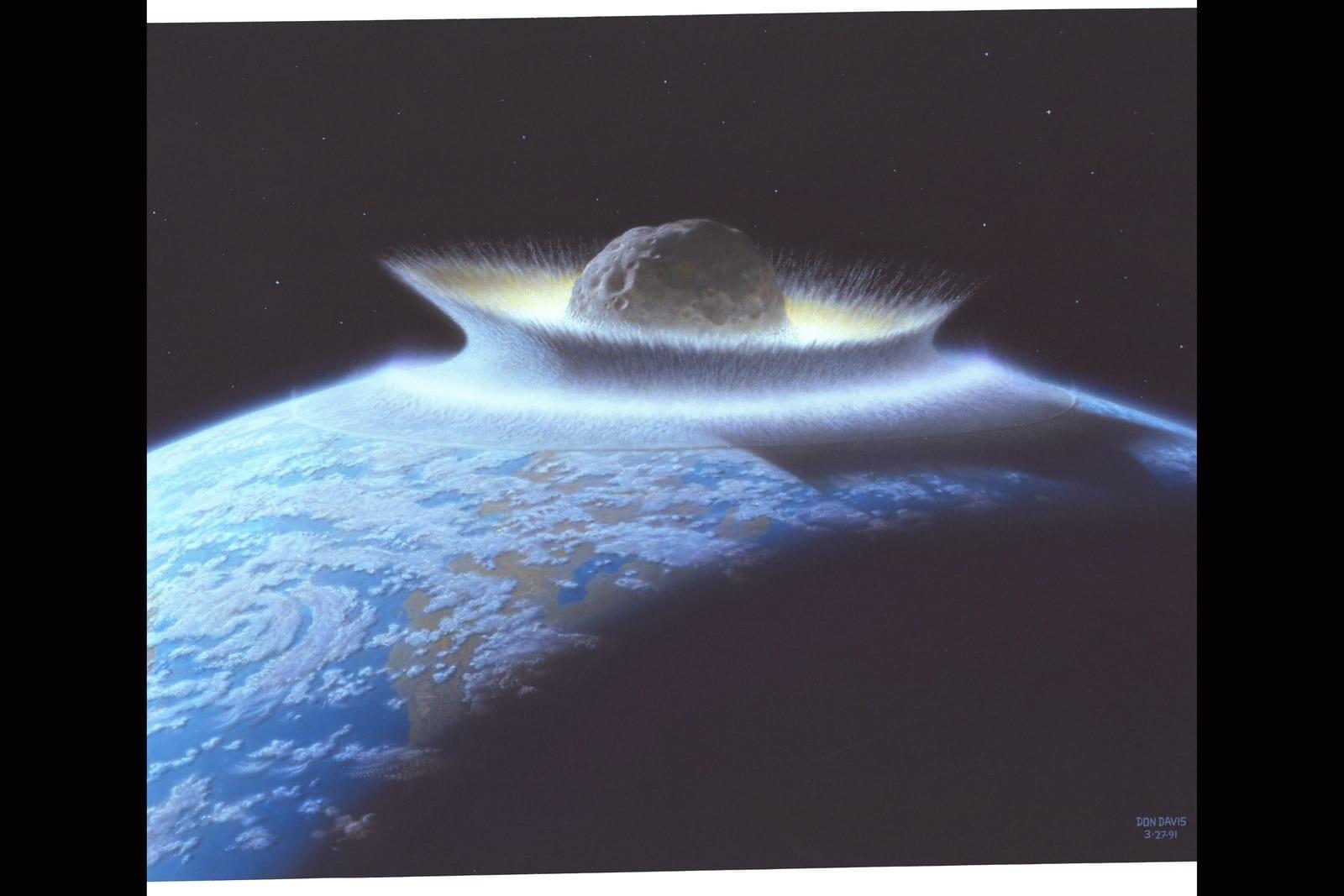
The second filter is the impact itself. At tens of kilometres per second, the collision drives pressures of 10 to 100 gigapascals, 100,000 to a million times atmospheric pressure. Some rock melts, water vaporises, and organic molecules undergo pyrolysis, thermal decomposition. HCN holds up better than the rest thanks to its triple bond. It does not escape destruction.
To put numbers on this, the researchers combined three models. A simulation of how short-period comets form and evolve, the ones that loop around the Sun in less than 200 years, calibrated on a million primordial bodies. A code called atmosentry that follows atmospheric entry. And a model of HCN survival during impact. They ran the whole chain as a Monte Carlo simulation, a method that replays the scenario many times with parameters drawn at random, 100,000 times here, to measure how often favourable cases occur.
The global tally leaves little room for hope. That bombardment lasted about 500 million years, then declined rapidly. Across that period, comets delivered 26,500 billion kilograms of intact HCN (2.65 × 10¹³ kg). Spread through a global ocean, that comes to at best 0.75 micromoles per litre. Prebiotic chemistry experiments work at 10 millimoles per litre, more than 10,000 times higher. At the local scale, even the best case offers little comfort. Half of the simulations record no impact at all delivering a useful concentration. Only 46% of runs record at least one. When one occurs, the last successful impact most often dates to 4.41 billion years ago, and fewer than 5% of runs place it after 4.03 billion years.
And the little that arrives does not stay concentrated. Crater water, rain and runoff dilute HCN within days to weeks. It also hydrolyses into formamide. The chemistry of life would have to succeed very fast, in a puddle that is draining away. "It would really have to be a one-in-a-million occurrence," Anslow says. You need the right angle, the right speed, then the right concentration and the right reaction rate. He calls it at best "a one-off fluke".
Mars was a better target, but no paradise
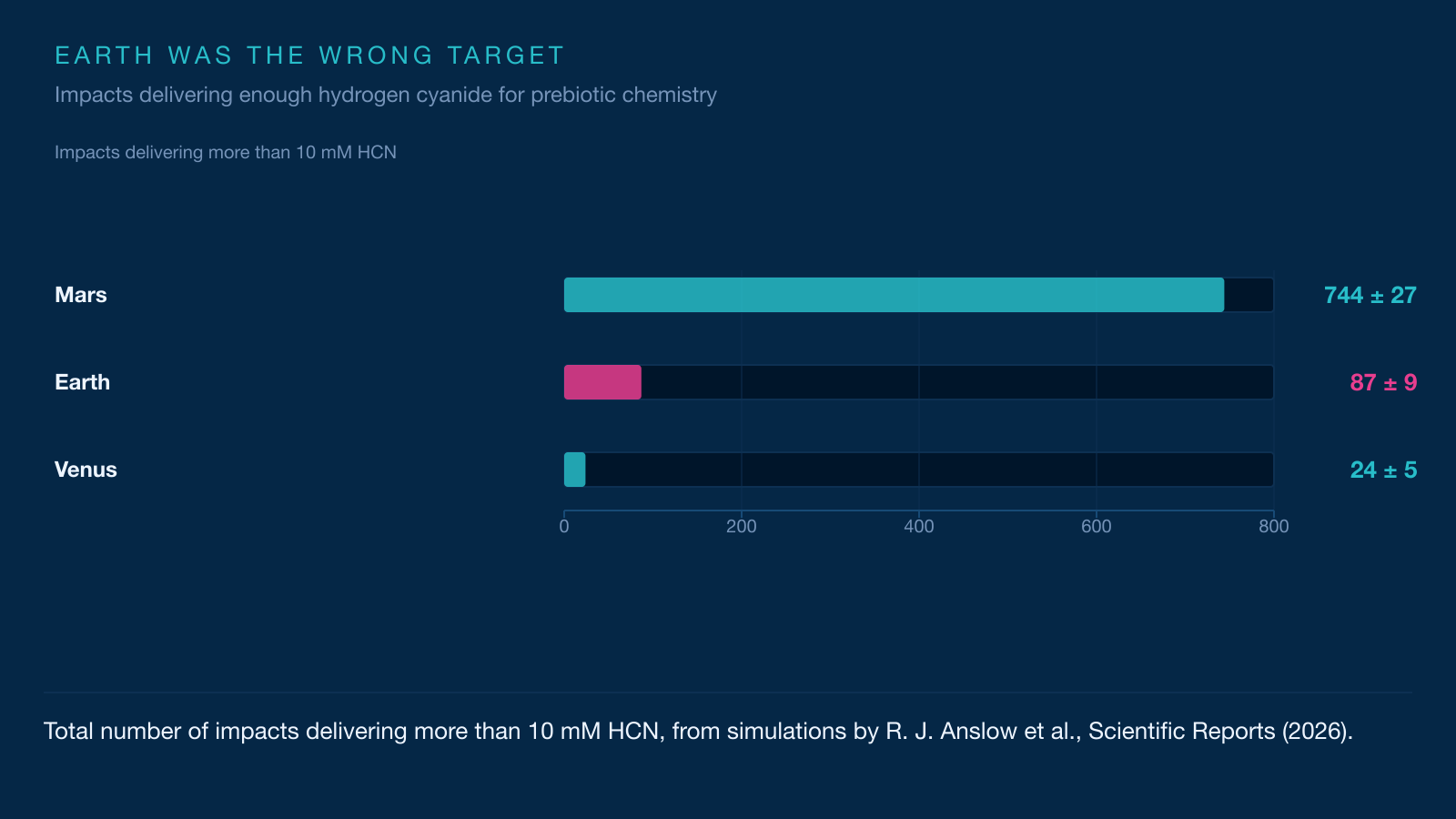
The most surprising result concerns Mars. Its cometary flux is about five times lower than Earth's. Yet the simulations count 744 ± 27 impacts delivering more than 10 millimoles of HCN per litre, against 87 ± 9 on Earth and 24 ± 5 on Venus. Two factors explain the gap. Mars's present atmosphere, more than a hundred times thinner than Earth's, lets almost every comet larger than 100 metres through. And the average impact speed is lower, 19.7 kilometres per second, versus more than 36 kilometres per second at Venus. A gentler impact heats less, so it destroys less.
Had Mars kept an atmosphere as thick as Earth's, the count would fall to 448 ± 21. That is still five times Earth's. The team is careful about limits. It assumes no particular amount of exposed land or ocean, and the surface conditions of early Mars remain poorly known. A warm, wet Mars would have diluted HCN much as Earth did. The result does not prove that life began on Mars. It says that, if life took that route, Mars offered a better counter.
So where did life's building blocks come from?
The study does not close the door. It moves it. Asteroids hit Earth far more often than comets. Their impacts can be just as violent, but their speeds are on average lower, and some delivery scenarios remain open. The other route is local: molecules can form on the spot, in the atmosphere or near hydrothermal vents, with no extraterrestrial delivery at all. Prebiotic chemistry does not need a parcel from the sky.
The conclusion also changes how we look for life elsewhere. Systems where comets can bounce from planet to planet become interesting targets. Future telescopes, such as the proposed Habitable Worlds Observatory that would follow James Webb, could spot those architectures. But the rocky planets best suited to characterisation often orbit red dwarf stars, where impact speeds are higher. For astrobiology, that makes cometary delivery harder elsewhere too.
Going further
- The University of Cambridge release: Comets didn't seed life on Earth after all, new study suggests.
- The study in Scientific Reports: Cometary impacts an unlikely pathway towards the origins of life on Earth, DOI 10.1038/s41598-026-74214-y.
- On this site: our story on the first comet found by Euclid, the interactive sky map and our astrophotography gallery.