Two studies led by NASA astrophysicist Casey McGrath, published on 10 November 2026 in The Astrophysical Journal, show that LISA could detect planets orbiting pairs of white dwarfs. LISA is the European Space Agency's gravitational-wave observatory, a mission with NASA as a partner, due to launch in the mid-2030s, and it will listen for ripples in space-time. No planet has ever been found around a binary white dwarf, so any detection would open a population of worlds that only gravity can reveal.
A planet tugs, and a gravitational wave wiggles
A white dwarf is what is left of a star like the Sun. The fusion in its core has stopped, the outer layers are gone, and what remains is a ball the size of Earth holding about the mass of the Sun. Its matter is packed far more tightly than anything we handle on Earth.
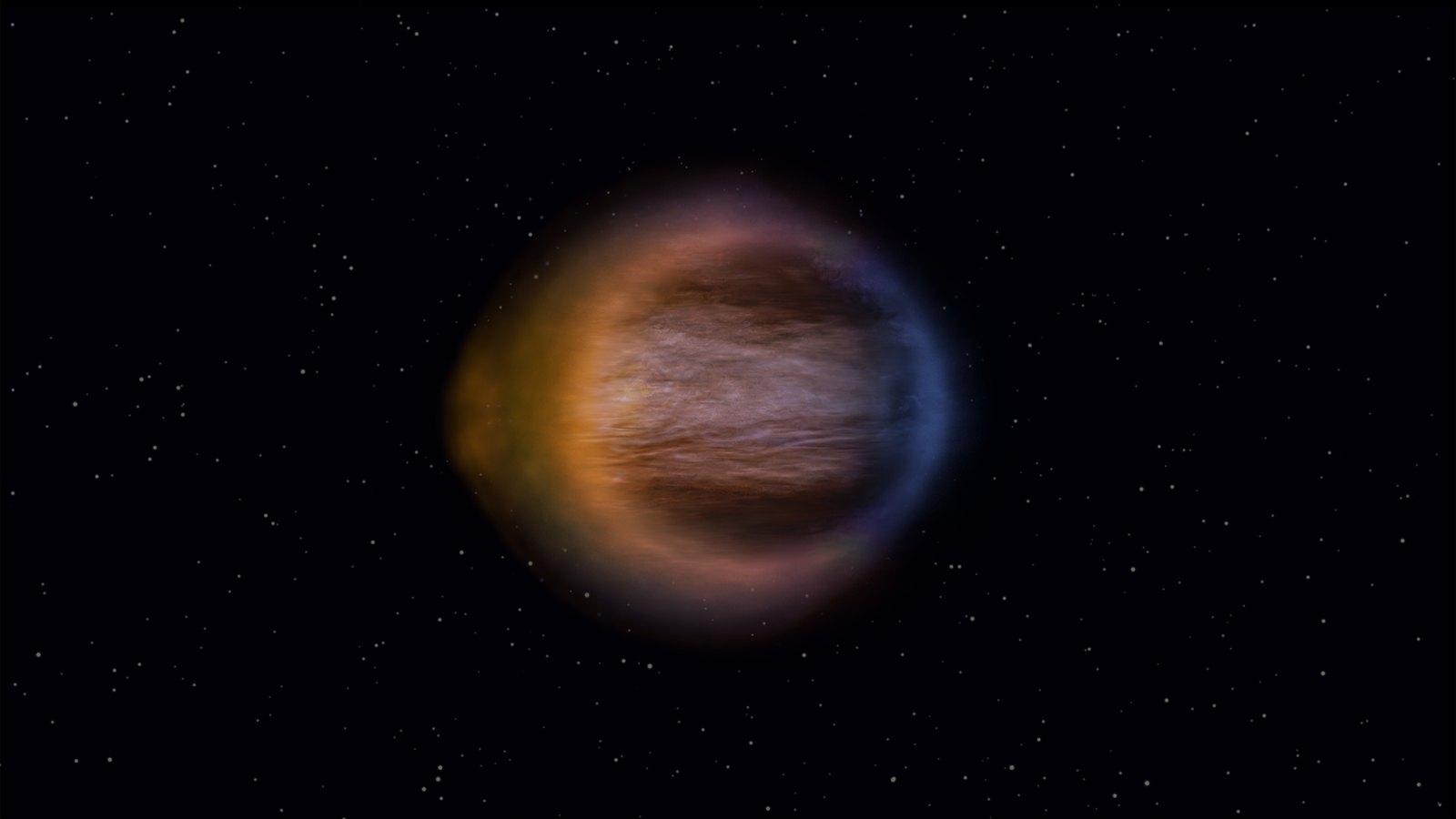
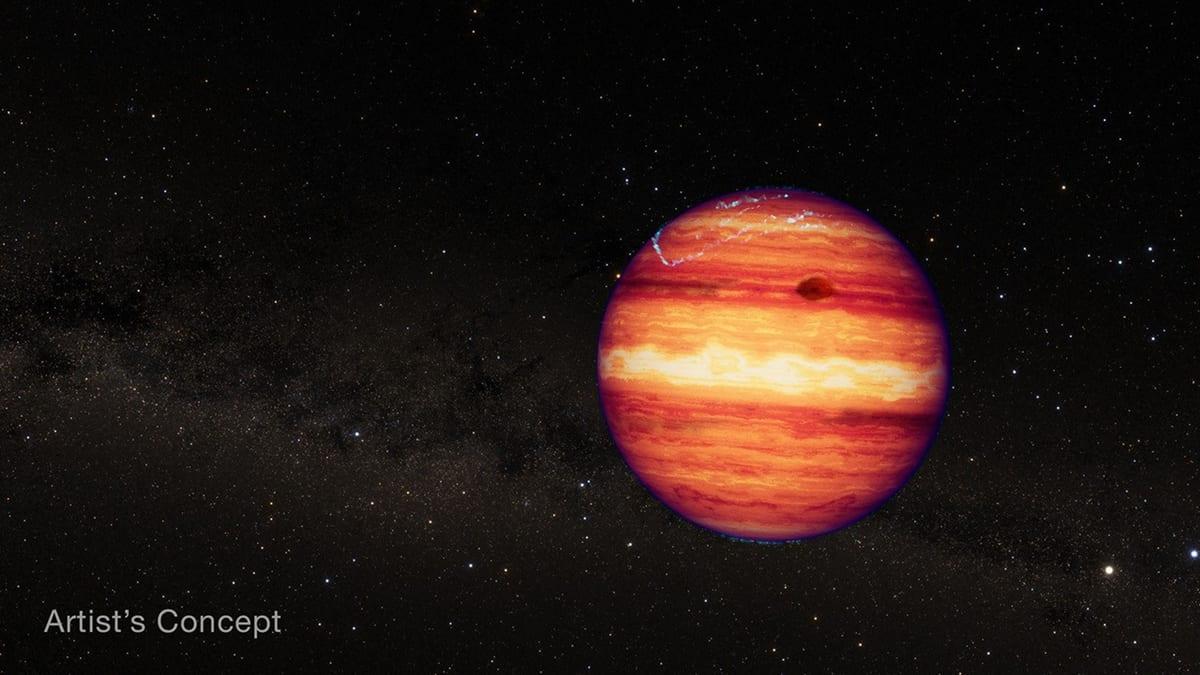
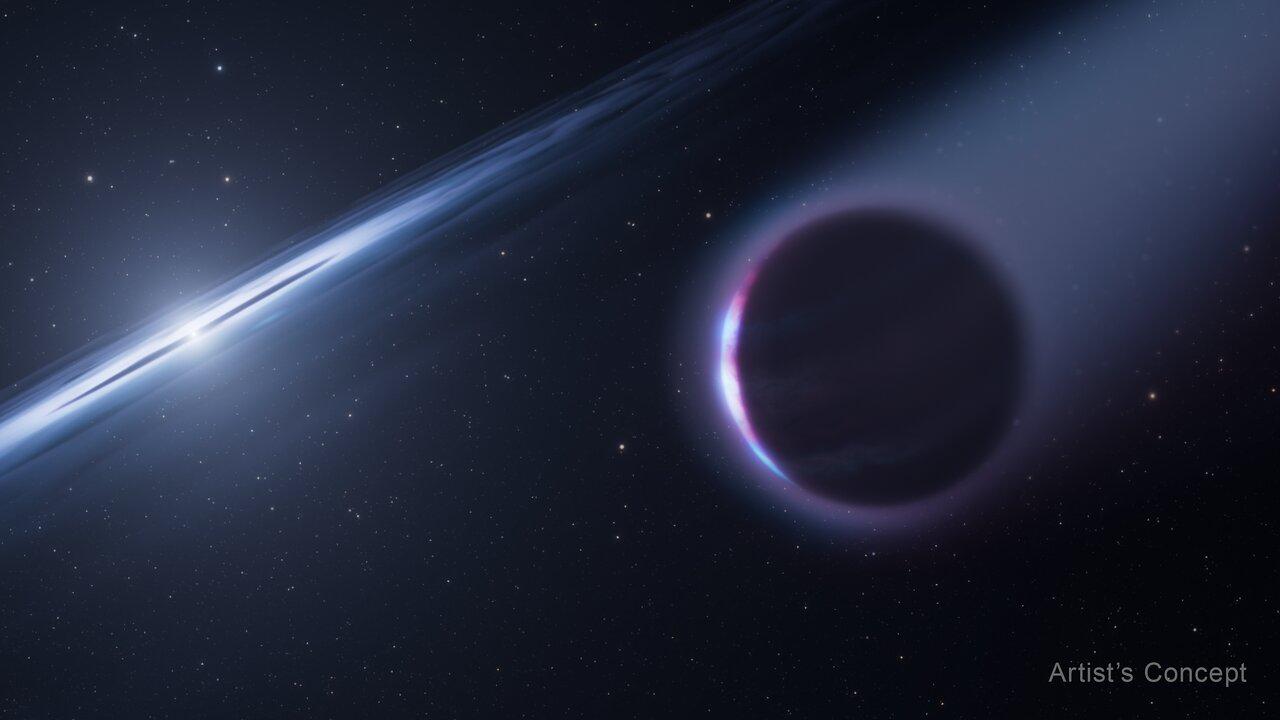
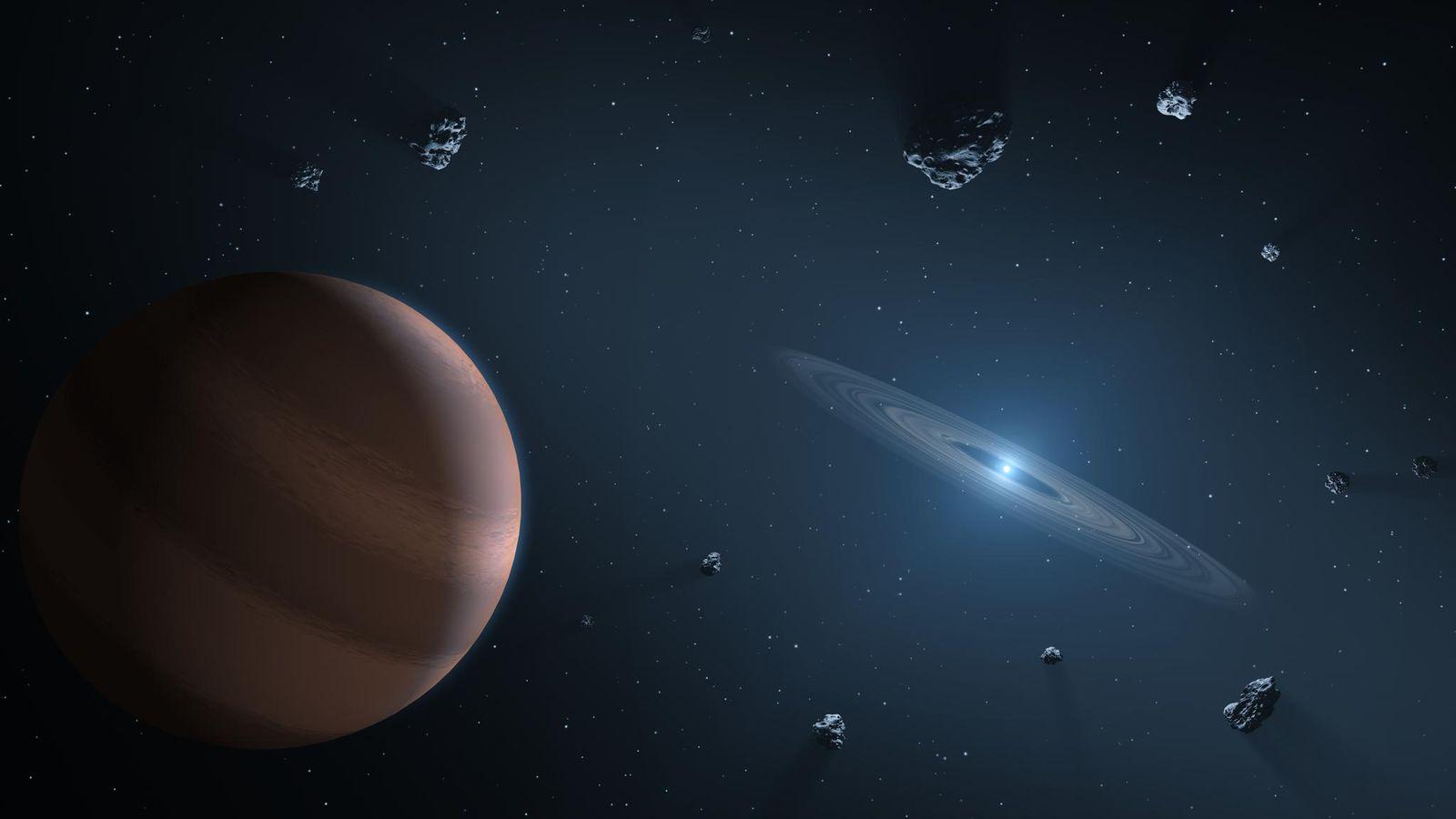
What happens to planets when their star ends up like this is an open question. The concept image below shows one answer astronomers now take seriously, a surviving world beside a shrunken star, with the wreckage of its planetary system spread in a ring around it.
Put two of those remnants in an orbit around each other and something remarkable happens. When the two cores circle every few minutes, they stir space itself. The pair radiates gravitational waves, ripples in the fabric of space-time. Einstein predicted them in 1916, and ground-based observatories caught them for the first time in 2015.
The faster the pair orbits, the higher the frequency of the waves. Astronomers describe that frequency as a tone. A double white dwarf with a period under an hour sits right in the band LISA is built to hear.
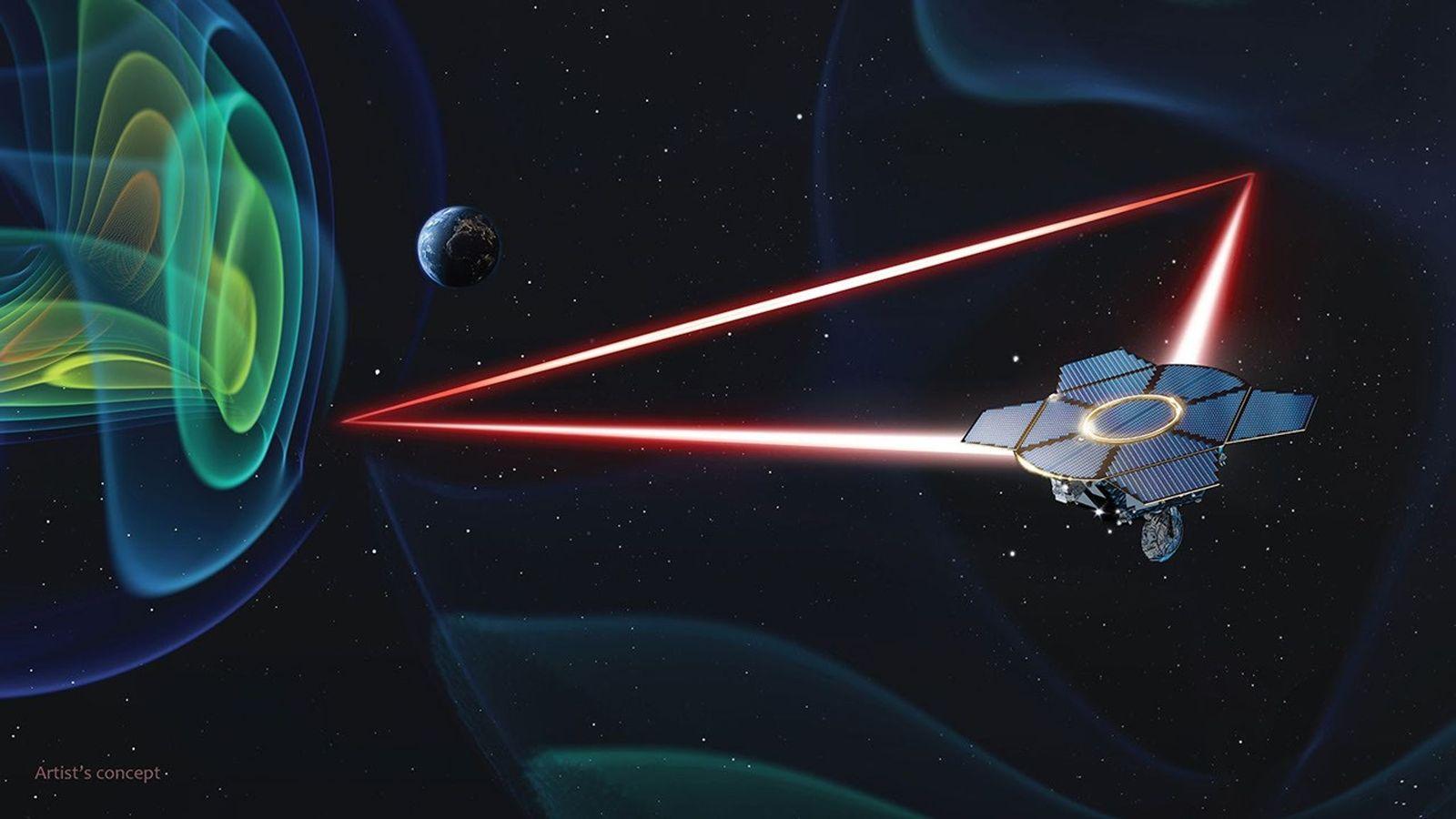
LISA is not a single instrument. It is a set of three spacecraft flying in formation around the Sun, linked by laser beams and forming a triangle 2.5 million kilometers on each side. Along those beams, the spacecraft measure changes in their separation smaller than the width of a helium atom, one of the smallest atoms in nature. The arrangement is called an interferometer: it combines the laser beams and reads how they interfere, the way two ripples on a pond add up or cancel out.
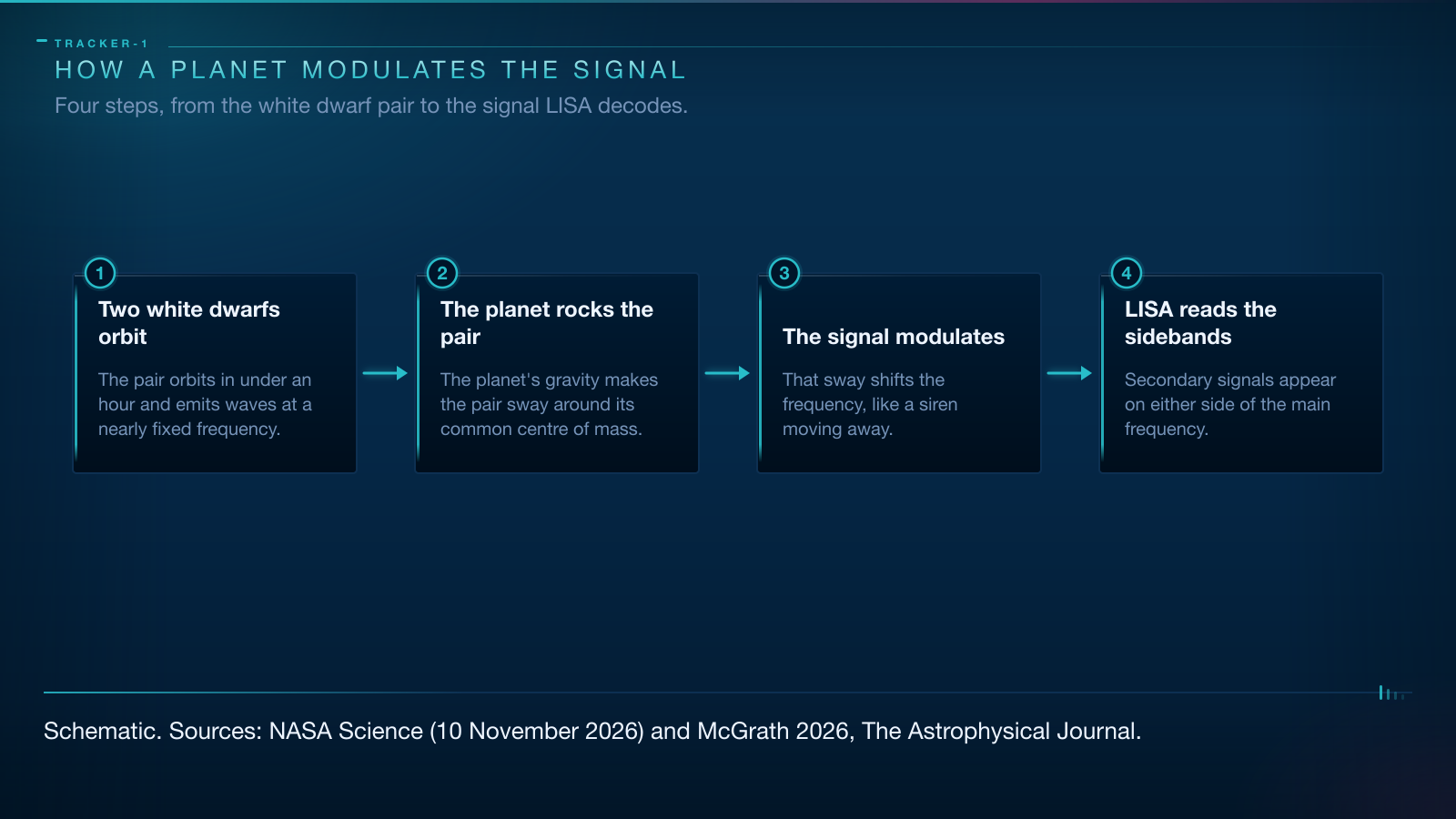
Now add a planet. If it is heavy enough, its gravity tugs the pair off balance. The two white dwarfs rock back and forth around the system's center of mass, the way a parent swinging a child by the hands turns around a point between them rather than around either body.
That rocking is the signal. As the pair swings toward us, its waves arrive slightly squeezed, at a higher frequency. As it swings away, the waves arrive stretched, at a lower one. The slow rise and fall has a name, Doppler modulation, and it is the same effect that drops the pitch of a siren as the ambulance passes.
For LISA, the modulation appears as sidebands. A sideband is a second, weaker tone sitting just above or just below the main frequency, present at the same moment. Casey McGrath, who led both studies, compares the effect to radio. A station broadcasts on one carrier frequency, and the voice or the music rides on sidebands just above and below it. Strip the sidebands and you get silence. For a double white dwarf, the sidebands carry the news that a planet is there.
None of this is entirely new to astronomy. A technique called radial velocity already finds planets by their pull on a star: the star's light shifts a little toward the red as it moves away and toward the blue as it comes closer, and the pattern of that shift betrays the planet. LISA would do the same job with gravitational waves instead of light, and with dead stars instead of living ones.
10 million pairs, 10,000 in reach, and no planet yet
The scale of the target is the part that makes astronomers sit up. Astronomers estimate that the Milky Way holds 10 million double white dwarf systems with orbital periods under an hour. Each of those pairs completes a full orbit in less time than the minute hand of a clock takes to travel once around the dial.
LISA will not resolve all of them. The mission team expects about 10,000 individual systems to stand out from the background, plus around 100 mixed binaries, systems in which a white dwarf circles a neutron star or a black hole. A neutron star is the crushed core left behind by the explosion of a massive star. A black hole is gravity collapsed past the point where light can escape.
Every resolved system is a chance to look for sidebands. If a planet is there, its signature is already in the data. The work then shifts from finding to reading.
Here is the part that makes the two papers matter. The catalog has a hole in it: a few exoplanets, worlds outside our solar system, orbit isolated white dwarfs, and a handful of circumbinary planets, worlds that circle two stars at once, are known around ordinary stars. Around a binary white dwarf, nothing. Not one planet has been confirmed.
That emptiness is the point. These are not young stars. They are the end state of stars like the Sun, and a planet still in orbit around one has outlived its own sun. Finding planets there would tell us how planetary systems behave after the star that made them has burned out.
Webb looks for heat that should not be there
LISA measures motion, not light. A detection would deliver a planet's mass and its orbital period. It would not deliver an image, and on its own it could not prove that the extra pull comes from a planet rather than from some effect nobody modeled.
Light is where confirmation lives. A planet around two white dwarfs is lit by both stars. It absorbs that light and re-emits it as heat, mostly in the infrared, the band just beyond the red end of what our eyes can see. Two white dwarfs alone give off very little infrared compared with what a warm planet adds. The result is an infrared excess, a glow brighter than the stars can explain.
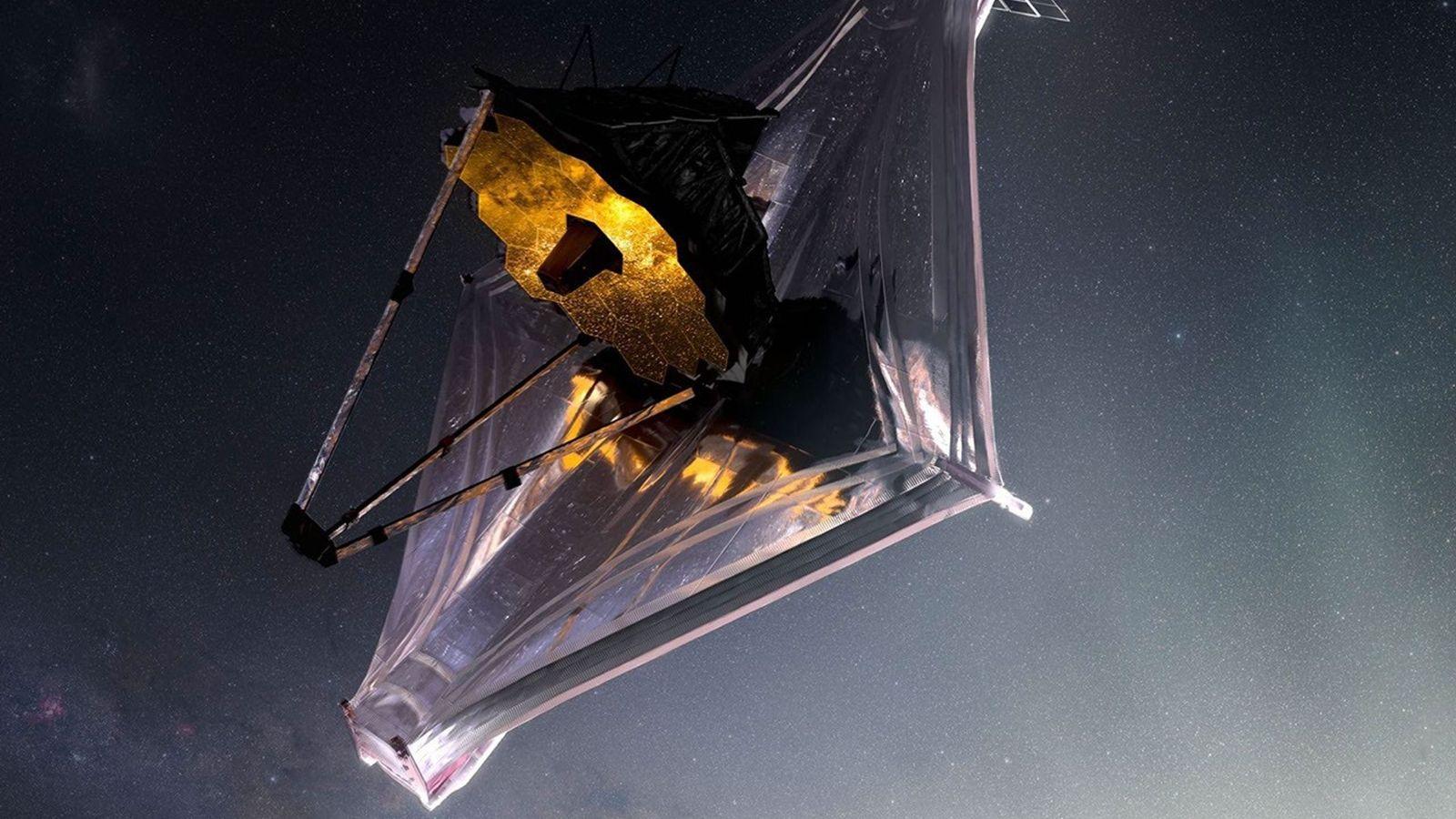
Webb's instruments are sensitive enough to pick up that excess out to a distance of at least 500 light-years. In the second paper, the team tested the idea on a system placed at that kind of distance. Webb could detect a planet about five times Jupiter's mass. LISA, under ideal conditions, could detect a sub-Jupiter planet, a world lighter than Jupiter.
Those two results describe different jobs. LISA finds the wobble. Webb finds the heat. A planet heavy enough for Webb is also heavy enough for LISA, so the overlap between the two is where a first confirmation would come from.
Mary Anne Limbach, a coauthor of the second paper, put the stakes plainly. "Once LISA captures its first exoplanet detections, it will be critical for us to validate some of them," she said. "These joint detections will allow us to establish that the gravitational signals correspond to genuine planets rather than false positives."
A false positive is a signal that imitates a planet without being one. A glitch in the detector, a third body nobody accounted for, or a misread orbit could each copy the sideband pattern. A separate detection in light removes the doubt.
The 500 light-year figure is a yardstick, not a limit
This is where the story needs a pause. The 500 light-years is not the range of the method. It is a reference distance chosen for a test case.
The second paper works from a real object, ZTF J2243+5242. Its two white dwarfs complete an orbit in 8.8 minutes, which makes it one of the strongest gravitational-wave sources LISA will detect, and the pair will merge in about 400,000 years. For the calculation, the authors scaled the system to a reference distance of 150 parsecs, a unit astronomers use for large distances, which works out to about 490 light-years. Then they asked what Webb could see.
ZTF J2243+5242 is not that close. Its measured distance is about 2120 parsecs, nearly 7,000 light-years. The 150 parsecs is a chosen position on a diagram, not a place the binary occupies.
The distinction matters because a benchmark quoted as a promise turns into a disappointment later. If a reader takes 500 light-years as the reach of the technique, every LISA planet beyond that radius starts to look like a failed confirmation. That is not what the papers say. They say that a heavy planet around a nearby pair, at a stated distance, would produce an excess Webb can detect. The distance is part of the scenario.
Keeping the two figures apart also keeps the physics honest. Infrared brightness falls with distance, so the same planet is far easier to see when it sits close by. The test case shows what the method can do at a chosen distance, and nothing more.
What has to happen before anyone believes it
No planet has been detected this way. LISA has not flown. The launch is planned for the mid-2030s, which puts the first data years after the papers that describe the method.
The idea has waited a while already. Naoki Seto, a Japanese astronomer, first proposed in 2008 that LISA could find planets around double white dwarfs. For nearly two decades the method lived as a calculation. These two studies turn it into a plan.
A plan needs a second opinion. The second paper sets out two ways to confirm a gravitational-wave detection with light. The first is the infrared excess with Webb. The second is astrometry, the precise tracking of an object's position on the sky. If a planet orbits a binary, the binary itself traces a small loop around the system's center of mass. Astrometry can measure that loop, and Gaia or the Habitable Worlds Observatory could supply the measurement.
Two independent lines of evidence, one in gravity and one in light, are what turn a signal into a planet. The authors call that independent confirmation essential, especially for the first detections, because the method has never been tested on a real system.
So the near future is models and candidate lists. The first real test comes with the launch, when a faint wobble in a distant tone will mean either a planet or a dead end.
Going further
- The NASA Science story by Francis Reddy, Gravitational Waves Can Reveal New Worlds, published on 10 November 2026.
- The two papers in The Astrophysical Journal: the gravitational-wave radial velocity method and multimessenger exoplanets.
- The discovery paper for ZTF J2243+5242, an 8.8-minute double white dwarf, on arXiv.
- The telescope that would do the confirming: James Webb, whose infrared instruments can measure a planet's own glow.
- The concepts: exoplanets, multimessenger astronomy and interferometers in our glossary.
- To see where these binaries sit in the sky, use our interactive sky map and the observing guide.